


 Order Status & Returns
 Gift Cards
 Help Center
 1-800-345-4545

Steering & Alignment
Steering components connect your steering wheel to the front tires and decide how precisely your car or truck responds. This category covers manual and power-assisted systems, the hardware for setting caster, camber, and toe, and handling parts for street, strip, and off-road builds. Add your vehicle by year, make, and model or VIN, then shop by system below.
Show More
What Steering Components Does This Category Include?
This category covers every part between your steering wheel and front tires, plus the hardware that keeps those tires aligned. It sits within our Chassis, Steering & Suspension parts department, organized by system so you can shop one job at a time.
Beyond the steering gear itself, you'll find the parts that carry its motion to the wheels:
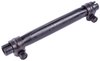
- Steering linkage, including tie rods, center links, and pitman arms that connect the gear to the spindles
- Steering knuckles & components that locate the wheel hub and brake on the suspension
- King pins & components for solid front axles and vintage beam-axle setups
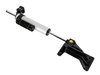
- Steering stabilizers that damp kickback from bumps on lifted trucks and off-road rigs
If you're rebuilding the front end, inspect the linkage whenever you upgrade the gear.
Rack and Pinion vs. Steering Box: Which Fits Your Build?
Rack-and-pinion steering kits give you more direct steering, while steering boxes keep an older vehicle's original layout. In a rack, a pinion gear meshes with a toothed rack and converts steering wheel rotation into linear motion. That's more direct than the recirculating ball design used in older vehicles.
In a steering box system, the column turns the gearbox internals, and the pitman arm moves the center link and tie rods to the spindles. If you're keeping that layout, replacement boxes and steering box components let you replace or rebuild the gear.
Converting instead? Conversion kits adapt a rack to an older chassis, such as the Flaming River cradle kit for the 1968-1972 Chevy Chevelle and El Camino. Before you order, read how to choose a rack and pinion for your steering conversion.
How Power Steering Pumps Affect Steering Effort
The power steering pump supplies the hydraulic pressure that cuts the effort you need to turn the wheel. Rack-and-pinion and steering box systems both come in manual and power-assisted versions. Power assist can be hydraulic or electric.
Many 1960s and 1970s muscle cars used Saginaw-style pumps, mostly on GM vehicles and on some Ford and Mopar models. This subcategory covers the pump and the hardware that supports it. Match the pump to your steering gear and engine before you order, since mounting and pulley alignment vary by application.
LS swaps often need a different pump or bracket. Some accessory drive kits include a power steering pump option. For era-specific advice, see our guide to power steering pumps for classic muscle cars.
Alignment Components and Sway Bars for Sharper Handling
Alignment components let you set camber, caster, and toe, while sway bars & end links control body roll in corners. Toe is adjusted through the tie rods. Camber is set with adjustable control arms, cam bolts, or camber plates, and caster affects straight-line stability and steering return.
Look for cam bolts, camber plates, and kits that dial in those angles on street and race cars. A sway bar ties the left and right suspension together to reduce lean.
QA1 offers front and rear sway bar kits for 1964-1967 and 1973-1977 GM A-Body cars, so you can tune both ends of the car. Planning to check settings in your garage? Our rundown of DIY front-end alignment tools covers what you need to set your alignment at home.
Steering Wheels, Columns, and Shafts for Street and Race Cars
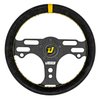
The wheel, column, and shaft form the driver's end of the system and shape how the car feels in your hands. Aftermarket steering wheels change grip, diameter, and style. Billet Specialties offers 14 in. D-shaped steering wheels and steering wheel half wraps.
For race cars, a collapsible steering column is recommended, so start with steering columns & accessories. Circle-track racers often add a steering quickener, typically 2:1 for dirt and 1.5:1 for asphalt. A quickener reduces how far you turn the wheel for the same tire movement.
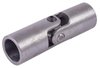
The steering shaft links the column to the rack or box and has to route around headers, frame rails, and swapped engines. Steering shafts & U-joints from Borgeson help you make that connection with the angles your chassis needs.
How to Choose Steering Components That Fit Your Vehicle
Start with fitment by adding your vehicle with the year, make, and model or VIN selector above. Then match steering ratio, mounting location, and intended use to your build. Check whether a kit includes the linkage, brackets, and hardware you need, or whether you'll order those separately.
A lower steering ratio turns the wheels more per rotation of the steering wheel, so response gets quicker. Mounting a rack ahead of or behind the axle line changes steering geometry, so confirm it matches your chassis.
Off-road use may call for heavy-duty parts. Trail Gear IFS Eliminator kits and Trail-Link Three front 3-link kits suit 1979-1995 Toyota Pickup builds. When your list is set, shop Steering & Alignment by system and add the parts to your cart.
ALIGNMENT COMPONENTS
KING PINS & COMPONENTS
POWER STEERING PUMPS & COMPONENTS
RACK AND PINIONS
STEERING BOX COMPONENTS
STEERING BOXES
STEERING COLUMNS & ACCESSORIES
STEERING KNUCKLES & COMPONENTS
STEERING LINKAGE
STEERING SHAFTS & U-JOINTS
STEERING STABILIZERS
STEERING WHEELS & ACCESSORIES
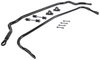
SWAY BARS & END LINKS

ADD A VEHICLE TO GUARANTEE PARTS FIT
See products that fit

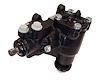
BORGESON
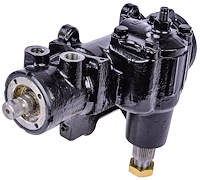
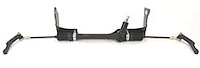
Street and Performance Series Steering Box Fits Select 1961-2002 GM Models [Quick Ratio: 12.7:1]
Part Number: 153-800130
 Ships Today
 Lowest price guarantee
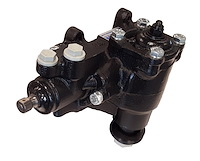
BORGESON
Street and Performance Series Steering Box Fits Select 1961-2002 GM Models [Quick Ratio: 12.7:1]
Part Number: 153-800130
Ships TodayLowest Price Guarantee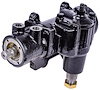
JEGS
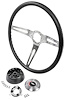
3-Spoke Comfort Grip Steering Wheel Kit Fits Select 1969-1972 Chevrolet Cars [Black Grip]
Part Number: 555-79611
Ships TodayLowest price guarantee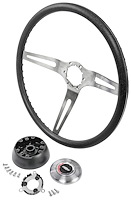
JEGS
3-Spoke Comfort Grip Steering Wheel Kit Fits Select 1969-1972 Chevrolet Cars [Black Grip]
Part Number: 555-79611
Ships TodayLowest Price Guarantee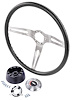
JEGS
3-Spoke Comfort Grip Steering Wheel Kit Fits Select 1967-1969 Chevrolet Cars & 1960-1975 Chevrolet & GMC Trucks [Black Grip]
Part Number: 555-79595
Ships TodayLowest price guarantee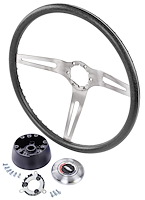
JEGS
3-Spoke Comfort Grip Steering Wheel Kit Fits Select 1967-1969 Chevrolet Cars & 1960-1975 Chevrolet & GMC Trucks [Black Grip]
Part Number: 555-79595
Ships TodayLowest Price Guarantee
JEGS
Power Steering Hose Kit for GM-Style Power Steering Pump to GM Power Steering Box
Part Number: 555-60712
Ships TodayLowest price guarantee
JEGS
Power Steering Hose Kit for GM-Style Power Steering Pump to GM Power Steering Box
Part Number: 555-60712
Ships TodayLowest Price Guarantee
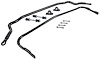
JEGS
Front and Rear Sway Bar Kit Fits Select 1964-1972 Buick, Chevrolet, Oldsmobile, Pontiac Models
Part Number: 555-90908
Ships TodayLowest price guarantee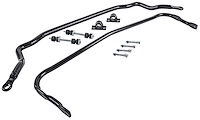
JEGS
Front and Rear Sway Bar Kit Fits Select 1964-1972 Buick, Chevrolet, Oldsmobile, Pontiac Models
Part Number: 555-90908
Ships TodayLowest Price Guarantee
JEGS
Rear Sway Bar Fits Select 1964-1972 GM A-Body Models [1 in. Solid Bar]
Part Number: 555-90906
Ships TodayLowest price guarantee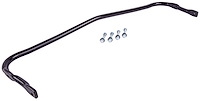
JEGS
Rear Sway Bar Fits Select 1964-1972 GM A-Body Models [1 in. Solid Bar]
Part Number: 555-90906
Ships TodayLowest Price Guarantee
BORGESON
Street & Performance Series Quick Ratio Power Steering Gear Box for 1968-1986 Chevrolet C-10 [12.7:1 Ratio]
Part Number: 153-800132
Ships TodayLowest price guarantee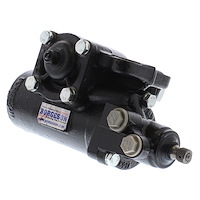
BORGESON
Street & Performance Series Quick Ratio Power Steering Gear Box for 1968-1986 Chevrolet C-10 [12.7:1 Ratio]
Part Number: 153-800132
Ships TodayLowest Price Guarantee
JEGS
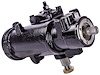
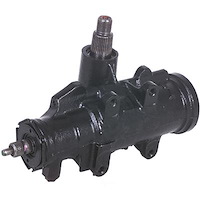
Power Steering Gear Box for 1968-1977 Chevy, GMC, Dodge, International, Plymouth Trucks
Part Number: 555-60753
Ships on 11/18/2026Lowest price guarantee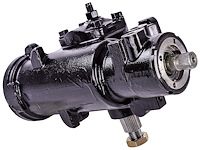
JEGS
Power Steering Gear Box for 1968-1977 Chevy, GMC, Dodge, International, Plymouth Trucks
Part Number: 555-60753
Ships on 11/18/2026Lowest Price Guarantee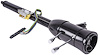
JEGS
Universal Floor Shift Tilt Keyed Steering Column, Black, 2 in. Diameter, 32 in. Length
Part Number: 555-70448
Ships TodayLowest price guarantee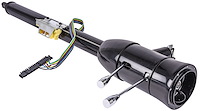
JEGS
Universal Floor Shift Tilt Keyed Steering Column, Black, 2 in. Diameter, 32 in. Length
Part Number: 555-70448
Ships TodayLowest Price Guarantee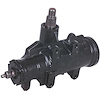
IDIDIT
Retrofit Tilt Floor Shift Steering Column 1967-68 Camaro/Firebird, Chevelle/El Camino/GTO
Part Number: 535-1120680051
Ships TodayLowest price guarantee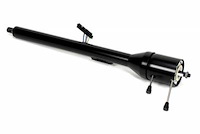
IDIDIT
Retrofit Tilt Floor Shift Steering Column 1967-68 Camaro/Firebird, Chevelle/El Camino/GTO
Part Number: 535-1120680051
Ships TodayLowest Price Guarantee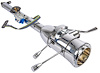
JEGS
Column Shift Keyed Steering Column with Tilt, 2 in. Diameter, 32 in. Length, Chrome
Part Number: 555-70496
Ships TodayLowest price guarantee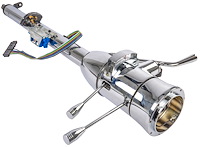
JEGS
Column Shift Keyed Steering Column with Tilt, 2 in. Diameter, 32 in. Length, Chrome
Part Number: 555-70496
Ships TodayLowest Price Guarantee
CROWN AUTOMOTIVE
SK1RHD Steering Kit for Steering Kit 2007-2018 Jeep JK Wrangler w/ RHD, Includes Tie Rod Assembly and Drag Link Assembly
Part Number: 077-SK1RHD
Ships on 11/23/2026Lowest price guarantee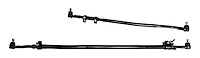
CROWN AUTOMOTIVE
SK1RHD Steering Kit for Steering Kit 2007-2018 Jeep JK Wrangler w/ RHD, Includes Tie Rod Assembly and Drag Link Assembly
Part Number: 077-SK1RHD
Ships on 11/23/2026Lowest Price Guarantee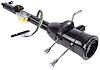
JEGS
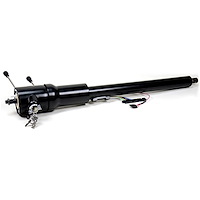
Column Shift Keyed Steering Column with Tilt, 2 in. Diameter, 30 in. Length, Black
Part Number: 555-70456
Ships TodayLowest price guarantee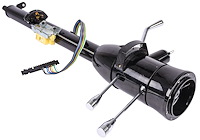
JEGS
Column Shift Keyed Steering Column with Tilt, 2 in. Diameter, 30 in. Length, Black
Part Number: 555-70456
Ships TodayLowest Price Guarantee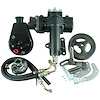
BORGESON
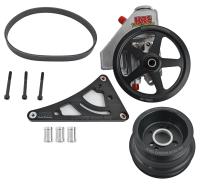
Complete Power Steering Conversion Kit 1963-66 Corvette with Small Block & Short Water Pump
Part Number: 153-999016
Ships on 03/08/2027Lowest price guarantee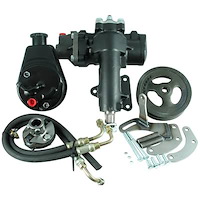
BORGESON
Complete Power Steering Conversion Kit 1963-66 Corvette with Small Block & Short Water Pump
Part Number: 153-999016
Ships on 03/08/2027Lowest Price Guarantee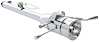
JEGS
Column Shift Steering Column with Tilt, 2 in. Diameter, 32 in. Length, Chrome
Part Number: 555-70478
Ships TodayLowest price guarantee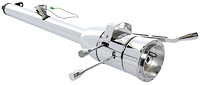
JEGS
Column Shift Steering Column with Tilt, 2 in. Diameter, 32 in. Length, Chrome
Part Number: 555-70478
Ships TodayLowest Price Guarantee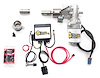
EPAS PERFORMANCE
2001 Electric Power Steering Conversion Kit for 1953-1962 C1 Chevy Corvettes
Part Number: 563-2001
Ships TodayLowest price guarantee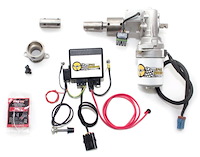
EPAS PERFORMANCE
2001 Electric Power Steering Conversion Kit for 1953-1962 C1 Chevy Corvettes
Part Number: 563-2001
Ships TodayLowest Price GuaranteeFrequently Asked Questions About Steering Components
What Are the Main Parts of a Steering System?
A typical system includes the steering wheel, column, shaft, steering gear, linkage, and knuckles. The gear is either a rack and pinion or a steering box. Linkage such as tie rods and the pitman arm carries the gear's motion to the spindles.
Do I Need an Alignment After Replacing Steering Parts?
Yes, you should check alignment after replacing tie rods, control arms, ball joints, or springs. Each of these parts can change your toe or camber settings. Checking right away helps you catch a change before it affects how the car tracks.
Why Is My Steering Hard to Turn?
Hard steering often traces to low power steering fluid, a worn serpentine or drive belt, or a faulty pump. A worn steering rack or low tire pressure can cause it too. Check fluid level and tire pressure first, since they're the quickest to rule out.
What Causes Steering Play or Pulling to One Side?
Excessive play usually points to worn tie rods, ball joints, or steering gear, or to an alignment issue. Pulling to one side can come from alignment, tire pressure, uneven tire wear, or a stuck brake caliper.
What Does a Steering Stabilizer Do?
A steering stabilizer is a damper mounted to the steering linkage that absorbs sudden jolts before they reach the wheel. It's common on lifted trucks and off-road vehicles running large tires. A stabilizer reduces kickback, but worn linkage still needs to be replaced.