


 Order Status & Returns
 Gift Cards
 Help Center
 1-800-345-4545
Steering Boxes
Steering boxes at JEGS give you direct-fit replacements and quick-ratio upgrades for classic cars, trucks, and Jeeps from top aftermarket brands. You'll find manual steering boxes, power steering gear boxes, power and electric power steering conversion kits, and orbital steering control valves in one place. Use the Add a Vehicle tool to narrow results to your project, then compare ratios, turns lock to lock, and mounting details.
Show More
What Does a Steering Box Do?
A steering box turns steering wheel rotation into the swing of the pitman arm, which moves the steering linkage and turns your front wheels. Most use a recirculating-ball design, where ball bearings roll between a worm gear and ball nut to cut friction.
The ball nut's teeth mesh with the sector shaft, and the pitman arm bolts to the sector shaft's splined end. That gear reduction gives you leverage over a heavy front end. The ratio decides how far your wheels turn per turn of the wheel, so a quick-ratio box needs fewer turns lock to lock.
The box is only one part of the system. Your column connects to it through steering shafts and U-joints, and worn joints or couplers can feel like a bad box. Check your steering box components before you replace a box that may only need service.
Manual vs. Power Steering Gear Box: Which Do You Need?
A manual steering box suits light, simple builds, while a power steering gear box suits heavier vehicles, wide tires, and daily drivers. Here's how the two compare:
- A manual steering box needs no pump, belt, or hoses, so it's lighter and simpler.
- Manual steering takes more effort at parking speeds, especially with wide front tires.
- A power steering gear box uses hydraulic pressure to cut steering effort.
- Power steering needs a pump, reservoir, and hoses, so plan for bracket space.
JEGS offers a 16:1 manual box for 1966-1979 Mopar A, B, C, and E-body cars and a power box for 1964-1976 GM passenger cars. Jeep owners can choose an Omix-ADA manual steering gear box for 1972-86 CJ models.
Going with power? Pair it with matching power steering pumps and reservoirs. If your current setup fights you, read why your steering wheel is hard to turn before you pick a box.
How Do You Choose the Right Replacement Steering Box?
Start by confirming fit with the Add a Vehicle tool, then match the specs of the box you're removing. When you're replacing a steering box, a mismatch in any of these details can stop the install:
- Input shaft spline size and count
- Sector shaft spline and pitman arm fit
- Frame mounting bolt pattern
- Rotation direction for front-steer or rear-steer layouts
- Pressure and return port threads on power boxes
- Steering ratio and turns lock to lock
Ratio is where a replacement can double as an upgrade. The Flaming River Vega-style manual steering box uses a 16:1 quick ratio for street rod builds. JEGS also carries direct-fit manual boxes for 1971-1977 Chevy Vega and 1965-1979 Ford F-Series 2WD trucks. There's a power box for 1968-1976 GM K Series trucks, too.
Not sure the box is the problem? Start with diagnosing common steering issues to rule out worn joints, linkage, or alignment first.
Steering Box vs. Rack and Pinion: Which Is Better for Your Build?
A steering box is the better fit if you want to keep your factory frame, linkage, and mounting points. Rack and pinion suits builds that are already changing the front suspension. Steering box setups are durable and suit trucks, Jeeps, and off-road rigs.
A box also keeps the original look for restorations. A rack and pinion conversion changes more parts. You'll often need new brackets, tie rods, and a different steering shaft.
The payoff is a lighter, more direct feel that suits pro-touring builds. Leaning toward a swap? Browse rack and pinion steering kits and read how to choose a rack and pinion for your steering conversion before you order. Suspension geometry changes often touch other chassis, steering and suspension parts, so plan the full system up front.
Power and Electric Power Steering Conversion Kits
A power steering conversion kit adds hydraulic assist to a vehicle that left the factory with manual steering. Borgeson offers complete kits for 1968-70 Mustang 289/302/351W, 1966-1977 Ford Bronco, and 1958-64 Chevy small block. Borgeson also covers 1962-1972 small-block Mopar LA and 1965-1979 Mopar 383-440 big-block cars, plus 1949-1951 Ford cars.
An electric power steering conversion skips the pump, belt, and hoses entirely. An electric motor provides the assist, which frees up engine bay space. EPAS Performance builds kits for 1967-1968 Camaro, 1950-1954 Chevy Bel Air, 1955-1957 Ford Thunderbird, 1964-1967 GM A-body, and 1958-83 Willys/Jeep CJ5.
For custom builds, the Flaming River FR40200 Microsteer is a universal electric power steering system. Round out your conversion with matching steering and alignment parts, then Shop All Steering Boxes above to find the right fit for your project.

ADD A VEHICLE TO GUARANTEE PARTS FIT
See products that fit

ADD A VEHICLE TO GUARANTEE PARTS FIT
See products that fit
OER
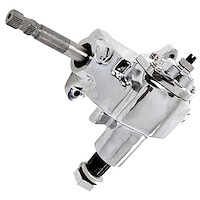
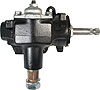
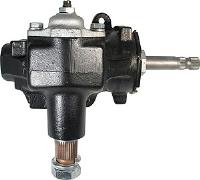
8270108A 1964-67 Mustang, Cougar; Steering Gear Box; Manual; 16:1 Ratio; 1 in. Dia. Integrated Sector Shaft
Part Number: 691-8270108A
 Ships Today
 Lowest price guarantee
OER
8270108A 1964-67 Mustang, Cougar; Steering Gear Box; Manual; 16:1 Ratio; 1 in. Dia. Integrated Sector Shaft
Part Number: 691-8270108A
Ships TodayLowest Price Guarantee
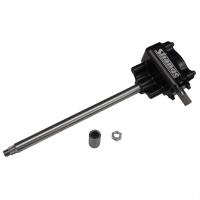
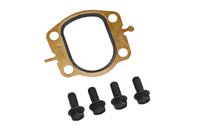
OER
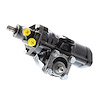
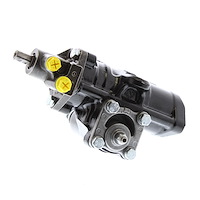
P27539 1988-95 Chevrolet, GMC, Cadillac Truck, Power Steering Gear Box, 3 to 3.5 Turns
Part Number: 691-P27539
Ships TodayLowest price guarantee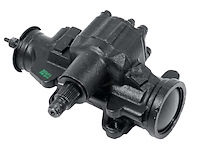
OER
P27539 1988-95 Chevrolet, GMC, Cadillac Truck, Power Steering Gear Box, 3 to 3.5 Turns
Part Number: 691-P27539
Ships TodayLowest Price Guarantee
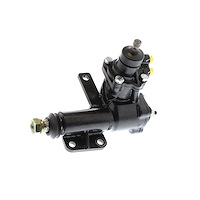
YUKON GEAR
ZSG6507 Power Steering Gear Box Fits Select 1975-1981 Buick, Cadillac, Chevy, GMC, Jeep, Olds, Pontiac Models
Part Number: 807-ZSG6507
Ships TodayLowest price guarantee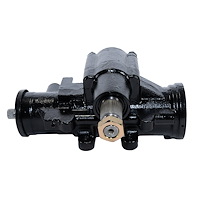
YUKON GEAR
ZSG6507 Power Steering Gear Box Fits Select 1975-1981 Buick, Cadillac, Chevy, GMC, Jeep, Olds, Pontiac Models
Part Number: 807-ZSG6507
Ships TodayLowest Price Guarantee
EPAS PERFORMANCE
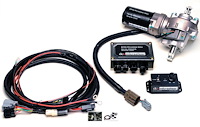
2001 Electric Power Steering Conversion Kit for 1953-1962 C1 Chevy Corvettes
Part Number: 563-2001
Ships TodayLowest price guarantee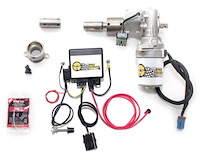
EPAS PERFORMANCE
2001 Electric Power Steering Conversion Kit for 1953-1962 C1 Chevy Corvettes
Part Number: 563-2001
Ships TodayLowest Price Guarantee
YUKON GEAR
ZSG7585 Power Steering Box for 1997-2002 Ram 2500/3500 4X4
Part Number: 807-ZSG7585
Ships TodayLowest price guarantee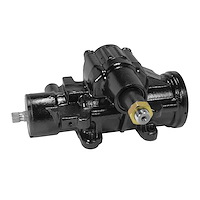
YUKON GEAR
ZSG7585 Power Steering Box for 1997-2002 Ram 2500/3500 4X4
Part Number: 807-ZSG7585
Ships TodayLowest Price Guarantee![8270140A Manual Steering Gear Box for 1969-1982 Chevrolet Corvette [16:1 Ratio, Raw Cast Iron Finish]](https://www.jegs.com/images/mini_100/600/691/691-8270140a.jpg)
OER
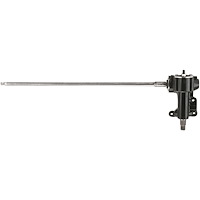
8270140A Manual Steering Gear Box for 1969-1982 Chevrolet Corvette [16:1 Ratio, Raw Cast Iron Finish]
Part Number: 691-8270140A
Ships TodayLowest price guarantee![8270140A Manual Steering Gear Box for 1969-1982 Chevrolet Corvette [16:1 Ratio, Raw Cast Iron Finish]](https://www.jegs.com/images/mini_200/600/691/691-8270140a.jpg)
OER
8270140A Manual Steering Gear Box for 1969-1982 Chevrolet Corvette [16:1 Ratio, Raw Cast Iron Finish]
Part Number: 691-8270140A
Ships TodayLowest Price Guarantee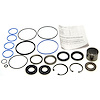
GATES
Steering Gear Complete Rebuild Kit for 1972-1996 Ford, Lincoln and Mercury Models
Part Number: 465-350520
Ships on 10/16/2026Lowest price guarantee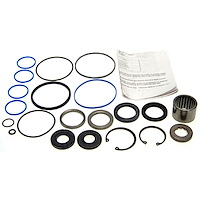
GATES
Steering Gear Complete Rebuild Kit for 1972-1996 Ford, Lincoln and Mercury Models
Part Number: 465-350520
Ships on 10/16/2026Lowest Price Guarantee
OMIX-ADA
This manual steering gear box from Omix-ADA fits 87-95 Jeep Wrangler YJ 97-98 TJ Wrangler and 84-93 XJ Cherokees.
Part Number: 440-18001.03
Ships on 10/13/2026Lowest price guarantee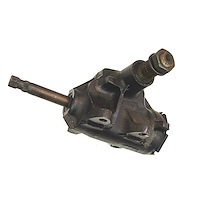
OMIX-ADA
This manual steering gear box from Omix-ADA fits 87-95 Jeep Wrangler YJ 97-98 TJ Wrangler and 84-93 XJ Cherokees.
Part Number: 440-18001.03
Ships on 10/13/2026Lowest Price GuaranteeFrequently Asked Questions About Steering Boxes
What are the signs of a failing steering box?
Common signs include excessive play or looseness in the wheel, hard turning, and inconsistent or uneven response. You may also hear clunking or grinding noises when you turn. Power steering gear boxes can leak fluid, too.
How much does it cost to replace a steering box?
It depends on your application, whether you choose a manual or power box, and whether you buy new or remanufactured. Costs can range from a few hundred to over a thousand dollars. Conversion kits and labor add to the total.
What is a quick-ratio steering box?
A quick-ratio box turns your wheels farther for each turn of the steering wheel. That means fewer turns lock to lock and a more responsive feel. It can also take slightly more effort, especially on a manual box.
Can you convert manual steering to power steering?
Yes. A hydraulic conversion kit adds a power box, pump, and hoses, while an electric system adds assist without a pump. Pick a kit built for your vehicle so the mounting and linkage line up.
Do you need a new pitman arm when you replace a steering box?
Not always. If the new box has the same sector shaft spline as your old one, you can often reuse your pitman arm. If the spline differs, or your arm is worn, plan on a new one.