


 Order Status & Returns
 Gift Cards
 Help Center
 1-800-345-4545
Piston Rings
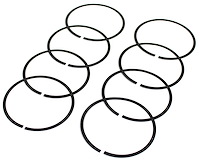
Piston rings seal combustion pressure, control oil, and move heat into the cylinder wall, so the ring set you choose shapes engine power. JEGS carries cast-iron, moly, plasma-moly, gapless, and low-tension ring sets in standard and oversize bores for stock rebuilds, street performance, and race engines. Filter by bore size, ring width, and material to find a piston ring set that fits your pistons and budget.
Show More
Piston Ring Types and Materials
Most piston ring sets use a 3-ring pack: a top compression ring, a second ring, and an oil control ring. The top ring's material decides how much heat, cylinder pressure, and wear the set can handle.
The top ring seals combustion pressure, the second ring backs it up and scrapes oil, and the oil ring meters oil on the wall. Match the ring material to your engine's use:
- Cast-iron piston rings seat quickly and cost less, which suits stock rebuilds and mild street engines.
- Ductile iron rings resist breakage better than gray cast iron in street-performance engines.
- Moly piston rings carry a molybdenum face that holds oil and resists scuffing in street and bracket engines.
- Plasma-moly rings use a plasma-sprayed molybdenum face that holds up to sustained heat and high rpm.
- Gas-nitrided steel rings add strength and wear resistance for nitrous, boost, and dedicated racing.
JEGS stocks Sealed Power cast and moly sets for common rebuilds. Our budget vs performance engine build guide covers where to spend.
How Much Do Piston Rings Cost?
Piston rings cost under $50 for a basic cast set and about $250 to $500 for gapless and premium race sets at JEGS. Price depends on bore size, ring material, and cylinder count.
Current JEGS listings show these typical price points for ring sets:
- Cast iron ring sets start under $50.
- Standard sets, including Clevite MAHLE premium sets, run about $60 to $75.
- Moly ring sets run around $150.
- Gapless and premium race sets, including JE Pistons ring sets, run about $250 to $500.
Prices change, so check the current price on each set before you order. An eight-cylinder set costs more than a four-cylinder set of the same ring type. Keep in mind that piston ring replacement cost goes beyond the parts. A full ring job usually adds machine work, such as honing or boring, plus labor for teardown and reassembly if a shop does it.
How to Choose the Right Piston Ring Set Size
Start with your finished bore diameter, then match ring widths to your piston's ring grooves. A ring set sized for the wrong bore or groove won't seal, whatever the material.
If the block was bored oversize, order rings for that oversize. Check these specs before you buy:
- Bore diameter, measured after machining, such as 4.030 or 4.060 inches
- Oversize, listed as .020, .030, or .035 over the standard bore
- Ring face widths, such as 1/16, 1/16, 3/16 inch or metric 1.5/1.5/3.0mm
- Fit type, either pre-gapped for a standard bore or file-fit for custom end gaps
Ring widths must match the grooves machined into your pistons, so confirm groove specs with the piston maker. Pre-gapped rings work for many stock and street builds. File-fit rings ship with a tight gap, so you can file each ring to the piston ring gap your application needs.
Gapless vs Conventional Piston Rings
Gapless piston rings reduce blow-by by closing the end-gap path a conventional ring leaves open. Most gapless sets use a two-piece second ring, where a thin rail covers the gap in the base ring.
A conventional ring needs an end gap so it can expand with heat. Combustion gas escapes through that gap into the crankcase. Less blow-by keeps more cylinder pressure on the piston, keeps oil cleaner, and helps crankcase vacuum stay consistent.
Total Seal gapless sets are a common pick for race engines, nitrous or boosted builds, and high-compression street engines where sealing matters most. For a stock rebuild or mild street engine, a conventional cast or moly set seals well with a correct gap and proper cylinder finish.
Gapless rings cost more, and they still need correct bore finish and ring groove condition. They can't make up for poor machine work, so budget for proper honing first.
Low-Tension vs Standard-Tension Piston Rings
Low-tension piston rings reduce friction, while standard-tension rings give you more oil control. Your choice depends on bore finish, rpm range, and whether the engine runs high vacuum or boost.
Ring tension is the force a ring puts on the cylinder wall, and the oil ring provides most of it. A low-tension oil ring drags less, which can free up power and reduce wear in high-rpm race engines.
The tradeoff is oil control. High manifold vacuum at idle and on deceleration pulls oil past the rings, so a low-tension set on a street engine can raise oil consumption. Standard-tension rings suit daily drivers, towing engines, and most rebuilds.
Boosted and nitrous engines load the top rings with cylinder pressure, so follow the ring maker's tension and gap recommendations. Shop all pistons and piston rings to match ring tension to your pistons and bore finish.

ADD A VEHICLE TO GUARANTEE PARTS FIT
See products that fit

ADD A VEHICLE TO GUARANTEE PARTS FIT
See products that fit
![Oil Ring Spacers [4.030-4.059 in. Bore]](https://www.jegs.com/images/mini_100/500/532/532-4030-183.jpg)
![Oil Ring Spacers [4.030-4.059 in. Bore]](https://www.jegs.com/images/mini_200/500/532/532-4030-183.jpg)
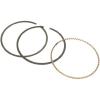
MAHLE MOTORSPORTS PISTONS
Standard Tension Piston Rings Bore: 4.060"/File Fit: 4.065"
Part Number: 644-4065MS-15-1
 Ships Tomorrow
 Lowest price guarantee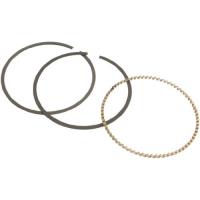
MAHLE MOTORSPORTS PISTONS
Standard Tension Piston Rings Bore: 4.060"/File Fit: 4.065"
Part Number: 644-4065MS-15-1
Ships TomorrowLowest Price Guarantee
MAHLE MOTORSPORTS PISTONS
Standard Tension Piston Ring Set Bore: 4.030"/File Fit: 4.035"
Part Number: 644-4035MS
Ships TomorrowLowest price guarantee
MAHLE MOTORSPORTS PISTONS
Standard Tension Piston Ring Set Bore: 4.030"/File Fit: 4.035"
Part Number: 644-4035MS
Ships TomorrowLowest Price Guarantee
MAHLE MOTORSPORTS PISTONS
Standard Tension Piston Rings Bore: 4.030"/File Fit: 4.035"
Part Number: 644-4035MS-15-1
Ships TomorrowLowest price guarantee
MAHLE MOTORSPORTS PISTONS
Standard Tension Piston Rings Bore: 4.030"/File Fit: 4.035"
Part Number: 644-4035MS-15-1
Ships TomorrowLowest Price Guarantee![Piston Ring Set [Small Block Chevy 350]](https://www.jegs.com/images/mini_100/800/809/809-88894219.jpg)
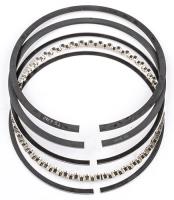
![Piston Ring Set [Small Block Chevy 350]](https://www.jegs.com/images/mini_200/800/809/809-88894219.jpg)
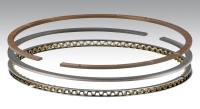
![RS-XP600-4030 Performance 4.030 in. Gas Nitrided Stainless Steel Ring Set [1.2, 1.2, 3 mm]](https://www.jegs.com/images/mini_100/900/915/915-rs-xp6004030.jpg)
DSS RACING
RS-XP600-4030 Performance 4.030 in. Gas Nitrided Stainless Steel Ring Set [1.2, 1.2, 3 mm]
Part Number: 915-RS-XP6004030
Ships TomorrowLowest price guarantee![RS-XP600-4030 Performance 4.030 in. Gas Nitrided Stainless Steel Ring Set [1.2, 1.2, 3 mm]](https://www.jegs.com/images/mini_200/900/915/915-rs-xp6004030.jpg)
DSS RACING
RS-XP600-4030 Performance 4.030 in. Gas Nitrided Stainless Steel Ring Set [1.2, 1.2, 3 mm]
Part Number: 915-RS-XP6004030
Ships TomorrowLowest Price Guarantee
CLEVITE MAHLE
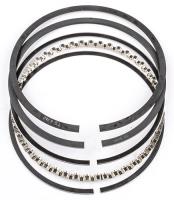
Plasma-Moly Piston Ring Set 1959-1999 Big Block Chevy 427/454ci, Chrysler 426 HEMI/Wedge with 4.310" Bore (+.060")
Part Number: 695-40203CP.060
Ships TomorrowLowest price guarantee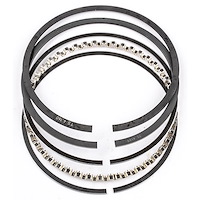
CLEVITE MAHLE
Plasma-Moly Piston Ring Set 1959-1999 Big Block Chevy 427/454ci, Chrysler 426 HEMI/Wedge with 4.310" Bore (+.060")
Part Number: 695-40203CP.060
Ships TomorrowLowest Price Guarantee
CLEVITE MAHLE
Piston Ring Set 1968-1997 Big Block Ford 429/460 with 4.360" Bore (Standard)
Part Number: 695-50843CP
Ships TomorrowLowest price guarantee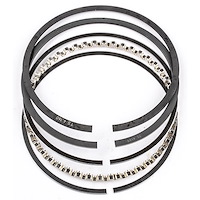
CLEVITE MAHLE
Piston Ring Set 1968-1997 Big Block Ford 429/460 with 4.360" Bore (Standard)
Part Number: 695-50843CP
Ships TomorrowLowest Price Guarantee
CLEVITE MAHLE
Piston Ring Set Small Block Ford 289/302/351/400, Chevy 327/350, Chrysler 360 with 4.020" Bore (+.020")
Part Number: 695-50564CP.020
Ships TomorrowLowest price guarantee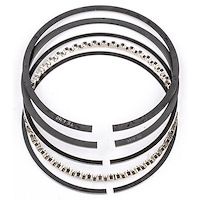
CLEVITE MAHLE
Piston Ring Set Small Block Ford 289/302/351/400, Chevy 327/350, Chrysler 360 with 4.020" Bore (+.020")
Part Number: 695-50564CP.020
Ships TomorrowLowest Price Guarantee
CLEVITE MAHLE
Single Plasma-Moly Piston Ring Set 2010-2016 Chevy/GMC Duramax Diesel V8 6.6L with 4.055" Bore (Standard)
Part Number: 695-S42160
Ships TomorrowLowest price guarantee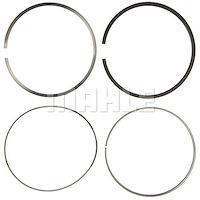
CLEVITE MAHLE
Single Plasma-Moly Piston Ring Set 2010-2016 Chevy/GMC Duramax Diesel V8 6.6L with 4.055" Bore (Standard)
Part Number: 695-S42160
Ships TomorrowLowest Price Guarantee
CLEVITE MAHLE
Plasma-Moly Piston Ring Set 1996-2009 Small Block Chevy Vortec 350 (5.7L), LS V8 6.0L (LS2) with 4.000" Bore (Standard)
Part Number: 695-41858CP
Ships TomorrowLowest price guarantee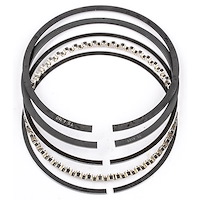
CLEVITE MAHLE
Plasma-Moly Piston Ring Set 1996-2009 Small Block Chevy Vortec 350 (5.7L), LS V8 6.0L (LS2) with 4.000" Bore (Standard)
Part Number: 695-41858CP
Ships TomorrowLowest Price Guarantee![M40018-030 Piston Ring Set for 1993-2003 Dodge 5.9L [+0.030 in. Oversize]](https://www.jegs.com/images/mini_100/400/416/416-m40018-030.jpg)
ENGINETECH
M40018-030 Piston Ring Set for 1993-2003 Dodge 5.9L [+0.030 in. Oversize]
Part Number: 416-M40018-030
Ships TomorrowLowest price guarantee![M40018-030 Piston Ring Set for 1993-2003 Dodge 5.9L [+0.030 in. Oversize]](https://www.jegs.com/images/mini_200/400/416/416-m40018-030.jpg)
ENGINETECH
M40018-030 Piston Ring Set for 1993-2003 Dodge 5.9L [+0.030 in. Oversize]
Part Number: 416-M40018-030
Ships TomorrowLowest Price Guarantee
![PCE306.1036 Plasma Moly Piston Ring Set [4.000 in. Bore - 1.5 - 1.5 - 3mm, Zero Gap]](https://www.jegs.com/images/mini_100/700/746/746-pce306.1036.jpg)
SPEEDMASTER
PCE306.1036 Plasma Moly Piston Ring Set [4.000 in. Bore - 1.5 - 1.5 - 3mm, Zero Gap]
Part Number: 746-PCE306.1036
Ships on 10/13/2026Lowest price guarantee![PCE306.1036 Plasma Moly Piston Ring Set [4.000 in. Bore - 1.5 - 1.5 - 3mm, Zero Gap]](https://www.jegs.com/images/mini_200/700/746/746-pce306.1036.jpg)
SPEEDMASTER
PCE306.1036 Plasma Moly Piston Ring Set [4.000 in. Bore - 1.5 - 1.5 - 3mm, Zero Gap]
Part Number: 746-PCE306.1036
Ships on 10/13/2026Lowest Price Guarantee
SPEEDMASTER
4.020 Bore - 1/16 - 1/16 - 3/16 Plasma Moly Piston Ring Set - Zero Gap
Part Number: 746-PCE306.1032
Ships on 10/13/2026Lowest price guarantee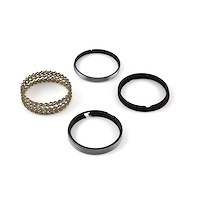
SPEEDMASTER
4.020 Bore - 1/16 - 1/16 - 3/16 Plasma Moly Piston Ring Set - Zero Gap
Part Number: 746-PCE306.1032
Ships on 10/13/2026Lowest Price Guarantee
SPEEDMASTER
4.030 Bore - 1/16 - 1/16 - 3/16 Plasma Moly Piston Ring Set - Zero Gap
Part Number: 746-PCE306.1033
Ships on 10/13/2026Lowest price guarantee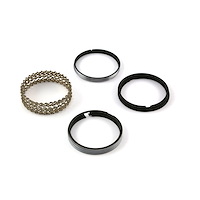
SPEEDMASTER
4.030 Bore - 1/16 - 1/16 - 3/16 Plasma Moly Piston Ring Set - Zero Gap
Part Number: 746-PCE306.1033
Ships on 10/13/2026Lowest Price Guarantee


Frequently Asked Questions About Piston Rings
What Are the Signs of Bad Piston Rings?
Common signs include blue exhaust smoke, rising oil consumption, low or uneven compression, and excess blow-by from the crankcase. Fouled spark plugs and lost power can also point to worn rings. A compression test followed by a leak-down test helps you confirm whether rings or valves are the cause.
Can You Drive With Bad Piston Rings?
You can drive short distances with worn rings, but the damage adds up. Burning oil fouls plugs and can harm the catalytic converter, and blow-by contaminates the engine oil and speeds bearing wear. Plan a rebuild before low compression leads to bigger repairs.
How Do You Set Piston Ring End Gap?
Square each ring in its bore, measure the gap with a feeler gauge, and file one end until it matches the ring maker's spec. Required gap depends on bore size, ring position, and use, and nitrous or boosted engines need more top ring gap. A ring filer and the right engine rebuild tools make the job accurate and repeatable.
Should You Hone the Cylinders When Replacing Piston Rings?
Yes, new rings need a fresh crosshatch to seat, and glazed cylinders can keep them from sealing. Measure each bore for taper and out-of-round first, since worn cylinders may need boring oversize. Match the hone finish to the ring maker's recommendation for your ring face material.
Do You Need New Pistons When Replacing Piston Rings?
Not always, since in-spec pistons with clean, undamaged ring grooves can be reused with new rings. If the block is bored oversize, you'll need matching oversize pistons, and engine rebuild kits bundle pistons, rings, bearings, and gaskets in one order. You'll find the rest of your build parts in engines and components.