


 Order Status & Returns
 Gift Cards
 Help Center
 1-800-345-4545
Quarter Panels
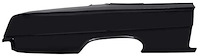
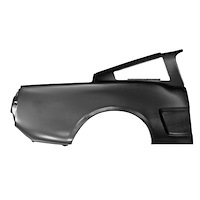
Quarter panels at JEGS cover rust repair, restoration, and racing, with full quarter panels, skins, and patch sections for classic cars and trucks. You can choose steel panels for factory-style repairs or fiberglass race panels for circle track Late Model and Sportsman cars. Filter by position, material, body type, and brand, then add your vehicle to see replacement quarter panels that fit.
Show More
What Is a Car Quarter Panel and Where Does It Sit?
A car quarter panel is the rear outer body panel that runs from the door jamb to the trunk and wraps the rear wheel arch. It meets the tail pan at the back and, on many cars, the roof at the top. Because it ties into so much surrounding metal, quarter panel rust or damage rarely stays in one spot.
Full quarter panels are sold with or without the upper section, so check where your repair ends before you order. If the damage reaches past the quarter itself, you can shop these related categories:
- sheet metal and body panels for complete replacement body sheet metal
- roofs and sail panels for rust at the upper quarter or roof seam
- tail light panels for the area where the quarter meets the rear of the car
- cab corners and rocker panels for rust that spreads below the doors
Full Quarter Panel vs Quarter Panel Skin: Which Do You Need?
A full quarter panel replaces the entire outer quarter, while a quarter panel skin replaces only the outer surface below the body line. Full quarters include the top section up to the trunk and door jamb, and some versions include the sail panel. Skins stop below the body line and come with partial flanges.
The tradeoff comes down to removal versus finishing. A full quarter takes more removal labor, but it needs less welding and finishing afterward. A skin takes less removal, but you'll spend more time welding, blending, and finishing the seam.
If the inner structure is solid and the damage sits low, a skin can make sense. If rust or damage reaches the upper quarter, a full panel is often the cleaner path. Options in this category come from brands including Auto Metal Direct and Golden Star. The Part Type filter lets you narrow results to full panels or skins. For cost, installation, and prep details, read our body panel replacement guide.
Quarter Panel Patch Panels and Partial Sections for Rust Repair
If rust is limited to one area, a quarter panel patch panel or partial section lets you replace only the damaged metal. It's a smaller job than a full quarter or skin, and you keep the original upper quarter in place.
This category includes several partial sections:
- Lower front quarter panel sections for the area behind the door
- Lower rear quarter panel sections for the area behind the rear wheel
- Tail pan to quarter panel sections for the rear corner of the body
- Wheel arch patches for the rear wheel opening
Before you buy, measure how far the rust extends. If it runs past the edges of a patch, step up to a larger section, a skin, or a full quarter. For smaller repairs on other parts of the body, browse our full range of patch panels. For more project help, see our restoration tech articles.
Steel vs Fiberglass Quarter Panels, EDP Coating, and Gauge
Choose steel quarter panels for restoration and street repairs, and fiberglass quarter panels for circle track racing. Steel panels weld into the original body, which suits restoration and rust repair work. Fiberglass race quarter panels in this category are built for Late Model and Sportsman cars.
Steel panels vary by gauge and coating. JEGS full quarter panels use 18-gauge steel with factory contours and mounting points. JEGS rear quarter patch panels use 20-gauge (0.036 in.) steel. Key Parts panels come with a black EDP coating and direct OE fitment.
EDP, or electro-deposit primer, is a shipping and storage protectant. It isn't a finish coat, so you'll need to prep and prime the panel before paint. Plan your body and paint schedule around that step.
Use the Material filter to separate steel from fiberglass, and the Finish filter to compare coatings. The Brand filter helps you compare OE-style steel options from makers such as OER.
How to Choose the Right Replacement Quarter Panels
The right replacement quarter panels depend on your year, make, model, side, and body style. Start with the Add a Vehicle tool and enter your year, make, and model or your VIN to narrow results to parts that fit.
Then confirm these details before you order:
- Side, since panels are sold as left (driver) or right (passenger)
- Body style, using the Body Type filter to match your car or truck
- Position, using the Position filter to pick front, rear, or lower sections
- Coverage, since some panels include the upper section and others stop below the body line
Vehicle coverage includes the 1964-1969 Chevelle, 1968-1972 El Camino, 1968-1972 Nova, 1970 Mustang Fastback, and 1966-1977 Bronco. Truck owners will find 1979-1987 pickup panels, truck rear fenders, and 1976-1986 CJ7 and 1987-1995 Wrangler YJ side panels. For truck-specific advice, read our truck body panel guide, then shop quarter panels for your build below.

ADD A VEHICLE TO GUARANTEE PARTS FIT
See products that fit

ADD A VEHICLE TO GUARANTEE PARTS FIT
See products that fit
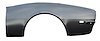
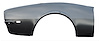
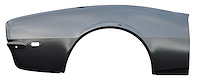
![X700-3568-VL Full OE-Style Quarter Panel for 1968 Chevy Camaro Convertible [Left/Driver Side]](https://www.jegs.com/images/mini_100/100/106/106-x700-3568-vl.jpg)
AUTO METAL DIRECT
X700-3568-VL Full OE-Style Quarter Panel for 1968 Chevy Camaro Convertible [Left/Driver Side]
Part Number: 106-X700-3568-VL
 Ships on 10/27/2026Free shipping
 Lowest price guarantee
![X700-3568-VL Full OE-Style Quarter Panel for 1968 Chevy Camaro Convertible [Left/Driver Side]](https://www.jegs.com/images/mini_200/100/106/106-x700-3568-vl.jpg)
AUTO METAL DIRECT
X700-3568-VL Full OE-Style Quarter Panel for 1968 Chevy Camaro Convertible [Left/Driver Side]
Part Number: 106-X700-3568-VL
Ships on 10/27/2026Free shippingLowest Price Guarantee
AUTO METAL DIRECT
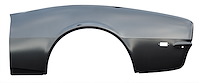
Full OE-Style Quarter Panel 1969 Camaro Convertible
Part Number: 106-X700-3569-VR
Ships on 12/23/2026Free shippingLowest price guarantee
AUTO METAL DIRECT
Full OE-Style Quarter Panel 1969 Camaro Convertible
Part Number: 106-X700-3569-VR
Ships on 12/23/2026Free shippingLowest Price Guarantee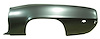
AUTO METAL DIRECT
Full OE-Style Quarter Panel 1969 Firebird Convertible
Part Number: 106-X700-5569-VL
Ships on 10/19/2026Free shippingLowest price guarantee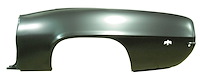
AUTO METAL DIRECT
Full OE-Style Quarter Panel 1969 Firebird Convertible
Part Number: 106-X700-5569-VL
Ships on 10/19/2026Free shippingLowest Price Guarantee![X700-3568-VR Full OE-Style Quarter Panel for 1968 Chevy Camaro Convertible [Right/Passenger Side]](https://www.jegs.com/images/mini_100/100/106/106-x700-3568-vr.jpg)
AUTO METAL DIRECT
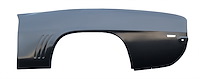
X700-3568-VR Full OE-Style Quarter Panel for 1968 Chevy Camaro Convertible [Right/Passenger Side]
Part Number: 106-X700-3568-VR
Ships on 10/28/2026Free shippingLowest price guarantee![X700-3568-VR Full OE-Style Quarter Panel for 1968 Chevy Camaro Convertible [Right/Passenger Side]](https://www.jegs.com/images/mini_200/100/106/106-x700-3568-vr.jpg)
AUTO METAL DIRECT
X700-3568-VR Full OE-Style Quarter Panel for 1968 Chevy Camaro Convertible [Right/Passenger Side]
Part Number: 106-X700-3568-VR
Ships on 10/28/2026Free shippingLowest Price Guarantee
GOLDEN STAR
QP05-68LOE Quarter Panel 1968-1969 Pontiac GTO OE Style Coupe Left/Driver Side
Part Number: 189-QP05-68LOE
Ships TodayLowest price guarantee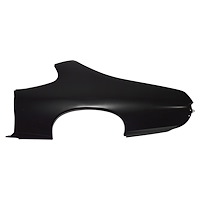
GOLDEN STAR
QP05-68LOE Quarter Panel 1968-1969 Pontiac GTO OE Style Coupe Left/Driver Side
Part Number: 189-QP05-68LOE
Ships TodayLowest Price Guarantee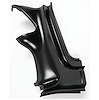

GOLDEN STAR
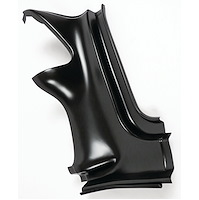
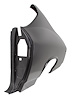
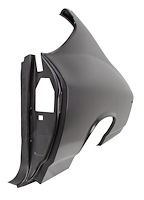
QP01-74RL Rear Lower Quarter Panel 1974-1981 Chevy Camaro- Left/Driver Side
Part Number: 189-QP01-74RL
Ships TodayLowest price guarantee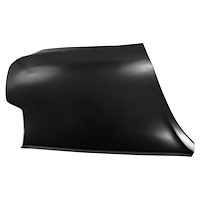
GOLDEN STAR
QP01-74RL Rear Lower Quarter Panel 1974-1981 Chevy Camaro- Left/Driver Side
Part Number: 189-QP01-74RL
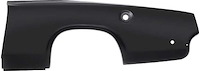
Ships TodayLowest Price Guarantee![9815409 Rear Quarter Panel for 1970-1972 Buick Skylark, GS [Left/Driver Side]](https://www.jegs.com/images/mini_100/600/691/691-9815409.jpg)
![9815409 Rear Quarter Panel for 1970-1972 Buick Skylark, GS [Left/Driver Side]](https://www.jegs.com/images/mini_200/600/691/691-9815409.jpg)

![4409685 Quarter Panel for 1962-1965 Chevy Chevy II Nova [2-Door, Hardtop, Left/Driver Side]](https://www.jegs.com/images/mini_100/600/691/691-4409685.jpg)
OER
4409685 Quarter Panel for 1962-1965 Chevy Chevy II Nova [2-Door, Hardtop, Left/Driver Side]
Part Number: 691-4409685
Ships TodayLowest price guarantee![4409685 Quarter Panel for 1962-1965 Chevy Chevy II Nova [2-Door, Hardtop, Left/Driver Side]](https://www.jegs.com/images/mini_200/600/691/691-4409685.jpg)
OER
4409685 Quarter Panel for 1962-1965 Chevy Chevy II Nova [2-Door, Hardtop, Left/Driver Side]
Part Number: 691-4409685
Ships TodayLowest Price Guarantee
KEY PARTS
1578-122 Front Lower Quarter Panel Section for 2008-2014 Dodge Caravan/Chrysler Town & Country, 2009-2012 Volkswagen Routan
Part Number: 576-1578-122
Ships TodayLowest price guarantee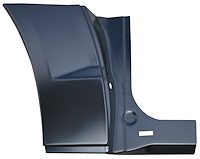
KEY PARTS
1578-122 Front Lower Quarter Panel Section for 2008-2014 Dodge Caravan/Chrysler Town & Country, 2009-2012 Volkswagen Routan
Part Number: 576-1578-122
Ships TodayLowest Price Guarantee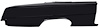
![Quarter Panel Skin for 1982-1992 Chevrolet Camaro [Right/Passenger Side]](https://www.jegs.com/images/mini_100/500/555/555-95372.jpg)
JEGS
Quarter Panel Skin for 1982-1992 Chevrolet Camaro [Right/Passenger Side]
Part Number: 555-95372
Ships TomorrowLowest price guarantee![Quarter Panel Skin for 1982-1992 Chevrolet Camaro [Right/Passenger Side]](https://www.jegs.com/images/mini_200/500/555/555-95372.jpg)
JEGS
Quarter Panel Skin for 1982-1992 Chevrolet Camaro [Right/Passenger Side]
Part Number: 555-95372
Ships TomorrowLowest Price Guarantee![Quarter Panel Skin for 1967-1968 Chevy Camaro Coupe & Convertible, w/o Marker Light Cut Out [Right/Passenger Side]](https://www.jegs.com/images/mini_100/500/555/555-95483.jpg)
JEGS
Quarter Panel Skin for 1967-1968 Chevy Camaro Coupe & Convertible, w/o Marker Light Cut Out [Right/Passenger Side]
Part Number: 555-95483
Ships TomorrowLowest price guarantee![Quarter Panel Skin for 1967-1968 Chevy Camaro Coupe & Convertible, w/o Marker Light Cut Out [Right/Passenger Side]](https://www.jegs.com/images/mini_200/500/555/555-95483.jpg)
JEGS
Quarter Panel Skin for 1967-1968 Chevy Camaro Coupe & Convertible, w/o Marker Light Cut Out [Right/Passenger Side]
Part Number: 555-95483
Ships TomorrowLowest Price Guarantee![Quarter Panel Skin for 1967-1968 Chevy Camaro Coupe & Convertible, w/o Marker Light Cut Out [Left/Driver Side]](https://www.jegs.com/images/mini_100/500/555/555-95482.jpg)
JEGS
Quarter Panel Skin for 1967-1968 Chevy Camaro Coupe & Convertible, w/o Marker Light Cut Out [Left/Driver Side]
Part Number: 555-95482
Ships TomorrowLowest price guarantee![Quarter Panel Skin for 1967-1968 Chevy Camaro Coupe & Convertible, w/o Marker Light Cut Out [Left/Driver Side]](https://www.jegs.com/images/mini_200/500/555/555-95482.jpg)
JEGS
Quarter Panel Skin for 1967-1968 Chevy Camaro Coupe & Convertible, w/o Marker Light Cut Out [Left/Driver Side]
Part Number: 555-95482
Ships TomorrowLowest Price Guarantee
AUTO METAL DIRECT
700-3466-L Full OE-Style Quarter Panel 1966-67 Chevrolet Chevelle Coupe
Part Number: 106-700-3466-L
Ships TodayLowest price guarantee
AUTO METAL DIRECT
700-3466-L Full OE-Style Quarter Panel 1966-67 Chevrolet Chevelle Coupe
Part Number: 106-700-3466-L
Ships TodayLowest Price Guarantee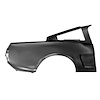
Frequently Asked Questions About Quarter Panels
Is a quarter panel structural?
A quarter panel is an outer body panel, but it's welded to surrounding metal at the door jamb, trunk area, and tail pan. That's why replacing one means cutting and welding. Check the inner structure for rust before you choose a skin or patch, since those pieces rely on solid metal behind them.
What is the difference between a quarter panel and a rear fender?
On pickups, the rear outer panel is often sold as a "rear fender," which is why this category lists 1979-1987 Chevy/GMC pickup rear fenders. Front fenders are sometimes called front quarter panels, too. On cars, the rear quarter is welded to the body rather than bolted on.
What tools do you need to replace a quarter panel?
You'll need spot weld drill bits or a spot weld cutter, a cutoff tool, a MIG welder, clamps, and body hammers and dollies. The drill bits or cutter release the old panel at the spot welds, and the cutoff tool handles the seams. Clamps hold the new panel in place for tack welds, and the hammers and dollies help you shape flanges and edges.
Should you leave the doors on when replacing a quarter panel?
If your door gaps are good, leave the door and trunk lid on the car. They give you alignment references while you fit the new quarter panel. Test-fit the panel and check the gaps before you weld anything.
Should you replace both quarter panels at the same time?
If both sides are rusted, replacing both quarter panels at once helps the body lines and contours match side to side. If only one side is damaged, replacing that side alone is common. Look over the opposite quarter before you order so you know which job you're planning.