


 Order Status & Returns
 Gift Cards
 Help Center
 1-800-345-4545
Clutch Forks, Pivot Balls, & Adjustable Linkage Rods
Clutch fork parts in this category include release forks, pivot balls and ball studs, adjustable linkage rods, fork boots, and Z-bar brackets for GM, Ford, and Jeep builds. You'll find stock-style parts for factory-correct restorations alongside heavy-duty forks and adjustable pivot balls for street performance clutches. Filter by part type, brand, or material, then add your vehicle to see parts that fit.
Show More
How Does a Clutch Fork Work?
A clutch fork is a lever that turns pedal movement into the push that releases your clutch. One end takes input from a rod or slave cylinder, and the other presses the release bearing into the pressure plate fingers.
The fork rocks on a pivot ball, or ball stud, mounted in the bellhousing. That ball acts as the fulcrum, so its height and condition set the fork's geometry and how far the bearing travels.
The fork slides the release bearing forward on the bearing retainer. Worn clutch release bearings can bind or chatter, so inspect the bearing when you replace a clutch release fork.
Mechanical systems drive the fork with a rod, while hydraulic setups use a slave cylinder. If you're converting, match the fork to your clutch slave cylinders and master cylinders so travel lines up. Upgrading the clutch? Read how to choose a performance clutch before ordering a fork.
What Parts Are in This Category?
This category covers the parts that connect your clutch pedal to the release bearing on manual transmission builds:
- Clutch forks and release forks in stock-style and heavy-duty designs
- Pivot balls and ball studs, including adjustable pivot balls
- Adjustable clutch rods and linkage rods that set pedal free play
- Fork boots and covers that seal the bellhousing fork opening
- Z-bar brackets, return springs, fork springs, and pivot repair kits
Speedmaster offers an adjustable clutch fork pivot ball that lets you fine-tune fork height on Chevy, Pontiac, and Olds applications. It's a practical fix when a new clutch or bellhousing changes your release geometry.
Crown Automotive covers Jeep with clutch forks, fork springs, fulcrums, adjusters, and brackets. Its 3167067K pivot repair kit fits 1972-1990 Jeep models with 4.2L or 5.0L engines. For parts on the other end of the linkage, shop clutch pedal components.
How Do You Choose the Right Clutch Fork and Pivot Ball?
Start with your year, make, model, transmission, and bellhousing, since fork length and ball height vary. Use the Add a Vehicle tool to narrow results to parts that fit.
For restorations, Auto Metal Direct offers a 1968-72 Nova clutch fork, a 1962-1974 Nova clutch pivot stud, and a 1970-81 frameside clutch ball stud. Heavy-duty options include a clutch fork for 1964-1973 small block Ford and a release fork for 1973-1986 GM.
Dorman Products lists a clutch fork pivot stud for 1999-2010 Ford. Its 14556 ball stud has a 13/16-16 thread and 1.50 in. length for Buick, Chevrolet, GMC, Oldsmobile, and Pontiac.
Match the clutch pivot ball to the fork as well as the vehicle. A mismatched ball height can cause clutch drag or keep the bearing riding the pressure plate. Since the pivot ball sits inside the bellhousing, plan for transmission removal and review how to install a new transmission.
How Do Adjustable Clutch Rods and Z-Bar Linkage Work?
An adjustable clutch rod sets the free play between your pedal and the release bearing on mechanical linkage. The clutch Z-bar pivots between the engine and frame, turning pedal motion into push on the clutch linkage rod.
Too little free play keeps the bearing riding the pressure plate. Too much can leave the clutch dragging when you shift. A threaded clutch rod lets you dial it in after a clutch swap.
Worn Z-bar bushings or a bent bracket add slop that rod adjustment can't fix. Replacement parts include a 1967 F-body clutch Z-bar frame bracket and a 1970-72 clutch return spring. You can also shop complete clutch bellcranks.
Hydraulic systems skip the rod and Z-bar. A slave cylinder pushes the fork and self-adjusts as the clutch wears, but the fluid still needs service. See how to check and change hydraulic clutch fluid.
Do You Need a Clutch Fork Boot for Your Bellhousing?
Yes, if your bellhousing has an open fork window. A clutch fork boot seals the opening where the fork exits, keeping dirt, water, and road debris away from the release bearing and pivot ball. Without one, debris can reach the pivot and speed wear on the fork socket.
Lakewood makes fork boots and covers matched to its cast-aluminum bellhousings. The LK4000 fits GM LS Gen III/IV, small block Chevy, and big block Chevy. The LK7000 fits Chrysler small and big block and Gen III Hemi, and the LK8000/LK9000 fit small block Ford.
Order the boot by bellhousing part number, since one engine family can use more than one bellhousing. Replace a torn or missing boot whenever the bellhousing is off, since it's a small part that protects the parts you just installed.
Ready to finish the job? Shop all clutches and clutch kits to complete your drivetrain.

ADD A VEHICLE TO GUARANTEE PARTS FIT
See products that fit

ADD A VEHICLE TO GUARANTEE PARTS FIT
See products that fit

JEGS
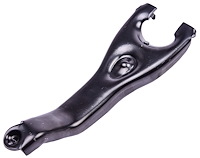
Heavy-Duty Ford Clutch Fork Fits most: 1964-1973 Small Block Ford
Part Number: 555-601150
 Ships Tomorrow
 Lowest price guarantee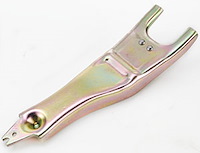
JEGS
Heavy-Duty Ford Clutch Fork Fits most: 1964-1973 Small Block Ford
Part Number: 555-601150
Ships TomorrowLowest Price Guarantee
JEGS
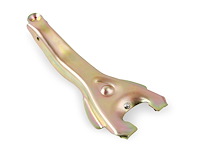
Heavy-Duty GM Clutch Fork for Select 1972-1984 GM Cars and Trucks
Part Number: 555-60101
Ships TomorrowLowest price guarantee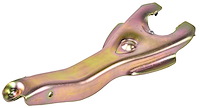
JEGS
Heavy-Duty GM Clutch Fork for Select 1972-1984 GM Cars and Trucks
Part Number: 555-60101
Ships TomorrowLowest Price Guarantee
JEGS
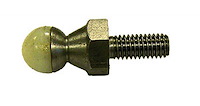
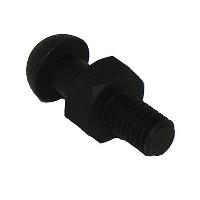
Adjustable Clutch Fork Pivot Ball Fits Most GM Applications (Buick, Chevrolet, Oldsmobile and Pontiac)
Part Number: 555-601023
Ships TomorrowLowest price guarantee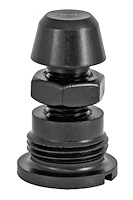
JEGS
Adjustable Clutch Fork Pivot Ball Fits Most GM Applications (Buick, Chevrolet, Oldsmobile and Pontiac)
Part Number: 555-601023
Ships TomorrowLowest Price Guarantee
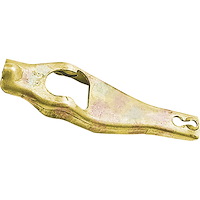

JEGS
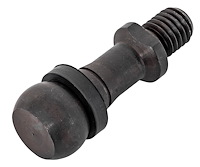
Clutch Fork Pivot Ball Stud Fits Select 1953-1990 Buick, Chevrolet, GMC, Oldsmobile, Pontiac Cars and Trucks w/Manual Trans.
Part Number: 555-601021
Ships TomorrowLowest price guarantee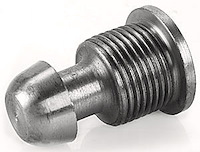
JEGS
Clutch Fork Pivot Ball Stud Fits Select 1953-1990 Buick, Chevrolet, GMC, Oldsmobile, Pontiac Cars and Trucks w/Manual Trans.
Part Number: 555-601021
Ships TomorrowLowest Price Guarantee
JEGS
GM Clutch Z-Bar Pivot Ball Bracket for Chevrolet Corvette (Long Style)
Part Number: 555-601025
Ships TomorrowLowest price guarantee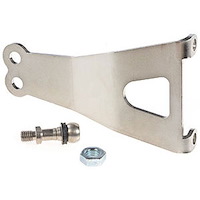
JEGS
GM Clutch Z-Bar Pivot Ball Bracket for Chevrolet Corvette (Long Style)
Part Number: 555-601025
Ships TomorrowLowest Price Guarantee![GM Clutch Pivot Ball Bracket for Cars and Trucks [Short Style]](https://www.jegs.com/images/mini_100/500/555/555-601026.jpg)
JEGS
GM Clutch Pivot Ball Bracket for Cars and Trucks [Short Style]
Part Number: 555-601026
Ships TomorrowLowest price guarantee![GM Clutch Pivot Ball Bracket for Cars and Trucks [Short Style]](https://www.jegs.com/images/mini_200/500/555/555-601026.jpg)
JEGS
GM Clutch Pivot Ball Bracket for Cars and Trucks [Short Style]
Part Number: 555-601026
Ships TomorrowLowest Price Guarantee
LAKEWOOD
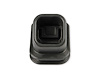
Clutch Fork Boot Fits Lakewood Cast-Aluminum Bellhousing 620-LK4000, GM LS Gen III/IV, Small Block Chevy, and Big Block Chevy
Part Number: 620-50351
Ships TomorrowLowest price guarantee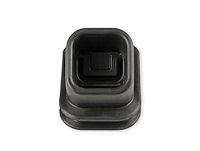
LAKEWOOD
Clutch Fork Boot Fits Lakewood Cast-Aluminum Bellhousing 620-LK4000, GM LS Gen III/IV, Small Block Chevy, and Big Block Chevy
Part Number: 620-50351
Ships TomorrowLowest Price Guarantee
LAKEWOOD
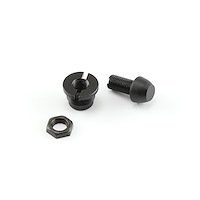
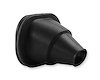
Clutch Fork Boot Fits Lakewood Cast-Aluminum Bellhousing LK7000, Small Block Mopar/Big Block Mopar/Gen III Hemi
Part Number: 620-50357
Ships TomorrowLowest price guarantee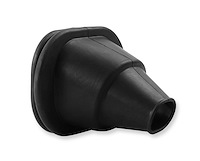
LAKEWOOD
Clutch Fork Boot Fits Lakewood Cast-Aluminum Bellhousing LK7000, Small Block Mopar/Big Block Mopar/Gen III Hemi
Part Number: 620-50357
Ships TomorrowLowest Price Guarantee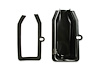
LAKEWOOD
Clutch Fork Cover For Small Block Ford - Fits Lakewood Cast-Aluminum Bellhousing 620-LK8000 or 620-LK9000
Part Number: 620-50367
Ships TomorrowLowest price guarantee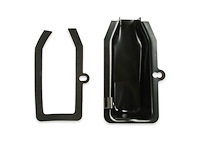
LAKEWOOD
Clutch Fork Cover For Small Block Ford - Fits Lakewood Cast-Aluminum Bellhousing 620-LK8000 or 620-LK9000
Part Number: 620-50367
Ships TomorrowLowest Price Guarantee
GOODMARK
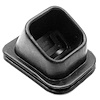
GMK40309516413 Clutch Fork Boot 1968-1979 X-Body 1967-1981 Camaro, Pontiac Firebird 64-77 Gm A-Body 65-73 'B
Part Number: 828-40309516413
Ships on 10/30/2026Lowest price guarantee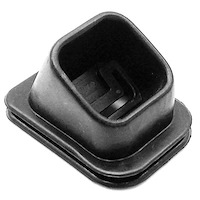
GOODMARK
GMK40309516413 Clutch Fork Boot 1968-1979 X-Body 1967-1981 Camaro, Pontiac Firebird 64-77 Gm A-Body 65-73 'B
Part Number: 828-40309516413
Ships on 10/30/2026Lowest Price Guarantee

![Clutch Fork for Chevy V8 Applications [Cast Iron, Natural]](https://www.jegs.com/images/mini_100/0/050/050-716176.jpg)
![Clutch Fork for Chevy V8 Applications [Cast Iron, Natural]](https://www.jegs.com/images/mini_200/0/050/050-716176.jpg)
![Clutch Release Fork for 1968-1969 Ford Mustang 289-351 [Clip-On, Steel]](https://www.jegs.com/images/mini_100/200/204/204-c8oz-7515-a.jpg)
SCOTT DRAKE
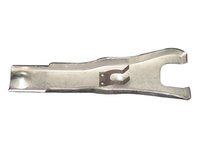
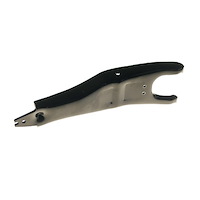
Clutch Release Fork for 1968-1969 Ford Mustang 289-351 [Clip-On, Steel]
Part Number: 204-C8OZ-7515-A
Ships on 11/09/2026Lowest price guarantee![Clutch Release Fork for 1968-1969 Ford Mustang 289-351 [Clip-On, Steel]](https://www.jegs.com/images/mini_200/200/204/204-c8oz-7515-a.jpg)
SCOTT DRAKE
Clutch Release Fork for 1968-1969 Ford Mustang 289-351 [Clip-On, Steel]
Part Number: 204-C8OZ-7515-A
Ships on 11/09/2026Lowest Price Guarantee
Frequently Asked Questions About Clutch Forks
What are the symptoms of a bad clutch fork?
Common signs include a clutch that won't fully release, grinding when you shift, and a stiff or inconsistent pedal. You may also hear clicking or squeaking from the bellhousing. Inspect the pivot ball and release bearing at the same time, since wear on one often shows up on the others.
Can you replace a clutch fork without removing the transmission?
On most bellhousing-mounted forks, no. The fork sits inside the bellhousing on the pivot ball, so the transmission has to come out or be separated from the bellhousing. Check your service manual for the exact procedure on your vehicle.
Should you lubricate a clutch fork pivot ball?
Yes, a thin film of high-temperature grease on the pivot ball and fork socket helps prevent squeaks and wear. Keep grease off the clutch disc and pressure plate, and don't overapply it, since excess grease collects debris. Follow your service manual or the part instructions.
Do you need to replace the release bearing when you replace the clutch fork?
It's a smart move since you've already done the labor to reach both parts. A worn bearing can damage a new fork's contact points, and a bad fork can load the bearing unevenly. Replacing the bearing, fork, and pivot ball together saves you from repeating the job.
How do you know if you need an adjustable clutch rod?
You likely need one if your mechanical linkage has no free-play adjustment or you've changed the clutch, engine, or bellhousing. Signs of wrong rod length include a clutch that drags, slips, or engages at the very top or bottom of pedal travel. An adjustable rod lets you set free play to your service manual spec.