

 Order Status & Returns
 Gift Cards
 Help Center
 1-800-345-4545

Engine Rotating Assemblies
Rotating assemblies bundle the crankshaft, connecting rods, pistons, rings and bearings your engine needs into one matched kit. You can shop stroker kits and stock-displacement kits for small block Chevy, big block Chevy, LS, Ford, Mopar and Toyota 2JZ engines. Use the guide below to match crank material, rod design and balancing to your power goal.
Show More
What Is Included in a Rotating Assembly?
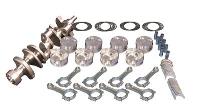
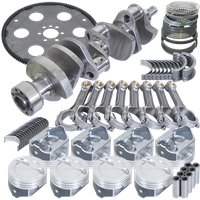
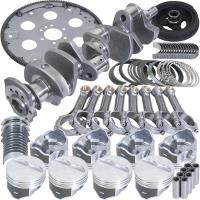
A rotating assembly is the set of moving parts inside the short block that turns combustion pressure into crankshaft rotation. Buying these parts as one kit means they're sized to work together. You avoid mismatched stroke, rod length and piston compression height. Most kits include:
- A cast or forged crankshaft that sets the stroke
- I-beam or H-beam connecting rods with rod bolts
- Pistons with wrist pins and a matched ring set
- Main and rod bearings sized to the crank journals
A complete kit saves you from measuring and cross-checking every part on your own. If you only need to replace one piece, you can shop performance crankshafts, connecting rods, pistons and piston rings or engine bearings separately. Just confirm each new part matches the stroke, journal sizes and specs of the parts you're keeping.
Stroker Kit vs. Stock-Displacement Rotating Assembly
A stroker kit uses a crankshaft with a longer stroke than stock, which increases displacement. The classic 383 stroker kit turns a 350 small block Chevy into a 383. Other popular strokers include Scat Ford 302-based 347ci and Chevy 454-based 489ci kits.
More cubic inches usually bring more low-end and midrange torque. That's why stroker kits are popular for street cars, trucks and bracket cars. The tradeoff is fit, since a longer stroke can require block clearancing and careful mockup.
A stock-displacement kit keeps the factory stroke. Eagle Specialty Products offers small block Chevy kits in 350 ci, and Scat offers a cast 355ci kit. These kits suit rebuilds and builds that must stay within a class displacement limit. If you're still deciding how far to go, read our budget vs. performance engine build article first.
Cast vs. Forged Rotating Assembly: Choosing for Your Power Goal
Your crankshaft material should match your power level and how hard you'll run the engine. Cast cranks, like the one in the Scat Series 9000 cast 355ci kit, are a cost-effective choice for mild street engines. A 4340 forged crankshaft adds strength and fatigue resistance for boost, nitrous or high rpm.
Rod design matters just as much. H-beam connecting rods are common in a forged rotating assembly because they handle higher loads than stock-style I-beam rods. Scat's LS1 Competition kit pairs a forged crank with H-beam rods.
Eagle and Scat also sort kits by tier. A Street and Strip rotating assembly targets strong street cars and weekend track use, like the Scat 4340 forged Street/Strip 383ci kit. Competition kits are built for repeated full-throttle passes and sustained racing loads. If you plan to add power later, choose one tier stronger so the bottom end doesn't become your limit.
Rotating Assemblies by Engine Platform
Start by matching the kit to your engine family, then confirm displacement and rear main seal style. Current options include:
- Small block Chevy rotating assembly kits in 350, 355, 383 and 400 ci
- Big block Chevy Street and Strip kits plus 454-based 489ci forged competition kits
- LS rotating assembly kits, including 408 ci Street and LS1 Competition options
- Ford small block kits for 302, 347ci strokers and 351W
- Ford Big Block Street and Strip and Competition kits
- Big Block Mopar Competition kits from Eagle
- Dart 2JZ kits with aluminum rods and an 86 mm stroke crankshaft
Eagle small block Chevy kits come with a 1-piece or 2-piece rear main seal, so check your block first. Planning a Ford big block build? Our Ford 460 big block engine guide covers stroker options. Use the Add a Vehicle tool by year, make and model or VIN to narrow results, or browse all engines and components.
Balanced vs. Ready-to-Balance Kits and Installation Prep
A balanced rotating assembly has already been weight-matched so the crank, rods and pistons spin smoothly together. That saves you a machine shop step and reduces vibration that wears bearings. A ready-to-balance kit needs balancing before installation, which lets your shop fine-tune it to your exact parts.
Check whether your engine is internally or externally balanced. That tells you which harmonic balancers and flexplate or flywheel weights you'll need. Before assembly, verify bearing clearances, ring end gaps, rod side clearance and crankshaft endplay. With a stroker or a bigger cam, check piston-to-valve clearance too.
Eagle also lists ARP 2000 7/16 in. rod bolts, a common upgrade for higher-rpm builds. Have the right engine rebuild tools on hand before you start. If you'd rather skip the assembly work, shop short block engines instead.

ADD A VEHICLE TO GUARANTEE PARTS FIT
See products that fit

ADD A VEHICLE TO GUARANTEE PARTS FIT
See products that fit
EAGLE
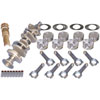
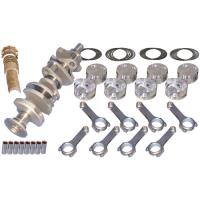
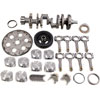
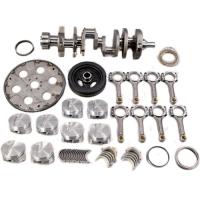
Eagle Ford 289/302 Automatic Transmission Street and Strip Rotating Assemblies
Part Number: 356-B16022MA060
 Ships on 11/03/2026
 Lowest price guarantee
EAGLE
Eagle Ford 289/302 Automatic Transmission Street and Strip Rotating Assemblies
Part Number: 356-B16022MA060
Ships on 11/03/2026Lowest Price Guarantee
EAGLE
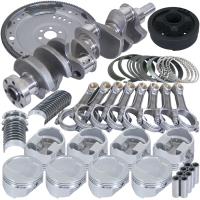
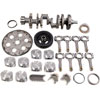
Eagle Ford 289/302 Automatic Transmission Street and Strip Rotating Assemblies
Part Number: 356-B16023EA030
Ships on 11/03/2026Lowest price guarantee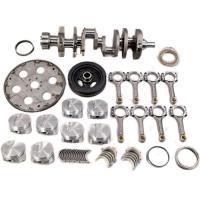
EAGLE
Eagle Ford 289/302 Automatic Transmission Street and Strip Rotating Assemblies
Part Number: 356-B16023EA030
Ships on 11/03/2026Lowest Price Guarantee
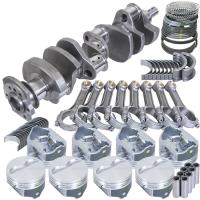
EAGLE
Eagle Ford 289/302 Automatic Transmission Street and Strip Rotating Assemblies
Part Number: 356-B16022EA040
Ships on 01/12/2027Lowest price guarantee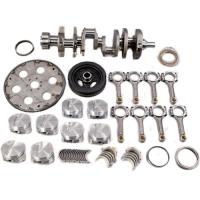
EAGLE
Eagle Ford 289/302 Automatic Transmission Street and Strip Rotating Assemblies
Part Number: 356-B16022EA040
Ships on 01/12/2027Lowest Price Guarantee
EAGLE
Eagle Chevy Small Block 2pc Seal Balanced Street and Strip Rotating Assemblies
Part Number: 356-B13007E040
Ships on 11/03/2026Lowest price guarantee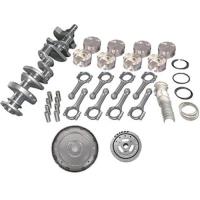
EAGLE
Eagle Chevy Small Block 2pc Seal Balanced Street and Strip Rotating Assemblies
Part Number: 356-B13007E040
Ships on 11/03/2026Lowest Price Guarantee
EAGLE
Eagle Ford 289/302 Automatic Transmission Street and Strip Rotating Assemblies
Part Number: 356-B16021LA040
Ships on 04/07/2027Lowest price guarantee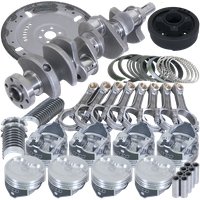
EAGLE
Eagle Ford 289/302 Automatic Transmission Street and Strip Rotating Assemblies
Part Number: 356-B16021LA040
Ships on 04/07/2027Lowest Price Guarantee
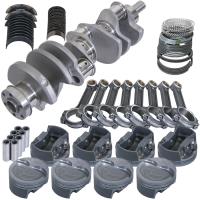
EAGLE
Eagle Chevy Small Block 1pc Seal Balanced Street and Strip Rotating Assemblies
Part Number: 356-B13022L03053
Ships on 11/03/2026Lowest price guarantee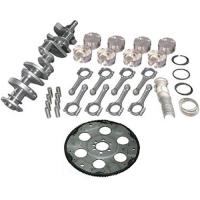
EAGLE
Eagle Chevy Small Block 1pc Seal Balanced Street and Strip Rotating Assemblies
Part Number: 356-B13022L03053
Ships on 11/03/2026Lowest Price Guarantee
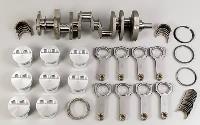
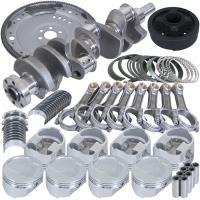
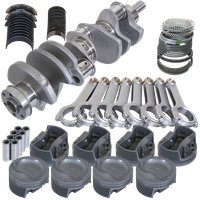
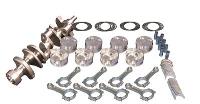
EAGLE
Eagle Ford 289/302 Automatic Transmission Street and Strip Rotating Assemblies
Part Number: 356-B16023EA040
Ships on 11/03/2026Lowest price guarantee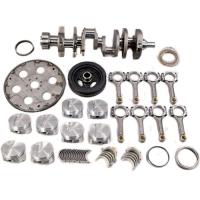
EAGLE
Eagle Ford 289/302 Automatic Transmission Street and Strip Rotating Assemblies
Part Number: 356-B16023EA040
Ships on 11/03/2026Lowest Price Guarantee
EAGLE
Eagle Ford 289/302 Manual Transmission Street and Strip Rotating Assemblies
Part Number: 356-B16022LS060
Ships on 11/03/2026Lowest price guarantee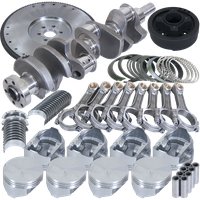
EAGLE
Eagle Ford 289/302 Manual Transmission Street and Strip Rotating Assemblies
Part Number: 356-B16022LS060
Ships on 11/03/2026Lowest Price Guarantee
EAGLE
Eagle Chevy Small Block 2pc Seal Balanced Street and Strip Rotating Assemblies
Part Number: 356-B13022E060
Ships on 11/03/2026Lowest price guarantee
EAGLE
Eagle Chevy Small Block 2pc Seal Balanced Street and Strip Rotating Assemblies
Part Number: 356-B13022E060
Ships on 11/03/2026Lowest Price Guarantee
EAGLE
Eagle Chevy Small Block 1pc Seal Balanced Street and Strip Rotating Assemblies
Part Number: 356-B13052L03053
Ships on 11/03/2026Lowest price guarantee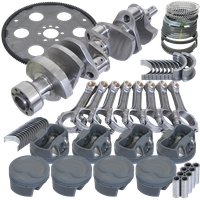
EAGLE
Eagle Chevy Small Block 1pc Seal Balanced Street and Strip Rotating Assemblies
Part Number: 356-B13052L03053
Ships on 11/03/2026Lowest Price GuaranteeFrequently Asked Questions About Rotating Assemblies
Do I need to machine my block for a stroker kit?
In many cases, yes. A longer stroke can bring the rods and counterweights close to the bottom of the cylinders, the oil pan rails or the camshaft. Mock up the assembly and check clearances before final assembly.
Can I reuse my stock pistons with a new crankshaft?
Usually not if the stroke changes, because piston compression height has to match the new stroke and rod length. With a stock-stroke crank, you may be able to reuse pistons that are still in spec. A matched kit removes the guesswork.
How much horsepower does a 383 stroker add?
It depends on your cylinder heads, cam, intake and tuning. With the same supporting parts, a 383 typically makes more torque and power than a 350 thanks to its extra displacement. Match your top-end parts to the bigger engine to get the full benefit.
Do rotating assemblies include a harmonic balancer or flexplate?
Most kits focus on the crank, rods, pistons, rings and bearings, so check each listing for what's included. Externally balanced engines need the correct balancer and flexplate or flywheel to stay in balance.
Should I upgrade my rod bolts?
Rod bolts are some of the most highly stressed fasteners in your engine. If you're adding rpm, boost or nitrous, upgraded bolts like ARP 2000 give you more margin. Always tighten them to the manufacturer's torque or stretch spec.