


 Order Status & Returns
 Gift Cards
 Help Center
 1-800-345-4545
Disc Brake Kits
Drum to disc brake conversion kits swap outdated drum brakes for modern disc brakes on classic cars, muscle cars, and trucks. Shop front, rear, and four-wheel kits from Power Stop, Wilwood, Baer, OER, Dynamic Friction, Aerospace Components, and JEGS, priced for daily drivers, tow rigs, and race cars alike. You'll find complete kits with ceramic pads, drilled-and-slotted or geo-carbon rotors, calipers, brackets, and the hydraulic parts you need to finish the upgrade.
Show More
What's Included in a Drum to Disc Brake Conversion Kit
A drum to disc brake conversion kit bundles every part you need to replace a drum setup with modern discs at one or both axles.
Most complete kits in our disc and drum brake kits lineup include the core components below, though exact contents vary by brand and application:
- Vented, drilled-and-slotted, or geo-carbon brake rotors
- Calipers with the piston count and finish your build calls for
- Ceramic or performance disc brake pads
- Caliper mounting brackets sized for your spindle or axle
- Wheel bearings and seals where the kit changes your hub setup
- Mounting hardware, brake lines, and fittings
Many kits also add a disc-compatible master cylinder and a proportioning valve to handle the hydraulic upgrade, so check whether yours includes them or if you'll add those parts separately. Matching the right components up front saves you a second parts order once the axle is apart, and it keeps your rotor, pad, and caliper choices working together.
Front vs. Rear Disc Brake Conversion Kits
Front kits deliver the biggest braking gain, while rear kits and four-wheel kits fine-tune balance and total capacity.
A front disc brake conversion kit is the common first upgrade, since the front axle handles most of your stopping force. It bolts modern calipers and rotors to your spindles and pairs well with new brake calipers sized for your wheel diameter. That single change sharpens pedal response and cuts fade on a mostly stock car.
A rear drum to disc brake conversion kit updates the rear axle for steadier pedal feel and easier parking-brake integration. If you want the strongest, most consistent setup, a four-wheel conversion updates both axles at once so the whole car stops evenly. Not sure where to start on the back? Our guide on how to convert rear drum brakes to disc brakes walks through the rear-axle steps.
Choosing a Kit for Your Chevy, Ford, or Mopar
Pick a kit built for your exact make, model, and axle, because brackets, rotor sizing, and bolt patterns are application-specific.
For classic GM builds like the Chevy A-body, F-body, and X-body, look for kits matched to your spindle and rear-axle type. Ford and Mustang builders should confirm spindle style and wheel clearance, since early and late spindles differ. Mopar owners need to match the kit to their specific front suspension and rear-axle setup.
Trucks that tow or haul benefit from larger rotors and heavier-duty pads that resist heat on long grades, while race cars often run lightweight rotors and aggressive pad compounds. If you're staging the upgrade one axle at a time, you can still source replacement drum brake parts to keep the other axle safe and serviceable in the meantime.
Do You Need a New Master Cylinder or Proportioning Valve?
Yes, most drum to disc conversions need a disc-compatible master cylinder and a proportioning valve to run safely.
Drum and disc brakes need different fluid volume and pressure, so a master cylinder set up for four drums often can't supply a disc system correctly. Swapping to a master cylinder matched to your new discs restores proper pedal travel and clamping force, and a disc/disc unit differs from the disc/drum unit some kits call for. Bench-bleeding the new cylinder before you install it helps you get a firm pedal faster. You'll find compatible units among our brake master cylinders and boosters.
A proportioning valve balances front-to-rear bias so the front discs don't lock before the rears engage, which matters most on rear and four-wheel conversions. An adjustable valve lets you dial in bias for your vehicle's weight and how you drive it. Browse matching proportioning valves to complete the hydraulic side of the job.
Disc Brake Conversion Benefits
Disc brakes stop harder, shed heat faster, and resist fade far better than the drums they replace.
Because rotors sit out in the airflow, they cool quickly and hold consistent stopping power through repeated hard stops, towing, and long downhill grades where drums tend to fade. Drilled-and-slotted rotors add cooling and help clear gas and dust, while ceramic pads run clean and quiet for street driving. High-performance disc brake kits step up to larger rotors and multi-piston calipers for track and heavy-duty use.
You can match rotor and pad choices to how you drive, from mild street setups to aggressive brake upgrade kits. Fresh disc brake pads let you tune bite and noise, and our tech article on the difference between drum and disc brakes explains the tradeoffs. Ready to build your setup? Shop the conversion kits above to get rolling.

ADD A VEHICLE TO GUARANTEE PARTS FIT
See products that fit

ADD A VEHICLE TO GUARANTEE PARTS FIT
See products that fit

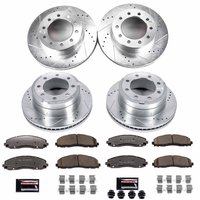
POWER STOP
Z36 Truck and SUV Carbon-Fiber Ceramic Brake Pad and Drilled & Slotted Rotor Kit for 2017-2022 Ford F-450 Super Duty/F-550 Super
Part Number: 419-K7423-36
 Ships TodayFree shipping
 Lowest price guarantee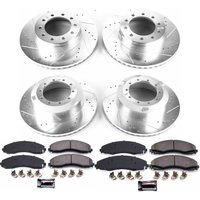
POWER STOP
Z36 Truck and SUV Carbon-Fiber Ceramic Brake Pad and Drilled & Slotted Rotor Kit for 2017-2022 Ford F-450 Super Duty/F-550 Super
Part Number: 419-K7423-36
Ships TodayFree shippingLowest Price Guarantee
POWER STOP
Z17 Evolution Coated Rotor and Low-Dust Ceramic Brake Pad Kit for 2012 Ford F-250 Super Duty/F-350 Super Duty
Part Number: 419-CRK6551
Ships TodayFree shippingLowest price guarantee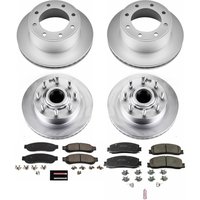
POWER STOP
Z17 Evolution Coated Rotor and Low-Dust Ceramic Brake Pad Kit for 2012 Ford F-250 Super Duty/F-350 Super Duty
Part Number: 419-CRK6551
Ships TodayFree shippingLowest Price Guarantee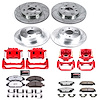
POWER STOP
Z36 Truck and SUV Ceramic Brake Pad, Drilled & Slotted Rotor, and Caliper Kit for 2008-2014 Chevrolet Tahoe
Part Number: 419-KC5520-36
Ships TodayFree shippingLowest price guarantee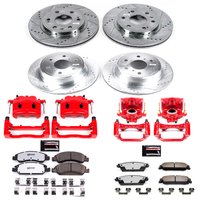
POWER STOP
Z36 Truck and SUV Ceramic Brake Pad, Drilled & Slotted Rotor, and Caliper Kit for 2008-2014 Chevrolet Tahoe
Part Number: 419-KC5520-36
Ships TodayFree shippingLowest Price Guarantee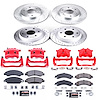
POWER STOP
Z23 Daily Driver Carbon-Fiber Ceramic Pads Drilled & Slotted Rotor & Caliper Kit for 2005-2007 GMC Sierra 1500 Classic/Sierra 15
Part Number: 419-KC8071
Ships TodayFree shippingLowest price guarantee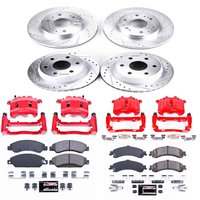
POWER STOP
Z23 Daily Driver Carbon-Fiber Ceramic Pads Drilled & Slotted Rotor & Caliper Kit for 2005-2007 GMC Sierra 1500 Classic/Sierra 15
Part Number: 419-KC8071
Ships TodayFree shippingLowest Price Guarantee
POWER STOP
Z17 Evolution Coated Rotor and Low-Dust Ceramic Brake Pad Kit for 2015-2019 Chevrolet Suburban 3500 HD/Silverado 2500 HD
Part Number: 419-CRK6992
Ships TodayFree shippingLowest price guarantee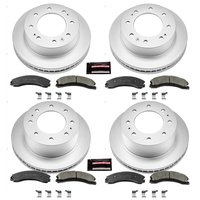
POWER STOP
Z17 Evolution Coated Rotor and Low-Dust Ceramic Brake Pad Kit for 2015-2019 Chevrolet Suburban 3500 HD/Silverado 2500 HD
Part Number: 419-CRK6992
Ships TodayFree shippingLowest Price Guarantee
POWER STOP
Z36 Truck and SUV Ceramic Brake Pad, Drilled & Slotted Rotor, and Caliper Kit for 2013-2018 Ram 3500
Part Number: 419-KC7141-36
Ships TodayFree shippingLowest price guarantee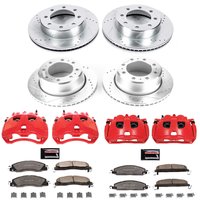
POWER STOP
Z36 Truck and SUV Ceramic Brake Pad, Drilled & Slotted Rotor, and Caliper Kit for 2013-2018 Ram 3500
Part Number: 419-KC7141-36
Ships TodayFree shippingLowest Price Guarantee
POWER STOP
Z23 Daily Driver Carbon-Fiber Ceramic Brake Pad and Drilled & Slotted Rotor Kit for 2017-2022 Ford F-450 Super Duty/F-550 Super
Part Number: 419-K7423
Ships TodayFree shippingLowest price guarantee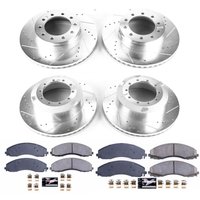
POWER STOP
Z23 Daily Driver Carbon-Fiber Ceramic Brake Pad and Drilled & Slotted Rotor Kit for 2017-2022 Ford F-450 Super Duty/F-550 Super
Part Number: 419-K7423
Ships TodayFree shippingLowest Price Guarantee
POWER STOP
Z23 Daily Driver Carbon-Fiber Ceramic Brake Pad and Drilled & Slotted Rotor Kit for 2019-2025 Ram 2500
Part Number: 419-K8640
Ships TodayFree shippingLowest price guarantee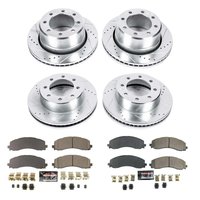
POWER STOP
Z23 Daily Driver Carbon-Fiber Ceramic Brake Pad and Drilled & Slotted Rotor Kit for 2019-2025 Ram 2500
Part Number: 419-K8640
Ships TodayFree shippingLowest Price Guarantee
POWER STOP
Autospecialty OE Stock Replacement 1-Click Daily Driver Brake Kit
Part Number: 419-KOE8028
Ships TodayFree shippingLowest price guarantee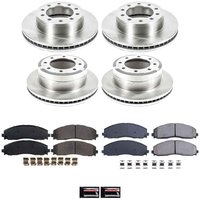
POWER STOP
Autospecialty OE Stock Replacement 1-Click Daily Driver Brake Kit
Part Number: 419-KOE8028
Ships TodayFree shippingLowest Price Guarantee
POWER STOP
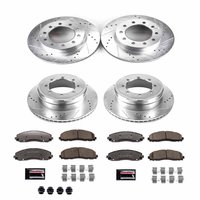
Z36 Truck and SUV Ceramic Brake Pad, Drilled & Slotted Rotor, and Caliper Kit for 2004-2006 Ford E-150/E-150 Club Wagon
Part Number: 419-KC4021-36
Ships on 10/26/2026Free shippingLowest price guarantee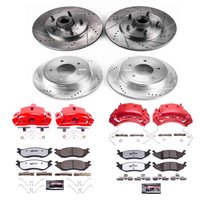
POWER STOP
Z36 Truck and SUV Ceramic Brake Pad, Drilled & Slotted Rotor, and Caliper Kit for 2004-2006 Ford E-150/E-150 Club Wagon
Part Number: 419-KC4021-36
Ships on 10/26/2026Free shippingLowest Price Guarantee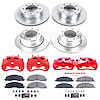
POWER STOP
Z23 Daily Driver Carbon-Fiber Ceramic Pads Drilled & Slotted Rotor & Caliper Kit for 2013-2018 Ram 3500
Part Number: 419-KC7141A
Ships TodayFree shippingLowest price guarantee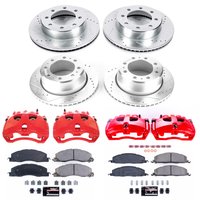
POWER STOP
Z23 Daily Driver Carbon-Fiber Ceramic Pads Drilled & Slotted Rotor & Caliper Kit for 2013-2018 Ram 3500
Part Number: 419-KC7141A
Ships TodayFree shippingLowest Price Guarantee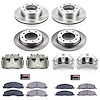
POWER STOP
Direct OE Stock Replacement Low-Dust Ceramic Brake Pad, Rotor and Caliper Kit for 2013-2018 Ram 3500
Part Number: 419-KCOE7141A
Ships TodayFree shippingLowest price guarantee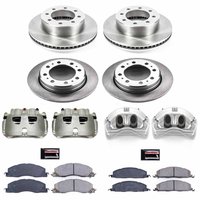
POWER STOP
Direct OE Stock Replacement Low-Dust Ceramic Brake Pad, Rotor and Caliper Kit for 2013-2018 Ram 3500
Part Number: 419-KCOE7141A
Ships TodayFree shippingLowest Price Guarantee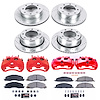
POWER STOP
Z23 Daily Driver Carbon-Fiber Ceramic Pads Drilled & Slotted Rotor & Caliper Kit for 2011-2012 Ram 3500
Part Number: 419-KC5458A
Ships TodayFree shippingLowest price guarantee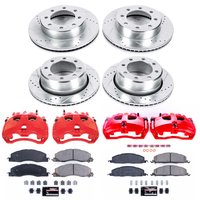
POWER STOP
Z23 Daily Driver Carbon-Fiber Ceramic Pads Drilled & Slotted Rotor & Caliper Kit for 2011-2012 Ram 3500
Part Number: 419-KC5458A
Ships TodayFree shippingLowest Price Guarantee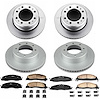
POWER STOP
Z17 Evolution Coated Rotor and Low-Dust Ceramic Brake Pad Kit for 2013-2018 Ram 3500
Part Number: 419-CRK7141
Ships TodayFree shippingLowest price guarantee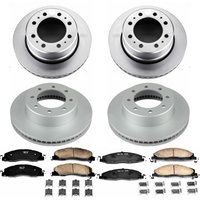
POWER STOP
Z17 Evolution Coated Rotor and Low-Dust Ceramic Brake Pad Kit for 2013-2018 Ram 3500
Part Number: 419-CRK7141
Ships TodayFree shippingLowest Price Guarantee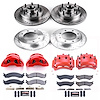
POWER STOP
Z23 Daily Driver Carbon-Fiber Ceramic Pads Drilled & Slotted Rotor & Caliper Kit for 1999-2002 Ford E-350 Econoline Club Wagon
Part Number: 419-KC4434A
Ships on 10/28/2026Free shippingLowest price guarantee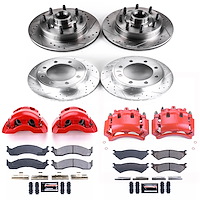
POWER STOP
Z23 Daily Driver Carbon-Fiber Ceramic Pads Drilled & Slotted Rotor & Caliper Kit for 1999-2002 Ford E-350 Econoline Club Wagon
Part Number: 419-KC4434A
Ships on 10/28/2026Free shippingLowest Price Guarantee
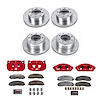
POWER STOP
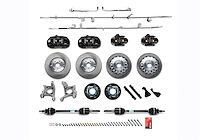
Z36 Truck and SUV Ceramic Brake Pad, Drilled & Slotted Rotor, and Caliper Kit for 2013-2022 Ford F-350 Super Duty
Part Number: 419-KC6405-36
Ships on 10/29/2026Free shippingLowest price guarantee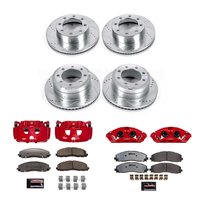
POWER STOP
Z36 Truck and SUV Ceramic Brake Pad, Drilled & Slotted Rotor, and Caliper Kit for 2013-2022 Ford F-350 Super Duty
Part Number: 419-KC6405-36
Ships on 10/29/2026Free shippingLowest Price Guarantee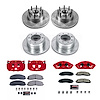
POWER STOP
Z23 Daily Driver Carbon-Fiber Ceramic Pads Drilled & Slotted Rotor & Caliper Kit for 2012-2022 Ford F-250 Super Duty
Part Number: 419-KC6820A
Ships on 10/28/2026Free shippingLowest price guarantee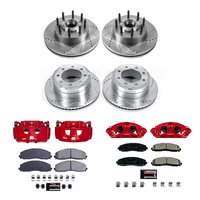
POWER STOP
Z23 Daily Driver Carbon-Fiber Ceramic Pads Drilled & Slotted Rotor & Caliper Kit for 2012-2022 Ford F-250 Super Duty
Part Number: 419-KC6820A
Ships on 10/28/2026Free shippingLowest Price Guarantee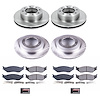
POWER STOP
OE Stock Replacement Low-Dust Ceramic Brake Pad and Rotor Kit for 2002-2004 Ford F-450 Super Duty
Part Number: 419-KOE6408
Ships TodayFree shippingLowest price guarantee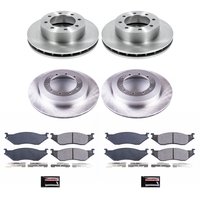
POWER STOP
OE Stock Replacement Low-Dust Ceramic Brake Pad and Rotor Kit for 2002-2004 Ford F-450 Super Duty
Part Number: 419-KOE6408
Ships TodayFree shippingLowest Price Guarantee
POWER STOP
Z23 Daily Driver Carbon-Fiber Ceramic Pads Drilled & Slotted Rotor & Caliper Kit for 2012-2019 Chevrolet Silverado 3500 HD
Part Number: 419-KC6260
Ships TodayFree shippingLowest price guarantee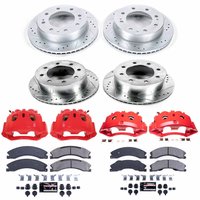
POWER STOP
Z23 Daily Driver Carbon-Fiber Ceramic Pads Drilled & Slotted Rotor & Caliper Kit for 2012-2019 Chevrolet Silverado 3500 HD
Part Number: 419-KC6260
Ships TodayFree shippingLowest Price GuaranteeFrequently Asked Questions About Drum to Disc Brake Conversion Kits
Will disc brakes fit behind my current wheels?
Not always, so check clearance before you buy. A disc conversion can add roughly 1/8 to 1/4 inch per side, depending on rotor-hat thickness and bracket design, which can crowd tight or aggressive wheel fitment. Mock up a wheel on the bare hub or check the kit's minimum wheel-diameter spec to be sure.
How much does a drum to disc brake conversion cost?
It depends on your vehicle and the kit's quality. As a general guide, front kits often run roughly $300 to $800, rear kits roughly $250 to $700, and high-performance kits with big rotors and multi-piston calipers can top $1,000. Adding a master cylinder or proportioning valve raises the total.
How hard is it to install a drum to disc conversion kit?
It's a moderate do-it-yourself job for anyone comfortable with hand tools, and complete kits include instructions. You'll remove the drums, shoes, and backing plates, then bolt on the new brackets, rotors, and calipers. Some rear conversions require pulling the axles, and every install ends with bleeding the system to get a firm pedal.
Do disc brakes need more maintenance than drum brakes?
No, they're generally easier to service and inspect than drums. Because the pads and rotor are exposed, you can check wear at a glance, though pads can wear faster under hard use. Routine care mostly means checking pad thickness and rotor condition and keeping fresh fluid in the system.