


 Order Status & Returns
 Gift Cards
 Help Center
 1-800-345-4545

Automotive Hose & Fuel Line Insulation Products
Fuel line insulation protects the fuel, oil, brake and electrical lines in your engine bay from radiant heat, abrasion and open flame. This category brings together fire sleeves, silicone-coated fiberglass heat sleeves, braided hose sleeving and covers, and heat-reflective protection for street, strip and turbo builds. Shop here when you want to fight vapor lock, extend hose life and give your engine bay a clean, finished look.
Show More
Why Does Fuel Line Insulation Matter for Vapor Lock and Heat Damage?
Fuel line insulation keeps engine bay heat out of your lines, which helps prevent vapor lock and early hose failure. When fuel gets hot enough to boil in the line, the pump moves vapor instead of liquid, and your engine stumbles or stalls. Heat also hardens rubber fuel hose, cooks oil lines, boils brake fluid and breaks down electrical insulation.
The risk climbs in turbo and high-horsepower builds, where turbine housings, headers and tight packaging put lines inches from serious heat. A fuel line heat shield or sleeve adds a barrier between the line and that heat source. If you're replumbing, start with the right fuel lines and line kits from our hose, hardline & tubing selection.
Our fuel line size vs. pressure drop guide helps you pick a line size before you add protection.
Fire Sleeve vs. Heat Sleeve vs. Braided Sleeving: Which Do You Need?
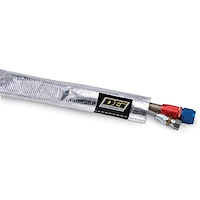
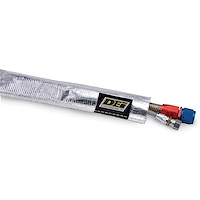
Choose a fire sleeve for flame and heat, a heat sleeve for radiant exhaust heat, or braided sleeving for abrasion resistance and looks. Here's how the options compare:
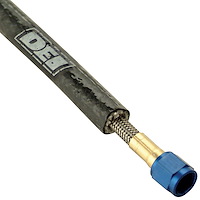
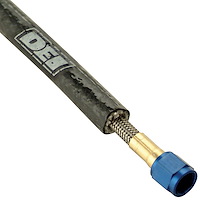
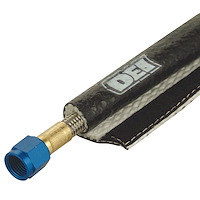
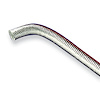
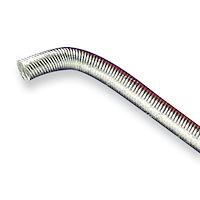
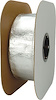
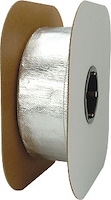
- A fire sleeve uses silicone-coated fiberglass to shield lines from flame and heat, like the Aeroquip Firesleeve Hose Flame Shield (0.50 in. ID, 10 ft, red).
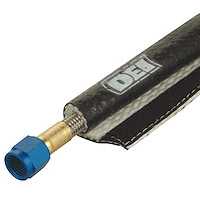
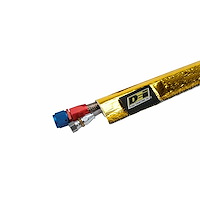
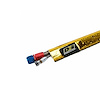
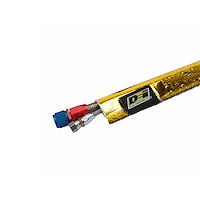
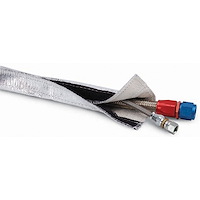
- A hose heat sleeve slips over the line to block radiant heat near headers, turbos and other exhaust components.
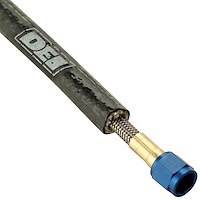
- Braided sleeving resists abrasion and dresses up lines, including Spectre Magna Braid engine sleeving in chrome or red/blue.
- A stainless braided sleeve adds a tough outer layer, such as the Earl's stainless steel braided hose sleeve.
- A braided cover finishes exposed lines, and the Lokar Hotrod Trick Kit covers a 1/8 in. to 2-3/4 in. diameter range.
Many builders sleeve the hot sections and run braid elsewhere. Pair any of these with braided AN hose and hose ends for a matched setup.
How Do You Size a Fuel Line Insulation Sleeve for AN Hose?
Size a fuel line insulation sleeve by matching its inside diameter to your hose's outside diameter, then confirm the AN size it's listed for. Each AN dash number equals 1/16 in. of tube outside diameter, so -8 AN equals 1/2 in. A braided hose's actual OD runs larger than its dash size suggests.
For example, the Redhorse Performance 244 Series -08 sleeve fits -8 AN hose and has a 0.784 in. diameter. Measure your hose OD with calipers and compare it to the sleeve's listed ID before you order. A loose sleeve can slide and leave gaps at the ends, and a tight one is hard to work over the hose.
Our AN fitting and hose sizes guide explains dash sizes in detail. The AN hose assembly guide walks you through building the line itself.
What Do Heat Sleeve Temperature Ratings Mean?
A continuous rating is the heat a sleeve handles all the time. An intermittent rating covers short exposures like heat soak or a brief flame. Compare the continuous rating with the steady heat near your line, and treat the intermittent number as a safety margin for short heat spikes.
The Redhorse 244 Series pairs a woven high-temperature fiberglass lining with a 100% silicone jacket. It lists a maximum ambient temperature of 3,000 degrees F. This slip-on heat sleeve comes in a 72 in. length, in red or black, and protects fuel, oil, brake or electrical lines.
Ratings vary by brand, material and construction, so check each product's listing for its rating before you buy a sleeve for your build. DEI and Thermo Tec also offer heat protection for lines that run near headers and turbos.
How Should You Route and Organize Protected Lines?
Route protected lines as far from heat sources as you can, and keep them clear of moving parts. Secure each run so it can't rub or sag. Distance works as free insulation, so plan the route before you sleeve anything.
Use hose clamps to lock sleeve ends and connections in place. Add billet hose line separators to keep parallel fuel, oil and brake runs evenly spaced and easy to inspect under each hose protection sleeve. Where a line passes near headers or a turbo, install exhaust heat shields between the exhaust and the line as a second layer of protection.
Check your routing with engine movement in mind, since torque can shift a line toward a hot spot. When your plan is set, shop this category for the sleeves and covers that fit your build.

ADD A VEHICLE TO GUARANTEE PARTS FIT
See products that fit

ADD A VEHICLE TO GUARANTEE PARTS FIT
See products that fit
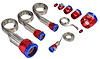
JEGS
Braided Hose Sleeving Kit with Clamps [Red and Blue Anodized Hose Clamp Covers]
Part Number: 555-50533
 Ships on Nov 02, 2026
 Lowest price guarantee
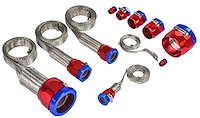
JEGS
Braided Hose Sleeving Kit with Clamps [Red and Blue Anodized Hose Clamp Covers]
Part Number: 555-50533
Ships on Nov 02, 2026Lowest Price Guarantee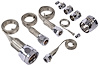
JEGS
Braided Hose Sleeving Kit with Clamps [Chrome Hose Clamp Covers]
Part Number: 555-50534
Ships on Nov 02, 2026Lowest price guarantee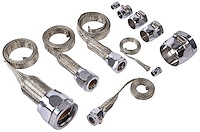
JEGS
Braided Hose Sleeving Kit with Clamps [Chrome Hose Clamp Covers]
Part Number: 555-50534
Ships on Nov 02, 2026Lowest Price Guarantee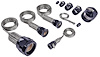
JEGS
Braided Hose Sleeving Kit with Clamps [Black Hose Clamp Covers]
Part Number: 555-50537
Ships on Nov 02, 2026Lowest price guarantee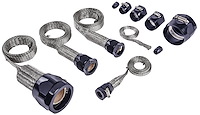
JEGS
Braided Hose Sleeving Kit with Clamps [Black Hose Clamp Covers]
Part Number: 555-50537
Ships on Nov 02, 2026Lowest Price Guarantee

Frequently Asked Questions About Fuel Line Insulation
Do braided stainless hoses need a fire sleeve?
The stainless braid resists abrasion, but it doesn't stop heat from reaching the hose liner and the fuel inside. If a braided hose runs near headers, a turbo or other exhaust components, add a fire sleeve or heat sleeve. Lines routed well away from heat can often go without one.
How do you seal the ends of a fire sleeve?
Seal the cut ends so fuel and oil can't wick into the fiberglass. Common methods include clamping over the sleeve ends or coating them with high-temperature silicone sealant. Check the product's instructions for the method its maker recommends.
Can I install a heat sleeve without disconnecting the line?
A slip-on heat sleeve needs an open end, so you'll usually remove one fitting or hose end to slide it on. Wrap-style sleeves, where offered, can go on without disconnecting anything. Check each listing to see which style you're buying.
Can heat sleeves be used on brake, oil and transmission lines?
Yes, heat sleeves work on brake, oil and transmission lines as well as fuel lines. Heat protection helps keep brake fluid from boiling and slows hose aging on oil and transmission cooler lines. Match the sleeve to the line's outside diameter the same way you would for fuel.
How much does fuel line insulation cost?
Based on JEGS listings, products in this category range from under $10 to around $100. Price depends on length, diameter, material and whether you're buying a single sleeve or a kit. Measure your lines first so you buy the right size and length.