


 Order Status & Returns
 Gift Cards
 Help Center
 1-800-345-4545

Starters & Starter Components
A car starter spins your engine's flywheel until combustion takes over, so the starter for your car has to match its engine, flywheel, and compression. This category covers mini, gear-reduction, OEM-style, and diesel starters for Chevy, Ford, and GM LS engines, along with starter components. Compare the fitment details on each product to find a starter that cranks reliably on the street or at the track.
Show More
How Do You Choose a Car Starter for Your Engine?
Choose a car starter by matching four details: engine family, flywheel tooth count, mounting pattern, and compression ratio. Get those right and the starter bolts in, engages cleanly, and cranks without bogging down. Miss one and you'll be pulling it back out.
Check these specs before you order:
- Engine family, such as small-block Chevy, big-block Chevy, GM LS, small-block Ford, or Ford FE.
- Flywheel or flexplate tooth count, commonly 153 or 168 teeth on Chevy engines.
- Block mounting pattern, either straight or staggered bolt holes.
- Compression ratio, since a high-compression engine needs more cranking torque.
- Header clearance, which decides whether you need an indexable starter.
Your starter is one part of a larger starting and ignition circuit. Our beginners guide to ignition systems explains how those parts work together. When you're ready, shop all starters and alternators in one place.
What Are the Main Types of Car Starters?
Most performance builds use one of three starter types: mini gear-reduction, OEM-style, or heavy-duty diesel. A gear-reduction starter uses an internal gear set to multiply torque, so a smaller housing can crank harder than a stock unit. The compact size also frees up room around headers and oil pans.
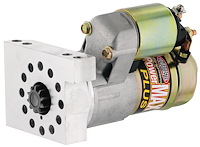
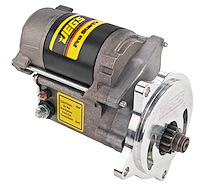
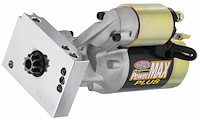
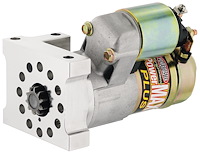
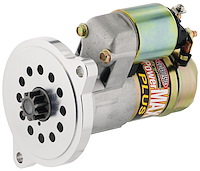
JEGS starters in this style include a performance mini starter for GM LS engines rated for 11:1 compression. Powermaster starters add Powermax PLUS units for small- and big-block Chevy, GM 153- and 168-tooth applications, and small-block Ford V8s.
OEM-style starters keep a factory-like footprint, which suits restorations and stock-appearing engine bays. The Speedmaster OEM-compact high-torque starter fits small-block Chevy 350 and big-block Chevy 454 engines.
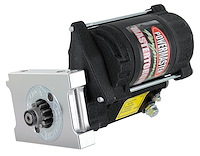
Diesel trucks need a heavy-duty unit. Powermaster UltraDuty starters fit 1994-2003 Ford F250/F350 7.3L Powerstroke trucks and 1985-1994 Ford 6.9L/7.3L non-Powerstroke diesels.
How Do Flywheel Tooth Count, Mounting, and Indexing Affect Fit?
Flywheel tooth count, bolt pattern, and indexing decide whether a starter engages properly and clears everything around it. Chevy flywheels and flexplates commonly use 153 or 168 teeth, and the starter has to match. JEGS mini starters for small- and big-block Chevy cover both 153-tooth and 168-tooth flywheels, so confirm your count before you order.
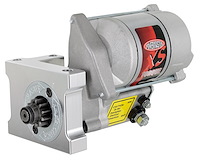
Chevy blocks also use straight or staggered starter mounting holes. The MSD Ignition starters lineup includes the DynaForce 5095 high-torque starter for Chevy small- and big-block engines with straight mount holes. Powermaster's XS Torque starter suits Chevy 168-tooth applications with a staggered mount.
Indexing lets you clock the starter to a different position for header or oil pan clearance. JEGS Prostarter starters for small- and big-block Chevy come with 2- or 4-position indexing. Prostarters also fit Ford 289, 302, 351C, and 351W engines, plus Ford FE 390, 427, and 428 engines.
Which Starters Handle High-Compression and Race Engines?
A high-compression engine needs a high-torque starter rated for its compression ratio. Match or exceed your engine's ratio, since an underrated starter cranks slowly and works harder on every start. JEGS mini starters for small- and big-block Chevy come in versions rated up to 11:1, 14:1, and 16:1 compression.
Race programs often step up to severe-duty hardware. Tilton starters include the 40000-Series severe-duty Super Starter for Chevy V8 and 90-degree V6 engines. For junior drag racing, JEGS also offers a mini starter built for the JEGS JR Dragster.
Modern engine swaps have options too. Ford Performance offers a high-torque mini starter for the 5.0L Coyote paired with the 10R80 transmission. Strong cranking also depends on your battery, so review our car battery voltage guide before you blame the starter.
What Starter Parts and Electrical Components Do You Need?
A starter only works as well as the parts feeding and protecting it. Starter components let you rebuild or fine-tune a unit, while supporting electrical parts deliver the current it needs. Slow cranking and grinding often trace back to these parts instead of the starter itself.
Powermaster offers solenoids and pinion gears for its starters. Tilton offers starter noses, pinion springs, and shim kits for race applications. Shim kits set the gap between the pinion and flywheel teeth, which helps prevent grinding and gear wear.
A starter draws heavy current every time you crank, so start with healthy car batteries. Then pair the battery with properly sized battery cables and clean grounds. Your charging system keeps that battery ready, so check alternators and components when you upgrade the electrical side of your build.

ADD A VEHICLE TO GUARANTEE PARTS FIT
See products that fit

ADD A VEHICLE TO GUARANTEE PARTS FIT
See products that fit
JEGS
Hitachi-Style Mini Starter for Small and Big Block Chevy w/153 or 168 Tooth Flywheel or Flexplate [Up To 11:1 Compression]
Part Number: 555-10011
 Ships Today
 Lowest price guarantee
JEGS
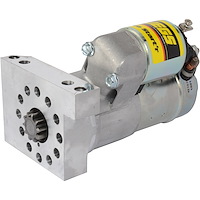
Hitachi-Style Mini Starter for Small and Big Block Chevy w/153 or 168 Tooth Flywheel or Flexplate [Up To 11:1 Compression]
Part Number: 555-10011
Ships TodayLowest Price Guarantee
JEGS
Prostarter Starter for Small Block & Big Block Chevy [2-Position Indexing]
Part Number: 555-10002
Ships TodayLowest price guarantee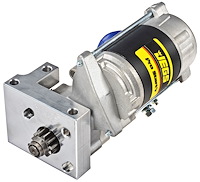
JEGS
Prostarter Starter for Small Block & Big Block Chevy [2-Position Indexing]
Part Number: 555-10002
Ships TodayLowest Price Guarantee
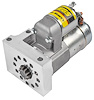
JEGS
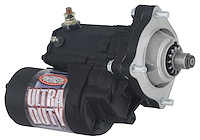
Hitachi-Style Mini Starter for Small Block, Big Block & 90 Degree V6 Chevy w/168 Tooth Flywheel or Flexplate
Part Number: 555-10015
Ships TodayLowest price guarantee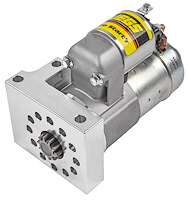
JEGS
Hitachi-Style Mini Starter for Small Block, Big Block & 90 Degree V6 Chevy w/168 Tooth Flywheel or Flexplate
Part Number: 555-10015
Ships TodayLowest Price Guarantee
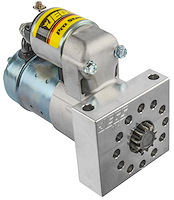
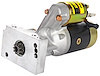
JEGS
Hitachi-Style Mini Starter for Small Block & Big Block Chevy w/153 or 168 Tooth Flywheel or Flexplate [Up To 16:1 Compression]
Part Number: 555-10012
Ships TodayLowest price guarantee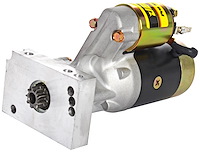
JEGS
Hitachi-Style Mini Starter for Small Block & Big Block Chevy w/153 or 168 Tooth Flywheel or Flexplate [Up To 16:1 Compression]
Part Number: 555-10012
Ships TodayLowest Price Guarantee
JEGS
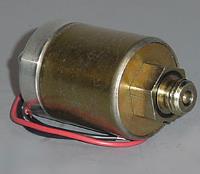
Replacement Solenoid for JEGS Quarter Stick/II or Pro Stick Shifter Solenoid
Part Number: 555-62300-1
Ships TodayLowest price guarantee
JEGS
Replacement Solenoid for JEGS Quarter Stick/II or Pro Stick Shifter Solenoid
Part Number: 555-62300-1
Ships TodayLowest Price Guarantee

JEGS
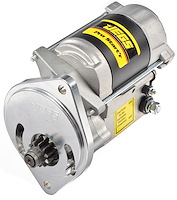
Hitachi-Style Mini Starter for Small Block and Big Block Chevy w/153 or 168 Tooth Flywheel or Flexplate [Up To 14:1 Compression]
Part Number: 555-10009
Ships TodayLowest price guarantee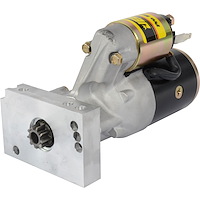
JEGS
Hitachi-Style Mini Starter for Small Block and Big Block Chevy w/153 or 168 Tooth Flywheel or Flexplate [Up To 14:1 Compression]
Part Number: 555-10009
Ships TodayLowest Price Guarantee
FORD PERFORMANCE
High-Torque Mini Starter for 5.0L Coyote Engine w/10R80 Transmission
Part Number: 397-M-11000-C50A
Ships TodayLowest price guarantee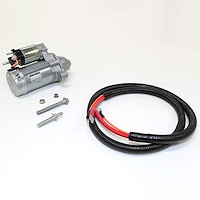
FORD PERFORMANCE
High-Torque Mini Starter for 5.0L Coyote Engine w/10R80 Transmission
Part Number: 397-M-11000-C50A
Ships TodayLowest Price Guarantee
JEGS
Prostarter Starter for Small Block & Big Block Chevy [4-Position Indexing]
Part Number: 555-10001
Ships TodayLowest price guarantee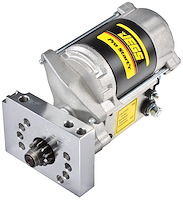
JEGS
Prostarter Starter for Small Block & Big Block Chevy [4-Position Indexing]
Part Number: 555-10001
Ships TodayLowest Price Guarantee
POWERMASTER
UltraDuty Diesel Starter 1985-1994 Ford F150/F250 6.9/7.3L (Except Powerstroke)
Part Number: 713-9050
Ships TodayLowest price guarantee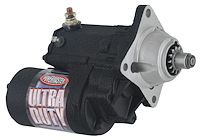
POWERMASTER
UltraDuty Diesel Starter 1985-1994 Ford F150/F250 6.9/7.3L (Except Powerstroke)
Part Number: 713-9050
Ships TodayLowest Price Guarantee

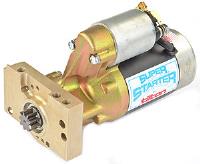

MSD IGNITION
5095 DynaForce High-Torque Starter for Chevy Small, Big Block Engines w/Straight Mount Holes [Red]
Part Number: 121-5095
Ships TodayLowest price guarantee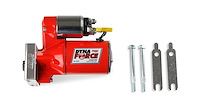
MSD IGNITION
5095 DynaForce High-Torque Starter for Chevy Small, Big Block Engines w/Straight Mount Holes [Red]
Part Number: 121-5095
Ships TodayLowest Price Guarantee

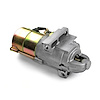
SPEEDMASTER
PCE393.1002 OEM-Compact High Torque Starter Small Block Chevy 350 /Big Block Chevy 454
Part Number: 746-PCE393.1002
Ships TodayLowest price guarantee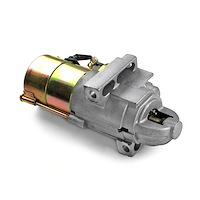
SPEEDMASTER
PCE393.1002 OEM-Compact High Torque Starter Small Block Chevy 350 /Big Block Chevy 454
Part Number: 746-PCE393.1002
Ships TodayLowest Price GuaranteeFrequently Asked Questions About Car Starters
How Can You Tell a Bad Starter From a Bad Alternator?
A bad starter acts up when you turn the key, with clicking, grinding, or slow cranking while the lights stay bright. A failing alternator acts up while you drive, causing dim lights, a battery warning light, or a battery that keeps dying. Learn how to test an alternator to rule out the charging system before you replace the starter.
Why Does a Starter Click but Not Crank the Engine?
A single click usually means the solenoid is engaging, but the motor isn't getting enough current to spin. Common causes include low battery voltage, loose or corroded cable connections, a weak ground, or worn starter internals. Rapid clicking usually points to a discharged battery.
How Long Does a Starter Last, and Is It Hard to Replace?
Starter life depends on how often you crank the engine, heat exposure, and the condition of your battery and cables. Replacement is usually a bolt-on job: disconnect the battery, unhook the starter wiring, and remove the mounting bolts. Headers, tight chassis clearance, or shims can add time, so check access before you start.
What Does a Starter Solenoid Do?
The starter solenoid is a heavy-duty switch that sends battery current to the starter motor when you turn the key. On most designs, it also pushes the pinion gear forward to engage the flywheel. The transbrake and shifter solenoids listed here are transmission parts, so don't order them as starter replacements.
Do You Need a Starter Heat Shield?
You need a heat shield if your headers or exhaust run close to the starter. Heat soak can cause slow cranking or no-crank conditions once the engine gets hot. Browse starter shields and hardware to find shields and mounting hardware for your setup.