


 Order Status & Returns
 Gift Cards
 Help Center
 1-800-345-4545
Batteries
Automotive batteries start your engine and power your ignition, fuel system, and electronics, so the right match keeps your street, race, or collector car dependable. This category covers AGM and lithium batteries in 12-volt and 16-volt options for daily drivers, race cars, and restorations. Use the guidance below to match group size, cranking power, and chemistry to your vehicle before you buy.
Show More
How to Choose the Right Automotive Batteries for Your Vehicle
Start with fitment: match your vehicle's BCI group size, terminal layout, and hold-down style. Then meet or exceed the OEM minimum cold cranking amps (CCA) and choose a chemistry.
The BCI group size sets a battery's case dimensions and terminal placement, so check the battery group size chart before you shop. Confirm top-post or side-post terminals and which side the positive post sits on. Your hold-down must clamp the new case securely, and battery boxes and hold-down hardware help when the original tray doesn't fit.
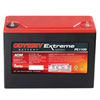
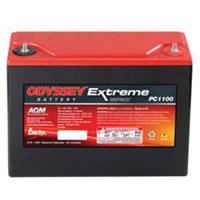
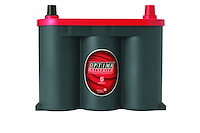
Next, find the OEM CCA rating in your owner's manual and meet or beat it. Odyssey Batteries offers an Extreme Series AGM Group 34 battery rated at 850 CCA with SAE top posts. For heavy-duty needs, Full Throttle Battery offers the FT1150-6T, a Group 6TL AGM rated at 1150 CCA and 120 Ah. Then compare the pros and cons of different automotive battery types to settle on flooded, AGM, or lithium.
AGM vs. Lithium Car Batteries
AGM batteries are sealed lead-acid units that work with most stock charging systems. Lithium batteries cut weight but need a compatible charging system. Here's how they compare:
- AGM batteries use absorbed glass mat construction, so they're sealed and spill-resistant.
- AGM batteries suit most daily drivers and street cars as a replacement car battery.
- Lithium batteries weigh less than comparable lead-acid batteries, which helps race builds.
- Lithium batteries need a charging system and charger built to support them.
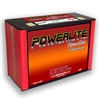
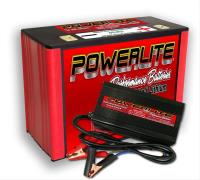
Braille Battery offers both chemistries. Its Endurance Series AGM line includes a Group 48/H6/L3 battery rated at 880 CCA and 70 Ah, and its Green-Lite batteries use lithium. Altronics Powerlite 920 and 1200 batteries give you 12-volt lithium options. If you're replacing a flooded battery, our AGM vs. lead-acid battery guide explains the differences.
16-Volt Racing Batteries and Lightweight Options
A 16-volt racing battery supplies higher system voltage for race ignition and other high-current components. Lightweight designs cut weight wherever your class rules allow it.
Before you switch, confirm every electrical component on your car is rated for 16 volts. XS Power Batteries offers the D1600 D-Series AGM 16-volt battery, plus D-Series 12-volt AGM and 16-volt lithium options. Turbostart builds the LT-16V lithium-titanate 16-volt race battery and the S16VL lightweight 16-volt race AGM.
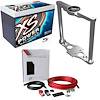
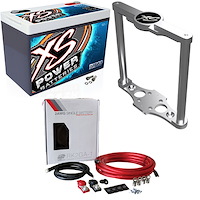
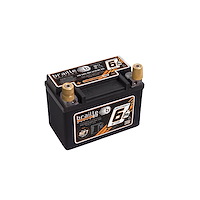
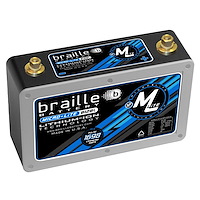
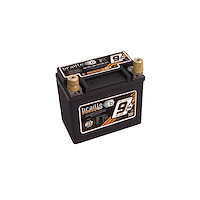
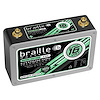
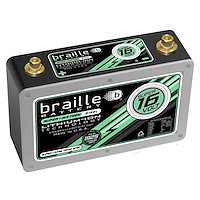
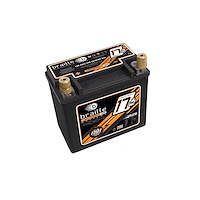
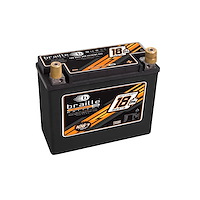
Turbostart also sells a 16-volt battery and mount kit if you want the battery and mount in one order. Altronics adds the Powerlite Pro-Series, a 16-volt LiFePO4 lithium battery. If weight is your priority, the Braille Battery Advanced AGM Lightweight Racing Battery comes in 18.5-pound, 15-pound, and 11.5-pound versions. Odyssey Batteries rounds out the race options with the Extreme Racing 501-PC1100 and the 48-720 racing battery.
Collector and Restoration Batteries for Classic Cars
Collector batteries are built for specific classic applications, so you can match a battery to your car's make and model years. The Turbostart Collector Series covers 1965-1974 Mopar and 1955-1973 Ford vehicles.
For 1965-1974 Mopar cars, the BB-S24MY is a lightweight 12-volt AGM battery in BCI Group 24. For 1955-1973 Ford vehicles, the LT-S27F uses lithium chemistry. Before you install the lithium model, confirm your charging system and charger support lithium batteries.
On a restoration, check that the new battery fits your original tray and that your cables reach both posts without strain. Many collector cars sit for long stretches between drives and shows. Battery disconnect switches let you cut power during storage without removing the cables. That helps limit slow drain from clocks, radios, and other accessories while the car is parked.
Battery Cables, Terminals, and Installation Hardware
A new battery only performs as well as its connections, so inspect your cables and terminals during installation. Replace corroded, frayed, or undersized parts at the same time.
Battery cables carry starting current to your starter and ground. Choose a gauge that handles your starter's load over the full cable length, especially on high-compression or relocated setups. Check that ground cables bolt to clean, bare metal.
Match battery terminals to your post style, since SAE top posts and side posts need different hardware. For example, the Full Throttle Battery FT1150-6T uses a brass SAE terminal. For powersport and small-engine use, the FTSX-4L is a 12-volt AGM battery in group BTX4L. Clean and tighten every connection, then shop the full batteries, terminals and wire category for the rest of your install.

ADD A VEHICLE TO GUARANTEE PARTS FIT
See products that fit

ADD A VEHICLE TO GUARANTEE PARTS FIT
See products that fit
TURBOSTART
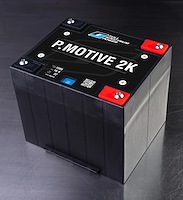
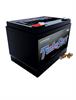
LT-16V Lithium-Titanate 16-Volt Lightweight Race Battery 10.240 in. L x 6.890 in. W x 7.160 in. H
Part Number: 903-LT-16V
 Ships Today
 Lowest price guarantee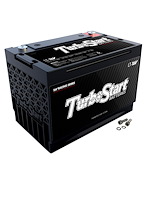
TURBOSTART
LT-16V Lithium-Titanate 16-Volt Lightweight Race Battery 10.240 in. L x 6.890 in. W x 7.160 in. H
Part Number: 903-LT-16V
Ships TodayLowest Price Guarantee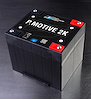

![CHG8A12V AGM Smart Battery Charger [12 Volt, 8 Amp]](https://www.jegs.com/images/mini_100/900/903/903-chg8a12v.jpg)
![CHG8A12V AGM Smart Battery Charger [12 Volt, 8 Amp]](https://www.jegs.com/images/mini_200/900/903/903-chg8a12v.jpg)






![B2317RP Lightweight AGM Battery [Right Side Positive, 475 CCA]](https://www.jegs.com/images/mini_100/100/147/147-b2317rp.jpg)
![B2317RP Lightweight AGM Battery [Right Side Positive, 475 CCA]](https://www.jegs.com/images/mini_200/100/147/147-b2317rp.jpg)
Frequently Asked Questions About Automotive Batteries
What Does CCA Mean on a Car Battery?
CCA stands for cold cranking amps. It rates how much current a battery can deliver to crank an engine in cold temperatures. Choose a battery that meets or exceeds your vehicle's OEM minimum CCA.
How Long Does It Take to Charge a Car Battery?
Charge time depends on how deeply the battery is discharged, its capacity, and your charger's output. A low-output maintainer takes longer than a higher-output charger. Our car battery charging FAQs cover the details.
Do AGM and Lithium Batteries Need a Special Charger?
AGM batteries charge properly on a charger with an AGM setting. Lithium batteries need a charger and charging system designed for lithium chemistry. Check the battery maker's charging instructions before you connect any charger.
How Often Should a Car Battery Be Replaced?
Battery life varies with climate, driving habits, and how long your vehicle sits. Have your battery tested regularly, especially before cold weather. Replace it if it fails a load test or cranks the engine slowly.
Can I Relocate My Battery to the Trunk?
Yes, many builders move the battery to the trunk to shift weight or clear engine-bay space. Battery relocation kits typically include the cables and mounting hardware for the move. Secure the battery with a proper hold-down, and check your sanctioning body's rules if you race.