


 Order Status & Returns
 Gift Cards
 Help Center
 1-800-345-4545
Brake Lines, Fittings, & Hoses
Brake line fittings connect your tubing, hoses, calipers, and master cylinder, so every joint has to match the right flare, thread, and size. Whether you're building a drag car or replacing rusted lines at home, the right fitting keeps your pedal firm and your fluid sealed in. Shop adapters, unions, tees, banjo fittings, braided stainless brake hoses, and the hardware that ties your system together.
Show More
Brake Line Fitting Types Explained
The main brake line fitting types are inverted double flare, bubble flare, AN, banjo, and compression. Each one seals differently, so match the fitting to the flare on your tubing and the port on your component before you order.
Here's how the common brake line fittings compare:
- Inverted double flares fold a 45-degree flare over itself for a strong metal-to-metal seal.
- Bubble flares, also called ISO flares, form a rounded end used on many metric systems.
- AN fittings use a 37-degree single flare, a sleeve, and a B-nut, and they're common in race plumbing.
- Banjo fittings pass a hollow bolt through a round eye and seal with crush washers at the caliper.
- Compression fittings squeeze a ferrule onto the tube and are generally avoided on hydraulic brake lines.
Flaring your own tubing? Learn how to flare a brake line for both 37-degree single flares and 45-degree double flares before you cut. Then browse our other brake system parts to finish the job.
How to Choose the Right Brake Line Fitting Size
Choose your fitting by tubing diameter first, then thread size and flare type. You'll find 3/16" tubing on many cars and hot rods. 1/4" and 3/8" lines appear on many trucks, older vehicles, and some master cylinder outlets.
Most 3/16 brake line fittings use 3/8"-24 inverted flare threads. 1/4 brake line fittings commonly use 7/16" threads in either -24 or -20 pitch, so check yours with a thread gauge before you buy.
Metric brake line fittings, such as 10mm x 1.0, are common on imports and many late-model vehicles. They won't thread correctly into SAE ports, and forcing a near-match can strip the port or leave a joint that weeps under pressure.
Replacing a full run? Shop brake lines in the tubing size you need, and compare plumbing options from Russell Performance. Measuring twice here saves you a second order and a second bleed.
Brake Line Fitting Adapters, Unions, and Tees
A brake line fitting adapter converts one thread or flare style to another. A brake line union joins two lines, and a tee splits one line into two. You'll use at least one of these on most custom brake builds.
Adapters let you connect AN brake fittings to factory-style ports. Earl's Performance Plumbing offers -3AN male to 10mm x 1.0 male adapters, plus -4AN male adapters to 3/8"-24 and 7/16"-20 male inverted flare. Earl's also makes brake banjo fittings and brake line T-fittings with 3/8"-24 inverted flare ports.
Unions help when you're repairing a damaged section or joining a new run to an existing line. Use matching flare types and threads on both ends unless you specifically need an adapter.
For more AN and hard-line pieces, check fittings from Vibrant Performance. If you're starting from scratch, a brake line fitting kit puts common sizes in one order, so you're not stuck mid-job waiting on one nut.
Steel Brake Lines vs. Braided Stainless Brake Hoses
Use rigid steel lines for fixed runs along the frame and flexible hoses wherever the suspension or steering moves. Braided stainless brake hoses wrap an inner hose in stainless braid, which helps limit expansion under pressure for a firmer pedal.
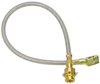
Shop brake hoses including Earl's Speed-Flex lines and extension hoses, plus coated -3AN brake line hose from Allstar Performance. A coating adds a protective layer that helps shield the braid and nearby parts from abrasion.
Route every flex line so it clears tires, springs, and exhaust at full lock and full droop. Secure it with stainless flex hose C clips and other brake hose hardware so it can't rub through.
Rubber hoses age even when they look fine on the outside. Before you reuse old ones, read up on how long brake hoses last and the symptoms that signal it's time to replace them.
Hardware, Clips, and Bleeders That Complete the System
Clips, brackets, and bleeders finish your brake plumbing by keeping lines secure and air out. Skip them, and even perfect flares can fail early.
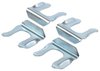
Loose tubing vibrates, and that movement fatigues the line right at the flare. Browse brake line hardware for clips and mounting pieces sized to your tubing, and plan your mounting points as carefully as your fittings. Space clips evenly along long runs, and keep tubing away from sharp edges and heat.
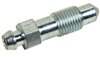
Any time you open the system, you'll need to bleed it, starting at the wheel farthest from the master cylinder on most setups. Our brake bleeders and hardware selection covers bleeder screws and related pieces that make the job cleaner.
Running calipers from Wilwood? Follow our guide on how to bleed a Wilwood brake system to purge trapped air. Then check every fitting for seepage and test the pedal at low speed before you drive hard.

ADD A VEHICLE TO GUARANTEE PARTS FIT
See products that fit


JEGS
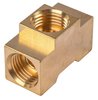
Brass 90 Degree Fitting 1/8 in. NPT x 3/8 in.-24 Inverted Flare Female
Part Number: 555-63082
 Ships on Oct 19, 2026
 Lowest price guarantee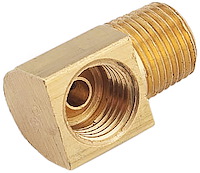
JEGS
Brass 90 Degree Fitting 1/8 in. NPT x 3/8 in.-24 Inverted Flare Female
Part Number: 555-63082
Ships on Oct 19, 2026Lowest Price Guarantee![Intermediate Brake Line Kit 1987-1993 Ford Mustang, w/o Sub-Frame Connectors [Stainless]](https://www.jegs.com/images/mini_100/500/555/555-95930.jpg)
JEGS
Intermediate Brake Line Kit 1987-1993 Ford Mustang, w/o Sub-Frame Connectors [Stainless]
Part Number: 555-95930
Ships on Oct 19, 2026Lowest price guarantee![Intermediate Brake Line Kit 1987-1993 Ford Mustang, w/o Sub-Frame Connectors [Stainless]](https://www.jegs.com/images/mini_200/500/555/555-95930.jpg)
JEGS
Intermediate Brake Line Kit 1987-1993 Ford Mustang, w/o Sub-Frame Connectors [Stainless]
Part Number: 555-95930
Ships on Oct 19, 2026Lowest Price Guarantee![Complete Brake Line Kit 2002-2004 Ford F-350/F-350 Superduty, 4wd, AWABS, Crew Cab/Long Bed [Stainless]](https://www.jegs.com/images/mini_100/500/555/555-95842.jpg)
JEGS
Complete Brake Line Kit 2002-2004 Ford F-350/F-350 Superduty, 4wd, AWABS, Crew Cab/Long Bed [Stainless]
Part Number: 555-95842
Ships on 10/19/2026Lowest price guarantee![Complete Brake Line Kit 2002-2004 Ford F-350/F-350 Superduty, 4wd, AWABS, Crew Cab/Long Bed [Stainless]](https://www.jegs.com/images/mini_200/500/555/555-95842.jpg)
JEGS
Complete Brake Line Kit 2002-2004 Ford F-350/F-350 Superduty, 4wd, AWABS, Crew Cab/Long Bed [Stainless]
Part Number: 555-95842
Ships on 10/19/2026Lowest Price Guarantee![Rear Axle Brake Lines 1980-1981' Ford F-150 4wd w/ 9in. Rear Axle, 2pc [Stainless]](https://www.jegs.com/images/mini_100/500/555/555-95916.jpg)
JEGS
Rear Axle Brake Lines 1980-1981' Ford F-150 4wd w/ 9in. Rear Axle, 2pc [Stainless]
Part Number: 555-95916
Ships on Oct 19, 2026Lowest price guarantee![Rear Axle Brake Lines 1980-1981' Ford F-150 4wd w/ 9in. Rear Axle, 2pc [Stainless]](https://www.jegs.com/images/mini_200/500/555/555-95916.jpg)
JEGS
Rear Axle Brake Lines 1980-1981' Ford F-150 4wd w/ 9in. Rear Axle, 2pc [Stainless]
Part Number: 555-95916
Ships on Oct 19, 2026Lowest Price Guarantee![Intermediate Brake Line Kit 2011-2015 Ford F-350, Crew Cab/ Short Bed [Stainless]](https://www.jegs.com/images/mini_100/500/555/555-95872.jpg)
JEGS
Intermediate Brake Line Kit 2011-2015 Ford F-350, Crew Cab/ Short Bed [Stainless]
Part Number: 555-95872
Ships on Oct 19, 2026Lowest price guarantee![Intermediate Brake Line Kit 2011-2015 Ford F-350, Crew Cab/ Short Bed [Stainless]](https://www.jegs.com/images/mini_200/500/555/555-95872.jpg)
JEGS
Intermediate Brake Line Kit 2011-2015 Ford F-350, Crew Cab/ Short Bed [Stainless]
Part Number: 555-95872
Ships on Oct 19, 2026Lowest Price Guarantee![Intermediate Brake Line Kit 1999 1/2-01 F-250 to F-550 Super Duty, AWABS, Gas, Ext/Crew Cab, Long/Short Bed [Stainless]](https://www.jegs.com/images/mini_100/500/555/555-95889.jpg)
JEGS
Intermediate Brake Line Kit 1999 1/2-01 F-250 to F-550 Super Duty, AWABS, Gas, Ext/Crew Cab, Long/Short Bed [Stainless]
Part Number: 555-95889
Ships on Oct 19, 2026Lowest price guarantee![Intermediate Brake Line Kit 1999 1/2-01 F-250 to F-550 Super Duty, AWABS, Gas, Ext/Crew Cab, Long/Short Bed [Stainless]](https://www.jegs.com/images/mini_200/500/555/555-95889.jpg)
JEGS
Intermediate Brake Line Kit 1999 1/2-01 F-250 to F-550 Super Duty, AWABS, Gas, Ext/Crew Cab, Long/Short Bed [Stainless]
Part Number: 555-95889
Ships on Oct 19, 2026Lowest Price Guarantee![Intermediate Brake Line Kit 1999 1/2 -01 F250-F550 Super Duty, AWABS, Diesel, Reg/Ext Cab, Long/Short Bed [Stainless]](https://www.jegs.com/images/mini_100/500/555/555-95891.jpg)
JEGS
Intermediate Brake Line Kit 1999 1/2 -01 F250-F550 Super Duty, AWABS, Diesel, Reg/Ext Cab, Long/Short Bed [Stainless]
Part Number: 555-95891
Ships on Oct 19, 2026Lowest price guarantee![Intermediate Brake Line Kit 1999 1/2 -01 F250-F550 Super Duty, AWABS, Diesel, Reg/Ext Cab, Long/Short Bed [Stainless]](https://www.jegs.com/images/mini_200/500/555/555-95891.jpg)
JEGS
Intermediate Brake Line Kit 1999 1/2 -01 F250-F550 Super Duty, AWABS, Diesel, Reg/Ext Cab, Long/Short Bed [Stainless]
Part Number: 555-95891
Ships on Oct 19, 2026Lowest Price Guarantee![Brake Line Kit 1999-2001 Ford F-250 Super Duty, F-350 Super Duty/Excursion RWABS [Stainless]](https://www.jegs.com/images/mini_100/500/555/555-95910.jpg)
JEGS
Brake Line Kit 1999-2001 Ford F-250 Super Duty, F-350 Super Duty/Excursion RWABS [Stainless]
Part Number: 555-95910
Ships on Oct 19, 2026Lowest price guarantee![Brake Line Kit 1999-2001 Ford F-250 Super Duty, F-350 Super Duty/Excursion RWABS [Stainless]](https://www.jegs.com/images/mini_200/500/555/555-95910.jpg)
JEGS
Brake Line Kit 1999-2001 Ford F-250 Super Duty, F-350 Super Duty/Excursion RWABS [Stainless]
Part Number: 555-95910
Ships on Oct 19, 2026Lowest Price Guarantee![Front 3-Piece Brake Line Set 1966 Ford Galaxie w/ Power Brakes [Steel]](https://www.jegs.com/images/mini_100/500/555/555-98240.jpg)
JEGS
Front 3-Piece Brake Line Set 1966 Ford Galaxie w/ Power Brakes [Steel]
Part Number: 555-98240
Ships on Oct 19, 2026Lowest price guarantee![Front 3-Piece Brake Line Set 1966 Ford Galaxie w/ Power Brakes [Steel]](https://www.jegs.com/images/mini_200/500/555/555-98240.jpg)
JEGS
Front 3-Piece Brake Line Set 1966 Ford Galaxie w/ Power Brakes [Steel]
Part Number: 555-98240
Ships on Oct 19, 2026Lowest Price Guarantee
JEGS
Thru-Frame Brake Fitting Fits up to 2" Thick Frame Rail
Part Number: 555-107790
Ships on Oct 19, 2026Lowest price guarantee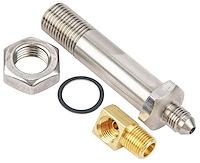
JEGS
Thru-Frame Brake Fitting Fits up to 2" Thick Frame Rail
Part Number: 555-107790
Ships on Oct 19, 2026Lowest Price Guarantee
JEGS
Universal DOT Brake Line Kit (3-Line) Use with: Traditional Rear Axle & Drum Brakes
Part Number: 555-635590
Ships on Oct 19, 2026Lowest price guarantee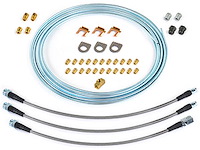
JEGS
Universal DOT Brake Line Kit (3-Line) Use with: Traditional Rear Axle & Drum Brakes
Part Number: 555-635590
Ships on Oct 19, 2026Lowest Price Guarantee
![Complete Brake Line Set for 2001-2005 Chevy S10, Blazer 4WD with ZR2 Package [Stainless Steel]](https://www.jegs.com/images/mini_100/500/555/555-13537.jpg)
JEGS
Complete Brake Line Set for 2001-2005 Chevy S10, Blazer 4WD with ZR2 Package [Stainless Steel]
Part Number: 555-13537
Ships on Oct 19, 2026Lowest price guarantee![Complete Brake Line Set for 2001-2005 Chevy S10, Blazer 4WD with ZR2 Package [Stainless Steel]](https://www.jegs.com/images/mini_200/500/555/555-13537.jpg)
JEGS
Complete Brake Line Set for 2001-2005 Chevy S10, Blazer 4WD with ZR2 Package [Stainless Steel]
Part Number: 555-13537
Ships on Oct 19, 2026Lowest Price Guarantee![Black Coated Brake Hose [-3 AN, Straight Female to Straight Female, 60 in. Length]](https://www.jegs.com/images/mini_100/500/555/555-635043.jpg)
JEGS
Black Coated Brake Hose [-3 AN, Straight Female to Straight Female, 60 in. Length]
Part Number: 555-635043
Ships on 11/16/2026Lowest price guarantee![Black Coated Brake Hose [-3 AN, Straight Female to Straight Female, 60 in. Length]](https://www.jegs.com/images/mini_200/500/555/555-635043.jpg)
JEGS
Black Coated Brake Hose [-3 AN, Straight Female to Straight Female, 60 in. Length]
Part Number: 555-635043
Ships on 11/16/2026Lowest Price Guarantee
JEGS
DOT Rear Brake Hose Kit 3/8 in.-24 Inverted Flare Female Swivel to 3/8 in.-24 Inverted Flare Female "T"
Part Number: 555-635400
Ships on Oct 19, 2026Lowest price guarantee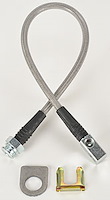
JEGS
DOT Rear Brake Hose Kit 3/8 in.-24 Inverted Flare Female Swivel to 3/8 in.-24 Inverted Flare Female "T"
Part Number: 555-635400
Ships on Oct 19, 2026Lowest Price Guarantee![Front Brake Hose for 1982-1983 Chevy Camaro, Pontiac Firebird [Right/Passenger Side]](https://www.jegs.com/images/mini_100/500/555/555-184421.jpg)
JEGS
Front Brake Hose for 1982-1983 Chevy Camaro, Pontiac Firebird [Right/Passenger Side]
Part Number: 555-184421
Ships on Oct 19, 2026Lowest price guarantee![Front Brake Hose for 1982-1983 Chevy Camaro, Pontiac Firebird [Right/Passenger Side]](https://www.jegs.com/images/mini_200/500/555/555-184421.jpg)
JEGS
Front Brake Hose for 1982-1983 Chevy Camaro, Pontiac Firebird [Right/Passenger Side]
Part Number: 555-184421
Ships on Oct 19, 2026Lowest Price Guarantee![Complete Brake Line Set for 1970 Chevy Chevelle, Malibu Hardtop with Power Disc Brakes [Stainless Steel]](https://www.jegs.com/images/mini_100/500/555/555-13408.jpg)
JEGS
Complete Brake Line Set for 1970 Chevy Chevelle, Malibu Hardtop with Power Disc Brakes [Stainless Steel]
Part Number: 555-13408
Ships on Oct 19, 2026Lowest price guarantee![Complete Brake Line Set for 1970 Chevy Chevelle, Malibu Hardtop with Power Disc Brakes [Stainless Steel]](https://www.jegs.com/images/mini_200/500/555/555-13408.jpg)
JEGS
Complete Brake Line Set for 1970 Chevy Chevelle, Malibu Hardtop with Power Disc Brakes [Stainless Steel]
Part Number: 555-13408
Ships on Oct 19, 2026Lowest Price Guarantee![Complete Brake Line Set for 1963-1966 Chevy C10, GM C1500 2WD Trucks with Standard brakes/Long Bed [Stainless Steel]](https://www.jegs.com/images/mini_100/500/555/555-13512.jpg)
JEGS
Complete Brake Line Set for 1963-1966 Chevy C10, GM C1500 2WD Trucks with Standard brakes/Long Bed [Stainless Steel]
Part Number: 555-13512
Ships on Oct 19, 2026Lowest price guarantee![Complete Brake Line Set for 1963-1966 Chevy C10, GM C1500 2WD Trucks with Standard brakes/Long Bed [Stainless Steel]](https://www.jegs.com/images/mini_200/500/555/555-13512.jpg)
JEGS
Complete Brake Line Set for 1963-1966 Chevy C10, GM C1500 2WD Trucks with Standard brakes/Long Bed [Stainless Steel]
Part Number: 555-13512
Ships on Oct 19, 2026Lowest Price Guarantee![Complete Brake Line Set for 1963-1966 Chevy C10, GM C1500 2WD Trucks with Standard brakes/Short Bed [Stainless Steel]](https://www.jegs.com/images/mini_100/500/555/555-13513.jpg)
JEGS
Complete Brake Line Set for 1963-1966 Chevy C10, GM C1500 2WD Trucks with Standard brakes/Short Bed [Stainless Steel]
Part Number: 555-13513
Ships on Oct 19, 2026Lowest price guarantee![Complete Brake Line Set for 1963-1966 Chevy C10, GM C1500 2WD Trucks with Standard brakes/Short Bed [Stainless Steel]](https://www.jegs.com/images/mini_200/500/555/555-13513.jpg)
JEGS
Complete Brake Line Set for 1963-1966 Chevy C10, GM C1500 2WD Trucks with Standard brakes/Short Bed [Stainless Steel]
Part Number: 555-13513
Ships on Oct 19, 2026Lowest Price Guarantee![Complete Brake Line Set for 1995-1999 Chevy Tahoe 4WD Truck [Stainless Steel]](https://www.jegs.com/images/mini_100/500/555/555-13522.jpg)
JEGS
Complete Brake Line Set for 1995-1999 Chevy Tahoe 4WD Truck [Stainless Steel]
Part Number: 555-13522
Ships on Oct 19, 2026Lowest price guarantee![Complete Brake Line Set for 1995-1999 Chevy Tahoe 4WD Truck [Stainless Steel]](https://www.jegs.com/images/mini_200/500/555/555-13522.jpg)
JEGS
Complete Brake Line Set for 1995-1999 Chevy Tahoe 4WD Truck [Stainless Steel]
Part Number: 555-13522
Ships on Oct 19, 2026Lowest Price Guarantee![Intermediate Brake Line for 2002-2007 Hummer H2 [Stainless Steel]](https://www.jegs.com/images/mini_100/500/555/555-13587.jpg)
JEGS
Intermediate Brake Line for 2002-2007 Hummer H2 [Stainless Steel]
Part Number: 555-13587
Ships on Oct 19, 2026Lowest price guarantee![Intermediate Brake Line for 2002-2007 Hummer H2 [Stainless Steel]](https://www.jegs.com/images/mini_200/500/555/555-13587.jpg)
JEGS
Intermediate Brake Line for 2002-2007 Hummer H2 [Stainless Steel]
Part Number: 555-13587
Ships on Oct 19, 2026Lowest Price Guarantee![Intermediate Brake Line Set for 1998-2005 Chevy S10, GMC Sonoma ZR2 4WD Trucks [Stainless Steel]](https://www.jegs.com/images/mini_100/500/555/555-13607.jpg)
JEGS
Intermediate Brake Line Set for 1998-2005 Chevy S10, GMC Sonoma ZR2 4WD Trucks [Stainless Steel]
Part Number: 555-13607
Ships on Oct 19, 2026Lowest price guarantee![Intermediate Brake Line Set for 1998-2005 Chevy S10, GMC Sonoma ZR2 4WD Trucks [Stainless Steel]](https://www.jegs.com/images/mini_200/500/555/555-13607.jpg)
JEGS
Intermediate Brake Line Set for 1998-2005 Chevy S10, GMC Sonoma ZR2 4WD Trucks [Stainless Steel]
Part Number: 555-13607
Ships on Oct 19, 2026Lowest Price Guarantee![Front Brake Line Set for 1969-1973 Chevrolet Nova with Manual Drum Brakes [4-PC, Stainless Steel]](https://www.jegs.com/images/mini_100/500/555/555-13682.jpg)
JEGS
Front Brake Line Set for 1969-1973 Chevrolet Nova with Manual Drum Brakes [4-PC, Stainless Steel]
Part Number: 555-13682
Ships on Oct 19, 2026Lowest price guarantee![Front Brake Line Set for 1969-1973 Chevrolet Nova with Manual Drum Brakes [4-PC, Stainless Steel]](https://www.jegs.com/images/mini_200/500/555/555-13682.jpg)
JEGS
Front Brake Line Set for 1969-1973 Chevrolet Nova with Manual Drum Brakes [4-PC, Stainless Steel]
Part Number: 555-13682
Ships on Oct 19, 2026Lowest Price Guarantee![Complete Brake Line Set for 1966 Chevrolet Chevy II/Nova w/Manual Drum/Dual Exhaust [Stainless Steel]](https://www.jegs.com/images/mini_100/500/555/555-13697.jpg)
JEGS
Complete Brake Line Set for 1966 Chevrolet Chevy II/Nova w/Manual Drum/Dual Exhaust [Stainless Steel]
Part Number: 555-13697
Ships on Oct 19, 2026Lowest price guarantee![Complete Brake Line Set for 1966 Chevrolet Chevy II/Nova w/Manual Drum/Dual Exhaust [Stainless Steel]](https://www.jegs.com/images/mini_200/500/555/555-13697.jpg)
JEGS
Complete Brake Line Set for 1966 Chevrolet Chevy II/Nova w/Manual Drum/Dual Exhaust [Stainless Steel]
Part Number: 555-13697
Ships on Oct 19, 2026Lowest Price GuaranteeFrequently Asked Questions About Brake Line Fittings
Are compression fittings safe on brake lines?
Many builders and regulations favor double-flare connections over compression unions for hydraulic brake lines. A compression fitting relies on a ferrule's grip, which can slip under high pressure and vibration. For a lasting repair, use a flared union and check your local inspection requirements.
Can you reuse brake line fittings?
You can often reuse a tube nut or adapter if the threads, flare seat, and hex are clean and undamaged. Replace anything that's rounded, corroded, or cross-threaded. Banjo crush washers should be replaced every time you disconnect the fitting.
Do brake line fittings need thread sealant or Teflon tape?
No. Flare fittings seal metal to metal at the flare seat, and the threads only supply clamping force. Tape or sealant can shred into the system and contaminate your fluid, valves, and caliper seals.
How tight should brake line fittings be?
Tighten until the flare seats snugly, then add a small extra turn without cranking hard. Overtightening can crack the flare or distort the seat, while a loose nut will weep. Use a flare-nut wrench to protect the hex, and follow the component maker's torque spec when one is listed.
How often should I check brake lines and fittings?
Inspect them during routine maintenance, such as oil changes or tire rotations. Look for wet spots, corrosion, kinks, or chafed hoses. A spongy pedal or a dropping fluid level means you should find the leak before you drive again.