


 Order Status & Returns
 Gift Cards
 Help Center
 1-800-345-4545
Torque Arms
Torque arms control rear axle rotation on rear-wheel-drive cars, including the factory rear suspension on 1982-2002 GM F-body Camaro and Firebird models. This category covers automotive suspension parts, including torque arm assemblies, complete kits, relocation mounts, brackets and grommets. Use the Part Type, Brand, Material, Color and Finish filters to narrow the list to your car and goals.
Show More
How a Torque Arm Suspension Works
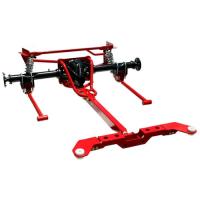
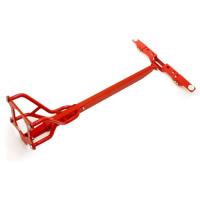
A torque arm suspension uses one long arm to stop the rear axle housing from rotating under acceleration and braking. The arm attaches rigidly to the axle housing and runs forward to a front mount near the transmission tailshaft or crossmember. When you launch hard, the housing tries to rotate and the pinion climbs upward, which is called axle wrap.
The torque arm resists that twist, so your pinion angle stays close to where you set it. That keeps driveline angles consistent and helps the rear tires stay planted.
Because the arm only handles rotation, the rest of the rear end has to do its part. Lower control arms locate the axle front to rear, and a panhard bar keeps it centered side to side. That's why torque arm cars often upgrade these parts together, and you'll find them in our suspension components category.
Torque Arm Mount Styles and Designs
Torque arms are grouped by where the front of the arm mounts, which affects load paths and transmission clearance. The factory 1982-2002 F-body arm mounts to the transmission, while many aftermarket designs move that load to the chassis.
Here's how the main styles on this page compare.
- Transmission-mounted torque arms use the factory tailshaft location, like the UMI Performance arm for 1982-2002 Camaro and Firebird.
- Tunnel brace-mounted torque arms anchor to a brace across the transmission tunnel, taking load off the transmission housing.
- Relocation mount kits move the front mount off the transmission, including UMI kits for 1998-2002 Camaro and Firebird.
- Complete torque arm suspension kits for 1967-73 F-body cars convert early Camaros and Firebirds from leaf springs to a torque arm rear.
- Replacement brackets and grommets refresh worn mounts, such as the Energy Suspension red transmission torque arm grommet.
Consider a chassis-mounted design if you're swapping transmissions. BMR Suspension also offers replacement brackets for its Trak Pak and Xtreme torque arm kits.
Choosing a Torque Arm Kit or a Torque Arm Only
Buy a torque arm only if the rest of your rear suspension is in good shape. Choose a torque arm kit if you're changing the front mount. A standalone arm, like the BMR Torque Arm for 1982-02 GM F-body cars, replaces the factory arm at the original location.
Kits pair the arm with a mount, like the UMI Torque Arm Relocation Mount and Torque Arm Kit for 1998-2002 Camaro and Firebird. BMR's Trak Pak Torque Arm Kit is another option for 1982-02 F-body cars. Check each listing to see exactly what's included, or use the Mounting Hardware Included filter.
An adjustable torque arm lets you fine-tune pinion angle after you change ride height, rear end parts or power level. If you plan more upgrades later, adjustability can save you from buying a second arm. Shopping for bushings, mounts or hardware on their own? Browse our torque arm components to refresh the parts around your arm.
Camaro and Firebird Torque Arm Fitment
Most Camaro torque arm parts here fit specific GM F-body generations, so start with your car's model year. The 1982-2002 Camaro and Firebird came with a factory torque arm, and that's where you'll find the most choices.
Some parts cover a narrower range. UMI's tunnel brace-mounted torque arm fits 1993-2002 cars, and its torque arm relocation kits fit 1998-2002 models. Always match the listed years to your car before you order.
First- and second-generation F-bodies need a different approach, since they left the factory with leaf springs. BMR offers torque arm suspension kits for 1967-69 and 1970-73 GM F-body models, plus a torque arm for 1970-73 cars. These kits suit restomod and pro-touring builds where you want a modern rear suspension under a classic body. If you're updating the whole chassis, browse our full range of chassis, steering and suspension parts for brakes, steering and front suspension.
Torque Arms vs 4-Link and Other Rear Suspension Parts
Torque arms control axle rotation with one long arm, while a 4-link uses four bars to control both rotation and fore-aft axle location. On an F-body, the torque arm works with lower control arms and a panhard bar to do the same job.
A torque arm setup is simple and well suited to street cars that also see road course or autocross use. A 4-link offers more adjustment for instant center and launch behavior, which is why drag racers often choose it. Ladder bars are another drag-focused option with fewer adjustment points.
If you're weighing a different rear suspension, compare 4-link rear suspension kits and components before you buy. Our 4-link suspension setup guide explains how bar angles affect launch. The 4-link vs ladder bars comparison helps you match a design to your build. Ready to stick with a torque arm? Shop the torque arms above by mount style and fitment.

ADD A VEHICLE TO GUARANTEE PARTS FIT
See products that fit

ADD A VEHICLE TO GUARANTEE PARTS FIT
See products that fit

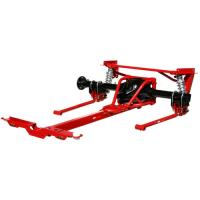
BMR SUSPENSION
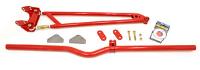
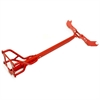
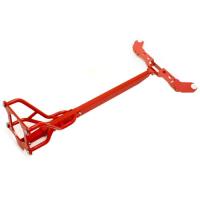
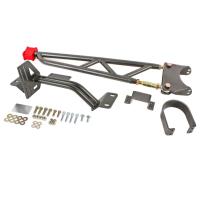
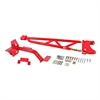
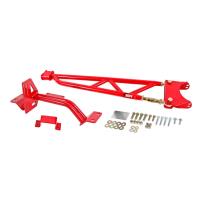
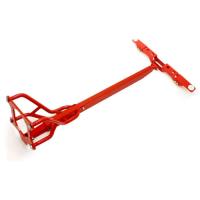
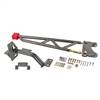
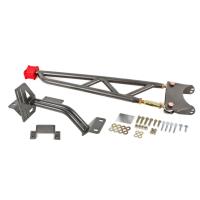
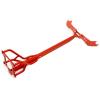
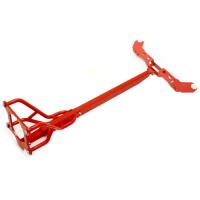
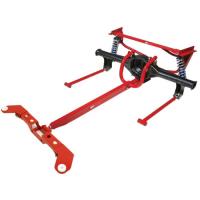
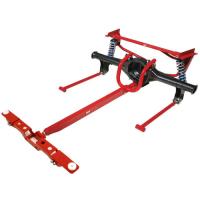
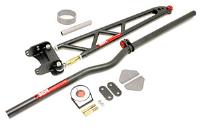
Torque Arm Crossbrace Replacement For Trak Pak TPU001 & Xtreme Torque Arm Kit XTA001
Part Number: 142-CB001R
 Ships on 10/13/2026
 Lowest price guarantee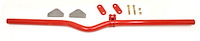
BMR SUSPENSION
Torque Arm Crossbrace Replacement For Trak Pak TPU001 & Xtreme Torque Arm Kit XTA001
Part Number: 142-CB001R
Ships on 10/13/2026Lowest Price Guarantee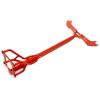








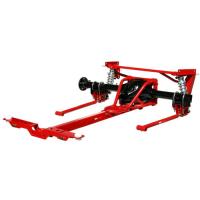
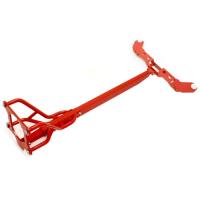


BMR SUSPENSION
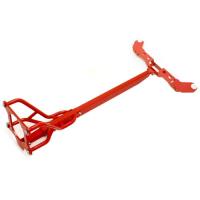
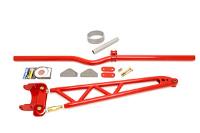
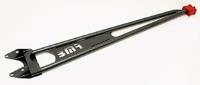
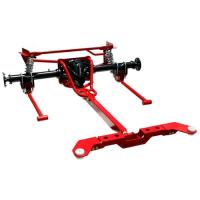
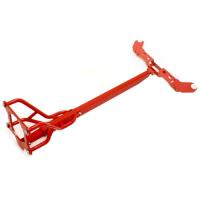
Torque Arm Crossbrace Replacement For Trak Pak TPU001 & Xtreme Torque Arm Kit XTA001
Part Number: 142-CB001H
Ships on 10/13/2026Lowest price guarantee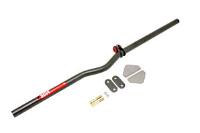
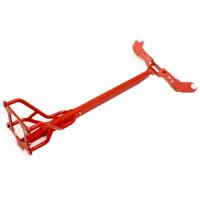
BMR SUSPENSION
Torque Arm Crossbrace Replacement For Trak Pak TPU001 & Xtreme Torque Arm Kit XTA001
Part Number: 142-CB001H
Ships on 10/13/2026Lowest Price Guarantee
Frequently Asked Questions About Torque Arms
What Is Another Name for a Torque Arm?
In automotive parts listings, you'll usually see it called a torque arm, torque arm assembly or part of a torque arm rear suspension. It's sometimes confused with a torque tube, an older design that encloses the driveshaft inside a rigid tube. The same name also describes unrelated parts for e-bikes and industrial tools.
Do Torque Arms Reduce Wheel Hop?
Yes, a properly installed torque arm helps reduce wheel hop by controlling axle wrap, a common cause of hop during hard launches. Worn bushings, tired shocks and a loose front mount can still let the axle move. Check those parts when you install a new arm.
Should I Also Upgrade My Panhard Bar When Installing a Torque Arm?
It's worth considering, especially if your car still has the factory bar and rubber bushings. The panhard bar handles side-to-side axle location, so a flexible bar can undercut the stability you gain from a stiffer torque arm. An adjustable bar also lets you re-center the axle after lowering, and you'll find options in our panhard bars and track bars category.
Can I Adjust Pinion Angle With a Torque Arm?
You can with an adjustable torque arm or an adjustable front mount. A fixed arm holds the pinion angle set by its mounting geometry. After any adjustment, confirm the angle with an angle finder before you drive the car hard.
Why Do Some Torque Arms Come in Different Colors or Part Number Suffixes?
Some torque arms are listed under part numbers with different letter suffixes, such as 142-TA001R and 142-TA001H for the BMR arm for 1982-02 F-body cars. These suffixes separate color variants of the same arm. Use the Color and Finish filters, then check each listing to confirm the version you want.