


 Order Status & Returns
 Gift Cards
 Help Center
 1-800-345-4545
Panhard Bars, Track Bars & Rods
Track bars keep your solid axle centered under the vehicle, so it tracks straight and stays planted through turns. This category covers panhard bars and rods, track rods, adjustable track bars, brackets, and bushings for muscle cars, street rods, drag cars, trucks, and Jeeps. At JEGS, you can compare direct-fit replacements, universal weld-on kits, and mounting hardware from multiple suspension brands in one place.
Show More
What Does a Track Bar Do?
A track bar keeps a solid axle centered under the vehicle by stopping it from shifting side to side. One end mounts to the axle and the other to the frame or body. The axle can still move up and down, but its lateral position stays fixed.
Panhard bar, panhard rod, track bar, and track rod are four names for the same part. You'll find them on live-axle cars, coil-spring trucks, Jeeps, and many custom rear suspensions. Without firm lateral location, the body shifts around the axle in turns, which feels like vague steering and rear-end wander.
Because the bar pivots in an arc, the axle moves slightly sideways through suspension travel. That's why bar length and mounting height matter as much as bar strength. On GM F-Body cars, the rear track bar works with the factory torque arm, so many owners upgrade the bar alongside torque arms.
If you're planning a full rear setup, compare track bars with the rest of our suspension components. You can also browse the wider chassis, steering & suspension parts lineup to match springs, shocks, and bars.
Adjustable Track Bars vs. Fixed Panhard Bars
An adjustable track bar lets you change its length to re-center the axle, while a fixed panhard bar holds one factory length. Lifting or lowering a vehicle changes the bar's angle, and that pulls the axle toward one side. You'll often notice it as uneven gaps between the tires and fenders.
An adjustable bar uses a threaded end, often with a rod-end design, so you can dial the axle back to center after a ride-height change. If your adjuster uses heim joints, keep spare rod ends & jam nuts on hand for service and fine-tuning. You'll also find BMR Suspension track bars in this category.
Fixed bars suit stock-height vehicles and OE-style repairs where factory geometry still applies. They have fewer parts to inspect and no adjuster to loosen over time. Building a race rear end? Read our 4-link suspension setup guide before you set bar height, since it affects roll center and weight transfer.
Panhard Bar Brackets, Bushings, and Mounting Hardware
A track bar only locates the axle as well as its brackets and bushings allow. Worn rubber, cracked brackets, or stretched bolt holes let the axle move even when the bar itself is straight. This category includes hardware to mount, repair, or relocate a bar:
- Allstar Performance ALL60244 frame-mount panhard bar bracket for 1-1/2 x 1-1/2 in. square tubing
- Powdercoated steel construction and 3/4 in.-10 threads on the ALL60244 bracket
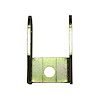
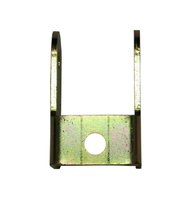
- Allstar Performance ALL60089 track bar locator bracket with a 3/4 in. mounting hole
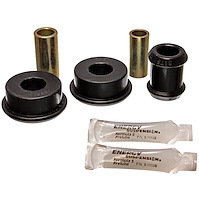
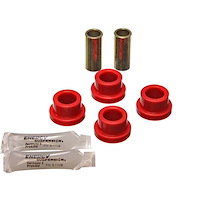
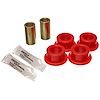
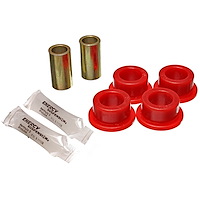
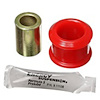
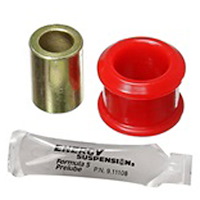
- Prothane 1-1208 red rear track bar bushing kit for replacing tired factory bushings
Polyurethane bushings resist deflection better than soft rubber, so the axle stays put under cornering loads. Expect a little more road feel in return. Inspect the bolts, brackets, and bushings any time you replace the bar, since a new bar on worn mounts won't stop wander.
Track Bars for Muscle Cars, Street Rods, and Drag Cars
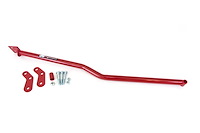
For muscle cars, street rods, and drag cars, you can choose a direct-fit bar for a specific chassis or a universal kit for custom builds. The UMI Performance 2029-R rear panhard bar fits 1982-2002 GM F-Body cars and comes in red. For 1958-64 Chevy full-size and Impala builds, the Global West PHC-84BKT adjustable panhard rod bracket lets you tune bar position.
Fabricating your own rear end? The JEGS 555-64600 weld-on track rod kit is made for use with 4-link suspensions or ladder bars. The Competition Engineering 247-2037 universal panhard bar gives custom chassis a starting point for fabricated mounts.
Pair either one with 4-link rear suspension kits & components to complete the rear setup. Still choosing a rear design? Our 4-link rear suspension vs. ladder bars comparison explains the tradeoffs for street and strip use. Check each product's fitment notes before ordering, since bracket spacing and bar length vary by chassis.
Replacement Track Bars for Trucks and Jeeps
If your truck or Jeep wanders on the highway or shakes hard after a bump, a worn track bar is a common cause. On solid front axles, loose bushings or a worn bar end let the axle shift, and that play can contribute to death wobble. Other signs include clunking over bumps, an off-center steering wheel, and uneven tire wear.
OE-style replacements restore factory geometry on stock-height trucks. Dorman Products 524-271 fits 1995-2007 Ford and 2004-2007 Mercury applications, and 524-263 fits 1994 Dodge. The ProForged 106-10109 and Rough Country 31005 suspension track bars give you more options, so confirm fitment for your vehicle before ordering.
After you install a new bar, get an alignment to re-center the steering wheel. Leaf-spring trucks with axle wrap under hard launches need traction bars, which control axle rotation rather than side-to-side movement. Our guide on how to install traction bars walks you through the job.

ADD A VEHICLE TO GUARANTEE PARTS FIT
See products that fit

ADD A VEHICLE TO GUARANTEE PARTS FIT
See products that fit
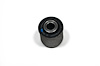
STEER SMARTS
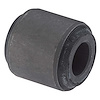
59028001 Yeti XD Replacement Track Bar Bushing Fits Select Jeep Wrangler JK/JL, Gladiator JT
Part Number: 974-59028001
 Ships on Oct 12, 2026
 Lowest price guarantee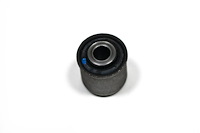
STEER SMARTS
59028001 Yeti XD Replacement Track Bar Bushing Fits Select Jeep Wrangler JK/JL, Gladiator JT
Part Number: 974-59028001
Ships on Oct 12, 2026Lowest Price Guarantee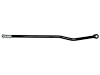
NOLATHANE
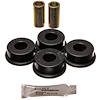
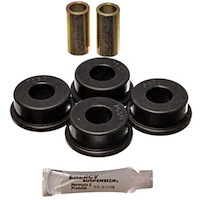
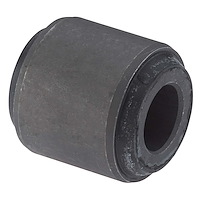
Rear Suspension Track Bar Bushing for 2015-2016 Nissan Frontier
Part Number: 622-REV142.0006
Ships on Oct 12, 2026Lowest price guarantee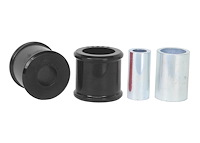
NOLATHANE
Rear Suspension Track Bar Bushing for 2015-2016 Nissan Frontier
Part Number: 622-REV142.0006
Ships on Oct 12, 2026Lowest Price Guarantee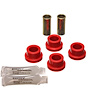

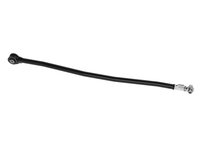
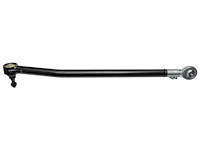
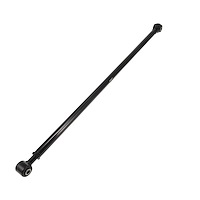
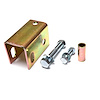
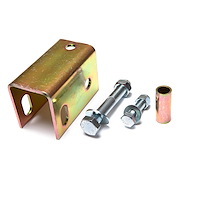

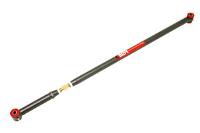

STEER SMARTS
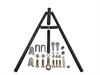
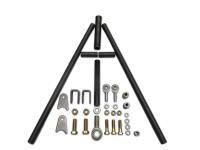
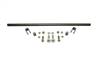
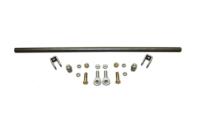
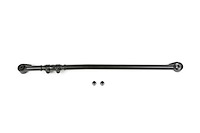
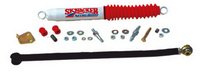
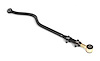
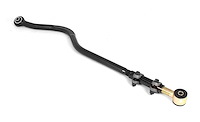
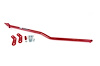
75040002 Yeti XD Front Adjustable Track Bar Fits Select Jeep Wrangler JL, Gladiator JT
Part Number: 974-75040002
Ships on Oct 12, 2026Lowest price guarantee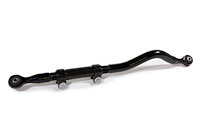
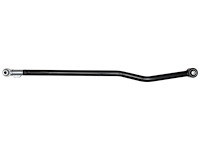
STEER SMARTS
75040002 Yeti XD Front Adjustable Track Bar Fits Select Jeep Wrangler JL, Gladiator JT
Part Number: 974-75040002
Ships on Oct 12, 2026Lowest Price GuaranteeFrequently Asked Questions About Track Bars
Is a panhard bar the same as a track bar?
Yes. Panhard bar, panhard rod, track bar, and track rod all describe one lateral locating link between the axle and chassis. Part listings use different names by vehicle and era, so search both terms when you check fitment.
Panhard bar vs. Watts link: which is better?
A Watts link uses two horizontal links and a center pivot, so the axle moves almost straight up and down with very little side shift. A panhard bar is simpler, lighter, and easier to install, but the axle moves slightly sideways through travel. For most street cars and trucks, a well-mounted panhard bar works well. Road racers chasing precise roll-center control often choose a Watts link.
What's the difference between a panhard bar and a sway bar?
A panhard bar locates the axle side to side, while a sway bar controls body roll by linking the left and right suspension. The sway bar twists as one side compresses, which resists lean in corners. Many vehicles use both, since each one solves a different problem.
Is a track bar the same as a traction bar?
No. A track bar controls lateral axle movement, while a traction bar limits axle wrap, the twisting a leaf-spring axle sees under hard acceleration. Traction bars run front to rear under the vehicle, and track bars run across it.
How do I know my track bar is the right length or centered?
Park on level ground at ride height and measure from each side of the axle to the same point on the frame or quarter panels. Equal measurements mean the axle is centered, so adjust bar length until both sides match. The bar should also sit close to level at ride height to limit side shift through travel.