


 Order Status & Returns
 Gift Cards
 Help Center
 1-800-345-4545
Rod Ends & Jam Nuts
Rod ends and jam nuts let you build adjustable links that pivot freely and hold their length once you lock them down. You'll find 300+ heim joints, jam nuts, spacers, seals and threaded tube ends here, and many ship same day. Add a vehicle, then filter by size, material, position and brand to narrow your options fast.
Show More
What Are Rod Ends and Heim Joints?
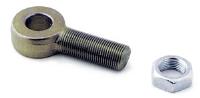
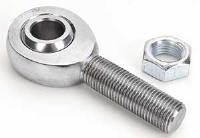
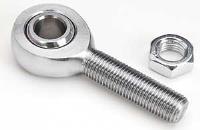
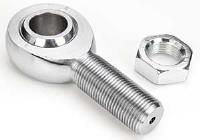
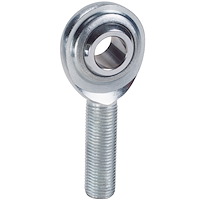
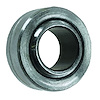
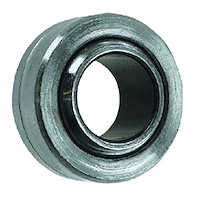
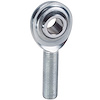
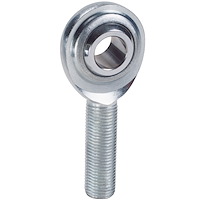
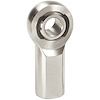
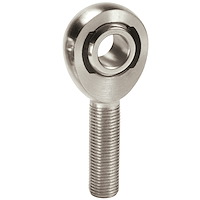
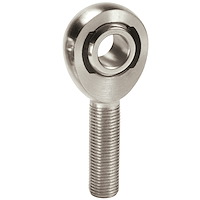
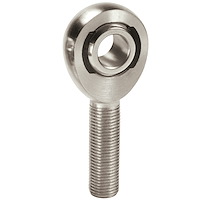
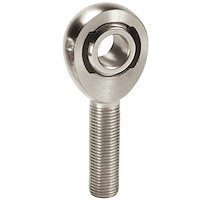
A rod end is a ball swivel held inside a housing with a male or female threaded shank. You'll also hear them called heim joints, rod end joints or rose joints, and all three names describe the same part.
The ball lets the joint pivot and absorb misalignment, while the threaded shank sets the link's length. That gives you a strong, adjustable connection between a moving link and a fixed mount. Most installs pair each rod end with a jam nut that locks the setting in place.
Rod ends connect many of the moving parts in our suspension components category. They also show up across our wider range of chassis, steering & suspension parts.
Before you buy, confirm four details: thread size, thread direction, hole size and shank style. If any one of them is wrong, the rod end won't fit your tube or your mount.
Two-Piece vs. Three-Piece Rod Ends: Which Do You Need?
Pick two-piece rod ends for linkages and lighter-duty links, and three-piece rod ends for higher loads and tighter tolerances. The difference comes down to how the ball is held in the body.
Here's how the two designs compare:
- Two-piece rod ends press the ball directly into the body, which keeps cost down for linkages and light-duty links.
- Three-piece rod ends add a separate race around the ball, which gives you less play and longer life under load.
- JEGS two-piece rod ends with jam nut come in 3/16", 5/16", 3/8" and 5/8" hole sizes, plus a 3/4" hole kit.
- JEGS three-piece rod ends with jam nut come in 1/2" and 3/4" hole sizes.
Match the construction to the job. A throttle linkage doesn't see the same forces as a rear suspension bar, so you don't need to spend the same money on both.
If you want a moly option, the Allstar Performance Pro Series rod end comes in a black finish.
Choosing Rod End Materials: Chromoly, Carbon Steel and PTFE-Lined
Choose chromoly rod ends for high-load suspension links, carbon steel for moderate loads and PTFE-lined rod ends when you want quiet, grease-free operation. The material filter makes it easy to sort by each type.
Here's what each material brings to your build:
- Chromoly rod ends are stronger than carbon or mild steel, so they suit 4-link bars and other high-load pivot points.
- Carbon steel rod ends, such as the QA1 CM Series and EXM Series, cover many street and linkage jobs.
- PTFE-lined rod ends use a self-lubricating liner, so they run quieter and don't need grease.
- Alloy steel options include QA1 Endura rod ends and MIB-T PTFE-lined spherical bearings.
For chromoly, Competition Engineering Magnum Series Chrome Moly Rod Ends come in 5/8" and 3/4" thread sizes. Each size is offered in right-hand and left-hand versions.
QA1 also offers the XM Chromoly Steel Series and the PCM Series PTFE-lined rod ends.
Right-Hand vs. Left-Hand Threads and Jam Nuts
Adjustable links use one right-hand and one left-hand rod end, so turning the tube changes the link's length. You don't have to unbolt either end to make an adjustment.
A jam nut is a thin, low-profile nut you tighten against the tube to lock that setting. Jam nuts come in right-hand and left-hand threads, and a left-hand thread rod end needs a left-hand jam nut. The same idea applies to a tie rod jam nut on your steering linkage.
Competition Engineering sells Extra Heavy Duty Chrome Moly Rod Ends in 3/4" RH and LH versions, which makes pairing easy. For replacement nuts, the QA1 5/8"-18 jam nut shows why you need to match both thread size and pitch.
If you're building adjustable bars, browse our 4-link rear suspension kits & components. Then read our 4-link suspension setup guide before you set bar lengths and tighten your 4-link rod ends.
Where Rod Ends Are Used in Suspension and Steering
You'll find rod ends anywhere a link needs to pivot and adjust. Here are the most common places you'll install them:
- 4-link bars and trailing arms use rod ends to set bar length and let the axle move through its travel.
- Panhard bars and track bars use rod ends to locate the axle side to side.
- Steering linkages and tie rods rely on jam nuts to lock toe adjustment.
- Shifter and throttle linkages use small rod ends for smooth pivots with little play.
Shop our panhard bars & track bars if you're adding lateral location. You'll also find the Wehrs Machine WM441 center pull rear trailing arm, QA1 GM-T Series rod ends and PTFE-lined shock bearings here.
Still deciding on a rear setup? Our 4-link rear suspension vs. ladder bars comparison covers the tradeoffs. For leaf-spring cars, see how to install traction bars.
Once you know your sizes, shop rod ends and jam nuts now and add rod end spacers and seals to finish the install.

ADD A VEHICLE TO GUARANTEE PARTS FIT
See products that fit

ADD A VEHICLE TO GUARANTEE PARTS FIT
See products that fit



QA1
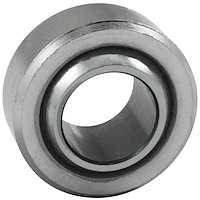
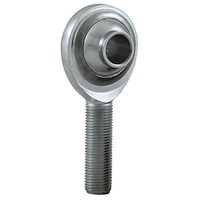
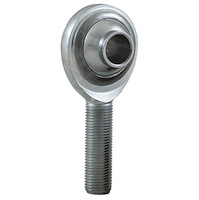
PCYM-T Series High Misalignment, PTFE Lined, Chromoly Steel Rod End 5/8 in. x 3/4 in.-16
Part Number: 122-PCYMR10-12T
 Ships Tomorrow
 Lowest price guarantee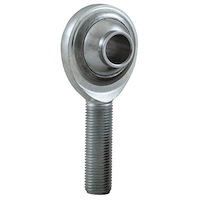
QA1
PCYM-T Series High Misalignment, PTFE Lined, Chromoly Steel Rod End 5/8 in. x 3/4 in.-16
Part Number: 122-PCYMR10-12T
Ships TomorrowLowest Price Guarantee
![One-Piece Rod End with Jam Nut [1 in.-1.250 LH x 3 in. L Male Threads] 2.626 in. Ball Width; Yellow Zinc Finish](https://www.jegs.com/images/mini_100/700/746/746-pce420.1003.jpg)
SPEEDMASTER
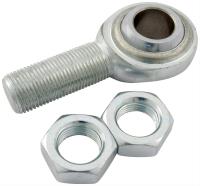
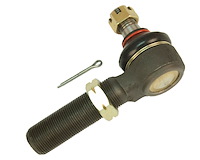
One-Piece Rod End with Jam Nut [1 in.-1.250 LH x 3 in. L Male Threads] 2.626 in. Ball Width; Yellow Zinc Finish
Part Number: 746-PCE420.1003
Ships TomorrowLowest price guarantee![One-Piece Rod End with Jam Nut [1 in.-1.250 LH x 3 in. L Male Threads] 2.626 in. Ball Width; Yellow Zinc Finish](https://www.jegs.com/images/mini_200/700/746/746-pce420.1003.jpg)
SPEEDMASTER
One-Piece Rod End with Jam Nut [1 in.-1.250 LH x 3 in. L Male Threads] 2.626 in. Ball Width; Yellow Zinc Finish
Part Number: 746-PCE420.1003
Ships TomorrowLowest Price Guarantee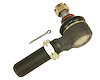

QA1
PCYFR8T PCYF-T Series High Misalignment, PTFE Lined, Chromoly Steel Rod End, 1/2 in.-20 Thread
Part Number: 122-PCYFR8T
Ships TomorrowLowest price guarantee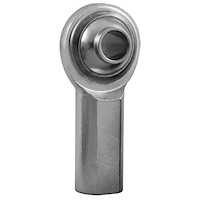
QA1
PCYFR8T PCYF-T Series High Misalignment, PTFE Lined, Chromoly Steel Rod End, 1/2 in.-20 Thread
Part Number: 122-PCYFR8T
Ships TomorrowLowest Price Guarantee
Frequently Asked Questions About Rod Ends and Jam Nuts
What is the purpose of a jam nut on a tie rod?
A tie rod jam nut locks the tie rod end in place so it can't rotate on its threads. That keeps your toe setting from drifting as the steering sees vibration and load. Always tighten the jam nut after you finish an alignment.
Which way do I turn a jam nut to tighten it?
Turn a right-hand jam nut clockwise and a left-hand jam nut counterclockwise, viewed from the rod end side. Run the nut toward the tube until it seats against the tube end. Hold the rod end steady while you tighten so your length setting doesn't change.
How do I measure rod end size?
Rod ends are sized by hole size and thread size. Measure the inside diameter of the ball's bore for hole size, then measure the shank diameter and thread pitch. You'll also need to know thread direction and whether the shank is male or female.
Are heim joints good for street-driven cars?
Yes, as long as you plan for dirt and moisture. Unsealed heim joints wear faster on the street because debris gets between the ball and the race. Rod end seals help keep contaminants out and extend service life.
Do PTFE-lined rod ends need grease?
No. PTFE-lined rod ends use a self-lubricating liner between the ball and the race, so you don't need to add grease. That's also why they tend to run quieter than metal-on-metal designs.