Sign up now to join the JEGS email newsletter and be the first to learn about new products, special deals and e-mail only offers!

 2 People Found This Article Helpful
By
When building a drag car, street and strip machine, or serious performance vehicle, rear suspension design plays a major role in traction and launch performance. Two of the most common setups used in performance applications are the 4 link rear suspension and ladder bars. Each system has unique advantages depending on the type of vehicle, horsepower level, and how the car will be driven.
Understanding the differences between a 4 link suspension and ladder bars can help you choose the right setup for your project.
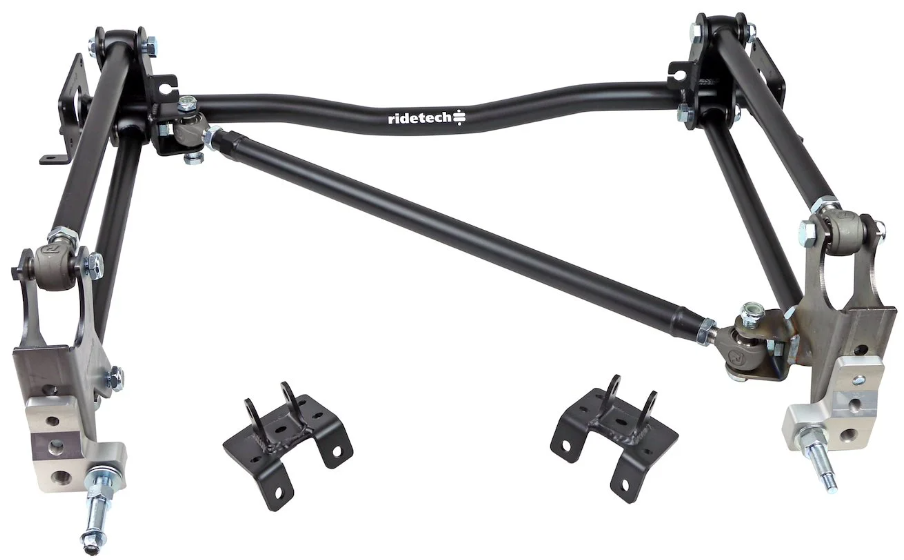
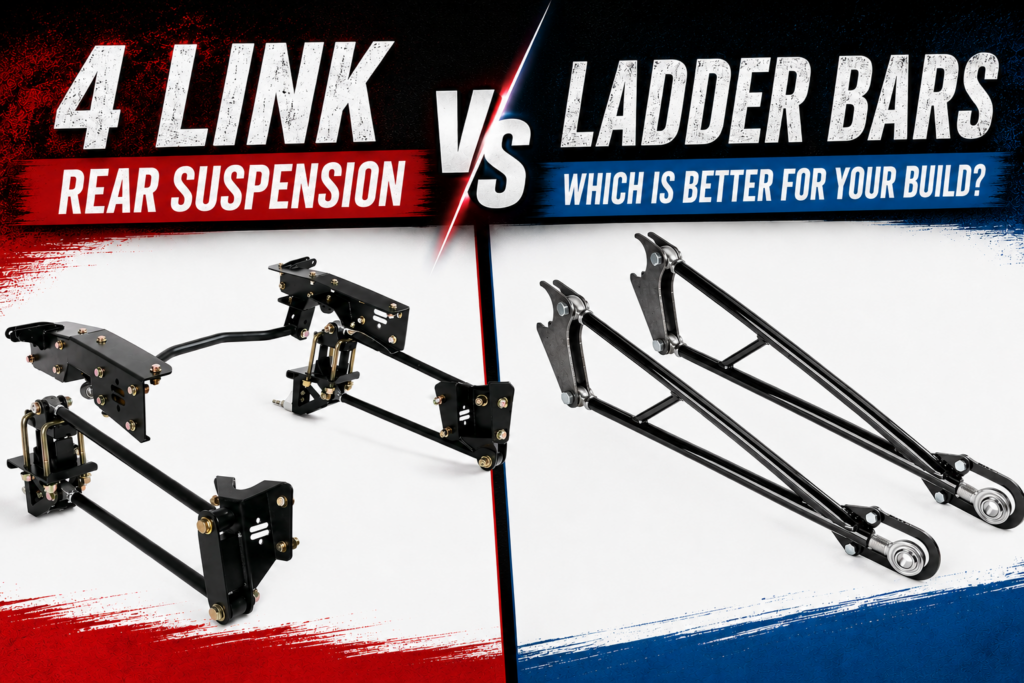
A 4 link rear suspension uses four adjustable control arms to locate the rear axle and control how power is transferred to the tires. Two upper bars and two lower bars connect the rear axle housing to the chassis. These bars can be mounted in multiple positions, allowing suspension geometry to be adjusted for different track conditions and power levels.
Because of its adjustability, the 4 link system is widely used in drag racing and other forms of motorsports where traction tuning is critical.
Manufacturers such as Competition Engineering and JEGS produce 4 link kits that are commonly used in high horsepower builds.
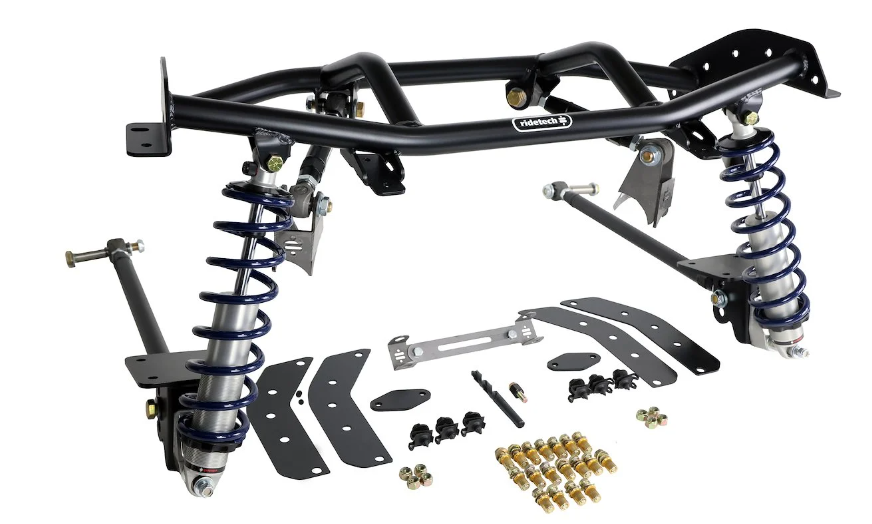
The biggest advantage of a 4 link rear suspension is tunability. By adjusting bar angles and mounting locations, racers can fine tune how the suspension reacts during launch.
A properly set up 4 link system can improve weight transfer, increase traction, and help the car launch harder without spinning the tires.
This level of adjustability makes 4 link suspensions very popular in drag racing where track conditions change frequently.
Another advantage is flexibility. A 4 link system can be adapted to different tire sizes, power levels, and chassis configurations.

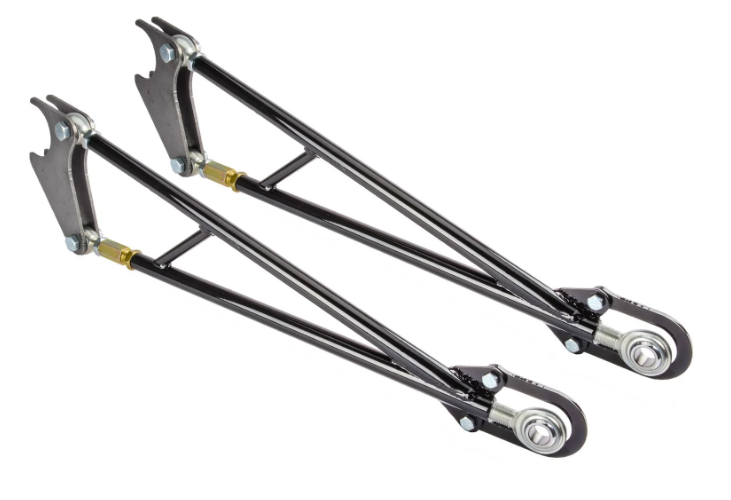
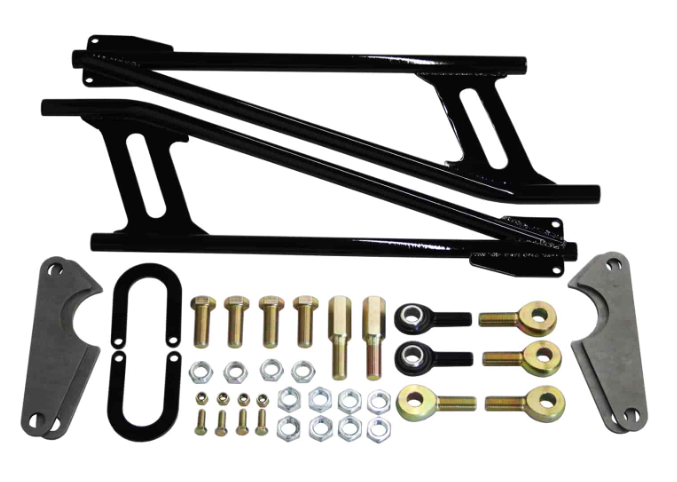
Ladder bars are another popular rear suspension system commonly used in drag racing and street performance cars. A ladder bar setup uses two long triangular bars that connect the rear axle housing to the chassis.
Each ladder bar has two mounting points at the axle and a single pivot point at the chassis. This design helps control axle rotation and transfers engine torque to the rear tires during acceleration.
Ladder bars are known for their strength and simplicity, making them a reliable option for many performance builds.
Companies such as Competition Engineering and JEGS offer ladder bar kits designed for drag racing and street applications.
Sign up now to join the JEGS email newsletter and be the first to learn about new products, special deals and e-mail only offers!
Ladder bars are simpler to install and set up compared to a full 4 link system. Because there are fewer adjustment points, they are often easier for beginners to tune.
This simplicity makes ladder bars a popular choice for street and strip vehicles where maximum adjustability may not be necessary.
Ladder bars also provide strong and consistent traction when launching hard at the drag strip.
For many drag racing applications, ladder bars deliver reliable performance with minimal setup changes.
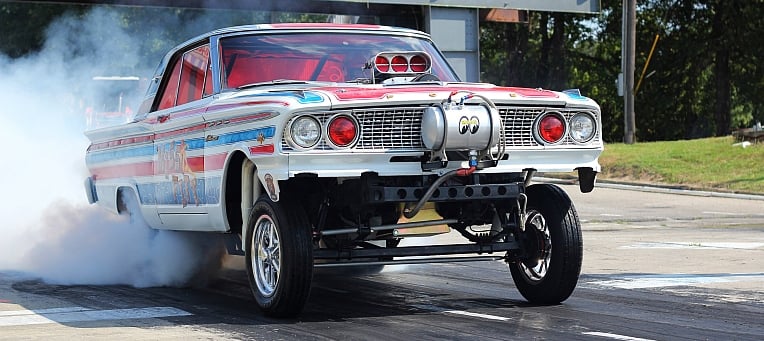
The main difference between a 4 link suspension and ladder bars is adjustability. A 4 link system allows extensive tuning of suspension geometry, which can optimize traction under varying conditions.
Ladder bars focus on simplicity and strength. They provide predictable performance but offer fewer adjustment options.
Another consideration is ride quality. A properly designed 4 link suspension often offers better ride characteristics for vehicles that see both street and track use.
Ladder bar setups are typically more focused on straight line performance.
The best suspension choice depends on how the vehicle will be used.
For serious drag racing where traction tuning is important, a 4 link rear suspension provides the adjustability needed to maximize performance.
For street and strip cars or simpler drag builds, ladder bars offer a durable and straightforward solution that can still provide excellent launches.
Vehicle weight, horsepower level, tire size, and chassis design should all be considered when choosing between these systems.
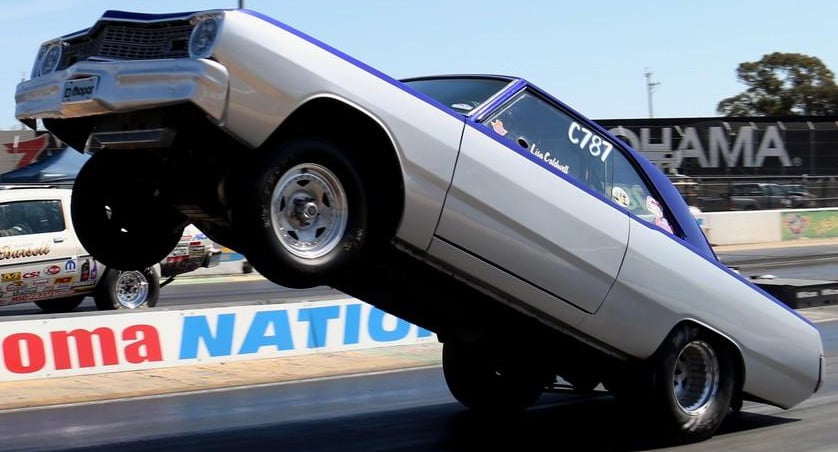
Selecting the right rear suspension setup can make a significant difference in traction, launch performance, and overall vehicle stability.
At www.jegs.com, you will find rear suspension kits, ladder bar systems, 4 link suspension components, coilovers, and chassis parts from trusted manufacturers such as Competition Engineering, JEGS, and Alston Race Cars.
If you need help choosing between a 4 link rear suspension and ladder bars for your project, the JEGS Tech Specialists are available to help you select the right components for your vehicle and performance goals.


Leave a Reply