


 Order Status & Returns
 Gift Cards
 Help Center
 1-800-345-4545
Brake Proportion Valves & Balance Bars
Brake proportion valves control how much hydraulic pressure reaches your rear brakes, so the rear wheels don't lock up before the fronts. If you're adding front discs or converting to 4-wheel disc, the right valve keeps your brake bias in check. You'll find adjustable and fixed proportioning valves, distribution blocks, metering valves, balance bars, and the brackets and tools to install them.
Show More
What Does a Brake Proportion Valve Do?
A brake proportion valve limits hydraulic pressure to the rear brakes once line pressure passes a set point. That keeps the rear tires from locking before the fronts. It matters because weight shifts forward when you brake, loading the front tires and unloading the rears.
Your front brakes end up doing most of the stopping work. The set point where the valve starts working is called the knee point, or split point. Below it, the front and rear brakes see equal pressure, and above it, the valve passes only part of any added pressure to the rear.
Getting this front-to-rear brake bias right keeps the car straight and stable in hard stops. Too much rear pressure causes early rear lockup and spins, while too little wastes rear braking power. For the other end of the hydraulic system, read our brake master cylinder FAQs or browse all brake parts for your build.
Adjustable vs. Fixed Proportioning Valves
An adjustable proportioning valve lets you dial in rear brake pressure with a rotary knob, while a fixed valve uses a preset ratio. Choose adjustable for custom, street/strip, and race builds. Choose fixed when you want factory-style behavior on a known disc/drum or disc/disc setup.
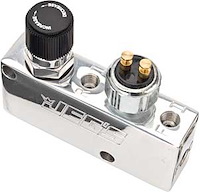
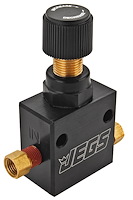
JEGS offers an adjustable proportioning valve and distribution block with a rotary adjustment valve in black billet aluminum, black, and chrome. Adjustable valve kits add a mounting bracket and brake lines, so you need fewer extra parts. You can also add standalone proportioning valve brackets for a clean install.
Adjustable valves are also available from Wilwood. If you're running one, read how to adjust a Wilwood proportioning valve before your first test stops.
Fixed OE-style valves need no tuning. They only work as intended with the brake combination they were built for, so match the valve to your exact setup.
Proportioning Valves vs. Distribution Blocks, Metering Valves, and Combination Valves
A proportioning valve reduces rear pressure, while distribution blocks, metering valves, and combination valves handle other jobs in the brake circuit. Many OE-style parts combine several of these functions in one housing, so it pays to know what each one does.
Here's how each component works:
- A proportioning valve limits rear brake pressure above the knee point to prevent rear lockup.
- A brake distribution block splits master cylinder output into front and rear lines and often houses a brake warning switch.
- A metering valve briefly holds off front disc pressure so rear drum shoes can overcome their return springs.
- A combination valve packs metering, proportioning, and a pressure-differential warning switch into one OE-style body.
This category includes valves and blocks from Right Stuff, RPC, and Leed Brakes, plus a universal hot rod drum/drum metering valve. Shop all proportioning valves and line locks to compare options side by side.
How to Choose a Proportioning Valve for Your Brake Setup
Start with your brake combination, then match the valve to your master cylinder and line routing. A disc/drum proportioning valve won't give the right balance on a disc/disc car, and the reverse is true.
Use these checkpoints to narrow your choice:
- Disc/drum cars need rear proportioning, and GM disc/drum valve kits mount on the left/driver side.
- Disc/disc systems use an OE-style GM disc/disc valve or an adjustable valve to fine-tune rear bias.
- Drum/drum systems often run a distribution block or a drum/drum metering valve.
- 4-wheel disc conversions call for a dedicated valve, such as a one-piece brass-body unit, paired with drum and disc brake conversion kits.
- Vehicle-specific parts fit 1965-1973 Mustang, 1967-1969 Corvette, 1967-1969 Camaro, and 1962-1976 Chrysler A-, B-, C-, and E-body cars.
Check that the valve's ports match your master cylinder, and browse master cylinders if you're upgrading both. Finish the plumbing with brake lines and brake line fittings in the correct thread size and flare type.
Balance Bars and Line Locks for Race Brake Systems
A brake balance bar is a pedal-mounted bias adjuster for cars with dual master cylinders. It splits pedal force between the front master cylinder and the rear one. Instead of reducing pressure in a line, it changes how hard the pedal pushes each master cylinder.
Race cars with dual master cylinders use balance bars to shift brake bias in small steps without changing the plumbing. Some builds pair a balance bar with an adjustable valve for finer tuning. Make small adjustments and test after each change, since a few turns can noticeably move the bias.
A line lock is a solenoid valve that holds pressure in the front brake lines while the rear brakes release. Drag racers use one to hold the car during burnouts and staging. Browse line lock and roll control kits to add one to your system.

ADD A VEHICLE TO GUARANTEE PARTS FIT
See products that fit

ADD A VEHICLE TO GUARANTEE PARTS FIT
See products that fit
![Adjustable Brake Proportioning Valve and Distribution Block w/Rotary Adjustment Valve [Black, Billet Aluminum]](https://www.jegs.com/images/mini_100/500/555/555-63025.jpg)
JEGS
Adjustable Brake Proportioning Valve and Distribution Block w/Rotary Adjustment Valve [Black, Billet Aluminum]
Part Number: 555-63025
 Ships on Oct 19, 2026
 Lowest price guarantee
![Adjustable Brake Proportioning Valve and Distribution Block w/Rotary Adjustment Valve [Black, Billet Aluminum]](https://www.jegs.com/images/mini_200/500/555/555-63025.jpg)
JEGS
Adjustable Brake Proportioning Valve and Distribution Block w/Rotary Adjustment Valve [Black, Billet Aluminum]
Part Number: 555-63025
Ships on Oct 19, 2026Lowest Price Guarantee![Brake Proportioning Valve for Disc/Drum Applications [GM]](https://www.jegs.com/images/mini_100/500/555/555-631290.jpg)
JEGS
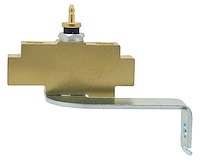
Brake Proportioning Valve for Disc/Drum Applications [GM]
Part Number: 555-631290
Ships on Oct 19, 2026Lowest price guarantee![Brake Proportioning Valve for Disc/Drum Applications [GM]](https://www.jegs.com/images/mini_200/500/555/555-631290.jpg)
JEGS
Brake Proportioning Valve for Disc/Drum Applications [GM]
Part Number: 555-631290
Ships on Oct 19, 2026Lowest Price Guarantee

![Brake Proportioning Valve & Bleeder Tool Kit for Disc/Drum Applications [GM]](https://www.jegs.com/images/mini_100/500/555/555-631290k.jpg)
JEGS
Brake Proportioning Valve & Bleeder Tool Kit for Disc/Drum Applications [GM]
Part Number: 555-631290K
Ships on Oct 19, 2026Lowest price guarantee![Brake Proportioning Valve & Bleeder Tool Kit for Disc/Drum Applications [GM]](https://www.jegs.com/images/mini_200/500/555/555-631290k.jpg)
JEGS
Brake Proportioning Valve & Bleeder Tool Kit for Disc/Drum Applications [GM]
Part Number: 555-631290K
Ships on Oct 19, 2026Lowest Price Guarantee![Adjustable Brake Proportioning Valve Kit with Mounting Bracket and Brake Lines [w/Black Proportioning Valve]](https://www.jegs.com/images/mini_100/500/555/555-631452.jpg)
JEGS
Adjustable Brake Proportioning Valve Kit with Mounting Bracket and Brake Lines [w/Black Proportioning Valve]
Part Number: 555-631452
Ships on Oct 19, 2026Lowest price guarantee![Adjustable Brake Proportioning Valve Kit with Mounting Bracket and Brake Lines [w/Black Proportioning Valve]](https://www.jegs.com/images/mini_200/500/555/555-631452.jpg)
JEGS
Adjustable Brake Proportioning Valve Kit with Mounting Bracket and Brake Lines [w/Black Proportioning Valve]
Part Number: 555-631452
Ships on Oct 19, 2026Lowest Price Guarantee![O.E. Style Proportioning Valve/Distribution Block GM [for Disc/Drum Applications]](https://www.jegs.com/images/mini_100/500/555/555-631302.jpg)
JEGS
O.E. Style Proportioning Valve/Distribution Block GM [for Disc/Drum Applications]
Part Number: 555-631302
Ships on Oct 19, 2026Lowest price guarantee![O.E. Style Proportioning Valve/Distribution Block GM [for Disc/Drum Applications]](https://www.jegs.com/images/mini_200/500/555/555-631302.jpg)
JEGS
O.E. Style Proportioning Valve/Distribution Block GM [for Disc/Drum Applications]
Part Number: 555-631302
Ships on Oct 19, 2026Lowest Price Guarantee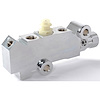
JEGS
Proportioning Valve Disc/Disc For: 4-Wheel Disc Brake Conversions
Part Number: 555-631296
Ships on Oct 19, 2026Lowest price guarantee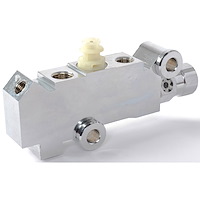
JEGS
Proportioning Valve Disc/Disc For: 4-Wheel Disc Brake Conversions
Part Number: 555-631296
Ships on Oct 19, 2026Lowest Price Guarantee![GM Proportioning Valve Kit for Disc/Drum Applications [Left/Driver Side]](https://www.jegs.com/images/mini_100/500/555/555-631298.jpg)
JEGS
GM Proportioning Valve Kit for Disc/Drum Applications [Left/Driver Side]
Part Number: 555-631298
Ships on Oct 19, 2026Lowest price guarantee![GM Proportioning Valve Kit for Disc/Drum Applications [Left/Driver Side]](https://www.jegs.com/images/mini_200/500/555/555-631298.jpg)
JEGS
GM Proportioning Valve Kit for Disc/Drum Applications [Left/Driver Side]
Part Number: 555-631298
Ships on Oct 19, 2026Lowest Price Guarantee
![Adjustable Brake Proportioning Valve and Distribution Block w/Rotary Adjustment Valve [Chrome]](https://www.jegs.com/images/mini_100/500/555/555-631297.jpg)
JEGS
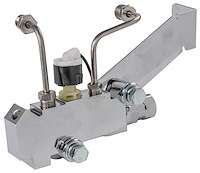
Adjustable Brake Proportioning Valve and Distribution Block w/Rotary Adjustment Valve [Chrome]
Part Number: 555-631297
Ships on Oct 19, 2026Lowest price guarantee![Adjustable Brake Proportioning Valve and Distribution Block w/Rotary Adjustment Valve [Chrome]](https://www.jegs.com/images/mini_200/500/555/555-631297.jpg)
JEGS
Adjustable Brake Proportioning Valve and Distribution Block w/Rotary Adjustment Valve [Chrome]
Part Number: 555-631297
Ships on Oct 19, 2026Lowest Price Guarantee
JEGS
O.E. Style Proportioning Valve/Distribution Block For GM Disc/Disc Applications
Part Number: 555-631303
Ships on Oct 19, 2026Lowest price guarantee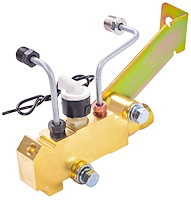
JEGS
O.E. Style Proportioning Valve/Distribution Block For GM Disc/Disc Applications
Part Number: 555-631303
Ships on Oct 19, 2026Lowest Price Guarantee![Brake Proportioning Valve for Disc/Disc Applications and 4-Wheel Disc Brake Conversions [GM]](https://www.jegs.com/images/mini_100/500/555/555-631292.jpg)
JEGS
Brake Proportioning Valve for Disc/Disc Applications and 4-Wheel Disc Brake Conversions [GM]
Part Number: 555-631292
Ships on Oct 19, 2026Lowest price guarantee![Brake Proportioning Valve for Disc/Disc Applications and 4-Wheel Disc Brake Conversions [GM]](https://www.jegs.com/images/mini_200/500/555/555-631292.jpg)
JEGS
Brake Proportioning Valve for Disc/Disc Applications and 4-Wheel Disc Brake Conversions [GM]
Part Number: 555-631292
Ships on Oct 19, 2026Lowest Price Guarantee![Brake Proportioning Valve for Disc/Drum Applications, Chrome [GM]](https://www.jegs.com/images/mini_100/500/555/555-631294.jpg)
JEGS
Brake Proportioning Valve for Disc/Drum Applications, Chrome [GM]
Part Number: 555-631294
Ships on Oct 19, 2026Lowest price guarantee![Brake Proportioning Valve for Disc/Drum Applications, Chrome [GM]](https://www.jegs.com/images/mini_200/500/555/555-631294.jpg)
JEGS
Brake Proportioning Valve for Disc/Drum Applications, Chrome [GM]
Part Number: 555-631294
Ships on Oct 19, 2026Lowest Price Guarantee![Universal Proportioning Valve for GM with Disc/Disc Setup [Aluminum]](https://www.jegs.com/images/mini_100/500/555/555-631870.jpg)
JEGS
Universal Proportioning Valve for GM with Disc/Disc Setup [Aluminum]
Part Number: 555-631870
Ships on 10/21/2026Lowest price guarantee![Universal Proportioning Valve for GM with Disc/Disc Setup [Aluminum]](https://www.jegs.com/images/mini_200/500/555/555-631870.jpg)
JEGS
Universal Proportioning Valve for GM with Disc/Disc Setup [Aluminum]
Part Number: 555-631870
Ships on 10/21/2026Lowest Price Guarantee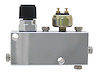
JEGS
Universal Adjustable Proportioning Valve & Distribution Block
Part Number: 555-631883
Ships on 10/21/2026Lowest price guarantee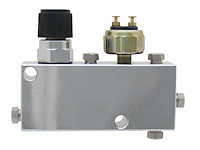
JEGS
Universal Adjustable Proportioning Valve & Distribution Block
Part Number: 555-631883
Ships on 10/21/2026Lowest Price Guarantee![Universal Hotrod Brake Metering Valve [Drum/Drum]](https://www.jegs.com/images/mini_100/500/555/555-631884.jpg)
![Universal Hotrod Brake Metering Valve [Drum/Drum]](https://www.jegs.com/images/mini_200/500/555/555-631884.jpg)
![Adjustable Brake Proportioning Valve Kit with Mounting Bracket and Brake Lines [w/Chrome Proportioning Valve]](https://www.jegs.com/images/mini_100/500/555/555-631973.jpg)
JEGS
Adjustable Brake Proportioning Valve Kit with Mounting Bracket and Brake Lines [w/Chrome Proportioning Valve]
Part Number: 555-631973
Ships on 10/23/2026Lowest price guarantee![Adjustable Brake Proportioning Valve Kit with Mounting Bracket and Brake Lines [w/Chrome Proportioning Valve]](https://www.jegs.com/images/mini_200/500/555/555-631973.jpg)
JEGS
Adjustable Brake Proportioning Valve Kit with Mounting Bracket and Brake Lines [w/Chrome Proportioning Valve]
Part Number: 555-631973
Ships on 10/23/2026Lowest Price Guarantee![Proportioning Valve for 1965-1973 Ford Mustang [Disc/Drum]](https://www.jegs.com/images/mini_100/500/555/555-631876.jpg)
JEGS
Proportioning Valve for 1965-1973 Ford Mustang [Disc/Drum]
Part Number: 555-631876
Ships on 10/28/2026Lowest price guarantee![Proportioning Valve for 1965-1973 Ford Mustang [Disc/Drum]](https://www.jegs.com/images/mini_200/500/555/555-631876.jpg)
JEGS
Proportioning Valve for 1965-1973 Ford Mustang [Disc/Drum]
Part Number: 555-631876
Ships on 10/28/2026Lowest Price Guarantee![Universal Proportioning Valve for GM Disc/Disc Setup [Aluminum]](https://www.jegs.com/images/mini_100/500/555/555-631873.jpg)
JEGS
Universal Proportioning Valve for GM Disc/Disc Setup [Aluminum]
Part Number: 555-631873
Ships on 10/21/2026Lowest price guarantee![Universal Proportioning Valve for GM Disc/Disc Setup [Aluminum]](https://www.jegs.com/images/mini_200/500/555/555-631873.jpg)
JEGS
Universal Proportioning Valve for GM Disc/Disc Setup [Aluminum]
Part Number: 555-631873
Ships on 10/21/2026Lowest Price Guarantee![Proportioning Valve for 1962-1976 Mopar A-Body, B-Body, C-Body, E-Body [Disc/Disc]](https://www.jegs.com/images/mini_100/500/555/555-631877.jpg)
JEGS
Proportioning Valve for 1962-1976 Mopar A-Body, B-Body, C-Body, E-Body [Disc/Disc]
Part Number: 555-631877
Ships on 10/21/2026Lowest price guarantee![Proportioning Valve for 1962-1976 Mopar A-Body, B-Body, C-Body, E-Body [Disc/Disc]](https://www.jegs.com/images/mini_200/500/555/555-631877.jpg)
JEGS
Proportioning Valve for 1962-1976 Mopar A-Body, B-Body, C-Body, E-Body [Disc/Disc]
Part Number: 555-631877
Ships on 10/21/2026Lowest Price Guarantee
JEGS
Proportioning Valve & Bracket for 1967-1968 Chevy Corvette
Part Number: 555-631878
Ships on 10/23/2026Lowest price guarantee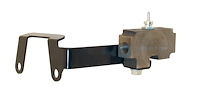
JEGS
Proportioning Valve & Bracket for 1967-1968 Chevy Corvette
Part Number: 555-631878
Ships on 10/23/2026Lowest Price GuaranteeFrequently Asked Questions About Brake Proportion Valves
Do you need a proportioning valve with drum brakes?
Most drum/drum systems don't need rear proportioning, because front and rear drums apply at similar rates. They typically use a distribution block or a drum/drum metering valve to split pressure. Once you add front discs, you'll need a disc/drum valve to keep the rear drums from locking.
How do you plumb a brake proportioning valve?
An adjustable proportioning valve goes in the rear brake line only, between the master cylinder and the rear brakes. Connect the inlet port to the master cylinder's rear circuit, and mount the valve where you can reach the knob. OE-style combination valves take both master cylinder circuits in and send separate lines to the front and rear brakes.
What are the symptoms of a bad proportioning valve?
Common signs include rear wheels locking up early, the rear stepping out under hard braking, and a brake warning light that stays on. You may also see fluid leaking from the valve body. Front pads that wear much faster than the rears can point to a valve sending too little pressure to the rear.
Do you need a proportioning valve when converting to 4-wheel disc brakes?
Yes, in most cases. The factory valve in a disc/drum car is set up for rear drums, so it won't give correct bias with rear discs. Use a disc/disc or adjustable valve, and read our guide to converting rear drum brakes to disc brakes before you start.
How do you bleed brakes with a proportioning valve?
Bleed the system as usual, typically starting at the wheel farthest from the master cylinder. Many OE-style valves have a pressure-differential piston or metering stem that can block fluid flow while you bleed. A bleeder tool holds the valve open so fluid reaches every line, and you'll find options with our brake system tools.