GM Truck VIN Decoder: GM Decoder Chart

October 09, 2023  -  Truck Parts & Accessories

71 People Found This Article Helpful

What Is A Truck Decoder and What Does A Truck Decoder Do?

A truck VIN decoder helps identify important information about a vehicle using its Vehicle Identification Number (VIN). Depending on the model year, a GM truck VIN can reveal details such as the manufacturer, assembly plant, model year, engine type, body style, GVWR classification, and production sequence.

Chevrolet and GMC truck VIN formats have changed significantly over the decades. Early trucks used simple serial number systems, while modern vehicles use the standardized 17-character VIN format adopted in 1981. Because VIN structures vary by production year, decoding a truck VIN requires understanding the format used during that specific era.

This guide explains how Chevrolet and GMC truck VINs evolved from the post-war Advance Design trucks of the late 1940s through today's Silverado, Sierra, Tahoe, Yukon, and other GM truck and SUV models. Use the information below to locate your VIN, understand what each character means, and decode it according to its model year.

Understanding The Parts Of A GM Truck VIN

The Vehicle Identification Number (VIN) on your Chevrolet or GMC truck is a unique 17-character code that provides information about the vehicle's manufacturer, body style, engine, model year, assembly plant, and production sequence.

The following VIN structure applies to 1981 and newer GM trucks that use the standardized 17-character VIN format:

1. World Manufacturer Identifier (WMI)

Characters 1-3 identify the vehicle's manufacturer and country of origin. Chevrolet and GMC truck WMIs typically begin with 1, 2, or 3 (United States, Canada, or Mexico), followed by G for General Motors and additional characters that identify the vehicle division, vehicle type, and manufacturing source.

2. Vehicle Descriptor Section (VDS)

Characters 4-8 identify vehicle attributes such as body style, series, GVWR classification, engine type, drivetrain, and restraint system. The exact meaning varies by model year and vehicle line.

3. Check Digit

Character 9 is a mathematically generated check digit used to verify the validity of the VIN.

4. Model Year

Character 10 identifies the model year. Model year codes repeat on a cycle. Examples include B = 1981, N = 1992, E = 2014, and T = 2026.

5. Assembly Plant

Character 11 identifies the assembly plant where the vehicle was built. Plant codes vary by manufacturer, model year, vehicle line, and production facility.

6. Production Number

Characters 12-17 form the vehicle's sequential production number, which uniquely identifies the vehicle within its production run.

Where Can You Find Your GM Truck VIN?

Locating your GM truck's VIN or serial number depends on the model year. Modern Chevrolet and GMC trucks typically use the standardized 17-character VIN introduced in 1981, while older trucks may use a serial number plate in a different location.

Common VIN and serial number locations include the following:

  • Driver's Side Dashboard (1981-Present): Most modern Chevrolet and GMC trucks have a VIN plate visible through the windshield on the driver's side dashboard.
  • Driver's Side Door Jamb or Door Frame: Many trucks have a VIN label, certification label, or serial number plate attached to the driver's side door jamb, door frame, or door edge.
  • Glove Box, Cowl, or Door Pillar (Older Models): Depending on the year and model, older Chevrolet and GMC trucks may use a serial number plate mounted on the cowl, door pillar, hinge pillar, or inside the glove box area.
  • Vehicle Title, Registration, and Insurance Documents: The VIN is typically listed on your title, registration, insurance card, and other ownership documents.
  • Engine Compartment: Some older trucks may have a VIN or serial number plate attached to the firewall, radiator support, or another location within the engine compartment.

Tip: If you're working with a classic Chevrolet or GMC truck built before 1981, use the model year guide below to determine whether your vehicle uses a serial number format or a standardized VIN.

GM Truck VIN Decoder Examples

Chevrolet and GMC truck VINs have changed significantly over the years. Early trucks used simple serial numbers that identified the model, assembly plant, and production sequence. As trucks became more sophisticated, VINs evolved to include information such as engine type, body style, GVWR, safety equipment, manufacturing location, and model year.

One of the most important milestones occurred in 1981, when the automotive industry adopted the standardized 17-character VIN format still used today. Because VIN formats varied before standardization, the meaning of each character depends heavily on the truck's model year.

Use the guide below to locate your truck's model year range and decode the VIN according to the format used during that period.

Quick VIN Format Reference

Model YearsVIN Format
1947-1952Serial Number Format
1953-1955 First SeriesEarly Serial Number Format
1955 Second Series-1959Updated Serial Number Format
1960-1964Early VIN Format
1965-1966Early VIN Format
1967-1972Early VIN Format
1973-1980Pre-Standardized VIN Format
1981-PresentStandardized 17-Character VIN

Tip: If you're unsure where to find your VIN, most Chevrolet and GMC trucks have the VIN located on the driver's side dashboard, driver's door jamb, title, registration, or insurance documents.

The following sections explain how Chevrolet and GMC truck VINs were structured during each production era.

1947-1952 VIN Decoding

1947-1952 Chevrolet Truck Serial Numbers

  • Assembly Plant Code = First one or two digits. Common plant codes include 1 = Flint, MI; 2 = Tarrytown, NY; 3 = St. Louis, MO; 5 = Kansas City, MO; 6 = Oakland, CA; 8 = Atlanta, GA; 9 = Norwood, OH; 14 = Baltimore, MD; 20 = Los Angeles, CA; and 21 = Janesville, WI.
  • Model Year Code = The letter following the assembly plant code, with E = 1947, F = 1948, G = 1949, H = 1950, J = 1951, and K = 1952.
  • Series Code = The letter or letters following the model year code. Common Chevrolet truck codes include P = 3100 1/2-ton with 116-inch wheelbase, R = 3600 3/4-ton with 125-inch wheelbase, and S = 3800 1-ton with 137-inch wheelbase. Additional series codes may appear depending on model, GVW rating, wheelbase, and body configuration.
  • Build Month Code = The letter following the series code, with A = January, B = February, C = March, D = April, E = May, F = June, G = July, H = August, I = September, J = October, K = November, and L = December.
  • Sequential Production Number = The remaining digits identify the sequential production number at the assembly plant. Production numbers were typically assigned by series at each plant and often began near 1001, though numbering practices could vary by year and application.

Note: 1947-1952 Chevrolet truck serial numbers are not standardized 17-character VINs. Plant codes may be one or two digits, and some heavy-duty or special-body applications may use additional series characters. Chevrolet and GMC trucks from this period used different serial number formats, so GMC trucks should be verified using GMC-specific documentation.

1953-1959 VIN Decoding

1953-1955 First Series Chevrolet Truck VINs

  • First Digit = Series. Common Chevrolet truck series codes include H = 3100, J = 3600, and L = 3800. Additional series codes may appear depending on model and application.
  • Second Digit = Model Year, with 3 = 1953, 4 = 1954, and 5 = 1955 First Series.
  • Third Digit = Assembly Plant. Common plant codes include A = Atlanta, GA; B = Baltimore, MD; F = Flint, MI; J = Janesville, WI; K = Kansas City, MO; L = Los Angeles, CA; N = Norwood, OH; O = Oakland, CA; P = Pontiac, MI; S = St. Louis, MO; T = Tarrytown, NY; and W = Willow Run, MI.
  • Fourth Through Ninth Digits = Sequential Serial Number at Assembly Plant.

1955 Second Series-1959 Chevrolet Truck VINs

  • First Digit = Series. Common Chevrolet pickup codes include D = 1500, H = 3100, M = 3200, J = 3600, and L = 3800. Additional series codes may appear depending on model, GVW rating, and application.
  • Second Digit = 1955 Second Series Indicator, used on 1955 Second Series trucks only.
  • Third and Fourth Digits = Model Year, with 55 = 1955, 56 = 1956, 57 = 1957, 58 = 1958, and 59 = 1959.
  • Fifth Digit = Assembly Plant. Common Chevrolet truck plant codes include A = Atlanta, GA; B = Baltimore, MD; F = Flint, MI; J = Janesville, WI; K = Kansas City, MO; L = Los Angeles, CA; N = Norwood, OH; O = Oakland, CA; S = St. Louis, MO; T = Tarrytown, NY; and W = Willow Run, MI.
  • Sixth Through Ninth Digits = Sequential Serial Number at Assembly Plant.

Engine Prefix Note: Some 1955-1959 VIN references show an engine prefix before the series code, with a blank space indicating a standard 6-cylinder engine and V indicating a V8 engine. Because format details vary between 1953-1955 First Series and 1955 Second Series-1959 trucks, verify unusual VINs using factory documentation or a year-specific VIN reference.

GMC Note: Chevrolet and GMC trucks from this period used different serial number formats. GMC VINs should be verified using GMC-specific documentation.

1960-1966 VIN Decoding

1960-1964 Chevrolet Truck VINs

  • First Digit = Model Year, with 0 = 1960, 1 = 1961, 2 = 1962, 3 = 1963, and 4 = 1964.
  • Second Digit = Vehicle Type. Common pickup codes include C = 2-wheel drive conventional cab and K = 4-wheel drive. Other Chevrolet truck vehicle-type codes may appear on forward-control, school bus, tilt-cab, diesel, tandem-axle, and commercial applications.
  • Third and Fourth Digits = Series Designation. Common pickup codes include 14 = 1/2-ton short bed with 115-inch wheelbase, 15 = 1/2-ton long bed with 127-inch wheelbase, and 25 = 3/4-ton long bed with 127-inch wheelbase. Other series codes may appear depending on GVW rating, wheelbase, and body configuration.
  • Fifth Digit = Model Type. Common Chevrolet truck codes include 2 = flat-face cowl/chassis cowl, 3 = cab and chassis, 4 = cab and pickup box, 5 = panel body, 6 = Suburban body, and 9 = cab/platform/stake rack.
  • Sixth Digit = Assembly Plant. Common plant codes include A = Atlanta, GA; B = Baltimore, MD; F = Flint, MI; H = Fremont, CA; J = Janesville, WI; K = Kansas City, MO; N = Norwood, OH; P = Pontiac, MI; S = St. Louis, MO; T = Tarrytown, NY; and 1 = Oshawa, Ontario. Plant codes may vary by year and reference source, so unusual VINs should be verified against a year-specific VIN card.
  • Seventh Through Twelfth Digits = Sequential Serial Number at Assembly Plant.

1965-1966 Chevrolet Truck VINs

  • First Digit = Chassis Type, with C = 2-wheel drive and K = 4-wheel drive.
  • Second and Third Digits = Series. Common pickup codes include 14 = 1/2-ton short bed with 115-inch wheelbase, 15 = 1/2-ton long bed with 127-inch wheelbase, and 25 = 3/4-ton long bed with 127-inch wheelbase. Additional series codes may appear depending on GVW rating, wheelbase, and body configuration.
  • Fourth Digit = Model Type. Common pickup codes include 4 = Pickup. Other model-type codes may appear on commercial and special-body applications.
  • Fifth Digit = Model Year, with 5 = 1965 and 6 = 1966.
  • Sixth Digit = Assembly Plant. Common plant codes include A = Atlanta, GA; B = Baltimore, MD; F = Flint, MI; J = Janesville, WI; K = Kansas City, MO; N = Norwood, OH; P = Pontiac, MI; S = St. Louis, MO; T = Tarrytown, NY; Z = Fremont, CA; and 1 = Oshawa, Ontario.
  • Seventh Through Twelfth Digits = Sequential Serial Number at Assembly Plant.

Note: Chevrolet and GMC trucks from this period used different serial number formats. Some commercial, export, fleet, and special-body applications may also differ. Always verify uncommon VINs using factory documentation or a year-specific VIN reference.

1967-1972 VIN Decoding

1967-1972 Chevrolet Truck VINs

  • First Digit = Chassis Type, with C = 2-wheel drive and K = 4-wheel drive.
  • Second Digit = Engine Type. Common Chevrolet truck codes include S = 6-cylinder gas engine and E = V8 gas engine. Additional engine codes may appear depending on model year and application.
  • Third Digit = GVW Range, with 1 = 1/2-ton, 2 = 3/4-ton, and 3 = 1-ton.
  • Fourth Digit = Model Type. Common Chevrolet truck codes include 4 = Pickup, 6 = Suburban, and 8 = Blazer.
  • Fifth Digit = Model Year, with 7 = 1967, 8 = 1968, 9 = 1969, 0 = 1970, 1 = 1971, and 2 = 1972.
  • Sixth Digit = Assembly Plant, with A = Atlanta, GA; B = Baltimore, MD; F = Flint, MI; J = Janesville, WI; K = Kansas City, MO; N = Norwood, OH; P = Pontiac, MI; S = St. Louis, MO; T = Tarrytown, NY; Z = Fremont, CA; and 1 = Oshawa, Ontario.
  • Seventh Through Twelfth Digits = Sequential Serial Number at Assembly Plant.

Note: Chevrolet and GMC trucks from this period use similar VIN structures, but GMC VINs may use different manufacturer, engine, model-type, and year-code assignments. Some commercial, export, fleet, and special-body applications may also differ. Always verify uncommon VINs using factory documentation or a year-specific VIN reference.

JEGS Newsletter Signup

Sign up now to join the JEGS email newsletter and be the first to learn about new products, special deals and e-mail only offers!

1973-1980 Chevy & GM VIN Decoder

  • First Digit = Division, either C for Chevrolet or T for GMC
  • Second Digit = Chassis Type, with C for 2-Wheel Drive and K for 4-Wheel Drive
  • Third Digit = Engine Type And Size
    • 1973-1975, Q = 250 6-Cylinder, T= 292 6-Cylinder, X = 307 V8, V=350 2-Barrel V8, Y=350 4-Barrel V8, U= 400 4-Barrel V8, Z= 454 4-Barrel V8
    • 1976, D = 250 6-Cylinder, T=292 6-Cylinder, Q=305 2-Barrel V8, V=350 2-Barrel V8, L=350 4-Barrel V8, U=400 4-Barrel V8, S= 454 4-Barrel V8
    • 1977, D = 250 6-Cylinder, T=292 6-Cylinder, U=305 V8, L=350 4-Barrel V8, R=400 4-Barrel V8, S=454 4-Barrel V8
    • 1978, D = 250 6-Cylinder, T=292 6-Cylinder, U=305 V8, L=350 4-Barrel V8, R=400 4-Barrel V8, S=454 4-Barrel V8, Z = 350 Diesel V8
    • 1979, D = 250 6-Cylinder, T=292 6-Cylinder, U=305 V8, L=350 4-Barrel V8, R=400 V8, S=454 V8, Z = 350 Diesel V8
    • 1980, D = 250 6-Cylinder, T=292 6-Cylinder, G=305 V8, L=350 4-Barrel V8, M=350 4-Barrel V8, R=454 4-Barrel V8, W=454 V8, Z = 350 Diesel V8
  • Fourth Digit = Vehicle Series with 1=10 (Chevy) or 15 (GMC) 1/2-ton, 2=20 (Chevy) or 25 (GMC) 3/4-ton, 3=30 (Chevy) or 35 (GMC)1-ton
  • Fifth Digit = Body Type, with 2 = Chassis Only, 3 = Cab and Chassis, 4 = Pickup, 5=Panel, 6=Suburban, 7=Motorhome, and 8=Utility
  • Sixth Digit = Year, with 3 = 1973, 4=1974, 5=1975, 6=1976, 7=1977, 8=1978, 9=1979, A=1980
  • Seventh Digit = Assembly Plant, with A = Lakewood, GA, B=Baltimore, MD, F=Flint, MI, J=Janesville, WI, S=St. Louis, MO, V=Pontiac, MI, Z=Fremont, CA
  • Eighth Through Thirteenth Digits = Sequential Serial Number At Plant Truck Was Manufactured

1981-1986 Chevy & GM Truck VIN Decoder Chart

  • 17 Characters: Beginning in 1981, GM trucks used the standardized 17-character VIN format.
    • First Digit = Country of Manufacture, with 1 = United States, 2 = Canada, and 3 = Mexico. Some early 1981 imported applications may use 7 = Japan-built vehicles.
    • Second Digit = Manufacturer, with G = General Motors.
    • Third Digit = Make/vehicle type. C = Chevrolet Truck, T = GMC Truck, B = Chevrolet Incomplete Vehicle, D = GMC Incomplete Vehicle, 8 = Chevrolet MPV, and 5 = GMC MPV. Codes vary by year and vehicle line.
    • Fourth Digit = GVWR Range, with B = 3,001-4,000 lbs, C = 4,001-5,000 lbs, D = 5,001-6,000 lbs, E = 6,001-7,000 lbs, F = 7,001-8,000 lbs, G = 8,001-9,000 lbs, H = 9,001-10,000 lbs, J = 10,001-14,000 lbs, and K = 14,001-16,000 lbs.
    • Fifth Digit = Line & Chassis Type. Common codes include C = Conventional Cab 4x2, K = Conventional Cab 4x4, G = Van 4x2, P = Forward Control 4x2, S = Small Conventional Cab 4x2, T = Small Conventional Cab 4x4, M = Small Van 4x2, W = El Camino/Panel Delivery/Caballero 4x2, and Z = Special Body 4x2. Codes vary by model year and vehicle line.
    • Sixth Digit = Series, with 1 = 1/2-ton, 2 = 3/4-ton, 3 = 1-ton, 8 = 1/2-ton El Camino/Caballero, and 9 = Cadillac Commercial Body/Chassis or short sill cowl, depending on year/application.
    • Seventh Digit = Body Type, with 0 = Pickup Delivery, 1 = Hi-Cube/Cutaway Van, 2 = Forward Control, 3 = Four-Door Cab, 4 = Two-Door Cab, 5 = Van, 6 = Suburban, 7 = Motorhome Chassis, 8 = Utility, and 9 = Stake. Codes vary significantly by vehicle line, including pickups, vans, Suburbans, motorhome chassis, and commercial applications.
    • Eighth Digit = Engine Type and Size
    • Common full-size Chevrolet/GMC truck engine codes include:
    • 1981
    • D = 250 6-Cylinder
    • T = 292 6-Cylinder
    • G = 305 2-Barrel V8
    • H = 305 4-Barrel V8
    • L = 350 V8
    • M = HD 350 V8
    • Z = 350 Diesel V8
    • W = 454 V8
    • 1982-1984
    • D = 250 6-Cylinder
    • T = 292 6-Cylinder
    • H = 305 V8
    • L = 350 V8
    • M = HD 350 V8
    • C = 6.2L Diesel V8
    • J = 6.2L Diesel V8
    • W = 454 V8
    • 1985-1986
    • T = 292 6-Cylinder
    • N = 262 V6
    • H = 305 V8
    • L = 350 V8
    • M = HD 350 V8
    • C = 6.2L Diesel V8
    • J = 6.2L Diesel V8
    • W = 454 V8
    • Note: Engine codes changed throughout the 1981-1986 production years. The listings above cover the most common full-size Chevrolet and GMC truck applications. Specific engine identification should be verified against the vehicle's model year and factory documentation. Engine codes may vary by vehicle line, GVWR classification, emissions certification, and production year.
    • Ninth Digit = Check Digit
    • Tenth Digit = Model Year, with B = 1981, C = 1982, D = 1983, E = 1984, F = 1985, and G = 1986.
    • Eleventh Digit = Assembly Plant. Common plant codes include F = Flint, MI; J = Janesville, WI; S = St. Louis, MO; Z = Fremont, CA; E = Pontiac, MI; and 1 = Oshawa, Ontario. Additional plant codes may appear depending on vehicle line and model year.
    • Twelfth Through Seventeenth Digits = Sequential Serial Number at Assembly Plant.

1987-1991 Chevy & GM Truck VIN Decoder Chart

  • 17 Characters: Beginning in 1981, GM trucks used the standardized 17-character VIN format
    • First Digit = Country of Manufacture, with 1 = United States, 2 = Canada, and 3 = Mexico.
    • Second Digit = Manufacturer, with G = General Motors.
    • Third Digit = Make/vehicle type. Examples include C = Chevrolet Truck, T = GMC Truck, B = Chevrolet Incomplete Vehicle, D = GMC Incomplete Vehicle, N = Chevrolet MPV, and K = GMC MPV. Additional codes may appear depending on model year and vehicle line.
    • Fourth Digit = GVWR Range, with B = 3,001-4,000 lbs, C = 4,001-5,000 lbs, D = 5,001-6,000 lbs, E = 6,001-7,000 lbs, F = 7,001-8,000 lbs, G = 8,001-9,000 lbs, H = 9,001-10,000 lbs, J = 10,001-14,000 lbs, and K = 14,001-16,000 lbs.
    • Fifth Digit = Line & Chassis Type. Common codes include C = Conventional Cab 4x2, K = Conventional Cab 4x4, R = Conventional Cab/Chassis 4x2, V = Conventional Cab/Chassis 4x4, G = Van 4x2, P = Forward Control 4x2, S = Small Conventional Cab 4x2, T = Small Conventional Cab 4x4, M = Small Van 4x2, and Z = Special Body 4x2. Codes vary by model year and vehicle line.
    • Sixth Digit = Series, with 1 = 1/2-ton, 2 = 3/4-ton, and 3 = 1-ton. Other series codes may appear depending on vehicle line and application.
    • Seventh Digit = Body Type. Common codes include 3 = Crew Cab/Four-Door Cab, 4 = Two-Door Cab, 6 = Suburban, 8 = Blazer/Jimmy/Utility, and 9 = Extended Cab. Codes vary by vehicle line, including pickups, vans, Suburbans, Blazers/Jimmys, motorhome chassis, and commercial applications.
    • Eighth Digit = Engine Type and Size

Common full-size Chevrolet/GMC truck engine codes include:

1987

  • H = 305 V8 with TBI
  • K = 350 V8 with TBI
  • C = 6.2L Diesel V8
  • J = 6.2L Diesel V8
  • W = 454 V8 with 4-Barrel Carburetor
  • N = 454 V8 with TBI

1988-1989

  • C = 6.2L Diesel V8
  • H = 305 V8
  • J = 6.2L Diesel V8
  • K = 350 V8
  • N = 454 V8 with TBI
  • W = 454 V8 with 4-Barrel Carburetor
  • Z = 262 V6

1990-1991

  • C = 6.2L Diesel V8
  • H = 305 V8
  • J = 6.2L Diesel V8
  • K = 350 V8
  • N = 454 V8
  • Z = 262 V6

Note: Engine codes changed during the 1987-1991 production years. The listings above cover common full-size Chevrolet and GMC truck applications, including the transition from R/V carryover trucks to 1988+ C/K pickups. Specific engine identification should be verified against the vehicle's model year, VIN card, and factory documentation. Engine codes may vary by vehicle line, GVWR classification, emissions certification, and production year.
  • Ninth Digit = Check Digit.
  • Tenth Digit = Model Year, with H = 1987, J = 1988, K = 1989, L = 1990, and M = 1991.
  • Eleventh Digit = Assembly Plant. Common plant codes include E = Pontiac, MI; F = Flint, MI; J = Janesville, WI; S = St. Louis, MO; Z = Fort Wayne, IN; and 1 = Oshawa, Ontario. Plant codes varied by model year, vehicle line, and production facility.
  • Twelfth Through Seventeenth Digits = Sequential Serial Number at Assembly Plant.

1992-1995 Chevy & GM Truck VIN Decoder Chart

  • 17 Characters: Beginning in 1981, GM trucks used the standardized 17-character VIN format.
    • First Digit = Country of Manufacture, with 1 = United States, 2 = Canada, and 3 = Mexico.
    • Second Digit = Manufacturer, with G = General Motors.
    • Third Digit = Make/vehicle type. Examples include C = Chevrolet Truck, T = GMC Truck, B = Chevrolet Incomplete Vehicle, D = GMC Incomplete Vehicle, N = Chevrolet MPV, and K = GMC MPV. Additional codes may appear depending on model year and vehicle line.
    • Fourth Digit = GVWR Range, with B = 3,001-4,000 lbs, C = 4,001-5,000 lbs, D = 5,001-6,000 lbs, E = 6,001-7,000 lbs, F = 7,001-8,000 lbs, G = 8,001-9,000 lbs, H = 9,001-10,000 lbs, J = 10,001-14,000 lbs, and K = 14,001-16,000 lbs.
    • Fifth Digit = Line & Chassis Type. Common codes include C = Conventional Cab 4x2, K = Conventional Cab 4x4, R = Conventional Cab/Chassis 4x2, V = Conventional Cab/Chassis 4x4, G = Van 4x2, P = Forward Control 4x2, S = Small Conventional Cab 4x2, T = Small Conventional Cab 4x4, M = Small Van 4x2, and Z = Special Body 4x2. Codes vary by model year and vehicle line.
    • Sixth Digit = Series, with 1 = 1/2-ton, 2 = 3/4-ton, and 3 = 1-ton. Other series codes may appear depending on vehicle line and application.
    • Seventh Digit = Body Type. Common codes include 3 = Crew Cab/Four-Door Cab, 4 = Two-Door Cab, 6 = Suburban, 8 = Blazer/Jimmy/Utility, and 9 = Extended Cab. Codes vary by vehicle line, including pickups, vans, Suburbans, Blazers/Jimmys, motorhome chassis, and commercial applications.
    • Eighth Digit = Engine Type and Size

Common full-size Chevrolet/GMC truck engine codes include:

1992-1993

  • C = 6.2L Diesel V8
  • F = 6.5L Turbo Diesel V8
  • H = 5.0L V8
  • J = 6.2L Diesel V8
  • K = 5.7L V8
  • N = 7.4L (454) V8
  • Z = 4.3L V6

1994-1995

  • F = 6.5L Turbo Diesel V8
  • H = 5.0L V8
  • K = 5.7L V8
  • N = 7.4L (454) V8
  • P = 6.5L Diesel V8
  • S = 6.5L Turbo Diesel V8
  • Z = 4.3L V6

Note: Engine codes changed during the 1992-1995 production years. The listings above cover common full-size Chevrolet and GMC truck applications. Specific engine identification should be verified against the vehicle's model year, VIN card, and factory documentation. Engine codes may vary by vehicle line, GVWR classification, emissions certification, and production year.

  • Ninth Digit = Check Digit.
  • Tenth Digit = Model Year, with N = 1992, P = 1993, R = 1994, and S = 1995.
  • Eleventh Digit = Assembly Plant. Common plant codes include E = Pontiac, MI; F = Flint, MI; J = Janesville, WI; R = Arlington, TX; G = Silao, Mexico; and 1 = Oshawa, Ontario. Plant codes varied by model year, vehicle line, and facility.
  • Twelfth Through Seventeenth Digits = Sequential Serial Number at Assembly Plant.

1996-1998 Chevy & GM Truck VIN Decoder Chart

  • 17 Characters: Beginning in 1981, GM trucks used the standardized 17-character VIN format.
    • First Digit = Country of Manufacture, with 1 = United States, 2 = Canada, and 3 = Mexico.
    • Second Digit = Manufacturer, with G = General Motors.
    • Third Digit = Make/vehicle type. Examples include C = Chevrolet Truck, T = GMC Truck, B = Chevrolet Incomplete Vehicle, D = GMC Incomplete Vehicle, N = Chevrolet MPV, and K = GMC MPV. Additional codes may appear depending on model year and vehicle line.
    • Fourth Digit = GVWR Range, with B = 3,001-4,000 lbs, C = 4,001-5,000 lbs, D = 5,001-6,000 lbs, E = 6,001-7,000 lbs, F = 7,001-8,000 lbs, G = 8,001-9,000 lbs, H = 9,001-10,000 lbs, J = 10,001-14,000 lbs, and K = 14,001-16,000 lbs.
    • Fifth Digit = Line & Chassis Type. Common codes include C = Conventional Cab 4x2, K = Conventional Cab 4x4, R = Conventional Cab/Chassis 4x2, V = Conventional Cab/Chassis 4x4, G = Van 4x2, P = Forward Control 4x2, S = Small Conventional Cab 4x2, T = Small Conventional Cab 4x4, M = Small Van 4x2, and Z = Special Body 4x2. Codes vary by model year and vehicle line.
    • Sixth Digit = Series, with 1 = 1/2-ton, 2 = 3/4-ton, and 3 = 1-ton. Other series codes may appear depending on vehicle line and application.
    • Seventh Digit = Body Type. Common codes include 3 = Crew Cab/Four-Door Cab, 4 = Two-Door Cab, 6 = Suburban, 8 = Blazer/Jimmy/Utility, and 9 = Extended Cab. Codes vary by vehicle line, including pickups, vans, Suburbans, Blazers/Jimmys, motorhome chassis, and commercial applications.
    • Eighth Digit = Engine Type and Size

Common full-size Chevrolet/GMC truck engine codes include:

1996-1998

  • F = 6.5L Turbo Diesel V8
  • H = 5.0L Vortec V8
  • M = 5.7L Vortec V8
  • J = 7.4L (454) Vortec V8
  • R = 5.7L Vortec V8
  • S = 6.5L Turbo Diesel V8
  • W = 4.3L Vortec V6

Note: Engine codes changed during the 1996-1998 production years. The listings above cover common full-size Chevrolet and GMC truck applications. Specific engine identification should be verified against the vehicle's model year, VIN card, and factory documentation. Engine codes may vary by vehicle line, GVWR classification, emissions certification, and production year.

  • Ninth Digit = Check Digit.
  • Tenth Digit = Model Year, with T = 1996, V = 1997, and W = 1998.
  • Eleventh Digit = Assembly Plant. Common plant codes include E = Pontiac, MI; F = Flint, MI; G = Silao, Mexico; J = Janesville, WI; R = Arlington, TX; and 1 = Oshawa, Ontario. Plant codes varied by model year, vehicle line, and facility.
  • Twelfth Through Seventeenth Digits = Sequential Serial Number at Assembly Plant.

1999-2009 Chevrolet & GM Truck VIN Decoder Chart

  • 17 Characters: Beginning in 1981, GM trucks used the standardized 17-character VIN format.
    • First Digit = Country of Manufacture, with 1 = United States, 2 = Canada, and 3 = Mexico.
    • Second and Third Digits = Division/Make, with GC = Chevrolet Truck, GB = Chevrolet Incomplete Vehicle, GT = GMC Truck, GD = GMC Incomplete Vehicle, GN = Chevrolet SUV, and GK = GMC SUV.
    • Fourth Digit = GVWR Range and Brake System. Common codes include E = 6,001-7,000 lbs, F = 7,001-8,000 lbs, G = 8,001-9,000 lbs, H = 9,001-10,000 lbs, and J = 10,001-14,000 lbs. Codes may vary by model year and vehicle line.
    • Fifth Digit = Drive and Chassis Type, with C = 2WD and K = 4WD.
    • Sixth Digit = Series or Trim.
      • 1999-2007 Classic/Old Body Style: 1 = 1/2-ton, 2 = 3/4-ton, 3 = 1-ton, and 6 = 1/2-ton luxury model, such as GMC C3 or Denali.
      • 2008-2009 New Body Style: 1 = 1/2-ton Chevrolet/GMC Work Truck, Chevrolet LS, or GMC SL; 2 = 1/2-ton Chevrolet LT or GMC SLE; 3 = 1/2-ton Chevrolet LTZ or GMC SLT; 4 = 3/4-ton Chevrolet/GMC Work Truck, Chevrolet LS, or GMC SL; 5 = 3/4-ton Chevrolet LT or GMC SLE; 6 = 3/4-ton Chevrolet LTZ or GMC SLT; 7 = 1-ton Chevrolet/GMC Work Truck; 8 = 1-ton Chevrolet LT or GMC SLE; 9 = 1-ton Chevrolet LTZ or GMC SLT; and 0 = 1/2-ton GMC Denali.
    • Seventh Digit = Body Type. Common codes include 3 = Four-Door Crew Cab or Tahoe/Yukon, 4 = Two-Door Cab, 6 = Suburban/Yukon XL, and 9 = Extended Cab. Body type codes may vary by model year and vehicle line.
    • Eighth Digit = Engine Type and Size

Common Chevrolet/GMC truck engine codes include:

1999-2000

  • T = 5.3L V8
  • U = 6.0L V8
  • V = 4.8L V8
  • W = 4.3L V6

2001

  • G = 8.1L V8
  • T = 5.3L V8
  • U = 6.0L V8
  • V = 4.8L V8
  • W = 4.3L V6
  • 1 = 6.6L Diesel V8

2002

  • G = 8.1L V8
  • N = 6.0L V8
  • T = 5.3L V8
  • U = 6.0L V8
  • V = 4.8L V8
  • W = 4.3L V6
  • X = 4.3L V6
  • Z = 5.3L Flex Fuel V8
  • 1 = 6.6L Diesel V8

2003

  • G = 8.1L V8
  • N = 6.0L V8
  • T = 5.3L V8
  • U = 6.0L V8
  • V = 4.8L V8
  • X = 4.3L V6
  • Z = 5.3L Flex Fuel V8
  • 1 = 6.6L Diesel V8

2004

  • G = 8.1L V8
  • N = 6.0L V8
  • T = 5.3L V8
  • U = 6.0L V8
  • V = 4.8L V8
  • X = 4.3L V6
  • Z = 5.3L Flex Fuel V8
  • 1 = 6.6L Diesel V8
  • 2 = 6.6L Diesel V8

2005

  • B = 5.3L V8
  • G = 8.1L V8
  • N = 6.0L V8
  • T = 5.3L V8
  • U = 6.0L V8
  • V = 4.8L V8
  • X = 4.3L V6
  • Z = 5.3L Flex Fuel V8
  • 2 = 6.6L Diesel V8

2006

  • B = 5.3L V8
  • D = 6.6L Diesel V8
  • G = 8.1L V8
  • N = 6.0L V8
  • T = 5.3L V8
  • U = 6.0L V8
  • V = 4.8L V8
  • X = 4.3L V6
  • Z = 5.3L Flex Fuel V8
  • 2 = 6.6L Diesel V8

2007 Classic/Old Body Style

  • B = 5.3L V8
  • D = 6.6L Diesel V8
  • G = 8.1L V8
  • N = 6.0L V8
  • T = 5.3L V8
  • U = 6.0L V8
  • V = 4.8L V8
  • X = 4.3L V6
  • Z = 5.3L Flex Fuel V8

2007-2009 New Body Style

  • C = 4.8L V8
  • J = 5.3L V8
  • K = 6.0L V8
  • M = 5.3L V8
  • X = 4.3L V6
  • Y = 6.0L V8
  • 0 = 5.3L V8
  • 2 = 6.2L V8
  • 3 = 5.3L Flex Fuel V8
  • 5 = 6.0L Hybrid V8
  • 6 = 6.6L Diesel V8
  • 8 = 6.2L V8

Note: Engine codes changed throughout the 1999-2009 production years, and 2007 included both Classic/old body style and new body style trucks. The listings above cover common Chevrolet and GMC truck applications. Specific engine identification should be verified against the vehicle's model year, VIN card, RPO code, and factory documentation, particularly for 2007 models, which were produced in both Classic and New Body Style configurations. Engine codes may vary by vehicle line, GVWR classification, emissions certification, and production year.

  • Ninth Digit = Check Digit.
  • Tenth Digit = Model Year, with X = 1999, Y = 2000, 1 = 2001, 2 = 2002, 3 = 2003, 4 = 2004, 5 = 2005, 6 = 2006, 7 = 2007, 8 = 2008, and 9 = 2009.
  • Eleventh Digit = Assembly Plant. Common plant codes include 1 = Oshawa, Ontario; E = Pontiac, MI; F = Flint, MI; G = Silao, Mexico; J = Janesville, WI; R = Arlington, TX; and Z = Fort Wayne, IN. Plant codes varied by model year, vehicle line, and facility.
  • Twelfth Through Seventeenth Digits = Sequential Serial Number at Assembly Plant.

2010-2013 Chevy & GM Truck VIN Number Decoder

  • 17 Characters: Beginning in 1981, GM trucks used the standardized 17-character VIN format.
    • First Digit = Country of Manufacture. Common codes include 1 or 5 = United States, 2 = Canada, and 3 = Mexico, depending on vehicle line and WMI.
    • Second and Third Digits = Division/Make. Common combinations include GC = Chevrolet Truck, GT = GMC Truck, GN = Chevrolet SUV, GK = GMC SUV, GB = Chevrolet Incomplete Vehicle, and GD = GMC Incomplete Vehicle. Additional combinations may appear depending on vehicle line and application.
    • Fourth Digit = GVWR, Brake System, and Body Style. This position identifies a combined GVWR/brake/body-style classification, rather than only a weight rating. Codes vary by model year, body style, and vehicle line.
    • Fifth and Sixth Digits = Chassis, Series, and Trim Combination. These positions should be read together. Common applications include Chevrolet Silverado, GMC Sierra, Tahoe, Suburban, Yukon, Yukon XL, Express, Savana, and related full-size GM truck and SUV platforms. Series and trim codes may identify 1500, 2500HD, 3500HD, Work Truck, LS, LT, LTZ, SLE, SLT, Denali, Hybrid, and other configurations depending on model year and vehicle line. Verify exact trim and series identification using the vehicle's VIN card, RPO codes, and factory documentation.
    • Seventh Digit = Restraint System. Common codes identify combinations of manual belts, front airbags, front-seat side airbags, and roof-side/curtain airbags. Restraint codes vary by model year and seating configuration.
    • Eighth Digit = Engine Type and Size.

Common Chevrolet/GMC truck and SUV engine codes include:

2010-2013

  • A = 4.8L V8 (L20)
  • B = 6.0L V8 CNG (LC8)
  • F = 6.2L V8 (L94)
  • G = 6.0L V8 (L96)
  • J = 6.0L V8 Hybrid (LZ1)
  • K = 6.0L V8 (LY6)
  • L = 6.6L Duramax Diesel V8 (LGH)
  • P = 5.3L V8 (LH9)
  • X = 4.3L V6 (LU3)
  • 0 = 5.3L V8 (LMG)
  • 2 = 6.2L V8 (L9H)
  • 3 = 5.3L V8 (LC9)
  • 4 = 5.3L V8 (LMF)
  • 6 = 6.6L Duramax Diesel V8 (LMM)
  • 7 = 5.3L V8 Flex Fuel (LFW)
  • 8 = 6.6L Duramax Diesel V8 (LML)

Note: Engine codes varied by vehicle line, emissions certification, GVWR classification, and production year. Specific engine identification should be verified against the vehicle's model year, VIN card, RPO code, and factory documentation.
  • Ninth Digit = Check Digit.
  • Tenth Digit = Model Year, with A = 2010, B = 2011, C = 2012, and D = 2013.
  • Eleventh Digit = Assembly Plant. Common plant codes include F = Flint, MI; R = Arlington, TX; Z = Fort Wayne, IN; G = Silao, Mexico; S = Ramos Arizpe, Mexico; J = Lansing Delta Township, MI; 1 = Oshawa, Ontario or Wentzville, MO depending on WMI/vehicle line; and 6 = Ingersoll, Ontario. Plant codes varied by model year, vehicle line, WMI, and production facility.
  • Twelfth Through Seventeenth Digits = Sequential Serial Number at Assembly Plant.

2014-2019 Chevrolet & GMC Truck VIN Decoder Chart

  • 17 Characters: Beginning in 1981, GM trucks used the standardized 17-character VIN format.
    • First Digit = Country of Manufacture. Common codes include 1 = United States, 2 = Canada, and 3 = Mexico. Additional region codes may appear depending on vehicle line and WMI.
    • Second and Third Digits = Division/Make. Common combinations include GC = Chevrolet Truck, GB = Chevrolet Incomplete Vehicle, GT = GMC Truck, GD = GMC Incomplete Vehicle, GN = Chevrolet SUV, and GK = GMC SUV. Additional combinations may appear depending on vehicle line and application.
    • Fourth Digit = GVWR, Brake System, and Body Style. This position identifies a combined GVWR/brake/body-style classification, rather than only a weight rating. Codes vary by model year, body style, and vehicle line.
    • Fifth and Sixth Digits = Chassis, Series, and Trim Combination. These positions should be read together. Common applications include 2WD and 4WD versions of Chevrolet Silverado, GMC Sierra, Tahoe, Suburban, Yukon, Yukon XL, Express, Savana, and related full-size GM truck/SUV platforms. Series and trim codes may identify 1500, 2500HD, 3500HD, Work Truck/Fleet/Base, Custom, LS, LT, LTZ, High Country, SLE, SLT, Denali, and other configurations depending on model year and vehicle line. Verify exact trim and series identification using the vehicle's VIN card, RPO codes, and factory documentation.
    • Seventh Digit = Restraint System. Common codes identify combinations of manual belts, front airbags, front-seat side airbags, roof-side/curtain airbags, and other restraint equipment. Restraint codes vary by model year, seating configuration, and vehicle line.
    • Eighth Digit = Engine Type and Size.

Common Chevrolet/GMC truck and SUV eighth-digit engine codes include:

2014

  • C = 5.3L V8 (L83)
  • G = 6.0L V8 (L96)
  • H = 4.3L V6 (LV3)
  • J = 6.2L V8 (L86)
  • P = 4.3L V6 (LV1)
  • 8 = 6.6L Duramax Diesel V8 (LML)

2015-2016

  • C = 5.3L V8 (L83)
  • G = 6.0L V8 (L96)
  • H = 4.3L V6 (LV3)
  • J = 6.2L V8 (L86)
  • L = 6.6L Duramax Diesel V8 (LML)
  • P = 4.3L V6 (LV1)

2017-2018

  • C = 5.3L V8 (L83)
  • G = 6.0L V8 (L96)
  • H = 4.3L V6 (LV3)
  • J = 6.2L V8 (L86)
  • P = 4.3L V6 (LV1)
  • R = 5.3L V8 eAssist (L8B)
  • Y = 6.6L Duramax Diesel V8 (L5P)

2019 Legacy and New Body Style

• C = 5.3L V8 (L83)
• D = 2.7L Turbo I4 (L3B)
• G = 6.0L V8 (L96)
• H = 4.3L V6 (LV3)
• J = 6.2L V8 (L86)
• P = 4.3L V6 (LV1)
• R = 5.3L V8 eAssist (L8B)
• U = 5.3L V8 (L82)

Common HD applications may also use additional engine codes for:
• 6.6L Duramax Diesel V8
• 6.6L Gas V8

Verify HD engine identification using the vehicle's VIN card and RPO codes.

Note: Engine codes varied by model year, vehicle line, emissions certification, GVWR classification, and production year. The 2019 model year included both Legacy (K2XX) and New Body Style (T1XX) trucks, which may use different engine and VIN-code combinations. Engine identification should be verified using the vehicle's model year, VIN card, RPO code, and factory documentation.
  • Ninth Digit = Check Digit.
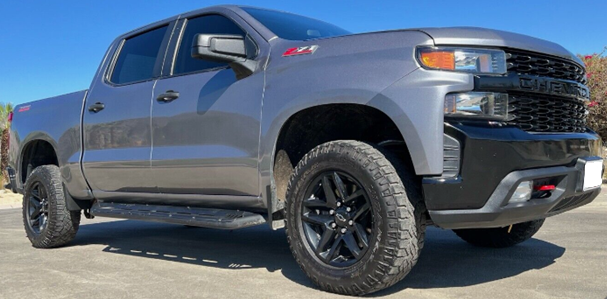
  • Tenth Digit = Model Year, with E = 2014, F = 2015, G = 2016, H = 2017, J = 2018, and K = 2019.
  • Eleventh Digit = Assembly Plant. Common plant codes include F = Flint, MI; G = Silao, Mexico; R = Arlington, TX; Z = Fort Wayne, IN; 1 = Oshawa, Ontario; and other codes depending on WMI, vehicle line, and production facility. Plant codes varied by model year, vehicle line, WMI, and facility.
  • Twelfth Through Seventeenth Digits = Sequential Serial Number at Assembly Plant.

2020-2026 Chevrolet & GMC Truck VIN Decoder Chart

  • 17 Characters: Beginning in 1981, GM trucks used the standardized 17-character VIN format.
    • First Digit = Country of Manufacture. Common codes include 1 = United States, 2 = Canada, and 3 = Mexico. Additional WMI region codes may appear depending on vehicle line and production source.
    • Second and Third Digits = Division/Make. Common combinations include GC = Chevrolet Truck, GB = Chevrolet Incomplete Vehicle, GT = GMC Truck, GD = GMC Incomplete Vehicle, GN = Chevrolet SUV, and GK = GMC SUV. Additional combinations may appear depending on vehicle line and application.
    • Fourth Digit = GVWR, Brake System, and Body Style. This position identifies a combined GVWR/brake/body-style classification, rather than only a weight rating. Codes vary by model year, body style, GVWR class, and vehicle line.
    • Fifth and Sixth Digits = Chassis, Series, and Trim Combination. These positions should be read together. Common applications include 2WD and 4WD versions of Chevrolet Silverado, GMC Sierra, Tahoe, Suburban, Yukon, Yukon XL, Express, Savana, Colorado, Canyon, and related GM truck/SUV platforms. Series and trim codes may identify 1500, 2500HD, 3500HD, Work Truck/Fleet/Base, Custom, LT, RST, LTZ, High Country, ZR2, SLE, SLT, AT4, AT4X, Denali, Denali Ultimate, and other configurations depending on model year and vehicle line. Verify exact trim and series identification using the vehicle's VIN card, RPO codes, and factory documentation.
    • Seventh Digit = Restraint System. Common codes identify combinations of manual belts, front airbags, front-seat side airbags, roof-side/curtain airbags, knee airbags, and other restraint equipment. Restraint codes vary by model year, seating configuration, and vehicle line.
    • Eighth Digit = Engine Type and Size.

Common Chevrolet/GMC truck and SUV eighth-digit engine codes include:

2020-2022

  • D = 5.3L V8 (L84)
  • F = 5.3L V8 (L82)
  • H = 4.3L V6 (LV3)
  • K = 2.7L Turbo I4 (L3B)
  • L = 6.2L V8 (L87)
  • T = 3.0L Duramax Diesel I6 (LM2)
  • Y = 6.6L Duramax Diesel V8 (L5P)
  • 7 = 6.6L Gas V8 (L8T)

2023-2026

  • D = 5.3L V8 (L84)
  • K = 2.7L Turbo I4 (L3B)
  • L = 6.2L V8 (L87)
  • Y = 6.6L Duramax Diesel V8 (L5P)
  • 7 = 6.6L Gas V8 (L8T)
  • 8 = 3.0L Duramax Diesel I6 (LZ0)

Note: Engine codes varied by model year, vehicle line, emissions certification, GVWR classification, and production year. Some 2022 applications included carryover or Limited models, and engine availability changed again for certain 2023-2026 applications. Engine identification should be verified using the vehicle's model year, VIN card, RPO code, and factory documentation.

  • Ninth Digit = Check Digit.
  • Tenth Digit = Model Year, with L = 2020, M = 2021, N = 2022, P = 2023, R = 2024, S = 2025, and T = 2026.
  • Eleventh Digit = Assembly Plant. Common plant codes include F = Flint, MI; G = Silao, Mexico; R = Arlington, TX; Z = Fort Wayne, IN; 1 = Oshawa, Ontario or Wentzville, MO depending on WMI/vehicle line; and other codes depending on WMI, vehicle line, and production facility. Plant codes varied by model year, vehicle line, WMI, and facility.
  • Twelfth Through Seventeenth Digits = Sequential Serial Number at Assembly Plant.

Understanding your GM truck's VIN can help verify authenticity, identify factory specifications, and better understand how a vehicle was originally equipped. Because VIN structures and code assignments can vary by model year, vehicle line, GVWR classification, and production application, always verify critical identification information using factory documentation.

If you have any questions or need further assistance with your GM truck's VIN decoding, feel free to reach out to us at JEGS High Performance. We're here to help you on your automotive journey.
16 responses to “GM Truck VIN Decoder: GM Decoder Chart”

  1. HARRY Avatar
    HARRY

    THANK YOU FOR THE INFORMATION ON THE SPRINT VIN NUMBER THIS IS VERY HELPFUL,YES THE 71 SPRINT WAS A RARE BIRD ONLY 3353 WERE MADE

    1. Pete Mitchell Avatar
      Pete Mitchell

      Harry, you’re very welcome. We’re glad the information helped. The 1971 Sprint is definitely an interesting and uncommon piece of GMC history, and it’s always great to hear from someone keeping the details and history of these trucks alive. Thanks for taking the time to follow up and share the production information with us. If you have any additional questions, give us a call at 1-800-345-4545 and speak with a Tech Specialist.

  2. Mike Johnson Avatar
    Mike Johnson

    We have a 66 C10 and the frame vin code and the door vin code are off by 1 digit. DMV is having an issue with this. Any ideas on how to clear this up? We do not have any of the original documentation.

    1. Pete Mitchell Avatar
      Pete Mitchell

      Mike, with a 1966 C10, a one-digit difference between the VIN plate and a frame-stamped VIN is something I would let your DMV resolve rather than trying to correct anything on the truck yourself. On a vehicle this old, the difference could be the result of a stamping or transcription error, but it could also indicate that the cab, VIN plate, or frame was replaced sometime during the truck’s history. Without the original documentation, there isn’t enough information to determine which VIN is correct. I would photograph both numbers clearly and ask the DMV what documentation or inspection they require to establish the truck’s identity. Depending on your state, that may involve a VIN inspection by the DMV, law enforcement, or another authorized inspector. I would not alter, restamp, remove, or replace either VIN marking. If you have additional questions about decoding the numbers themselves, give us a call at 1-800-345-4545 and speak with a Tech Specialist who can help.

  3. Trevor Nichols Avatar
    Trevor Nichols

    You have the 6th and 7th digits mixed up on the 73 trucks, it’s the year before the assembly plant on mine, wish I new the final serial numbers meanings, thanks for posting this information

    1. Pete Mitchell Avatar
      Pete Mitchell

      Thanks for the heads up, Trevor. We took another look at the 1973 truck VIN decoding section and confirmed that the year and assembly plant digit positions needed to be corrected. We’ve updated the chart to reflect the proper decoding sequence. We appreciate you helping us keep the information accurate for everyone researching and restoring these trucks.

  4. harry andrus Avatar
    harry andrus

    do you have a vin number decoder for a GNC SPRINT i am having a hard time finding out anything about my 71 GMC SPRINT any help ill be gladly accepted thankyou harry

    1. Pete Mitchell Avatar
      Pete Mitchell

      Hi Harry,

      The GMC Sprint is a bit tricky because it was basically GMC’s version of the Chevrolet El Camino, and it didn’t sell in nearly the same numbers. That makes finding detailed VIN decoders for it harder, since most of the charts you’ll come across are for Chevy passenger cars or trucks. For your 1971 GMC Sprint, the VIN will still follow GM’s general structure from that era. It should tell you the model year, assembly plant, engine code, and body style.
      Where things get complicated is that the Sprint didn’t have its own unique VIN sequence separate from Chevrolet. Instead, GMC used VIN coding that mirrored the El Camino since they were built on the same platform. That means a Chevy VIN decoder for 1971 will usually get you the information you need, but it won’t specifically say “Sprint.” Instead, it will look like an El Camino code. To confirm Sprint-specific details, you’d normally need the cowl tag (the trim tag on the firewall), but if yours is missing, you’ll need to rely on the VIN structure and any original documentation you might have.
      In short, there isn’t a separate GMC Sprint VIN decoder chart like there is for Camaros or Chevelles. You’ll want to use a 1971 Chevrolet passenger car/El Camino VIN guide, which will decode correctly for your Sprint as well. If you’d like help breaking down your exact VIN digit by digit, our team can walk you through it. Call us at 1-800-345-4545 and speak to a JEGS tech support specialist.

  5. Bryan Francis Avatar
    Bryan Francis

    What numbers were stamped on the 454 Gen V engines, 1996 – 1998?

    1. Pete Mitchell Avatar
      Pete Mitchell

      Hi Bryan,
      The 454 Gen V engines used in GM trucks from 1996 to 1998 are part of the Vortec 7400 family and typically had casting number 12550313 on the block. This casting was introduced with the Gen V series and carried over into early Gen VI production. You’ll usually find this number located on the rear of the block, near the bellhousing flange, on the driver’s side.
      For stamped engine ID numbers, check the pad on the front passenger side of the block, just below the cylinder head. These alphanumeric codes identify the plant, production date, and application. The exact digits will vary by vehicle and assembly plant, but for example, a code like “7.4L VORTEC L29” might be referenced in GM literature and service documents for this generation.
      If you need additional help, contact us at 1-800-345-4545 and speak to a tech support specialist. We’d be happy to help identify the right parts or decode your engine further.

  6. Ken Flecknell Avatar
    Ken Flecknell

    Hi, I have a question. My vin number does not conform to what you list. 1GT120E85FF674597 I take it was made in the USA it is a 2015 and with 11th number being F IT WAS MANUFACTURED AT Flint Michigan. It is 4 wheel drive with an Allison 6 speed Transmission. and V8 Duramax engine. Just not sure what the 120E85F Says about it? I know the 674598 should be the individual unit number. Thanks for anything you can clarify for me.

    1. Pete Mitchell Avatar
      Pete Mitchell

      You’re correct that your 2015 GMC truck was built in the USA (1st digit = “1”) and manufactured at Flint, Michigan (11th digit = “F”). The 1GT120E85FF674597 VIN breaks down as follows: “1GT” identifies it as a GMC truck, and “120E85F” contains information about the model, drivetrain, and body type. Specifically, “1” indicates it’s a 3/4-ton (2500 Series) truck, “2” signifies it’s a 4WD model, and “0E85” relates to specific trim or equipment configurations. The “5” in this section typically references body style or options. Your Duramax diesel V8 engine and Allison 6-speed transmission are correctly identified within this sequence as well. Lastly, as you mentioned, the last six digits (674597) are the unique unit production number assigned at the factory. If you need a deeper breakdown of trim-specific features, checking the RPO (Regular Production Option) sticker inside the glovebox or calling a GM dealership with your VIN can provide exact details on your truck’s original build. Hope this helps, and enjoy your Duramax-powered GMC!

  7. Evan Avatar
    Evan

    This article was very helpful but I have a question about the Division part of the vin. My 1996 GMC K1500 suburban has a “GK” in the 2nd and 3rd spots, what could those two letters indicate?
    Does it stand for a 4WD GMC?

    Thank you in advance for the help

    1. Pete Mitchell Avatar
      Pete Mitchell

      Hi Evan,
      Great question! In GM VIN decoding, the 2nd and 3rd characters (in your case, “GK”) represent the manufacturer and division, along with a basic vehicle type.
      For your 1996 GMC K1500 Suburban, here’s what “GK” indicates:
      Breakdown of “GK” in the VIN
      G – This identifies the vehicle as a GMC vehicle, as opposed to Chevrolet or other GM divisions.
      K – This designates the vehicle as a 4WD (four-wheel drive) model. In GM VINs, “C” typically represents two-wheel drive (2WD), while “K” signifies 4WD.
      So yes, your understanding is correct! The “GK” in the 2nd and 3rd positions of your VIN confirms that your Suburban is a GMC 4WD vehicle.
      If you have more questions or need help decoding the rest of your VIN, feel free to ask! If you need additional assistance, contact us at 1-800-345-4545 and speak to a tech support specialist.

  8. Rick Tess Avatar
    Rick Tess

    The VIN# decoder was very helpful, I am looking for production #’s i.e.: how many of this model was produced with the diesel engine?
    I have a 1984 short wide bed 1/2 ton 2 wd pickup with the 6.2 diesel engine and AOD transmission. Need to know where to go for the information…

    1. Pete Mitchell Avatar
      Pete Mitchell

      Hi Rick,

      Thank you for your question! While VIN decoders are great for identifying a vehicle’s unique characteristics, production numbers like the total units produced with specific options—such as the 6.2L diesel engine and AOD transmission—require more in-depth research. Here are some steps and resources to help you find the production data:
      Contact GM Historical Services:
      General Motors maintains historical archives, and they may be able to provide specific production numbers for your 1984 Chevy truck. Visit the GM Heritage Center website, where they offer vehicle information packages for many models.
      Check Enthusiast Forums:
      Online forums often have members who are knowledgeable about production numbers and specific configurations. Engaging with these communities can provide insights and resources for rare details like yours.
      Reference Books and Guides:
      Books with Chevrolet/GMC Light Duty Truck Production Numbers by authoritative authors can also offer the data you’re looking for. You can search for such publications online or in automotive specialty shops.
      Explore Historical Clubs or Organizations:
      Groups like the Vintage Chevrolet Club of America (VCCA) or similar organizations often have archives of historical data. Members may also have personal knowledge or documentation that could help.
      Reach Out to Specialty Vehicle Registries:
      Registries for classic GM trucks or diesel-powered vehicles can be another avenue. Sometimes enthusiasts have compiled unofficial records for specific models and engine configurations.
      Let us know if you find the data or need more assistance!

Leave a Reply

Your email address will not be published. Required fields are marked *

Did you find this article Helpful?

Related Articles