Sign up now to join the JEGS email newsletter and be the first to learn about new products, special deals and e-mail only offers!

 8 People Found This Article Helpful
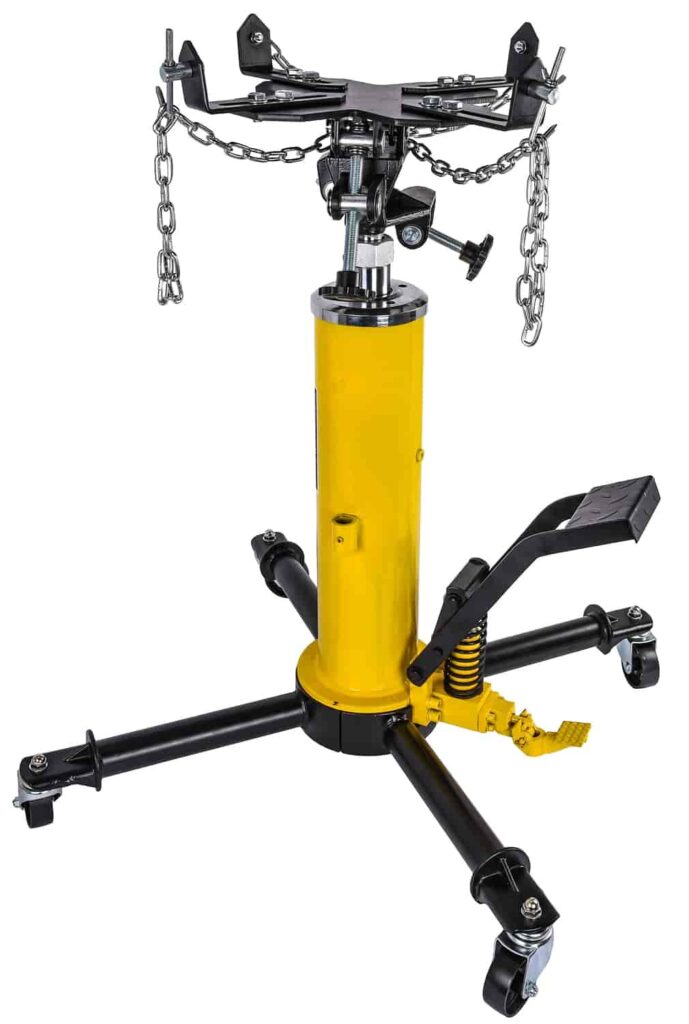

When it comes to working on automotive transmissions, having the right equipment is essential. One such tool that every professional mechanic or avid DIYer should consider is a transmission jack. In this comprehensive guide, we'll delve into the purpose of a transmission jack, factors to consider when selecting one, and proper usage techniques to ensure safety and efficiency.
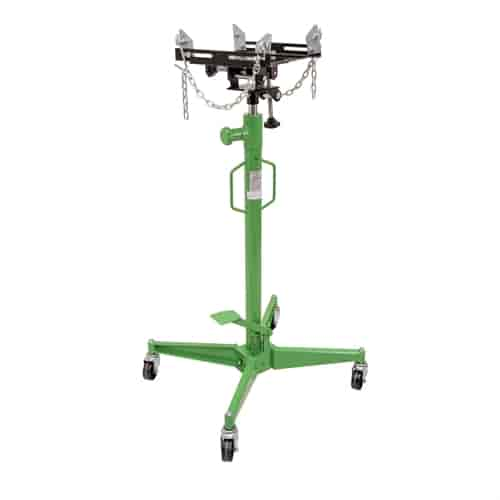
A transmission jack is a specialized tool designed to support and safely lift heavy transmissions during removal or installation. Its primary purpose is to provide stability and ease the process of working on transmissions, which are typically heavy and bulky components. By utilizing a transmission jack, mechanics can efficiently maneuver transmissions and avoid potential injuries or damages.
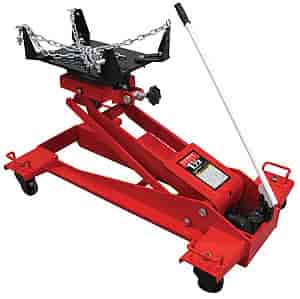
The transmission jack purpose is to support and safely lift heavy transmissions during removal or installation. It provides stability and ease the process of working on transmissions, which are typically heavy and bulky components. By utilizing a transmission jack, mechanics can efficiently maneuver transmissions and avoid potential injuries or damages.
When selecting a transmission jack, several factors come into play:
Weight Capacity: The most critical consideration is the jack's weight capacity. It must safely support the weight of the transmissions you work with. Understanding the weight range of the transmissions you encounter ensures you choose a jack with an appropriate capacity.
Height Range: Another crucial aspect is the jack's lifting height range. It should align with the clearance available in your workspace and the transmission's dimensions. An adjustable height range offers versatility and compatibility with various vehicle types.
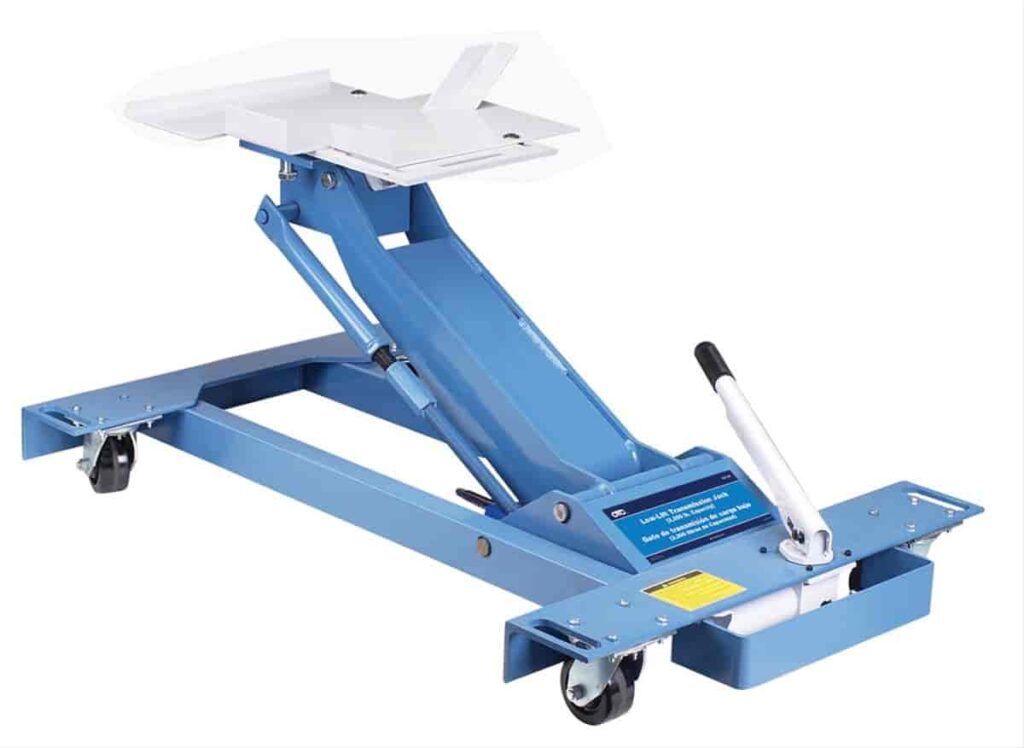
Stability and Construction: Opt for a transmission jack made from high-quality materials like durable steel. Features such as a wide base, sturdy casters, and a secure locking mechanism ensure stability during lifting and positioning.
Ease of Maneuverability: Consider features like swivel casters, smooth-rolling wheels, and a compact design for maneuvering in tight spaces.
Sign up now to join the JEGS email newsletter and be the first to learn about new products, special deals and e-mail only offers!
Safety is paramount when using a transmission jack:
Safety First: Always prioritize safety. Ensure the jack is on a level surface and the vehicle is securely supported. Confirm the jack's weight capacity matches the transmission's weight.
Positioning the Jack: Align the jack directly under the transmission, avoiding delicate components.
Lowering and Removal: Lower the transmission slowly and carefully once safely disconnected and supported by the jack.
Lifting the Transmission: Use the jack's lifting mechanism to raise the transmission evenly. Confirm its security before proceeding with installation.
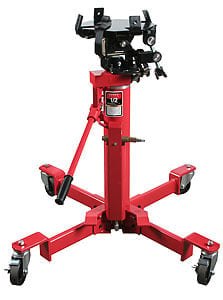
When swapping transmissions, consider factors like compatibility, weight distribution, and clearance to ensure a successful replacement using a transmission jack.
Using a transmission jack offers precise control, safety, and efficiency, reducing the risk of injuries and damages during transmission work.
A transmission jack is specifically designed for lifting transmissions, offering stability and maneuverability not found in regular floor jacks.
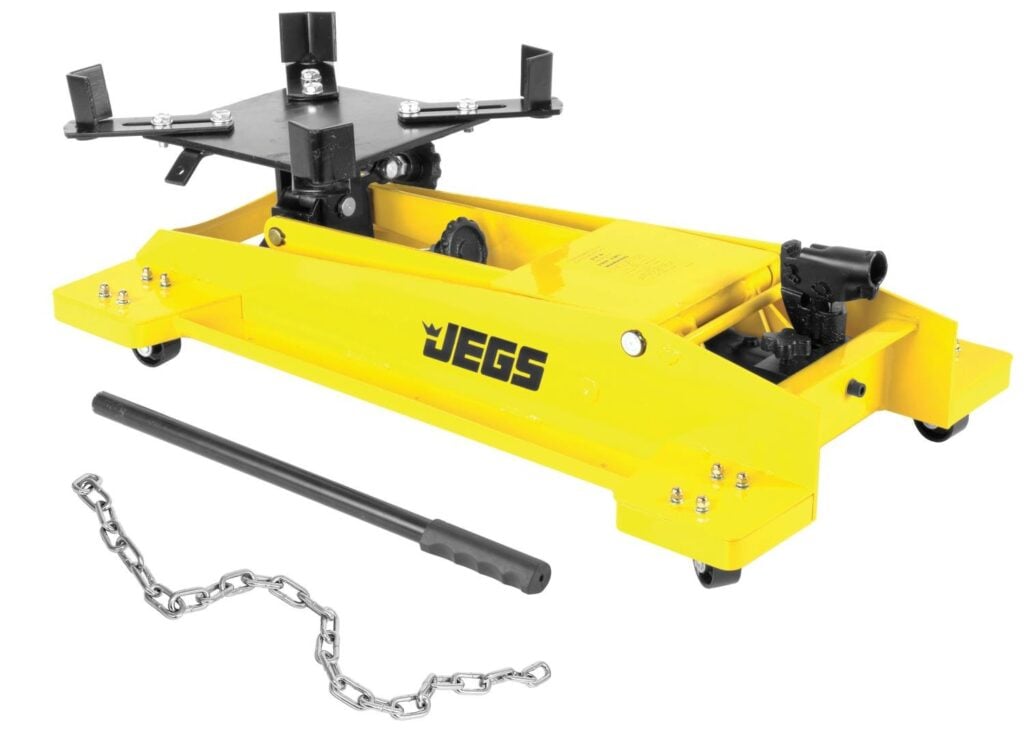
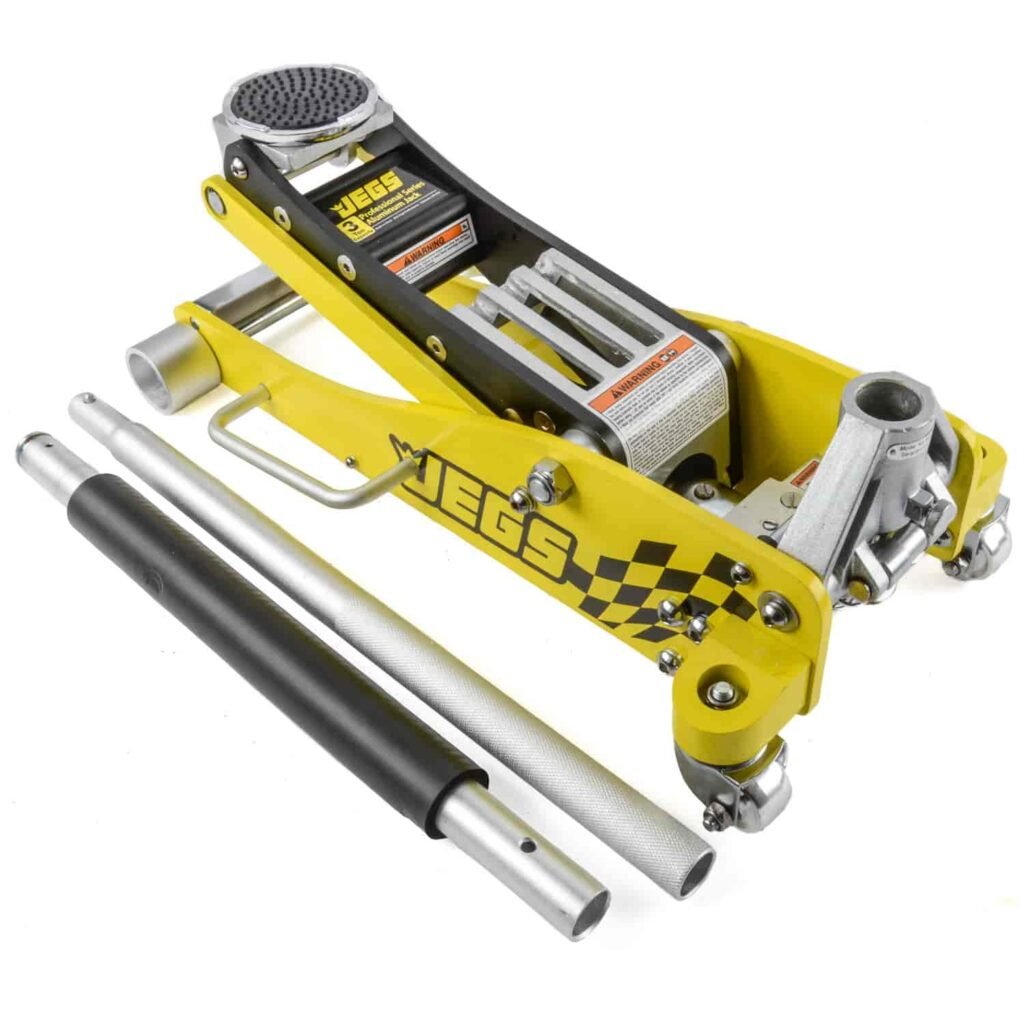
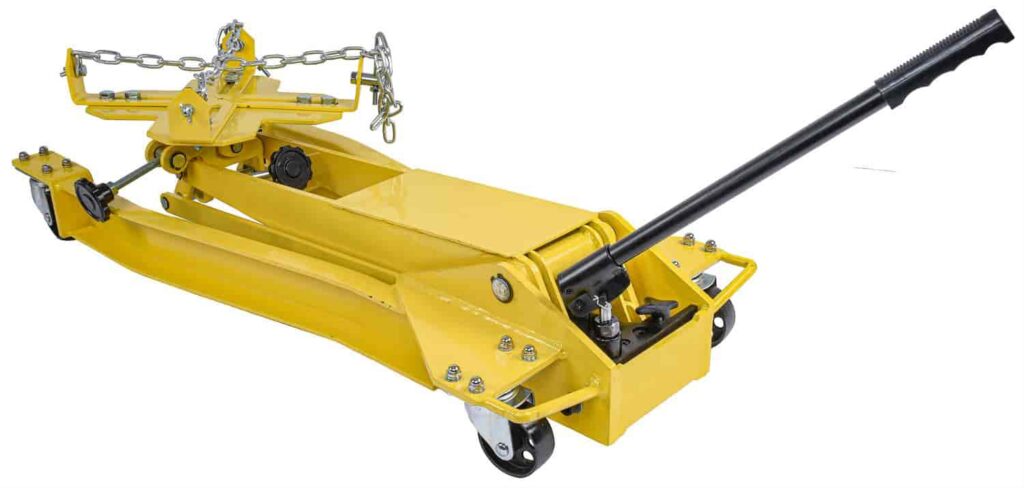
Explore a wide selection of high-quality transmission jacks at JEGS, including our very own JEGS transmission jack, ensuring reliability and performance for all your transmission-related tasks.
By choosing the right transmission jack based on weight and height considerations and adhering to proper usage techniques, mechanics and DIY enthusiasts can enhance their workflow efficiency and ensure workplace safety. Investing in a reliable transmission jack is a decision that pays off, making transmission work more manageable and hassle-free.




Leave a Reply