Sign up now to join the JEGS email newsletter and be the first to learn about new products, special deals and e-mail only offers!

 5 People Found This Article Helpful


Engines must deliver high-voltage electrical energy to each cylinder's spark plug, and many older and classic cars use a distributor. This electrical energy must reach the spark plug at the right time and sequence to ignite the air and fuel mixture in the cylinders. If there are any issues with the distributor, your engine won't start, you may get a Check Engine light (If equipped), and there might also be misfires.
The good news is that understanding how a distributor works and what you should look for in a Ford 302 engine distributor isn’t all that hard. It can help you replace a faulty distributor or even help you upgrade your current one to squeeze every ounce of horsepower out of your engine. Read on to learn more about Ford 302 engine distributors – we even include some of the best options in our buyer's guide.
Yes and no. If you're looking for a factory replacement, you won't notice any significant horsepower changes if you replace the old distributor with one with similar specs to factory parts. On the other hand, some Ford distributors can improve your engine's performance if you advance the timing. Full disclosure: You can advance the timing on factory distributors, too.
It's also important to note that a faulty distributor can reduce your engine's ability to accelerate properly, so replacing it will improve performance back to baseline. Ultimately, the specific type of distributor influences how much horsepower you can gain. You'll also have to tune the engine to maximize the benefits, so keep this in mind.

When adjusting your distributor to advance timing on a Ford 302 engine, you must be careful. Adjusting the timing too much can lead to premature detonation, a pinging sound, and misfires that can damage your engine. If you're prepared to adjust your distributor, you can start by setting the engine to top dead center (TDC). This will help you set the timing; you can use this as a foundation to advance your timing later.
Use a TDC indicator tool in the #1 spark plug hole for the best results. Then, rotate the crankshaft by hand until you notice the piston pressing against the stop, then confirm at or mark your balancer. You also need to confirm that the distributor rotor is under the #1 distributor spark plug wire terminal as distributors make two revolutions for every one crankshaft revolution. If you find TDC at the spark plug, the distributor rotor will either be under the #1 or the #6 distributor terminal; it needs to be under #1, otherwise you need to turn the crankshaft another 360 degrees. This will give you your TDC. In most engines, the spark plug will fire 10 to 14 degrees before the piston reaches the top of its stroke. You can then advance the timing from there, which is known as BTDC.
Once this is established, you can start to experiment with the timing. If you want to advance the timing, a good rule of thumb is to turn the distributor in the opposite direction of the rotor, which is clockwise. You can also retard the timing by turning the distributor in the same direction as the rotor (counter-clockwise).
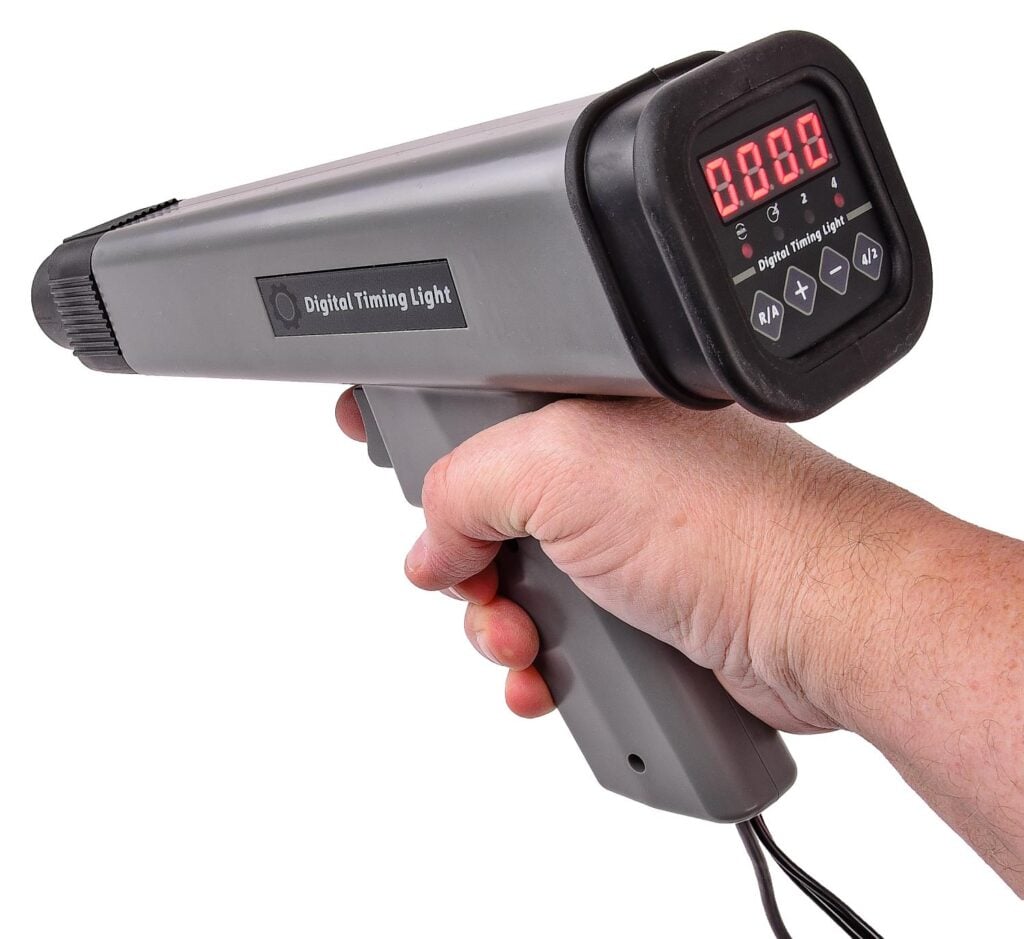
We also recommend using a timing light and other tools to help you set and advance the timing. While some suggest the ear test or using your thumb to set the TDC, it's always better to be safe and sure when working on these engines.
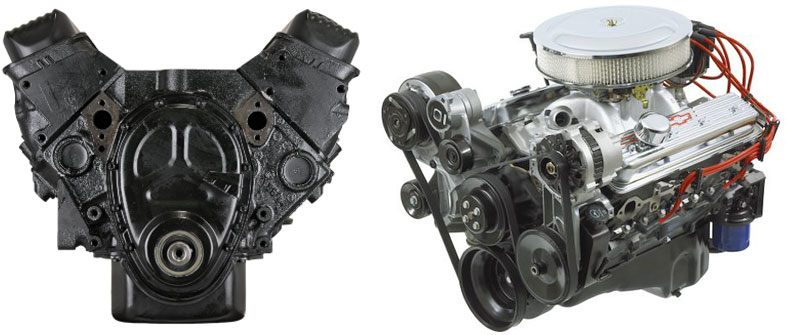
First, there are two types of 1993 and older 302 engines: those advertised as a "302" and engines advertised as a "5.0" (such as in Mustangs and F-Series pickups). The quickest way to confirm which one you have is to look for an ignition module bolted directly to the bottom of the distributor, which is on "5.0" 302 engines. the standard 302 engine will have an external ignition module box, typically in the fender well area. Also, there is more than one type of 351 engine: the 351W (Windsor) and the 351M (Modified). Each 302,5.0, 351W, and 351M engine uses a different distributor, so none are cross-compatible even though they may look similar at first glance.

Newer 302 "5.0" engine distributors will have different specifications than the earlier "302" distributors that came with the engine. However, there are still many similarities and specifications that distributors have to meet to work with the Ford 302 engines. Some of these specs include:
Some of these specs may change depending on the type of 302 distributor you use.
Sign up now to join the JEGS email newsletter and be the first to learn about new products, special deals and e-mail only offers!


Finding a distributor for your Ford 302 engine isn't always easy, especially if you don't know where to start. The good news is that finding the Ford 302 parts you need is a breeze when you shop with JEGS, including distributors that will fit your 302 engine like a glove. Learn about some of our top choices below.
When you want a distributor that's flexible and easy to work with, the HEI Distributor for Ford Small Block 221-302 V8 Engines from JEGS is the best choice. This distributor is unique because it will fit any Ford 302 engine from 1968 to 1995 (not 5.0 engines). Whether you want to restore an old Ford Mustang or swap a late-model 302 for something else, this distributor has you covered. Moreover, installing this distributor is a breeze with drop-in installation using the 1-wire hookup. This distributor is also well-made with CNC aluminum that will last years and is compatible with many engine variations.
The JEGS SSR-III Ready-to-Run (RTR) Pro-Series Distributor for Ford Small Block 221-302 V8 Engines is for car enthusiasts who want to maximize power, durability, and overall performance. This distributor comes ready to install right out of the box, and any DIYer can get the job done in a few hours due to its easy 3-wire hookup. While it's a little more complicated to connect than the HEI distributor we covered earlier, it has a forged aluminum housing and magnetic trigger. Plus, it's rated at 35% higher output voltage. This distributor is perfect to advance the timing and squeeze more power out of your engine.

Holley is one of the best names in the industry when it comes to maximizing performance with classic engines, including small-block Ford 302s. This is one of the best options for running an EFI system. The Holley EFI Gen 2 Dual Sync distributor can handle high RPMS thanks to its precision-machined shutter wheel and anodized CNC machined billet aluminum housing, making this thing practically bulletproof. What's more, if you're already running a Holley EFI or a Holley Sniper EFI, this part is plug-and-play; all you need is an adapter harness. The Holley 565-202BK EFI Gen 2 Dual Sync Distributor for Small Block Ford 302 also gives you, the user, a lot of control with precise timing control. Additionally, this Holley distributor features LED lights that make the installation process hassle-free.


Hello Brian, I have an 86′ ford mustang GT Hatchback. The engine is a 302 cu.in. It has a Vortec Super charger tuned to 550 HP. It is fuel injected with 47lb fuel injectors. It also has Methanal injection; And an MSD coil. The camshaft is an Anderson N51 with roller rockers, BBK aluminum heads with blower pistons and Oversized Valves for more fuel intake. The headers are Also BBK and has adjustable sounding exhaust. I recently had the Alternator rebuilt to 130 amps. The transmission is a World Class T-5 5spd to a true Posi rear with 3.55 gears. The distributor has the module on the side of it which I changed also. My question is when i start the car and start to drive down the road all is fine, when it hits operating temperature 190 degrees, the engine has a misfire. I’ve changed the thermostat to a 180 degree’s; the spark plugs are recent change as the spark plug wires 8MM. When you try to accelerate down the road it spits and sputters, no power. It has the original Motor craft distributor in it now; I was asking if by changing out to a new distributor would this help and solve my issue. The car is mainly used for car shows and a cruiser not every day. It also has the original PCM. Before I spend money on a new distributor, with your experience do have and ideas on what i am experiencing? I’ve owned the car for going on 3 years now. My tuner advised me not to drive the car till this is fixed. Thank you

Bob, with your combination and the fact that the issue only starts once the engine reaches operating temperature, I would not immediately jump to replacing the distributor itself. The heat-related timing of the problem points more toward an ignition module, TFI system issue, sensor problem, or tuning issue rather than the distributor housing or gear.
On those mid-80s Ford EFI systems, the **TFI module** mounted on the distributor is a very common heat-failure item. Even if it was replaced, some aftermarket modules are known to fail or become unstable once temperatures rise. The symptom of running fine cold, then sputtering, misfiring, and breaking up hot is classic TFI behavior.
Another thing that stands out is your combination is far beyond what the original Ford EFI and calibration were designed to support. A Vortech-blown 302 making around 550 HP with larger injectors, meth injection, aftermarket cam, and aluminum heads puts a huge demand on the tune. Once the ECU goes into full closed-loop operation at temperature, problems with fuel delivery, timing control, or sensor readings can show up that aren’t present while the engine is cold.
I’d also look closely at:
* Fuel pressure stability when hot
* Ignition timing under load
* Coil voltage and grounds
* PIP sensor inside the distributor
* Mass air meter calibration if equipped
* Intake air temp and coolant temp sensors
* Methanol injection activation and possible over-rich condition
The fact that it worsens under acceleration is important because cylinder pressure rises under boost and load, which exposes weak ignition components very quickly.
A newer performance distributor from brands like MSD can improve overall ignition stability, but I would treat that as part of a larger diagnostic process, not the guaranteed fix by itself. Simply swapping distributors without confirming the actual cause could get expensive quickly.
Your tuner’s advice not to drive it until sorted out is smart, especially with boost involved. A lean condition, unstable timing, or ignition breakup under load can damage the engine.
You’ve got a serious combination there, so this really needs a methodical diagnosis rather than parts swapping. Give us a call at 1-800-345-4545 and a Tech Specialist can help walk through the ignition and fuel system setup in detail to help narrow it down properly.

I am building a 1969 Ford Mustang with a 302 bored to a 347. I have an Edlebrock intake and Holley 4 bbl carb. I installed an HEI distributor but realized now that it is to tall and interferes with my shaker assembly. I like the ease of use with the HEI but with the clearance issue is there a better option I should look at?
Bryan, that is a common issue when using an HEI style distributor on a small block Ford, especially with a shaker setup where vertical clearance is tight. The large diameter cap and taller housing are what give the HEI its simplicity, but they also create fitment problems like the one you are running into. A very good alternative is to go with a more compact distributor that still gives you modern electronic ignition performance without the height. Brands like MSD offer their Pro-Billet distributors, and Ford Performance also has electronic distributor options that are much lower in profile than an HEI. These use an external ignition box instead of having the module in the distributor, which keeps the size down and usually clears shaker assemblies much better. You still get strong spark energy, reliable triggering, and easy tuning with advance springs and bushings, but in a package that fits your engine bay properly. For a 347 with a carburetor, that style of distributor is very commonly used and works well for both street and performance driving. It does add a little more wiring compared to an HEI, but the tradeoff is better fitment and often more precise control. If you would like to go over your setup and make sure everything clears and works together the way it should, give us a call at 1-800-345-4545 and speak with a Tech Specialist and we will be glad to help.

I’m converting my 1990 302 to carb. The motor has a b303 and I’ll be using jegs intake manifold and edelbrock 600cfm carb. I’m currently looking for a good distributor that would work with my set up. What would you recommend?
Hi Greg, that’s a solid setup you’re putting together. Since you’re converting your 1990 302 to a carbureted setup with the B303 cam, Edelbrock 600 CFM carb, and the JEGS dual-plane intake, you’ll want a distributor that delivers a strong spark curve matched to that cam’s midrange powerband.
Because your engine no longer needs computer control, you’ll need a standalone mechanical and vacuum advance distributor designed for carbureted small block Fords. Good options available from JEGS include distributors from MSD, JEGS, and Pertronix. Each of these brands offers ready-to-run (RTR) models that don’t require an external ignition box, though using one with an MSD 6-series or JEGS ignition control box can help you get a more precise spark and stronger ignition performance.
For your application, I’d look for a ready-to-run or HEI-style distributor with vacuum advance for best drivability, especially if the truck or car sees street duty. The B303 cam starts pulling strong around 2,000 RPM, so a good mechanical advance curve that comes in fully around 3,000 RPM will pair nicely with your setup.
If you want a cleaner install, JEGS and MSD both offer distributors with integrated modules that only need a coil and 12V switched power to run. Those are great for conversions like yours where simplicity and reliability matter.
To confirm the best fit for your exact ignition system and setup, I recommend calling one of our tech specialists at 1-800-345-4545. They can match you with the correct distributor series and coil combination based on whether you’re keeping the factory harness or wiring a standalone ignition.

I am building a 1923 Ford T-bucket from Speedway Motors with a 1986 5.0 Ford block with a Ford Motor Sports Roller Cam with Cast Iron Ford Heads with a Holley HI-RAM Tunnel Ram with two Holley 600cfm carbs, and now I am looking for a DISTRIBUTOR that will fit. Any ideas? I am NOT using this for the Drag Strip, it’s for the street and looks.
Hey Tim,
That sounds like an awesome build, nothing beats the look of a T-bucket with a tunnel ram and dual carbs sitting up top. For your 1986 5.0L Ford block with a Ford Motorsport roller cam and iron heads, a ready-to-run distributor is a great choice for a clean street setup without needing an external ignition box.
Check out something like the MSD Street Fire Ready-to-Run Distributor or Pertronix Flame-Thrower Billet Distributor, both available at JEGS.com and designed for 289/302 engines with hydraulic roller cams. They’ll drop right in, clear your intake setup in most cases, and offer reliable spark with easy tuning.
Just make sure you’ve got the correct steel distributor gear if your roller cam requires it. Some aftermarket roller cams are OK with iron gears, but Ford Motorsports cams often need the steel gear to avoid premature wear. It’s a small but important detail.
If you need help picking the perfect match for your cam and setup, give us a call at 1-800-345-4545 and speak with a tech specialist. We’ll get you set up right the first time.


Leave a Reply