Sign up now to join the JEGS email newsletter and be the first to learn about new products, special deals and e-mail only offers!

 14 People Found This Article Helpful


Proper float adjustment is crucial for the efficient operation of your Holley carburetor. If the float levels are not set correctly, it can lead to poor fuel delivery, engine flooding, or hesitation during acceleration. In this guide, we'll cover everything you need to know about Holley float adjustment, including the steps to adjust floats on Holley carb and ensure your engine runs smoothly.
Before diving into the adjustment process, it's essential to understand what float levels are and why they matter for your carburetor's performance.
The float inside a carburetor controls the amount of fuel in the fuel bowl. It acts as a valve, rising and falling with the fuel level to regulate the flow of gasoline into the carburetor. Proper setting floats on Holley carburetor ensures that the right amount of fuel is delivered to the engine at all times.

Incorrect float levels can cause a variety of engine problems, such as:
Understanding these potential issues highlights the importance of a precise Holley float adjustment for optimal engine performance.

Setting the float levels on your Holley carburetor is a straightforward process, but it requires careful attention to detail to ensure accuracy. Follow these steps to adjust floats on Holley carb:
These steps will help you achieve the ideal float setting for your Holley carburetor, ensuring that your engine receives the correct fuel supply.
Sign up now to join the JEGS email newsletter and be the first to learn about new products, special deals and e-mail only offers!

Even after adjusting the float levels, it's essential to fine-tune your settings to optimize engine performance. Here are some tips to get the most out of your setting floats on Holley carburetor:

Fine-tuning the float levels can make a significant difference in how well your engine performs, leading to smoother acceleration and improved fuel efficiency.
To keep your Holley carburetor in top shape, regular maintenance is essential. Here are some key maintenance tips to prolong its life and maintain performance:
Proper maintenance will keep your Holley carburetor running efficiently and ensure that your Holley float adjustment stays consistent over time.

Adjusting and fine-tuning the float levels on your Holley carburetor is a critical step in maintaining optimal engine performance. By following these steps to adjust floats on Holley carb and keeping up with regular maintenance, you can ensure that your carburetor delivers the right amount of fuel for smooth and efficient operation. Whether you're an experienced mechanic or a DIY enthusiast, mastering the art of setting floats on Holley carburetor will help you get the most out of your vehicle's performance.

HAV. A750 Holley no. Choke.
my 81 Cutlass with a 350 Dart enginesometimes the car stalls have to raise the floatturn the screw or the nut to adjust FLOAT Holly carburetor does not have a SITE. glass
SAYS DUPLICATE WHY. WON’T POST WHY

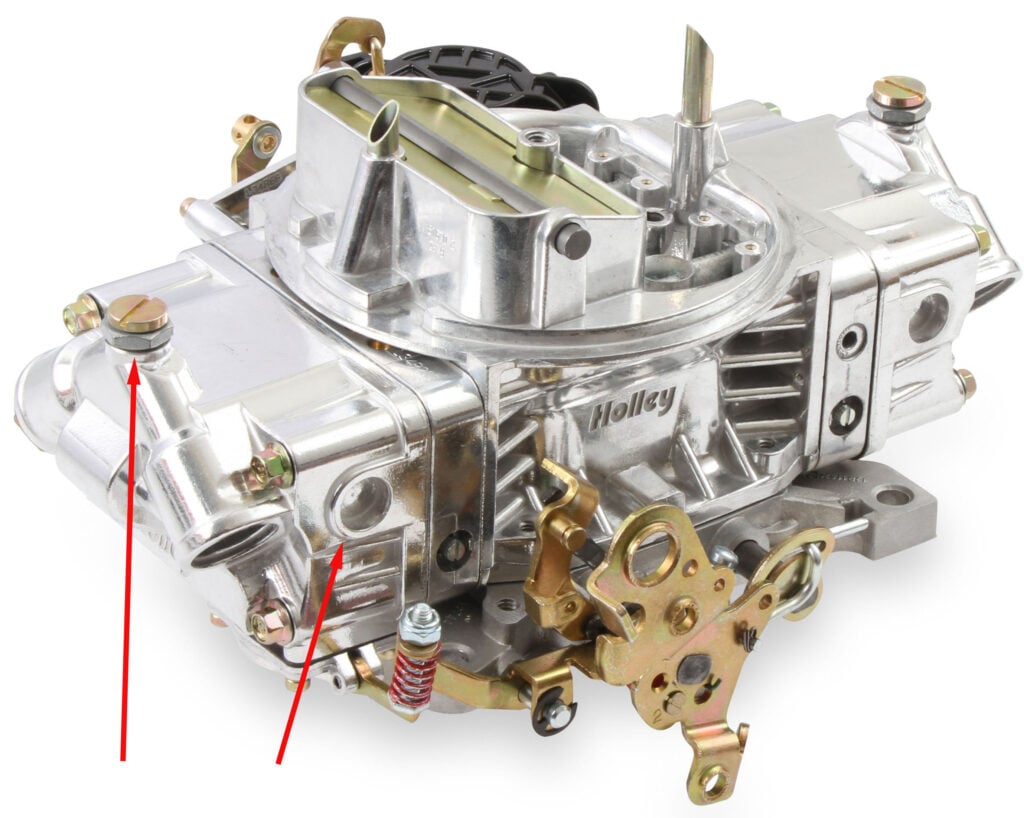
Gerard, if your Holley A750 does not have a sight glass, it likely uses the older style float bowl with a sight plug on the side. To check the float level, remove the sight plug with the engine idling on level ground. Fuel should be right at the bottom of the sight hole and may barely trickle out when the vehicle is gently rocked. If fuel pours out, the float level is too high. If you cannot see fuel at the bottom of the hole, the float level is too low.
To adjust it, loosen the lock screw on top of the float bowl and turn the adjusting nut. Turning the nut counterclockwise raises the float level, while turning it clockwise lowers the float level. Tighten the lock screw and recheck the level after each adjustment. Be very careful not to allow any fuel to reach hot exhaust or components that could create a spark, which would ignite the fuel.
If the engine is stalling and you find yourself repeatedly raising the float level to keep it running, there may be another issue besides the float adjustment. Common causes include a restricted fuel filter, weak fuel pump, dirt in the needle and seat assembly, vacuum leaks, or carburetor tuning issues.
The float level should not normally require frequent adjustment once it is set correctly. If it keeps changing, it is worth looking for an underlying fuel delivery or carburetor problem.
If you would like additional help diagnosing the issue, give us a call at 1-800-345-4545 and a Tech Specialist can help walk you through it.

I have a 1967 chevelle with a 396 and a quardrajet carburatot ,The 1967 carb was leaking down to stat when it,s cold you need to pour a little gas the choke worked ok,I just bought my first holley a 600 warrior ,It came with no choke the mechanic said just hold the pedal down till it gets warmed up ,well i,m very unhappy it,s running very rough,the whole car is shaking you smell alot of exhaust ,I,m ready to buy the brawler 600 with a electric choke As soon as i pay off pay pal the $465.00 i paid,I,m going to try one more good mechanic ,I was reading alot of what you wrote i didn,t know you had to be like a heart sergion,Thank you Gary Burnett.
Hi Gary, thanks for reaching out and sharing your experience. It definitely sounds like you’ve had a frustrating time getting your Chevelle running right, but you’re not alone, carb swaps can be tricky, especially going from a factory Quadrajet to a more universal Holley setup.
The Holley 600 Warrior is a performance-style carb designed more for track use or simplified builds, and the lack of a choke is part of why you’re having a hard time with cold starts. Without a choke, you’re relying completely on the accelerator pump to feed enough fuel on startup, and in cooler weather or with a cold intake manifold, that can lead to hard starting and rough running.
Also, a strong fuel smell and shaking can point to an overly rich condition, misfire, or improper timing. A good mechanic should check:
Your ignition timing (initial and total advance)
Vacuum leaks (especially if your manifold vacuum is low)
Proper jetting and idle mixture adjustment
Float level and fuel pressure
If you’re leaning toward the Brawler 600 with electric choke, that would be a good move for a street-driven car like yours. The electric choke makes cold starts much easier and more consistent, and the Brawler line is a step up from the Warrior series when it comes to drivability and tunability.
That said, if you’re tired of constant tuning and want a more modern solution, a Holley Sniper EFI system might be worth considering in the long run. It gives you the performance of a carb lookalike with the ease of fuel injection with better starts, cleaner idle, and automatic fuel compensation for weather and elevation changes.
If you need additional help, contact us at 1-800-345-4545 and speak to a tech support specialist.





Leave a Reply