Sign up now to join the JEGS email newsletter and be the first to learn about new products, special deals and e-mail only offers!

 73 People Found This Article Helpful
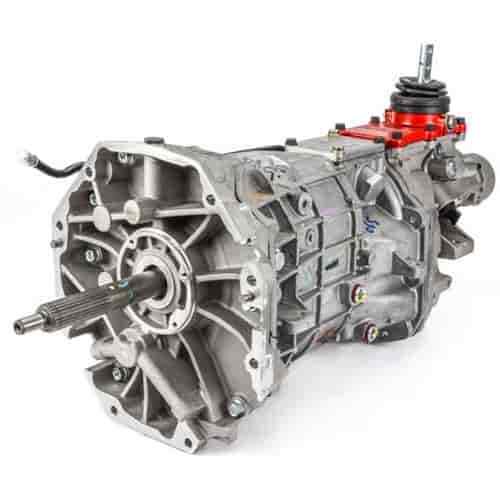
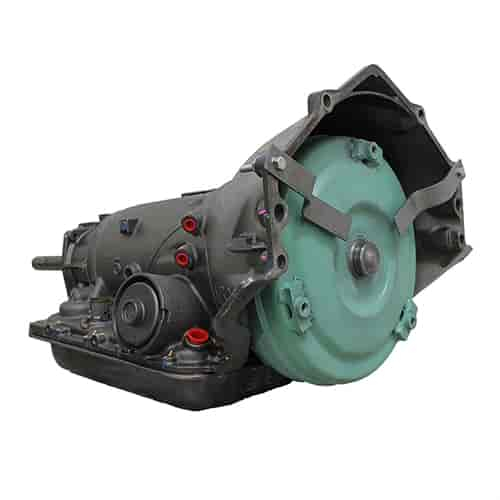

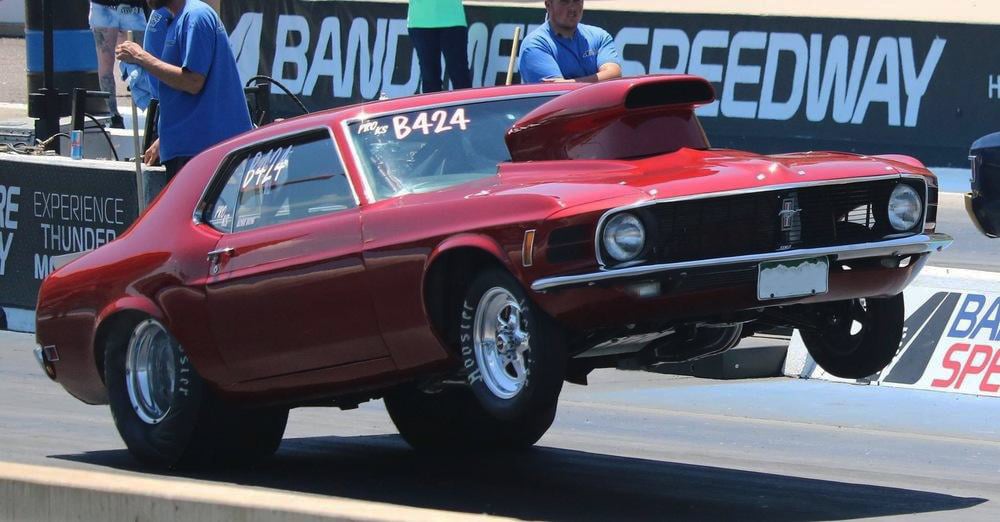
Drag racing is arguably the most popular type of motor racing there is. The goal is to get from point A to point B in a straight line as quickly as possible. Even though it sounds simple on paper, there are very few things that come close to being as fun and as thrilling as drag racing is.
When it comes to being the quickest in drag racing, there are various factors that come into play. Horsepower, vehicle weight, choice of tires, and vehicle layout, are just a few of them. Another is the type of transmission being used.
Automatic vs manual transmission is a debate as old as time. Each transmission has its own advantages and disadvantages, both in regard to how quick they are and how much involvement they require from the driver.
Even though it isn't set in stone, as a general rule of thumb, an automatic transmission is the best transmission for drag racing. For starters, you avoid the downtime associated with pressing the clutch yourself and changing gears. Assuming you lose a few hundredths of a second during each shift, that could equate to as much as half a second or even a full second during the entire run.
With an automatic transmission, you don't have to worry about missing a shift either. Because the transmission does everything for you, it will never skip a gear and accidentally go from 2nd to 1st instead of 3rd. This also means that you have more time to focus on applying steady throttle and steering with your hands.
On top of that, automatic transmissions are generally more durable than manual transmissions and can withstand more power and more abuse. There are distinctions to be made when it comes to automatic transmissions though. A DCT transmission is unbelievably quick since it uses two clutches, but is more prone to breaking down. A conventional torque converter is super strong at the expense of slightly slower shifts.
Sign up now to join the JEGS email newsletter and be the first to learn about new products, special deals and e-mail only offers!
Launching a car equipped with an automatic transmission is easier since many race-ready designs already come with a launch control, such as a transbrake. This allows you to hold the transmission until the green light and then let the vehicle launch with the push of a button. Another option is a foot-brake launch, which is the process where you use your left foot to hold the brake and your right foot to apply the accelerator. When you're ready to go, you simply lift your left foot off the brake and the car does everything else for you.
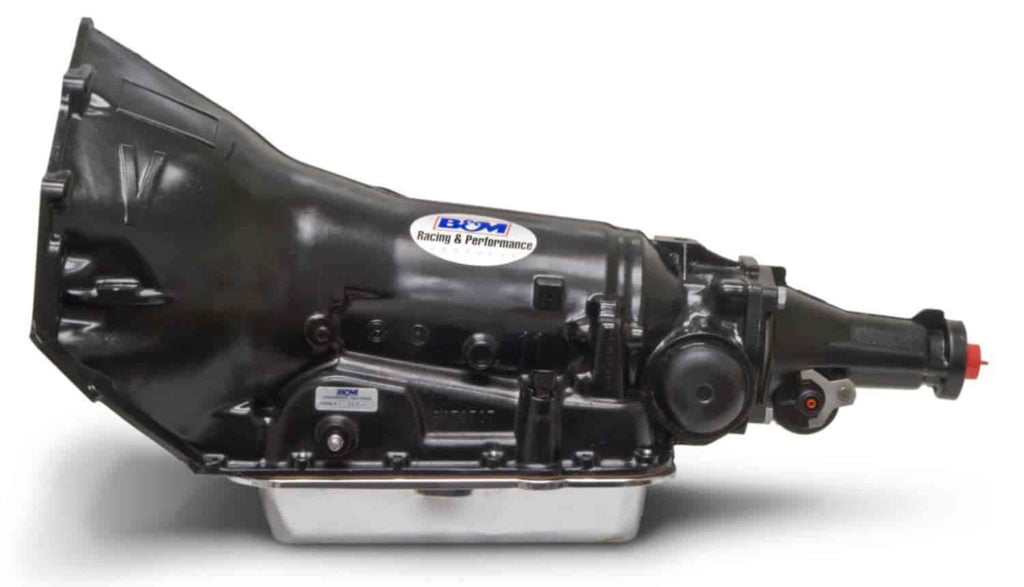
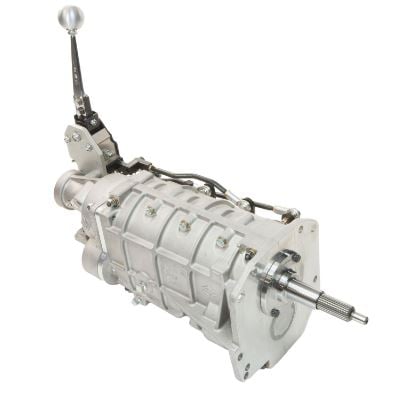
In comparison, launching a manual car is more difficult since you have to be precise with your throttle input and your clutch release. Because of this, and because of the time you lose shifting gears yourself, an automatic transmission is naturally going to be able to get more speed down the drag strip assuming all other components, such as the engine, are equal.
If you’ve ever wondered if automatic is faster than manual, then the answer is usually yes it is, although there are other factors in play that are arguably just as if not more important.
A manual transmission is great if you want to be involved in the driving experience and shift gears yourself. That being said, manual transmissions do have some downsides.
Apart from being slower, as already mentioned, manual transmissions usually require more maintenance because they have more moving parts. Over time, you might need to replace or upgrade your car's clutch and pressure plate, especially if the car is tuned or upgraded to make more power.
If you're looking to transform your car into a dragstrip monster, racing transmissions are the way to go. Designed to withstand more abuse than your stock transmission, they are incredibly quick and reliable. JEGS has racing transmissions and classic car transmissions for your vehicle, whether you're looking to dominate the next dragstrip event or you simply want to use your car as a fun daily driver.

Good day i have a nissan rb 25 drag racecar and would like to install a beter gearbox on the car most people say d4d are stronger but i would like to do a buget frendly manual gearbox that can contain a400 to 600kw any suggestions

Michael, for the power level you’re talking about, you’re right to be thinking carefully about transmission strength and cost. A factory-style manual gearbox usually won’t live very long in the 400 to 600 kW range in a drag racing environment, especially with hard launches.
The reason people point you toward a Powerglide or TH400 is durability and consistency. They’re proven to handle that kind of power with the right internal upgrades, and they tend to be more forgiving at the track. That’s why they’re so common in drag setups.
If you want to stay manual and keep it somewhat budget friendly, you’ll need to look at something built specifically for high horsepower. Options like a Tremec TKO series or Tremec Magnum (T56-based) can handle decent power, but once you get toward the upper end of your range, even those need to be properly built and paired with the right clutch and setup. At that point, cost starts climbing pretty quickly.
Another thing to keep in mind is that manuals at that level put a lot more stress on the drivetrain. Clutch choice, driveshaft, and rear end all become critical, and missed shifts can get expensive fast.
So realistically, if your goal is consistent drag performance and longevity, an automatic is still the most cost-effective route. If you’re set on a manual for the driving experience, plan on investing in a stronger aftermarket unit and supporting components to make it live.
If you want help comparing options based on your exact build and goals, give us a call at 1-800-345-4545 and a Tech Specialist can walk you through what will hold up best.

Hello and thanks for some great advice. I’ve known this for a long time as I used to help a funny car racer back in the
70s.
I would like some advice on component selection for a 4 cylinder street racer. My question seeks recommendations on motor, transmission and reared. I have been out or the sport for a long time.
Thank you
Hi Bruce, that’s awesome to hear you were involved with funny cars back in the 70s, those were the golden days of drag racing. For a modern 4-cylinder street setup, there are plenty of reliable and budget-friendly combinations depending on what platform you’re working with. Since you didn’t mention a specific make or engine family, I’ll give you a general rundown of what works well today.
If you’re starting from scratch, a turbocharged inline-four is one of the best ways to make strong power while keeping weight low. The most popular modern choices are the Honda K-series, Ford EcoBoost 2.3L, and GM 2.0L LTG platforms. All of these have excellent aftermarket support, forged internals available off the shelf, and tuners who know how to get reliable horsepower out of them without sacrificing street drivability.
For transmissions, a manual 5-speed or 6-speed setup gives the most control and fun factor, especially if you’re building a streetable car. A strong Tremec TKX or T56 Magnum is a good choice if you’re adapting a rear-drive configuration. If you’d rather stick with an automatic, something like a Powerglide or TH350 (with an adapter and appropriate torque converter) will handle the power easily, especially if the goal is straight-line performance with consistency.
As for the rear end, gearing will depend on tire size and how you want the car to behave. For a light 4-cylinder car, 3.73 to 4.11 gears in a Ford 8.8 or GM 10-bolt/12-bolt rear are a solid middle ground for both street and track. If you’re building something really lightweight or turbocharged, you can go a bit taller (around 3.42) to help traction.
In the meantime, you can give us a call at 1-800-345-4545 and one of our tech specialists can walk you through specific combinations, including transmission adapters, mounts, and drivetrain upgrades that will fit your exact build.




Leave a Reply