Sign up now to join the JEGS email newsletter and be the first to learn about new products, special deals and e-mail only offers!

 2 People Found This Article Helpful


Classic 1960s muscle cars hold a special place in automotive history. They were loud, fast, and unapologetically powerful. These beasts ruled the streets, setting performance benchmarks that many modern cars still struggle to match.
However, the golden era of muscle cars was short-lived. The Clean Air Act and the Oil Crisis of the 1970s hit hard, forcing automakers to tone down their performance. Despite this, the legacy of 60s muscle cars remains strong. Many enthusiasts still restore, modify, and race these classics, proving that there’s truly "no replacement for displacement."
Many argue that today's muscle cars, like the Dodge Challenger Hellcat, are among the best ever built. However, are we really living in the Golden Age of muscle cars?
The answer is likely no. Ford has already electrified the Mustang, and Camaro production ended in 2023. With limited options and rising emissions regulations, it’s clear that modern muscle cars don’t have the same freedom as their predecessors.
In contrast, the 1960s and early 1970s were all about big-block V8s, raw power, and a no-limits approach to performance. Automakers pushed boundaries, introducing legendary nameplates like the Camaro, Charger, Mustang, and Challenger.
These cars weren’t just built for the streets. They dominated the drag strips, NASCAR circuits, and street races. Models like the 1969 Dodge Hemi Daytona and Mustang Boss 429 became racing icons, proving that American muscle wasn’t just about looks, it was about speed and power.

There are plenty of great 1960s muscle cars, but some stand out more than others. Here are five legendary models that continue to influence performance cars today.
Many consider the 1964 Pontiac GTO the first true muscle car. It came equipped with a 389 cubic-inch Pontiac V8, producing 325 horsepower in its base form. Buyers could also opt for the 348-horsepower Tri-Power version, featuring three two-barrel carburetors. This powerful engine, paired with a three-speed manual transmission (with an optional four-speed), set the standard for muscle cars to follow.
Beyond performance, the GTO had an iconic design. The hardtop coupe remains a favorite at car shows, while the convertible model offered an open-air muscle car experience that influenced competitors. The GTO package was originally an option for the Pontiac Tempest, but its success led Pontiac to make it a standalone model in later years.

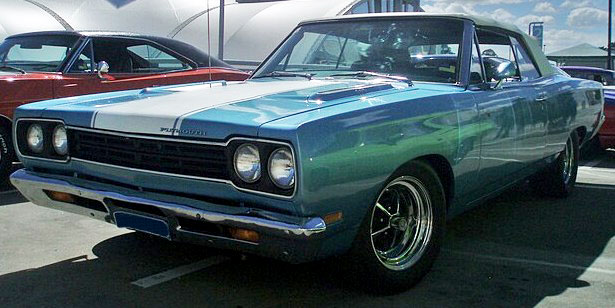
The Plymouth Road Runner took its name from the famous Warner Bros. cartoon and lived up to the reputation with impressive speed.
It came standard with a 383 cubic-inch V8 making 335 horsepower, but some models packed the legendary 426 Hemi. With up to 425 horsepower and 500 lb-ft of torque, the Road Runner became a street legend.
It was also affordable compared to other muscle cars, making it one of the most mass-produced performance cars of its time. Today, you can still find restored versions selling for around $70,000.
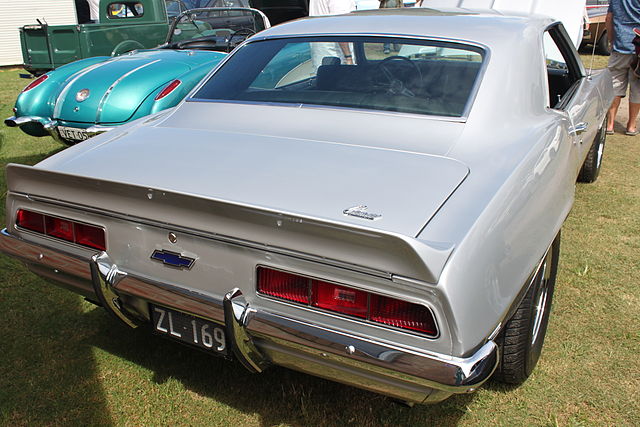
When Chevrolet wanted to make a statement in the late 1960s, they introduced the Camaro ZL1. This model featured a lightweight aluminum big-block V8, aggressive styling, and performance upgrades that made it a force on the road.
With over 430 horsepower, a cowl-induction hood, and massive disc brakes, the Camaro ZL1 was built for performance. Its combination of power and style continues to inspire Camaro models to this day.
Dodge aimed to dominate NASCAR in 1969, and they succeeded with the Hemi Daytona. Unlike most muscle cars of the time, the Daytona featured aerodynamic enhancements, including a pointed nose cone and a massive rear wing for added downforce.
Under the hood, it packed a 426 Hemi V8, making it one of the fastest cars of its time. With only 503 units produced, the Dodge Hemi Daytona is now one of the rarest and most expensive classic muscle cars, often selling for over $300,000.

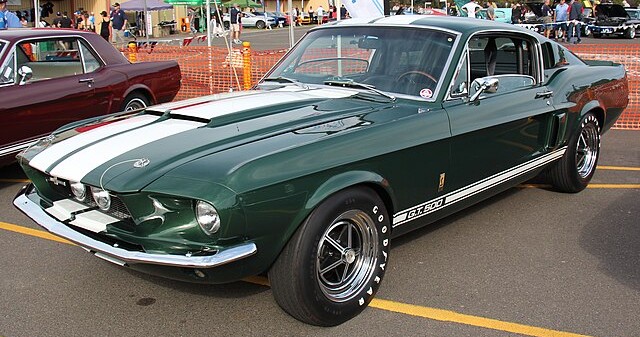
No list of top 1960s muscle cars is complete without the 1967 Ford Mustang GT500. Also known as "Eleanor" on the big screen, this model brought big-block V8 power to the Mustang lineup.
The 428 cubic-inch engine produced over 350 horsepower, giving the Mustang true muscle car status. With aggressive styling, a ducktail spoiler, and fiberglass body panels, it looked as fast as it was.
Today, the Mustang GT500 remains one of the most sought-after collector’s cars. Prices continue to rise, reflecting its legendary status.
Sign up now to join the JEGS email newsletter and be the first to learn about new products, special deals and e-mail only offers!
The muscle cars of the 1960s continue to influence the automotive industry. Their designs, performance, and cultural impact are still visible in modern cars.
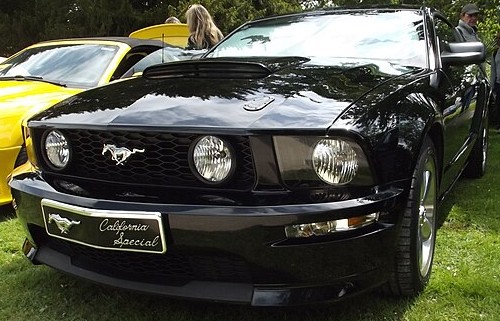
For example, Ford’s S197 Mustang (2005-2014) was a throwback to the original 1960s models, ditching the New Edge styling for classic muscle car looks. Even Dodge took inspiration from the past, bringing back the Charger and Challenger with retro styling and modern powertrains.
Chevrolet did the same with the Camaro, blending vintage cues with high-performance engineering. Across the industry, automakers recognize that the 60s muscle car era left a lasting mark.
The demand for classic muscle cars is still strong. Enthusiasts restore, modify, and race these machines, keeping the spirit alive. Whether at car shows, drag strips, or weekend cruises, these cars continue to turn heads and dominate conversations.
The 1960s muscle cars remain some of the best performance vehicles ever built. Their influence is undeniable, shaping modern designs and inspiring the next generation of enthusiasts.
From the Pontiac GTO to the Dodge Hemi Daytona, these classics continue to set the standard for power and style. While the golden era of muscle cars may be in the past, their legacy lives on.
If you're passionate about classic muscle cars, JEGS has the performance parts, tools, and accessories to help you maintain or upgrade your ride. Whether restoring a Chevelle, Charger, or Mustang, we have everything you need to keep the muscle car era alive.



Leave a Reply