Sign up now to join the JEGS email newsletter and be the first to learn about new products, special deals and e-mail only offers!

 2 People Found This Article Helpful

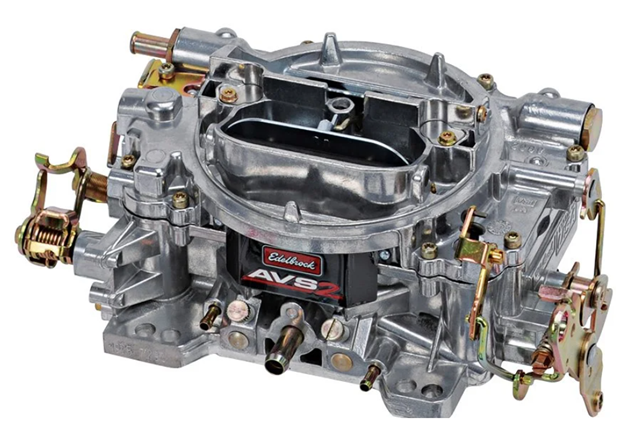

The carburetor is one of the most critical components in a classic vehicle’s performance. If your engine still uses a carburetor instead of fuel injection, upgrading to a performance model can make a noticeable difference. Among the most popular choices are the Edelbrock AVS and Edelbrock AVS2 carburetors. While the AVS has been discontinued, it remains in use by many enthusiasts. The AVS2 has taken its place with improved drivability and fuel delivery, making it a solid upgrade for both street and track applications.
Both the AVS and AVS2 carburetors were designed with drivability and tunability in mind. They share some key features that made the original AVS a favorite and continue to make the AVS2 a strong performer for modern builds.
Both models feature spring-loaded, adjustable secondary air valves. These allow for tuning based on throttle input, helping reduce hesitation or bogging during acceleration. Unlike vacuum- or mechanically-operated secondary systems, these adjustable valves allow drivers to fine-tune the transition between cruising and wide-open throttle.
This adjustability is especially helpful if you use your car in both daily driving and motorsports situations. Being able to refine the secondary valve timing based on conditions or personal preference can improve throttle response and overall driving satisfaction.
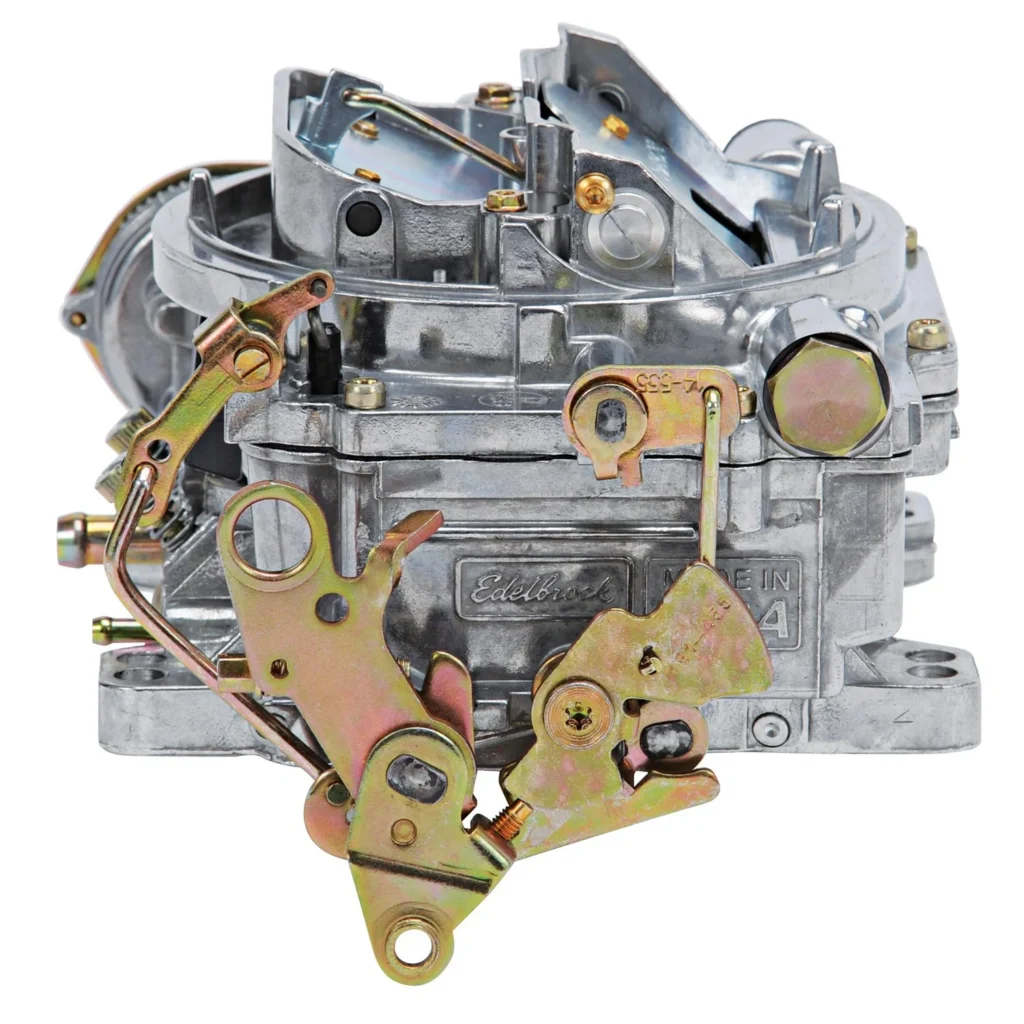
Both the AVS and AVS2 feature a design that minimizes the risk of fuel leaks. There are no gaskets below the fuel bowl level, which helps prevent leaks even when the engine reaches high temperatures. This design also contributes to cleaner, more efficient operation, especially when under heavy load or in extended high-heat situations like racing.
Each carburetor features an all-aluminum body. This keeps weight down without sacrificing durability. While the weight savings are minor on their own, every bit counts in high-performance builds where overall vehicle weight is being optimized. More importantly, the aluminum construction also helps with heat dissipation and corrosion resistance over time.
Sign up now to join the JEGS email newsletter and be the first to learn about new products, special deals and e-mail only offers!
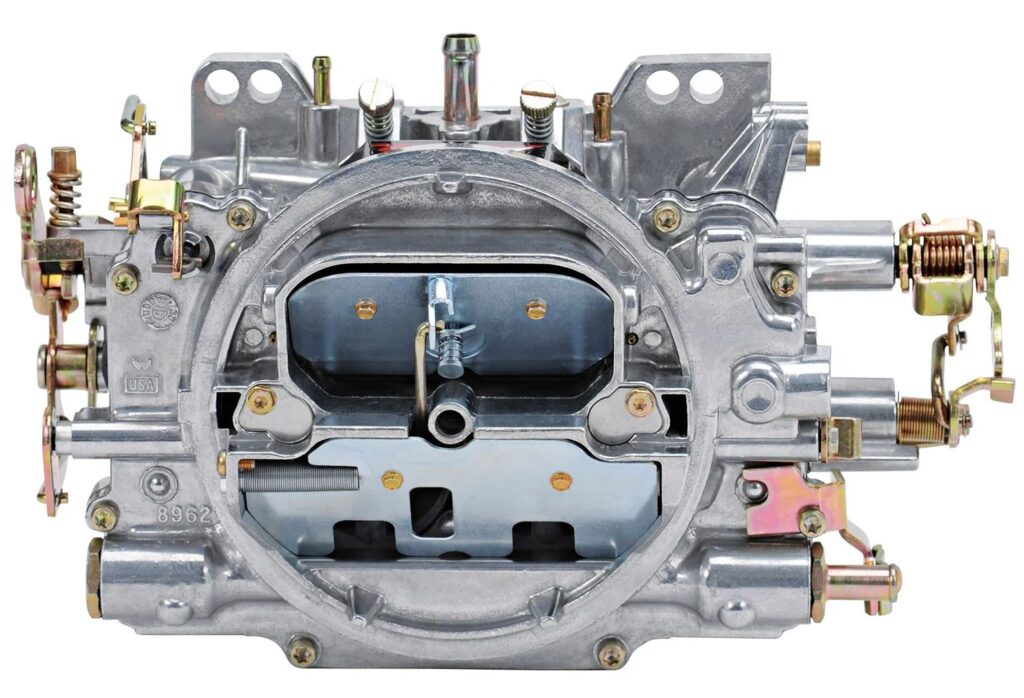
The most notable change from the AVS to the AVS2 is the updated booster design. The AVS uses traditional down-leg boosters, which are tuned for high-RPM performance. These deliver fuel effectively at wide-open throttle but can be less efficient at lower speeds. As a result, the AVS can sometimes cause a flat spot or stumble during part-throttle operation or low-RPM cruising.
The AVS2 was developed to address this limitation. It uses annular flow boosters that feature multiple fuel orifices around the circumference of each booster. This design significantly improves fuel atomization, which results in more even and responsive performance at all RPMs. The AVS2 is noticeably smoother in daily driving, especially during cold starts or when transitioning through throttle positions.
If your vehicle is driven on the street regularly, or if you want better fuel economy and smoother starts, the AVS2 is likely the better option. For full-throttle performance alone, both versions perform well, but the AVS2 offers more flexibility.

Since the AVS has been discontinued, it is no longer available as a new production item. However, it is still possible to find new old stock or rebuilt models. The pricing for both models is comparable, but availability of the AVS will continue to decline. This may increase the price for rare AVS units or drop it, depending on demand and support.
For those who already have the AVS installed and functioning well, there is no urgent need to upgrade. On the other hand, if you are building a new system or replacing a worn-out carburetor, the AVS2 offers better part availability, updated technology, and ongoing manufacturer support.

The Edelbrock AVS and AVS2 carburetors both offer reliable fuel delivery and tunability. The AVS2 is the modern version with improvements that make it more suitable for street-driven vehicles or cars that need smoother throttle response at low RPM. It maintains all the strengths of the AVS while solving one of its most common drawbacks.
If you are upgrading or tuning your carbureted engine, choosing the right model comes down to how you use your vehicle. For street driving and all-around consistency, the AVS2 is the better choice.
Whichever option fits your build, JEGS has the parts and accessories you need. From performance carburetors and rebuild kits to cleaners and tuning tools, we carry everything to help you get the most from your engine. Check out our full catalog at JEGS.com and get ready to unlock better throttle response, fuel control, and driving enjoyment!

Got me the 650 CFM AVS2 on my Chrysler 383, did a quick and dirty tune by ear until I could get a vacuum gauge and O2 sensor installed, but so far I think I got it pretty close. Runs pretty well, no pinging or knocking that I can tell, and stomping on the pedal there’s absolutely no hesitation at all. I’ve never ever driven a carbed vehicle before, I went straight from 90s EFI to the AVS2 and honestly I can’t tell the difference. In terms of throttle response, it feels just like a 90s cable-throttle car…I love it.

Ed, that is great to hear and it sounds like you did an excellent job setting it up. What you are describing is exactly what the AVS2 was designed to do. When the primary side is dialed in correctly and the air valve on the secondary side is matched to the engine’s airflow demand, the transition feels very natural and smooth, which is why it reminds you of a 90s cable throttle EFI setup. The lack of hesitation on a hard throttle hit tells us the accelerator pump and secondary air valve are working together the way they should, and no audible pinging or knock means your timing and fuel curve are in a safe range for that 383. Once you add the vacuum gauge and wideband O2, you will be able to fine tune idle mixture and cruise just a bit more, but it sounds like you are already very close. The AVS2 really shines on street driven engines like yours because it adapts to airflow instead of forcing it, which is why so many first time carb users end up surprised at how modern it feels. If you ever want help fine tuning idle vacuum, cruise air fuel ratio, or secondary air door adjustment, give us a call at 1-800-345-4545 and one of our tech specialists will be happy to walk through it with you.

I just upgraded to one of these AVS2 500 on my 289 mustang. I CAN NOT get rid of the stumbling cruise to WOT throttle they claim they fix. I’ve tried moving the accelerator pump hole locations and even trying different setup spring sizes. Mike driving and cruising is great but when I wanna get on it it falls flat in its face for a second, then catches and kicks down. Very disappointing.
Hi Daniel, thanks for sharing the details. What you’re describing with your 289 and the Edelbrock AVS2 500 is a pretty common issue when going from cruise to wide open throttle. The stumble you’re feeling is almost always related to a lean condition right as the secondaries come in. Even though Edelbrock advertises that the annular boosters in the AVS2 fix this, depending on the engine combination they can still need some fine tuning.
Since you’ve already tried moving the accelerator pump linkage and swapping springs, the next thing I’d look at is the step-up rod and jet calibration. If the rods are too lean or the springs aren’t allowing enrichment soon enough, you’ll get that flat spot before fuel catches up. A slightly richer rod/jet setup or a lighter spring can usually clear up that hesitation. Another thing to check is fuel delivery. Make sure the pump and filter are keeping steady pressure at WOT, since a weak supply can also mimic the same stumble.
Your cruising description sounds like it’s dialed in nicely, so it’s really just about fine-tuning that transition into WOT. A carb like the AVS2 does respond well to calibration kits that give you a range of rods, jets, and springs to work with. It isn’t unusual to need to go richer than the out-of-the-box setup on a small block Ford, especially with headers and other upgrades.
If you want help going step by step through calibration choices or making sure you’ve got the right fuel pressure for that carb, give us a call at 1-800-345-4545 and speak to one of our tech specialists. They can walk through your exact setup and point you to the best solution.

Whom it concerns, I own a 71’GTX 440 which carter carb do you recommend and is there any linkage i need to also purchase to run the carb? Thank you
Hi Toby, thanks for reaching out. For your 1971 GTX with the 440, Edelbrock’s AVS2 series is usually the best match. They are designed to deliver smoother throttle response and better atomization than the original AVS. The 440 big block works really well with a 4-barrel in the 650 to 800 CFM range, depending on whether you want to lean more toward cruising manners or top-end performance. Most folks with a 440 that’s street-driven and occasionally sees some spirited use go with something in the middle of that range for a nice balance.
As far as linkage, you’ll want to double-check if your car uses Chrysler’s factory throttle/kickdown linkage. Edelbrock carbs don’t always line up with Mopar’s original geometry, so you may need an adapter kit to make sure the kickdown works correctly. That’s something you don’t want to skip, because improper geometry can lead to transmission issues. If your car is still running the stock setup, I’d plan on picking up the proper Edelbrock linkage adapter so everything bolts up and functions smoothly.
If you’d like to narrow it down more precisely, the right choice depends on how stock your motor is (cam, headers, gearing, etc.) and how you plan to use the car most of the time. If you want me to be 100 percent specific, I’d need those details, but the good news is that Edelbrock designed the AVS2 line with Chrysler big blocks like yours in mind.
For exact fitment and linkage options, give our tech specialists a call at 1-800-345-4545 and they’ll make sure you get the right carb and accessories for your GTX.




Leave a Reply