Sign up now to join the JEGS email newsletter and be the first to learn about new products, special deals and e-mail only offers!

 6 People Found This Article Helpful


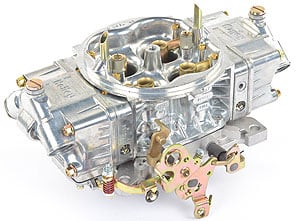
So, you’ve just installed a shiny new Holley carburetor on your engine. But when you fire it up for the first drive, something feels off. Maybe the engine stutters or hesitates when you press the gas, or it doesn’t run as smoothly as you’d expect. Sometimes, it may even struggle to start, whether the engine is hot or cold.
This is because a carburetor isn’t a “set it and forget it” type of part. Although it may look simple on the outside, it’s actually quite complex. It needs proper setup and tuning to perform at its best. Inside, there are various circuits, pathways, and mechanical components that all need to work together. Plus, external factors like temperature and altitude can affect how your carburetor functions.
In this article, we’ll guide you through tuning your Holley accelerator pump to improve throttle response and smooth out performance. You’ll also learn the difference between the 30cc and 50cc accelerator pumps and which one is right for your needs.
And if you need help picking the right Holley carburetor or other components for your vehicle, our team at JEGS is here to assist. We know carburetors inside and out, and we’re happy to answer any questions you have.

An accelerator pump is an important part of any carburetor because it helps deliver extra fuel when you need sudden power. Normally, a carburetor’s main system, called the metering circuit, uses the speed of air moving through the carburetor to control how much fuel enters the engine. But when you press the gas pedal quickly (like when you “floor it”), the airflow doesn’t increase fast enough for the metering circuit to keep up with the demand. This delay causes a hesitation or a momentary lack of response from the engine. In some cases, you might even hear a backfire through the intake manifold.
The accelerator pump solves this problem by providing an instant burst of fuel when you hit the gas pedal. Here’s how it works:
This quick squirt of fuel makes up for the time it takes the carburetor’s main metering system to respond to the sudden increase in airflow.
The amount of fuel the accelerator pump delivers depends on how much you open the throttle. For small, gradual throttle changes, the accelerator pump barely works because the carburetor’s main system can handle those needs. But when you make a sudden change, like stepping on the gas hard, the accelerator pump kicks in to prevent engine hesitation.
Holley Carburetors: In Holley carburetors, all models have an accelerator pump on the primary side (which controls the first set of throttle plates). However, only the models called Double Pumpers have an accelerator pump on the secondary side (the second set of throttle plates). Other models use a vacuum to open the secondaries, so they don’t need an additional accelerator pump.
Sign up now to join the JEGS email newsletter and be the first to learn about new products, special deals and e-mail only offers!
Holley carburetors typically come with a 30cc accelerator pump, which is more than enough for most street driving. This size delivers the right amount of fuel for smooth acceleration under normal conditions, such as everyday commuting or casual driving.
However, for high-performance engines, where there’s a lot more horsepower and the engine is under heavier loads (like in racing or towing), there’s an option to upgrade to a 50cc accelerator pump. This larger pump delivers more fuel for longer periods, helping the engine respond better to sudden throttle demands.
Key Differences:
Visual Difference: The 50cc pump has a larger diaphragm than the 30cc pump. This deeper, taller design allows it to hold and deliver more fuel to the engine.


Adjusting the accelerator pump is key to getting the right fuel delivery when you hit the gas. The two most important parts to adjust are the nozzle (also called the squirter) and the pump cam. Here’s how you can make sure everything is set up correctly:
1. Check the Pump Linkage Clearance
Before anything else, check that the accelerator pump linkage is set up properly. Holley recommends a clearance of 0.015 inches between the lever arm and the pump linkage when the throttle is fully open (not when it’s at rest). To do this:
This ensures that the pump will deliver fuel properly at wide-open throttle.

2. Tuning the Nozzle Size
The size of the nozzle (or squirter) determines how much fuel is injected into the engine when the accelerator pump is activated. Here are the basic guidelines:

3. Adjusting the Pump Cam
The pump cam controls how quickly the fuel is delivered by the accelerator pump. Holley carburetors offer two mounting positions for the pump cam:
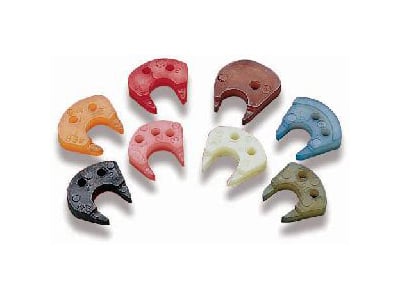
These adjustments help you fine-tune the accelerator pump for the specific needs of your engine, whether you're cruising on the street or racing at the track.
When it comes to fine-tuning the accelerator pump, the goal is simple: use the least amount of fuel necessary to get the best acceleration. This ensures you're getting the most efficient performance out of your engine without wasting fuel.
Holley recommends this tuning philosophy because it strikes the right balance between power and fuel economy. By delivering just the right amount of fuel when you press the gas, you ensure the engine responds quickly and smoothly without overloading it with excess fuel.
To achieve this:
The key is to find that sweet spot where the engine responds instantly, but you’re using only the fuel needed for quick and efficient acceleration.

Looking to get the most out of your engine? At JEGS, we’re here to help you unlock peak performance. Whether you need advice on choosing the right aftermarket parts or guidance on setting them up for maximum power, our team has the experience to assist you every step of the way. With decades of knowledge, we’re eager to share our expertise to ensure your engine performs at its best.
Every product you purchase from JEGS comes with full warranties and is supported by our excellent after-sales service. That’s why thousands of gearheads nationwide trust us for their performance needs.

Hello first off I uy all my performance parts from you I ha e for years ever since the 80s and short track days till oh man 10 years ago when I decided to play with another car and decided to build the 151 2.5 4 cylinder I’m my s10 thank you all very much. Well I e decided to put I guess a super charger on it I bought off ebay. I’m buying and fixing as much as possible this summer to put on this fall. I’m fixing a holley 2300 500cfm 2bbl I can’t run but 10 psi I think at most because I’m running 10.15.1 compression on sealed power hyperkinetic coated Pistons I think that’s what you call them so I don’t think 10 I think 10 lb is all I can run but I just want to make sure I’ve done everything possible I need to to my carburetor because I want to make sure don’t blow nothing up any information be greatly appreciated I have JB welded all the vacuum ports the brass freeze plugs on top of the metering block a boost regulated power valve I’ve cut the air horn off tapered it down to fit put the black poly something or another whatever you call it float in it and I know about to run a tube out of the bowl vent up into the carburetor hat and lock tight the base screws

Hi Jeffrey,
First off, thank you for being a loyal JEGS customer over the years! We really appreciate your support going all the way back to your short track days. It’s great to hear you’re still building and tuning, and it sounds like your 2.5L S10 project is shaping up to be a unique and fun boosted build.
With your 10.15:1 compression and plans to run up to 10 psi of boost on a Holley 2300 500 CFM 2-barrel carb, you’re definitely in the upper range of what pump gas and hypereutectic pistons can tolerate, so it’s smart to be cautious. From your description, you’ve already done a lot of the key prep work to make that carb boost-ready:
Boost-referenced power valve – That’s a must, and you’ve got that covered.
JB welding vacuum ports and sealing brass plugs – Good move to prevent boost leaks.
Float selection – Using a black nitrophyl float is the right call since brass can collapse under boost.
Extended bowl vent into the carb hat – Great for pressurizing the bowl evenly and avoiding fuel blowout.
Loctite on the base screws – Smart thinking. Vibration and boost can work things loose quickly.
Here are a few additional suggestions to keep your combo safe and reliable:
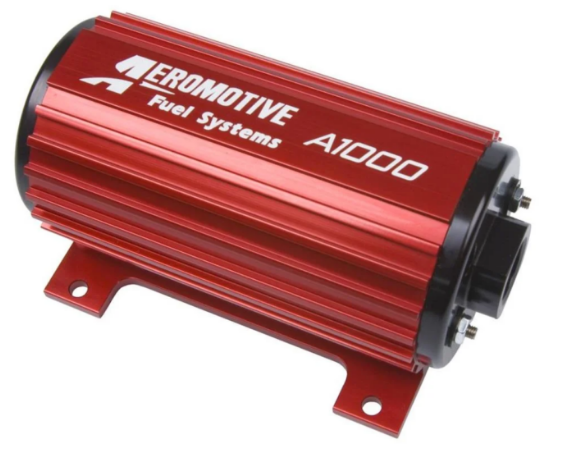
Fuel Pressure: Make sure you’re running a boost-referenced fuel pressure regulator to increase fuel pressure in sync with boost—1 psi of fuel pressure for every 1 psi of boost.
Jetting: You may need to increase main jet size slightly to compensate for the additional airflow under boost. Start rich and lean out carefully.
Ignition Timing: With your compression ratio and boost level, pull a few degrees of timing under boost to prevent detonation. A programmable ignition box or boost-retard system can help a lot here.
Carb Hat: Ensure your carb hat seals evenly and doesn’t distort the air horn. Uneven pressure can throw off metering.
Blow-Through Seals: If you’re running a blow-through setup, check that throttle shaft seals and gaskets are tight, or pressure will leak and affect metering and idle.
You’ve done a great job prepping that carb for boost. Just make sure your fuel and ignition systems are dialed in to handle the extra air. If you need additional help, contact us at 1-800-345-4545 and speak to a tech support specialist. We’ll help make sure your setup runs safe and strong.




Leave a Reply