Sign up now to join the JEGS email newsletter and be the first to learn about new products, special deals and e-mail only offers!

 101 People Found This Article Helpful


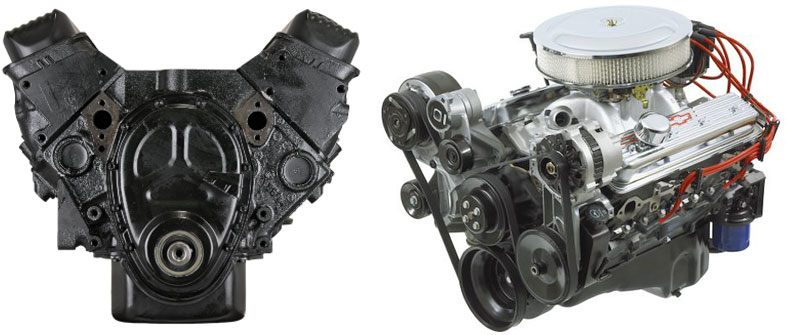
Produced from 1968-1998, Ford’s 7.0-liter (429ci) engine has powered various models like the Thunderbird, Mustang Boss, and some full-size Ford and Mercury vehicles.
With its massive displacement, cast-iron block, and impressive spec sheet, the Ford 429 engine remains popular today among performance enthusiasts due to its impressive durability and upgrade potential.
Still, the 429 big block has been known to have a few minor issues that owners should be aware of. Thankfully, this article covers everything you need to know about the 429 Ford engine, including its specs, best performance upgrades, and common problems.
But first, let’s briefly cover the history of this powerful Ford big block.
The Ford 429 engine, a part of Ford's 385 engine series, was introduced in 1968 as a successor to the FE-series engines. Originally designed for luxury and high-performance vehicles, the 429 big block engine was a response to the growing demand for more powerful and efficient engines during the muscle car era. Its production continued until 1998.
The engine debuted in the ‘68 Thunderbird and quickly found its way into several full-size Ford and Mercury cars. In 1969, the high-performance Cobra Jet and Super Cobra Jet versions were released, notably powering the Mustang Boss 429, which became one of the most iconic muscle cars of its time.
Ford's 429 engine was known for its large-bore and short-stroke design, which allowed it to generate massive power while maintaining a relatively compact size for its displacement. This design approach was geared towards optimizing high-speed performance and efficiency.
Over its three-decade lifespan, the 429 saw various iterations and improvements, reinforcing its reputation for durability and power, and securing its legacy in the Ford lineup.

Thanks to its robust design and massive displacement, stock variants of Ford’s 7.0 429 big block are already incredibly powerful. Below we’ll review the stock performance specs of this potent motor:

Sign up now to join the JEGS email newsletter and be the first to learn about new products, special deals and e-mail only offers!
If you own a 429 and are looking to step things up a notch, the below performance upgrades are sure to impress:
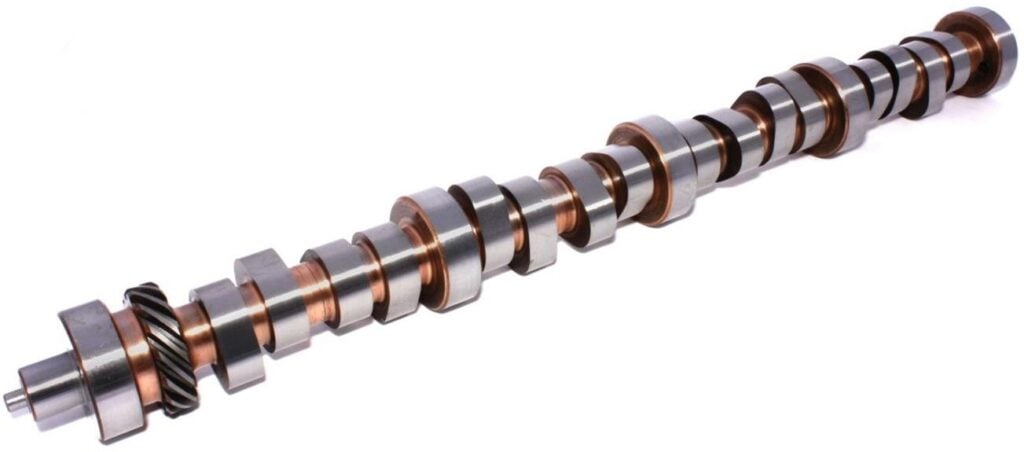
Upgrading to a performance camshaft, like this COMP Cams High Energy option, is a popular modification for the Ford 429 Big Block engine.
Upgrading your cam enhances valve timing and lift, leading to improved airflow and engine efficiency. With specifications like a .468 inch lift and 252° duration, a performance camshaft improves the engine's responsiveness and power across a broad RPM range.
This upgrade is beneficial for those seeking to boost their engine's overall performance and efficiency, making it a valuable addition to any performance-oriented build.

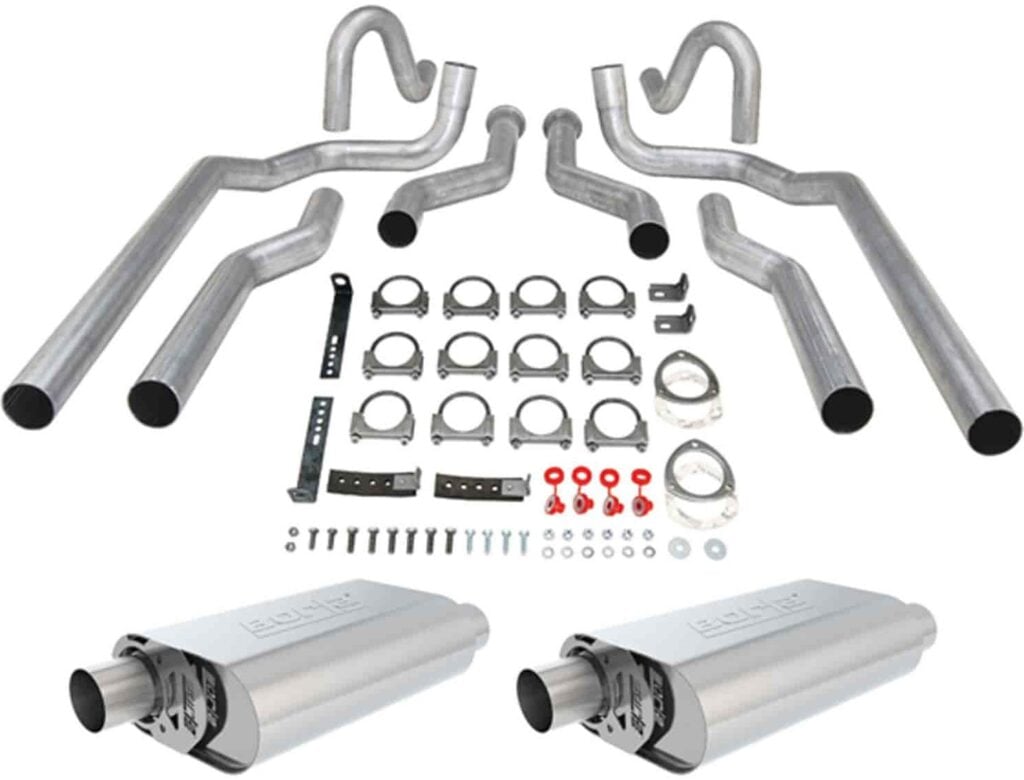
Replacing your stock exhaust with a performance system is a fantastic upgrade for the Ford 429. This modification allows for more efficient expulsion of exhaust gas by reducing backpressure.
Choosing systems from trusted brands such as Gibson, Borla, BRExhaust, JEGS, and others ensures both quality and compatibility with the 429 engine. These brands are known for their reliability and performance.
A performance exhaust upgrade leads to a noticeable boost in horsepower and torque, coupled with a deeper and more resonant exhaust sound, making it a popular choice among car enthusiasts.
Opting for aftermarket cylinder heads, such as the Edelbrock Performer RPM 460, is a sizable upgrade for the Ford 429 Big Block engine. These heads are designed for high-performance applications, enhancing both horsepower and torque.
The key features include a larger valve size (2.19" intake and 1.76" exhaust), which improves airflow, and a 95cc combustion chamber that supports efficient combustion.
With these upgrades, the engine can experience a solid increase in power, making it ideal for street and drag racing applications.

The next Ford 7.0 upgrade on our list is installing a performance intake manifold, like the Edelbrock Performer 460. This 429 big block upgrade is designed to boost engine efficiency by optimizing the air-fuel mixture delivery.
This dual plane manifold features a 180° firing order and a patented runner design. It’s also crafted from aluminum for improved durability and reduced weight, and has an RPM range that extends from idle to 5,500, ensuring adaptability for different driving conditions.
This upgrade is a valuable step in improving throttle response and overall engine performance.
Besides those mentioned above, there are a ton of other great mods for the 429 that are sure to dramatically improve performance. Some of these include installing an electronic ignition system, a performance carburetor, cooling system improvements, lightweight pulleys and flywheels, and more.

While known for its strength, Ford’s 429 engine does have some common issues to be aware of, including:



If you’ve made it this far, then you should now have a full understanding of Ford’s 429 big block, including its history, performance specs, and common problems.
For all your automotive needs, consider JEGS, a leading supplier of performance car parts, including a plethora of options for the 429. Complete your order online today and have your products sent straight to your garage. Still have questions? Contact our team today.


G evening JEGS, James J. my purchased 1978 ford f150 came with a 351m motor with a big c6 trans behind it. But I’m planning putting a 351w in it with a baby c6 trans behind the 351w. Question: will the 351w mounts bolt up where the 351m was?

Hi James, that’s a good plan you’ve got going with your F-150. The short answer is no, the 351W (Windsor) motor mounts will not bolt directly into the same frame brackets used for the 351M (Modified) without modification. The two engines are from completely different Ford engine families. The 351M belongs to the 335-series (same as the 400), while the 351W is part of the Windsor family, which has different mounting pad locations and bolt patterns on the block.
To install the 351W correctly, you’ll need engine mount adapters or conversion brackets that allow Windsor mounts to fit into the existing frame mounts made for the 351M. Several companies make these conversion mounts, including options available through Trans-Dapt Performance Products and Moroso, which you can find on JEGS.com. These kits make the swap straightforward and keep everything aligned properly without needing to weld or heavily modify the frame.
Also, double-check that your “baby C6” has the correct bellhousing pattern for a 351W. The 351M/400 engines use the 429/460 big block bellhousing pattern, while the 351W uses the small block pattern. If your transmission is from behind the 351M, it won’t bolt to the Windsor without a matching small block bellhousing or transmission swap.
If you’d like help picking the right conversion mounts or verifying transmission fitment, you can call us at 1-800-345-4545 and speak to a JEGS tech specialist. They can walk you through the exact parts you’ll need to make the swap work smoothly.

Looking to possibly repower my 1997 F350. The 5.8L is dead and there is a 7.0L available from a Ford 700.
How difficult would this swap be?
Hi William, thanks for the question. Swapping a 7.0L (429 big block) into your 1997 F-350 to replace the original 5.8L small block is doable, but it’s not a direct bolt-in and will take some planning. The biggest challenges you’ll run into are engine mounts, transmission compatibility, accessory drive alignment, and exhaust routing. The 5.8L small block and 7.0L big block are from different engine families, so the stock mounts and brackets won’t match. You’d need custom or aftermarket motor mounts to sit the big block in properly.
Next is the transmission. If you still have the factory transmission behind the 5.8L, you’ll need to check bellhousing compatibility or use an adapter plate, since small block and big block Fords don’t share the same bolt pattern. Many folks go with a heavy-duty transmission that was originally designed for the big block to handle the torque. The cooling system will also need attention, as the 7.0L produces more heat than the 5.8L, so a bigger radiator and possibly upgraded fan setup are strongly recommended.
Wiring and fuel delivery will depend on whether you want to keep the truck fuel-injected or convert the big block to carbureted. The original EFI wiring and computer won’t run a 7.0L without significant modification, so you’d be looking at either custom tuning, a standalone system, or going with a carburetor setup and simplifying things. Exhaust is another area to plan carefully, since off-the-shelf headers may not clear the F-350’s engine bay without some modification.
So in short, it’s not an easy swap, but it’s definitely possible with the right parts and some custom work. It’s a project best tackled if you’re comfortable with fabrication or have a shop that can handle it.
If you want to go over your exact setup and get guidance on mounts, transmission choices, or supporting components, give us a call at 1-800-345-4545 and speak to a tech specialist. They’ll make sure you get a clear path forward before you dive in.

Does a ford f 700 1994 fuel injected truck have a water separator in addition to the fuel filter ?
Hi John,
On your 1994 Ford F700 with the 7.0L/429 fuel-injected engine, the fuel system was designed a bit differently than the diesel versions of the F700. Gasoline fuel-injected models typically used a standard in-line fuel filter but did not come with a separate water separator from the factory. Water separators were mainly included on the diesel-powered versions of the F-series medium-duty trucks because of the higher risk of water contamination in diesel fuel.
That said, if you’re seeing issues with fuel contamination or just want added protection, you can install an aftermarket fuel filter assembly that incorporates a water separator. Brands like Wix offer universal-style fuel filter/water separator kits that can be adapted to your application if you feel it’s needed.
To be 100% accurate, the exact answer depends on whether your truck is indeed the gasoline fuel-injected 429 or if someone has swapped it or if it’s actually a diesel version, since the diesel F700s did come with water separators.
If you’d like to go over the exact setup on your truck and see the best options for replacement or upgrades, give us a call at 1-800-345-4545 and speak to a JEGS tech support specialist. They can confirm based on your VIN and engine whether a separator was originally part of your system and help with the right replacement parts.

omdlc1950@gmail.com, i am looking for a conversion engine mounting cross member for a 64 ranchero or a 73 marquis with a 429 engine in it
Hi Orlando,
Swapping a 429 big block into a 1964 Ford Ranchero or a 1973 Mercury Marquis can definitely be done, but locating a direct-fit conversion crossmember can be tricky depending on the application.
For the Ranchero, which originally came with small blocks or inline-sixes, you’ll likely need a custom or specialty engine crossmember to accommodate the physical size and weight of the 429. Some aftermarket companies specialize in these conversions and may offer engine swap kits or universal crossmembers that can be adapted with welding or fabrication.
As for the 1973 Marquis, since it originally came with big block options including the 429, OEM-style replacement crossmembers or mounts may be available through restoration parts suppliers or salvage sources. At this time, JEGS does not offer a direct bolt-in crossmember for these exact applications, but we do offer universal engine swap crossmembers, engine mounts, and components that may be adapted to work depending on your fabrication skills.
If you need additional help selecting mounting components or crossmembers, contact us at 1-800-345-4545 and speak to a JEGS tech support specialist. We’ll be happy to help you sort out the right fit for your project.


Leave a Reply