Sign up now to join the JEGS email newsletter and be the first to learn about new products, special deals and e-mail only offers!

 35 People Found This Article Helpful
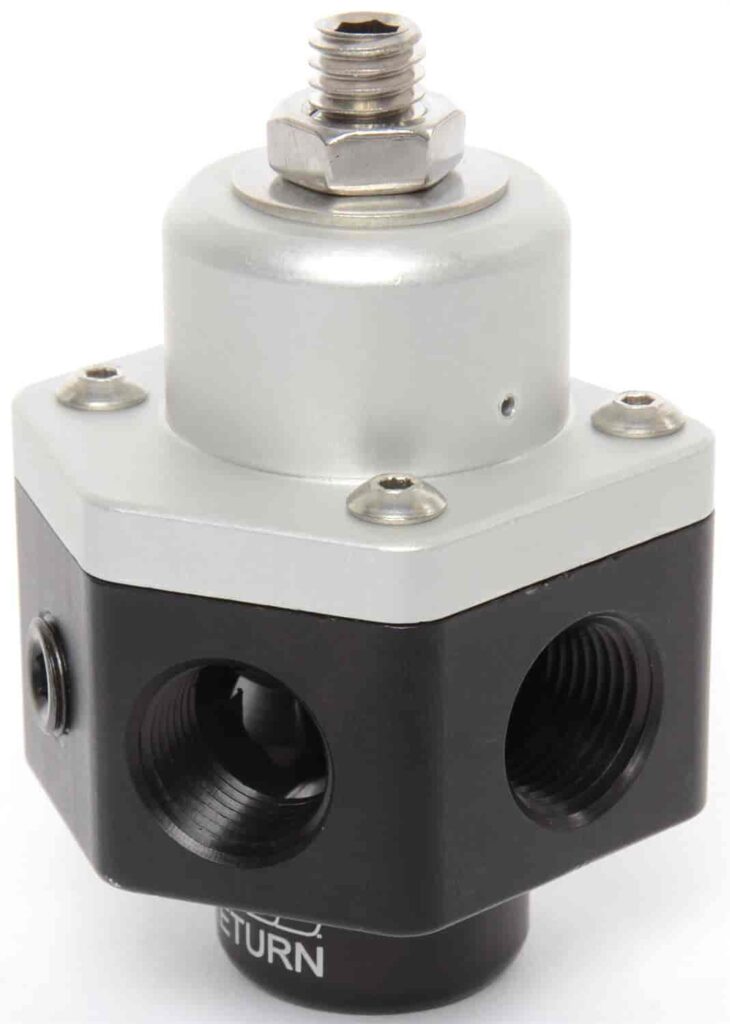

For your vehicle's engine to run efficiently, it must have the right fuel pressure regulator. This auto part helps maintain steady fuel pressure to the engine so you can enjoy optimal performance and fuel economy.
There are many reasons you might need to replace a fuel pressure regulator, such as to compensate for performance upgrades or if the part fails from regular wear and tear.
When shopping for a replacement fuel pressure regulator, you must select the right type or else your engine won’t receive enough fuel, impacting performance, fuel economy, and more.
Thankfully, this guide covers everything you need to know to choose the best fuel pressure regulator for your vehicle, whether you're rocking a classic carburetor setup or a modern Electronic Fuel Injection (EFI) system.
Let’s get started.
Fuel pressure regulators are designed to consistently maintain the right amount of fuel delivery to the engine. This part ensures that the engine gets the ideal fuel pressure needed for efficient performance, no matter the driving conditions.
Fuel pressure regulators are particularly beneficial for high-performance engines, which require a perfect balance of fuel pressure to deliver peak power and efficiency. Choosing the wrong regulator or ignoring a defective one can result in decreased performance, higher fuel consumption, and fuel leaks.
But not just any regulator will do; you must first know what type of fuel system your vehicle has, a topic we’ll cover next.
Understanding your fuel system is the first step in choosing the right fuel pressure regulator. Your vehicle will either have a carburetor or an EFI system, both designed to mix air and fuel for an internal combustion engine, but they do so in different ways.

Carburetors are mechanical devices that combine air and fuel in the right proportion before it enters the engine's cylinders. They typically operate at lower fuel pressures, around 4 to 7 psi. Carburetors are often found in older or classic vehicles and can be identified by a distinct, usually round air filter housing mounted on top of the engine.
As the air flows through the carburetor, it passes over a narrow part where a vacuum is created. This vacuum pulls fuel into the airstream, mixing with the air before being drawn into the engine for combustion.
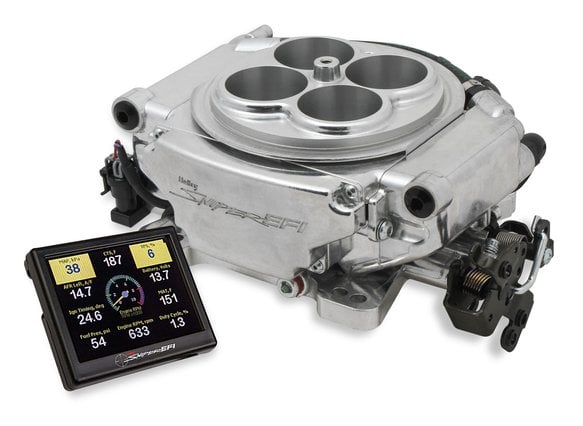
EFI systems, which come in various types, deliver fuel more accurately. Multi-Port Fuel Injection (MPFI) systems inject fuel into the intake ports near the intake valves, while direct injection delivers fuel right into the combustion chamber.
These systems generally run at higher fuel pressures, typically between 30 and 60 psi (40 to 70 psi for boosted applications), and are found in most modern vehicles. EFI systems can often be identified by a fuel injector for each cylinder located near the engine's intake manifold.
This precision in fuel delivery makes EFI systems generally more efficient than carburetors.
Carbureted systems don't have regulators like high-pressure EFI systems. Instead, they require a low-pressure fuel pump (usually operating at 4-7 psi) or an external regulator to reduce pressure to the appropriate range if a higher-pressure mechanical or electric fuel pump is used.
High-performance engines, whether carbureted or EFI-based, typically require fuel pressure regulators to manage the increased fuel volume and pressure.
Now that you have a better understanding of the different fuel system types, let’s review your options for fuel pressure regulators and explore how each works. There are two main types: return style (or bypass) and deadhead (also known as blocking regulators).
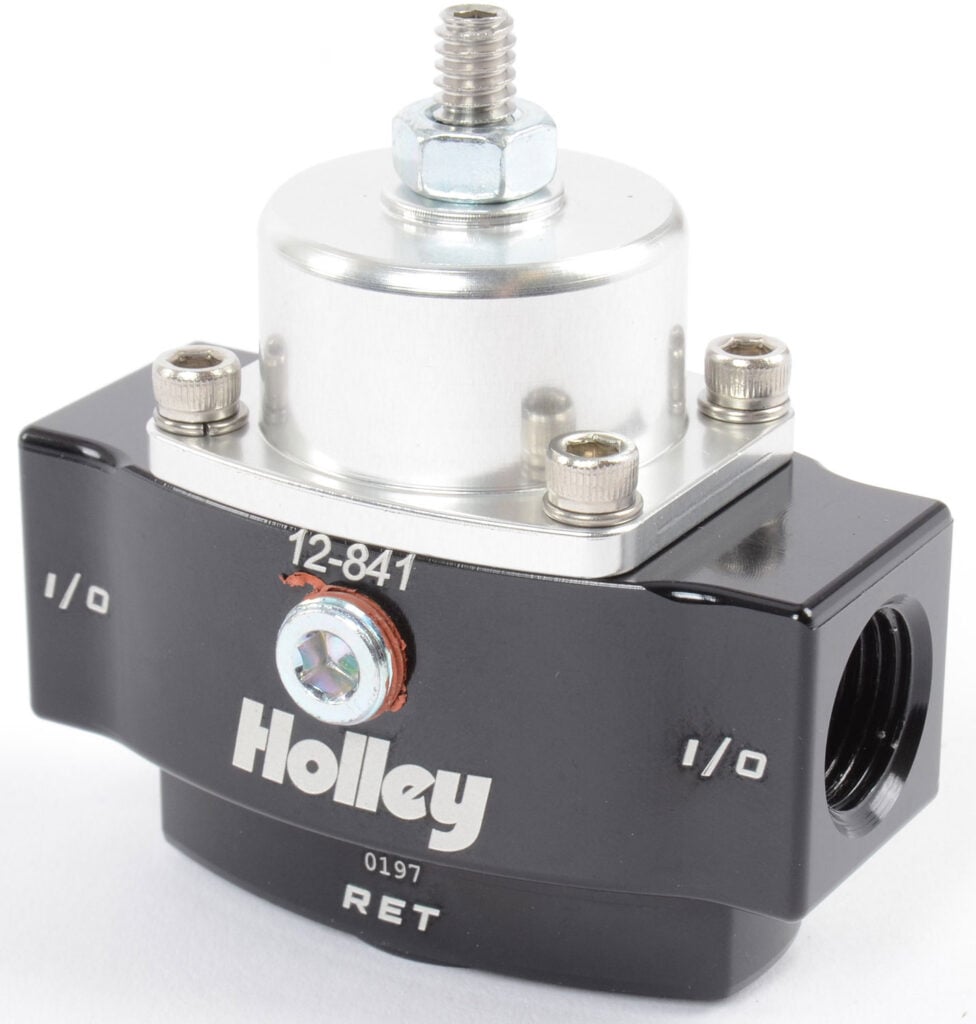
Return-style regulators work by stabilizing fuel pressure and directing surplus fuel back to the tank. When fuel flows through the regulator, it causes an increase in pressure. This triggers a spring-loaded bypass valve to open, allowing the excess fuel to return to the tank, thereby maintaining steady fuel pressure.
These regulators are adjustable, which means you can fine-tune the fuel pressure to match your engine's requirements. They're especially useful in EFI systems and setups with carburetors used in conjunction with high-pressure fuel pumps.
For high-demand scenarios like turbocharged or supercharged engines, return-style regulators are invaluable as they ensure a more consistent fuel pressure, allowing for optimal engine performance.

As for deadhead regulators, these don't have a return line. They regulate fuel pressure by restricting the fuel flow once it hits a predetermined level. When the pressure reaches this set point, a spring-loaded valve closes, reducing both the flow of fuel and its pressure.
Deadhead regulators are simpler in design compared to return-style. Despite being simpler, they can cause fuel temperatures to rise due to the restriction they create in the fuel flow. This restriction can result in increased fuel pressure on the upstream side of the regulator, leading to a rise in fuel temperature.
Modern EFI systems often incorporate design features like fuel line insulation and specialized tank designs to address this, making them a practical choice in certain contexts.
These regulators are a good fit for less demanding applications, such as classic cars with carbureted engines used for regular driving, where fuel demands are consistent and fuel temperature is less of a concern.
Learn more about how fuel pressure regulators work in our detailed guide.
Sign up now to join the JEGS email newsletter and be the first to learn about new products, special deals and e-mail only offers!
There are several advantages of return-style bypass regulators, making them a popular choice for many installations:
The main consideration when using return-style regulators is their complexity. They require a return line that leads back to the fuel tank, complicating the installation process. This factor is important to consider, especially for those who are planning to install the regulator themselves or in custom setups.
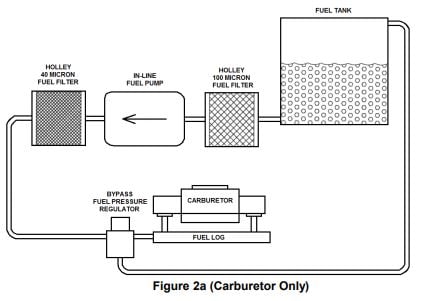
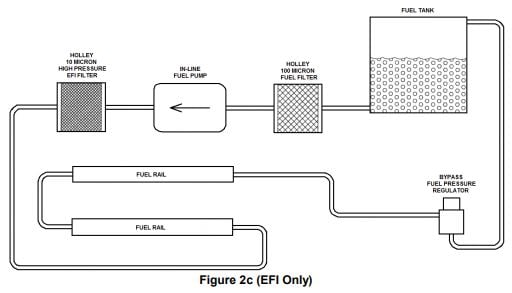
The routing of your fuel pressure regulator depends on several factors, including the type of regulator, the fuel system, and the power output.
In EFI systems, return-style regulators are typically installed after the fuel rails to maintain consistent pressure at the injectors. In carbureted systems, the placement can vary based on specific setup requirements, but is usually inside the engine compartment between the fuel filter and carburetor. Always follow the manufacturer's instructions for the best results.
For boosted applications, placing the regulator after the fuel rails can allow for a quicker response to pressure changes, enhancing performance, especially under varying load conditions.
For deadhead regulators, installation is usually straightforward. You simply install them between the fuel pump and the carburetor, offering a practical solution for simpler or traditional setups.
You may also want to consider using a fuel pressure gauge, which isn’t necessary for standard applications but is a must anytime an adjustable fuel pressure regulator is installed. It allows for detailed monitoring and fine-tuning of fuel pressure, which is key for achieving optimal engine performance and troubleshooting fuel system issues.
A gauge ensures that you have accurate, real-time data on your fuel system, a significant advantage in both maintaining and enhancing your vehicle's performance.
With your newfound knowledge, you should now be fully prepared to choose the right fuel pressure regulator for your vehicle, be it for a carburetor setup or an EFI. For a massive selection of quality regulators, consider JEGS, a trusted supplier of performance auto parts.
Complete your order online and have your products sent straight to your door. Still have questions? Contact our team today.


Hello! I have a 1979 Ford Bronco with a 400 engine and two barrel Carburetor. I am experiencing vapor lock. What application or kit would you suggest I need to remedy this.

Gil, vapor lock is usually caused by fuel getting too hot before it reaches the carburetor, so I would focus on reducing fuel temperature rather than installing a fuel pressure regulator. On your 1979 Bronco with a 400 and two-barrel carburetor, start by inspecting the routing of the fuel line to make sure it stays as far away from the exhaust manifolds and other heat sources as possible. Adding an insulating sleeve to the fuel line and installing a carburetor spacer can also help reduce heat transfer into the fuel. Make sure the mechanical fuel pump is in good condition, as a weak pump can make vapor lock more likely. If your truck still has the factory heat riser valve, verify that it isn’t stuck closed, as that can create excessive underhood temperatures. Keeping the cooling system in good working order is also important because high engine temperatures contribute to vapor lock. If you continue to have problems after checking these items, give us a call at 1-800-345-4545 and speak with a Tech Specialist who can help determine the best solution for your Bronco.

Hi Chris
I have a 1967 Buick GS 400, I’m told it has a different cam, it’s running rich, the guy I bought it from said it needs a fuel pressure regulator, it has a Holley 760 cfm carb and a Holley electric fuel pump, would you be able to let me know what fuel pressure regulator to buy?
Dan, before choosing a fuel pressure regulator, I’d make sure the rich condition is actually being caused by fuel pressure. A different camshaft by itself does not automatically require a regulator, and a rich-running engine can also be caused by carburetor tuning, float level issues, power valve problems, ignition issues, or excessive fuel pressure from the pump.
The first thing I would do is put a fuel pressure gauge on the system and see what the pump is delivering at the carburetor. Most Holley carburetors are happiest in the neighborhood of about 5 to 7 PSI. If the pressure is significantly higher than that, a regulator may be necessary to keep the needle and seat from being overpowered.
Since you have a Holley electric fuel pump and a Holley 760 CFM carburetor, an adjustable carbureted fuel pressure regulator from brands like Holley, Aeromotive, or Magnafuel would typically be the style to look at. The exact regulator depends on which Holley pump is installed and how much fuel volume it produces.
To give you a 100% accurate recommendation, I would need the model of the Holley electric fuel pump. Once you know that, give us a call at 1-800-345-4545 and a Tech Specialist can help match the correct regulator and verify whether fuel pressure is actually the cause of the rich condition.

I’m wanting to run a Holley 650 brawler.
I have an in tank Holley electric fuel pump.
Which fuel regulator do I need?
Chris, a Holley 650 Brawler carburetor typically runs best with fuel pressure in the range of about 5.5 to 6.5 psi, so the key is using a regulator designed for carbureted fuel systems that can reliably control pressure in that range. Since you are running an in tank Holley electric fuel pump, you will want a carburetor style fuel pressure regulator placed in the fuel line between the pump and the carburetor to step the pressure down to a level the carb can handle. Holley offers carbureted fuel pressure regulators that work very well with their Brawler carburetors, and brands like Aeromotive also make excellent carburetor regulators that provide stable pressure control for electric pump setups. The main decision is whether your fuel system is set up as a deadhead style with no return line or a return style system that routes excess fuel back to the tank. Both styles are available, but the correct choice depends on how your fuel lines are currently configured and which Holley in tank pump series you are using. Without knowing the exact Holley pump series and whether your system has a return line, it would not be accurate to narrow it down further, since some pumps are designed to work best with a return style regulator. If you would like to go over your exact pump and fuel line layout so you get the right regulator for the system, give us a call at 1-800-345-4545 and speak with a Tech Specialist and we will be glad to help.

Need a good deadhead(no return line) regulator & non-liquid filled fuel pressure guage. Running a Holley 600 cfm. Suggestions?
Eric, for a Holley 600 cfm carb you are on the right track looking for a deadhead style regulator if you are not running a return line. A typical Holley carb like that wants around 5.5 to 6.5 psi, so you will want a bypass free, deadhead regulator designed specifically for carbureted applications and adjustable in that range. Holley makes their standard carbureted fuel pressure regulators that work well in a deadhead setup, and Aeromotive also offers carbureted deadhead regulators that are very consistent and durable. Either brand will give you solid control as long as your fuel pump is matched correctly and not overpowering the regulator. For the gauge, a non liquid filled mechanical fuel pressure gauge in the 0 to 15 psi range is ideal for a carbureted system. AutoMeter offers dry fuel pressure gauges that are accurate and easy to read. Just make sure the gauge is rated for fuel use and mounted away from excessive engine heat and vibration to maintain accuracy and longevity. Also keep in mind that steady fuel pressure starts with the right pump, so it helps to confirm what type of pump you are running and its pressure output to be sure the regulator can control it properly. If you would like to go over your full setup and make sure everything is matched correctly, give us a call at 1-800-345-4545 and speak with a Tech Specialist and we will be glad to help.




Leave a Reply