Sign up now to join the JEGS email newsletter and be the first to learn about new products, special deals and e-mail only offers!

 334 People Found This Article Helpful


Chevy’s 7.4L (454 ci) big-block engine was offered in many production vehicles from 1970 to 2001 and is still available today as a crate variant. Much of the engine’s popularity stems from its impressive horsepower and torque output and solid reliability.
The engine is also a favorite of performance enthusiasts thanks to its robust build and proven track record with mods.
To help you better understand the details of the Chevy 7.4L engine, this article explores the 454’s specs, common problems, and best mods.
Let’s get started.
Chevrolet’s 7.4L 454 engine has powered many Chevy and GM vehicles, from classic 2-door muscle cars like the Caprice and Chevelle to more modern heavy-duty work trucks such as the Sierra 3500 and TopKick.
Here’s a full list of vehicles that came standard with or offered a Chevy 454 big-block engine:
The above list includes multiple variants of the Chevy 454, including the LS, L19, and Vortec 7400, all of which we’ll cover next.
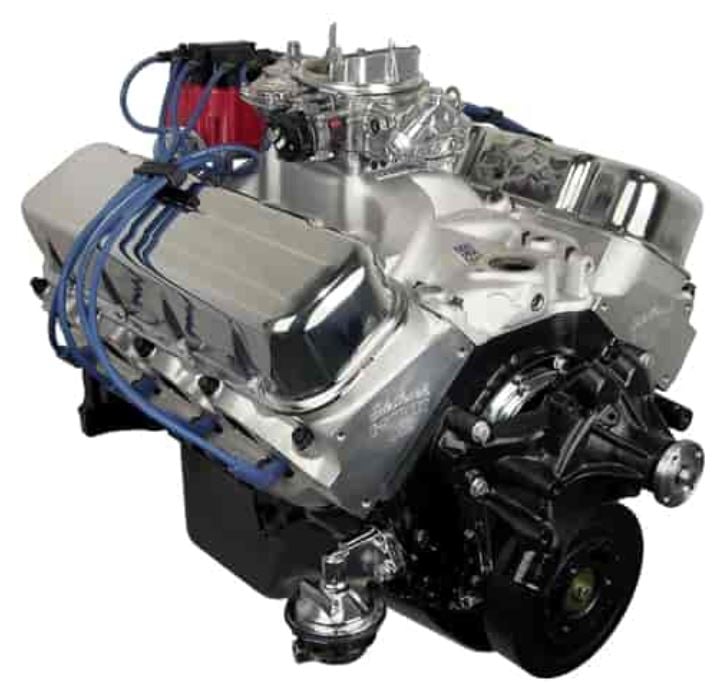
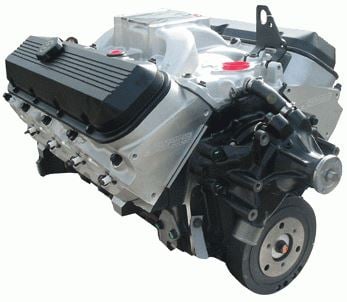
The Chevrolet 454 engine has seen several variants since its debut. The original 454 LS, prominent in early 1970s muscle cars, continued in Chevy and GMC trucks till 1991.
The 454 big blocks, including LS4, LS5, and the short-lived LS6, set a high standard in muscle cars and trucks with formidable power. In 1987, Chevy introduced the L19 with EFI, offering enhanced performance in vehicles like the 1990-1993 Chevy 454 SS.
The 1996 Vortec 7400 boasted significant upgrades with hydraulic roller cams and multi-port fuel injection, further enhancing power and efficiency.
While no longer featured in new production vehicles, crate variants, like these 454 performance blocks from ATK, continue the Chevy 454’s legacy, catering to enthusiasts and builders.

Proving there’s no replacement for displacement, the 454 came out of the gate as an absolute powerhouse. For the original 1970 LS engine, below are performance specs of the Chevy 454:
As the 1970s progressed, the Chevy 454’s engine specs by year declined due to stricter emission laws and new SAE power standards. Initially boasting up to 450 hp, later models produced around 230 hp. Despite reduced power, the 454 maintained strong torque, necessary for heavy-duty applications.
Sign up now to join the JEGS email newsletter and be the first to learn about new products, special deals and e-mail only offers!

While known for being reliable, Chevy’s 7.4L 454 does commonly develop a few problems. Here’s what to watch for in earlier variants:
While many of the 454’s common issues have improved in newer variants, you should still keep an eye out for any of the above-mentioned symptoms to prevent long-term problems.

And now for the best part: upgrades! Yes, the 454 is the perfect block for performance enthusiasts or anyone wanting to enhance the reliability of their stock setup.
Some of the most impactful chevy 454 engine upgrades worth considering include:
And there you have it, a detailed rundown on Chevy’s powerful 7.4L 454 engine. This article has discussed the different production vehicles offering the 454, as well as the engine’s variants, specs, common problems, and upgrade potential.
For all your automotive needs, consider JEGS, a leading supplier of performance car parts. Browse our full catalog of products online and have your order sent straight to your garage.
Still have questions? Contact our team today.

Hi Pete, I have 1993 chevy 3500 dually with a 454 and a 4L80E. The only real mods done to it are a banks exhast system and an air intake. The truck has about 130,000 miles and has been well maintained but I want to safely tow about 12,000 lbs through the hills of WV. Some of those hills can be pretty steep, stretching 5-6 miles long going downhill and uphill BOTH WAYS lol. My big concerns are all of the normal things…power, torque, cooling and stopping in a truck thats 30 years old. I’m looking for a rear disc conversion and maybe something for the front, slotted rotors? but also, any suggestions for beefing things up and keeping them safe and reliable. I’m hoping somewhere in the 5-10,000$ range would go a long way. I dont want carbs. I really like either the TBI or EFI if it made sense. I’m having a lot of fun reading these forums and learning alot. Thanks the help! – Doug

Doug, you’re thinking about this the right way. With that kind of weight and terrain, the focus really needs to be on control, cooling, and reliability more than chasing horsepower. Your 454 has plenty of torque for 12,000 lbs, it just needs support in the areas that handle the load.
Starting with braking, a rear disc conversion paired with quality front slotted rotors and performance pads is one of the best upgrades you can make. Brands like Wilwood and SSBC offer solid conversion options, and even just stepping up to better pads and rotors up front will improve fade resistance on long downhill stretches. Also make sure the system is supported with fresh fluid and consider a hydroboost conversion if you’re not already running one, since it can significantly increase braking assist under load.
Cooling is the next big piece. Long grades will push both engine and transmission temps up, so a high-capacity aluminum radiator along with a severe-duty fan clutch or electric fan setup helps keep engine temps stable. On the transmission side, adding or upgrading to a larger external transmission cooler is almost a must with a 4L80E in that kind of use.
For drivetrain control, a shift kit or valve body upgrade for the 4L80E can help firm up shifts and reduce heat, which goes a long way toward longevity when towing. You might also look at a lower stall, heavy-duty torque converter from brands like TCI or Hughes Performance that’s better suited for towing instead of slipping under load.
Suspension and stability matter more than people expect. Fresh shocks, something along the lines of Bilstein or KYB, along with checking bushings and possibly adding a heavier rear sway bar, will help keep the truck planted and predictable, especially on winding grades.
As for fuel delivery, your factory TBI system is actually very well suited for what you’re doing. It’s simple, reliable, and handles load changes well. There’s no real need to switch away from it unless you’re doing a full engine build.
Overall, if you put your budget into brakes, cooling, transmission durability, and suspension, you’ll end up with a truck that feels a lot more confident and controlled in the hills without sacrificing reliability.
If you want to go over specific combinations that fit your truck and budget, give us a call at 1-800-345-4545 and a Tech Specialist can help you put together a setup that works for your application.

Hello Pete Mitchell,
My name is Andre and i have a 1981 Arizona Chevy C20 454 Automatic (TH-400) Silverado longbed.
Vin: 1GCGC24W8B2136424, is it possible to see on the Arizona Certificate of Title if it is a 454 Big-Block from Factory? ( i have no options sticker in the glovebox..) it wood by great for me to find out the story about the truck before i get the truck in a better shape.
Now about the engine rebuild/refresh for a streettruck.
I like a bit more power, but it have to function on gasoline and liquide gas (LPG)..
I installate a 185L liquide gastank in the bed.
The Impco 425 mixer will regulate the LPG/AIR.
Maybe a cam and rollerlifterkit, and a nice pair of headers..
I hope you can help me, maybe all so with the Vinnumber..
Greethings Andre
Andre, great truck you have there. On your 1981 C20, the VIN you provided does give some useful information, but it will not fully confirm if the truck came with a 454 from the factory. The “W” in the VIN indicates a 454 big block engine for that model year, so based on that code, your truck was originally equipped with a 7.4L 454 from the factory. That is the best confirmation you can get from the VIN itself when the glovebox sticker is missing. For additional verification, you can also check the engine block casting numbers and the suffix code stamped on the front of the engine to confirm it matches a period correct 454. As for your rebuild and upgrade plan, running both gasoline and LPG with an Impco 425 mixer is very doable, but it does influence your parts choices. LPG has a higher octane rating but lower energy content, so the engine typically likes a bit more compression and a camshaft that supports good cylinder pressure and torque rather than high rpm power. A mild hydraulic cam with moderate duration and a wider lobe separation angle tends to work best for dual fuel setups like yours, keeping good vacuum and drivability. A roller cam and lifter setup can be a nice upgrade for durability and efficiency if your budget allows. For airflow, a set of quality headers from brands like Hooker or Hedman will help both gasoline and LPG performance by improving exhaust flow. Since your truck is a street driven longbed with a TH400, focusing on low to mid range torque will make it much more enjoyable to drive than chasing high rpm horsepower. The one detail that would help refine the cam recommendation further is your rear gear ratio and whether the engine is currently stock internally or already modified. If you would like to go deeper into your build and make sure everything works well together with the LPG system, give us a call at 1-800-345-4545 and speak with a Tech Specialist and we will be glad to help.

Looking for upgrades. I have a 1998 K3500 4×4 Dually that originally had a 6.5l diesel in it and was converted to a 1994 gen v 454 Tbi engine. It’s weak and as far as I can tell it’s all stock. I need some ideas to wake it up on a 4K budget. Please let me know your thoughts.
Thank you
Stephen, the 94 Gen V TBI 454 is a solid engine, but in stock form it’s definitely on the soft side, especially in a heavy 4×4 dually. With a 4K budget you can make a very real difference without tearing the entire engine apart. The biggest gains on these motors come from improving airflow and matching the fuel and ignition to support it. A good place to start is a quality TBI upgrade. The factory throttle body and injectors are limiting, so moving to a higher flowing TBI unit from a well known performance brand, along with higher capacity injectors and a matched fuel pressure regulator, will give the engine the fuel and airflow it never had from GM. Pair that with a performance TBI intake manifold designed for the big blocks and you’ll feel an immediate bump in torque. The next reliable gain comes from a cam change. You don’t need anything wild, but a towing or RV style cam from a major camshaft brand works very well with TBI 454s. They focus on torque in the 1500 to 3500 range, which is exactly where a truck like yours needs help. This is usually the single most noticeable improvement on a stock Gen V. A good set of headers is also worth the money. Shorties fit easier in truck chassis and still pick up a noticeable amount of midrange torque. Just make sure they are built for the GMT400 trucks so the plug angle and flange style match your heads. After these changes you’ll need a proper tune. A custom chip or flash tune for the TBI computer makes a huge difference in drivability and power once the engine is breathing better. All of these upgrades stay within your 4K window if you stick with well known brands and do some of the labor yourself. If you want specific part recommendations, or help matching components to your exact swap setup, give our tech team a call at 1-800-345-4545 and they can walk through every piece with you.

Una pregunta cuánto debe de tener de compresión el motor tengo uno con 115 maximo es bueno o malo
Filiberto,
Thanks for reaching out. When it comes to compression readings on a 7.4L 454, context really matters. On a healthy, stock big block Chevy 454, you would normally expect to see compression numbers closer to the 140 to 170 psi range, depending on the camshaft, compression ratio, and how the test was performed. A reading of 115 psi is on the low side, but it is not automatically a deal breaker.
If all cylinders are very consistent and within about 10 percent of each other, 115 psi can still indicate an engine that runs smoothly, especially if it has a mild performance cam, late intake valve closing, or a lot of miles on it. Big cams bleed off cylinder pressure at low rpm, which lowers compression readings even when the engine is mechanically sound. On the other hand, if some cylinders are much lower than others, that points toward wear issues like tired rings, worn cylinder walls, or valve sealing problems.
Also keep in mind that compression test results can vary based on throttle position, battery strength, engine temperature, and whether the test was done dry or with oil added. A leakdown test is the best next step if there is concern, since it will tell you where any pressure loss is actually occurring.
If the engine starts easily, pulls well, does not smoke excessively, and oil consumption is reasonable, those numbers alone do not mean the engine is bad. If performance feels weak or there are drivability issues, then the low compression is worth investigating further.
If you want help interpreting the results or planning next steps, our tech specialists are always happy to help. You can call us at 1-800-345-4545 and speak with a JEGS Tech Specialist for additional guidance.

Back in 1998 my dad bought a Chevrolet 3500 Extended cab 454 dually and in 2000 a Chevrolet Crew cab 3500 454. The dually has 185,000 miles and the crew cab has 215,000 miles. These two trucks have never been toyed with, everything is original and I’m looking forward to buying one. I’m thinking crew cab. If you could make a list of upgrades, what would be your best plan. $9,000 budget….
Hi Dan, cool pair of trucks! With 185k and 215k miles, the smartest $9k plan is reliability first, then torque adders that work with the stock L29 7.4L fuel-injected setup.
1) Baseline and refresh (about $2,000–$3,000).
Compression test, oil pressure check, and scan for stored codes. Replace timing chain and tensioner if original, all coolant hoses, thermostat, water pump, belt, tune-up parts, and all fluids. Fresh O2 sensors and a cleaned or new MAF help these Vortec engines a lot. If the intake manifold gaskets are seeping, do them now. Use quality ignition components from MSD or ACDelco.
2) Cooling and trans durability (about $1,200–$1,800).
Add a big stacked-plate transmission cooler from Derale or B&M and consider a deep aluminum pan for the 4L80E. An aluminum radiator from Cold Case or Mishimoto plus HD fan clutch or dual electric fans keeps temps in check when towing or in hot weather.
3) Exhaust and intake for easy torque (about $1,500–$2,500).
Free up the engine with ceramic-coated shorty or mid-length headers from Hooker or Hedman, high-flow cats where legal, and a cat-back from MagnaFlow, Flowmaster, or Borla. Pair that with a sealed cold-air intake from K&N or AEM and fresh intake ducting.
4) Calibration (about $400–$700).
A handheld tuner from DiabloSport, Hypertech, or Superchips lets you optimize timing and fueling for the mods, adjust shift points and firmness on the 4L80E, and pick the fuel grade you want to run. This is where the combo really wakes up.
5) Gearing and drivability (budget what is left).
If the truck still has tall gears and you run larger tires, a move to 4.10 or 4.56 can make it feel 1,000 lb lighter. Do this only after the mechanical refresh, since it is a bigger spend. While you are there, new rear wheel bearings and seals are cheap insurance on a high-mileage axle.
6) Chassis stuff that makes power usable (as needed).
Bilstein or KYB shocks, quality brake pads and rotors, and a fresh rubber coupler or U-joints. If you tow, consider air springs or helper springs. None of this adds horsepower, but it makes the added torque count.
What I would skip on a $9k budget unless the engine is already open: a cam swap or head work. The stock L29 heads and a mild tune with intake and exhaust will deliver a noticeable torque bump without risking reliability.
If you want, we can help pick specific brands and series from JEGS that fit your exact cab, wheelbase, and emissions setup. Call us at 1-800-345-4545 and a tech specialist will walk through the truck with you and price it out.
Thanks Mr. Pete, appreciate the info. This is exactly what I wanted. Hope you are ready for the cold months ahead, but thanks again. Maybe I’ll let you know how everything goes in a couple months.

I’m looking to get a 99 k2500 GMC Suburban, I was wondering if what would be the best upgrades for lighter towing and city use. This is going to be my first vehicle so try to keep price on the lower side. I also have heard from my grandparents (who had around 15 at a time back in the day for their business) that the 7.4 had a lot of head gasket issues. I was wondering what upgrades would fix that.
Hi Nick, sounds like a fun first vehicle project. A ’99 K2500 Suburban with the 7.4L can make a solid tow rig and daily driver if you set it up right without going overboard on cost.
For lighter towing and city driving, the most noticeable upgrades are usually focused on reliability and drivability. A fresh set of ignition components and a quality tune-up can really wake up a big block that’s a couple decades old. Upgrading to a free-flowing exhaust system also helps these engines breathe better and can give you a little more low-end torque, which is what you want for towing. If the budget allows, a mild towing camshaft paired with better valve springs can give you a strong torque curve without hurting street manners.
As for the head gasket concern your grandparents mentioned, you’re right that these 7.4L big blocks had some history of issues, especially under heavy loads or when they were run hot. The key fixes are really about prevention. A high-quality radiator, good cooling hoses, and a heavy-duty water pump will help keep temps in check. If you ever pull the heads, upgrading to modern gasket materials and higher-quality head bolts or studs can make a big difference in long-term durability. Regularly maintaining the cooling system is just as important as the parts themselves.
Since this is your first vehicle, I’d recommend starting with the basics like making sure the cooling system, ignition, and fuel system are solid before jumping into more expensive performance upgrades. That way you’ll have a reliable foundation for towing and daily driving while you plan out future mods.
If you’d like to go over exact product options that fit your Suburban and budget, our tech specialists would be glad to walk you through it. You can reach them at 1-800-345-4545 and they’ll help you get set up with the right parts.

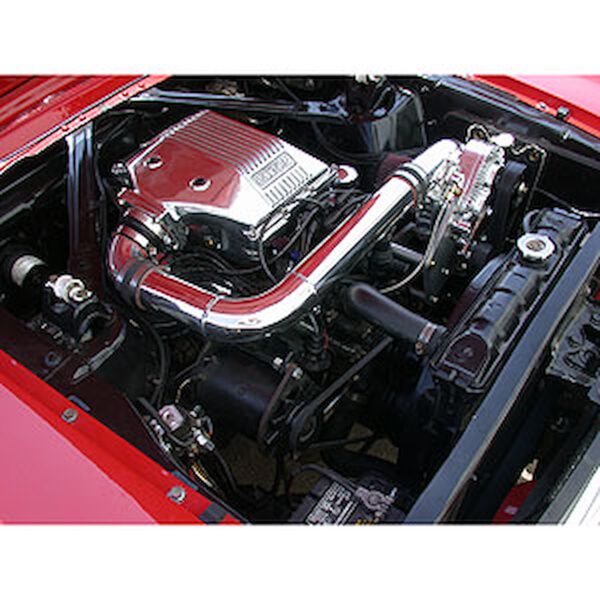
I want a Chevy 454ci, 7.4L V8 with a BDS blower & butterfly scoop. The engine must make min 1000HP for street cruises & car shows. The engine must use petrol & a Tremec T56 manual gearbox.
Hi Eino, thanks for your question. Building a 454 big block with a BDS blower and a butterfly scoop to reliably make 1000 horsepower on pump gas while still being streetable is a very ambitious project. It’s absolutely possible, but every part of the combination has to be carefully chosen and matched to hold that level of power.
For the engine block, a factory 454 block is not always the best choice at 1000 horsepower since cylinder walls, main webs, and deck thickness can become weak points. Many builders move to an aftermarket block with reinforced mains and thicker cylinder walls for reliability at that level. The rotating assembly needs to be forged throughout — crankshaft, H-beam or I-beam rods, and forged pistons designed for boosted applications. With a street build, compression ratio is critical; you’ll need something conservative (around 8.0:1 to 8.5:1 depending on fuel and boost levels) to keep detonation in check.
The BDS blower can certainly support the airflow needed, but you’ll want to size your pulleys to keep boost in a safe range for pump fuel. Many who shoot for 1000 horsepower at the crank move to higher-octane race fuel or E85 since pump gasoline becomes limiting at those pressures. Fuel delivery will require a high-volume EFI-ready system with a stand-alone ECU that can handle timing and boost mapping. A dual-injector-per-cylinder setup is not uncommon in builds like this.
For the gearbox, the Tremec T56 is a great choice, but it needs to be a Magnum or similarly strengthened version. Even then, a clutch designed for 1000 horsepower and lots of torque is essential. The drivetrain behind it (driveshaft, rear end, axles) also has to be upgraded to handle shock loads.
So yes, you can build a 454 with a BDS blower and make 1000 horsepower on gasoline, but it requires an aftermarket block, fully forged rotating assembly, conservative compression, a properly tuned fuel and ignition system, and a heavy-duty drivetrain to live behind it. It’s not just an engine swap — it’s a complete package that needs to be designed from front to back for that power level.
If you’d like, you can call us at 1-800-345-4545 and speak directly with a tech support specialist who can walk you through parts selection and options based on whether your main focus is cruising, shows, or a little street competition.

I’ve got a 1989 K-3500 with the factory 454/TH400 setup. The truck has 68,000 original miles. The transmission failed and now planning on replacing it with 4L80E. The engine is pathetic. Hauling a 20′ gooseneck with cattle gave me 3.5 mpg. It gets hot and seems all choked up. Please give me some solid, affordable plans to make this into a good solid puller.
Hi Brian, thanks for writing in, it sounds like you’ve got a solid platform to work with. The 454 in your 1989 K3500 is a torque-rich workhorse, but from the factory, it’s held back by a restrictive cam, low compression, and an underwhelming intake/exhaust setup, especially for towing.
Here’s a solid, affordable plan to turn your 454 into a reliable, cooler-running hauler:
1. Camshaft Upgrade (Top Priority)
Swap in a towing-optimized hydraulic flat tappet camshaft. Look for a cam with around 200–210° duration at .050″ lift and .450–.500″ lift with a 112–114 LSA. This will wake the engine up in the low- to mid-RPM range without killing vacuum or drivability. Match it with new lifters and valve springs.
2. Intake Manifold & Carb
Replace the stock intake with a dual-plane aluminum manifold like the Edelbrock Performer 2.0. If you’re still running the factory Quadrajet, consider a rebuild or replace with a properly tuned 750–800 CFM carb. An EFI system like Holley Sniper could be a future upgrade, but keep it carb’d for now to stay budget-friendly.
3. Headers & Exhaust
Stock manifolds are restrictive. Install long-tube headers and a dual 2.5-inch exhaust system with high-flow mufflers. This will help lower engine temps and improve breathing under load.
4. Cooling System
Upgrade to a high-flow aluminum radiator with dual electric fans or a severe-duty clutch fan setup. Consider a high-volume water pump if your temps are still climbing while towing.
5. Ignition System
Make sure your HEI distributor is in good shape, set timing properly (around 10–12° base timing with 32–36° total advance), and consider a performance coil and fresh plug wires.
6. Transmission Upgrade
Going to a 4L80E is a great choice. Pair it with a standalone controller and choose a converter with a stall around 1800–2000 RPM. This will help your 454 stay in its torque band while keeping transmission temps in check.
7. Gears & Tires
If you’re still running factory 3.42 or 3.73 gears, consider 4.10s—especially with the 4L80E’s overdrive. This will drastically improve your towing ability without killing highway RPMs thanks to the 0.75:1 OD.
These changes, even in stages, will help your truck run cooler, make more usable torque, and significantly improve fuel mileage under load.
If you’d like help picking exact part numbers or kits to fit your goals and budget, contact us at 1-800-345-4545 and speak to a JEGS tech support specialist. We’ll help you build a true tow rig!

I currently have a 1995 C3500 with a 454 and 4l8e trans. It has been converted to carburetor fromTBI. It has a new Holley 750 cfm on a Weiand street warrior intake. I want to replace the stock heads and camshaft but I am not certain what to go with. My intentions for this truck is burnouts and the ability to leave a stop light swiftly. Any help would be greatly appreciated.
Hi Robert,
Thanks for sharing the details on your build. With your 1995 C3500 running a carbureted 454 and a 4L80E transmission, you’ve already taken a solid step toward unlocking more performance. Upgrading the stock heads and camshaft is a great next move, especially given your goals of quick acceleration and lighting up the tires.
For heads, you’ll want to look at aluminum oval-port options that support good low- to mid-range torque without sacrificing top-end power. Something like a 280cc to 310cc intake runner with larger valves (around 2.19″/1.88″) would be a solid fit for a street-oriented big block that still wants to move fast off the line. Brands like Edelbrock and AFR offer high-flow, bolt-on aluminum heads for the 454 that will work with your carb and intake combo.
For the camshaft, since you’re already carbureted and not limited by TBI electronics, you can choose a more aggressive hydraulic flat tappet or hydraulic roller cam. Look for something in the 230–240 degrees duration @ .050 range with .550″ to .580″ lift and a lobe separation angle around 110–112 degrees. This will give you a lopey idle, strong throttle response, and the torque you’re after for stoplight fun and burnouts.
Pairing the right converter with your 4L80E (something in the 2800–3200 stall range) and making sure the rear gears support quick launches will tie it all together.
If you need additional help, contact us at 1-800-345-4545 and speak to a tech support specialist. We’ll help you find the best head and cam combo for your 454 and driving goals.

Hi everyone. I have a GMC topkick with a 454 in it. Throttle body. So it runs like a dog. It’s late ’90s dump truck. I was wondering what would be the best way to get it to run like a true 454 should run. Perhaps carburetor it. I’m going to go to Header’s. This is the second time I fixed the manifold leak. It would be cool if I could flash the ECM or whatever just to make it more like an old school. 454. Cuz I got to tell you this thing is a dog. Got to do a timing and the fuel that it’s being fed. It has great compression. Great vacuum. Motor is super tight. Super strong. Thank you! Appreciate it.
Hi Steve,
Thanks for the detailed question — it sounds like you’ve got a strong foundation with your late-’90s GMC TopKick 454, but you’re right: the factory throttle-body injection (TBI) systems on those big-blocks were tuned more for emissions and reliability than performance. That’s a big reason they can feel sluggish compared to the older carbureted 454s — especially in a heavy-duty truck like yours.
If you want to wake it up and make it feel more like a classic muscle-era 454, there are a few solid paths you can take. One option is to convert to a carburetor using a TBI-to-carb intake manifold swap and a traditional HEI ignition system. This eliminates the computer controls entirely, giving you full tuning flexibility, better throttle response, and often more horsepower. You’d also want to match it with a proper carbureted fuel pump and regulator to keep the pressure in the right range.
If you’d prefer to keep the fuel injection but improve performance, you can swap to a modern EFI system (like a Holley Sniper or FiTech) that bolts on like a carburetor but gives you modern driveability and tuning features — perfect if you’re looking for better fuel delivery, especially under load. As with a carburetor, you would need either a different manifold or an adapter.
As for your thoughts on the exhaust: going to headers is a great move — those factory manifolds are notorious for leaks and heat soak. Pairing headers with a free-flowing dual exhaust will really help that 454 breathe. And if you’re sticking with EFI for now, a custom ECM tune or chip reflash may help optimize ignition timing and fuel delivery for better low-end torque and throttle feel — especially helpful in a heavy dump truck application.
You’ve already got good compression and vacuum, which means the engine is mechanically healthy — you’re just being held back by a restrictive factory setup. Whether you go carb or upgraded EFI, getting better fuel and spark control will absolutely bring that 454 to life.
If you need additional help, contact us at 1-800-345-4545 and speak to a tech support specialist. We’ll help you pick the right components to turn your TopKick into a true big-block bruiser.

Hi .Tony from,NUMBER ONE AUTOMOTIVE
IM NO STRANGER TO PERFORMANCE.
I KNOW. MOST ( NEVER KNOW EVERYTHING YOU WILL STOP LEARNING).I’m not getting into a list to prove my education..
MY 7.4 STANDARD HAS NOTICEABLE
MORE POWER AT TIMES .( I HAVENT CKED IF CLOSED OR OPEN LOOP AS ITS RARE…I know the power is there but like almost having to go on vacation w a customer u know aren’t lying .lol
I’m.almost done new cooling system as maintenance. I did go to a 180 temp.and 15 lb cap .this is off point.
I was going to unplug upper o2s .but I dont.like working this.way .I have a exhaust restricted to 2.5 per side helped low end.
what’s your opinion on a ecm tuner..
the truck runs great 110000 milage pulls boat good although sometimes it runs like my 383 stroker .I also a 7.4 magnem in my boat but Magnum of of course is .more power.
your thoughts on obd 2 or any type worth the money ..any thoughts.
Tony Iovinelli no.oneautomotive@gmail.com
sorry I wrote a novel lol
Hey Tony,
Thanks for reaching out with your question! It’s clear you’ve got a solid handle on performance and are digging into the nuances of your 7.4L 454. Let’s break this down and address your situation with the truck, the ECM tuner question, and your OBD-II thoughts.
Your 7.4L standard (assuming it’s a Vortec 7400 or similar variant from the ’90s trucks) showing “noticeable more power at times” is intriguing. That intermittent power surge could indeed tie into whether it’s in open or closed loop, as you mentioned. In open loop, the ECM relies on preset fuel maps and doesn’t adjust based on O2 sensor feedback, which might feel punchier depending on how rich it’s running. Closed loop, on the other hand, leans out the mix for efficiency based on sensor data, which could tame it down. Since it’s rare, it might be worth logging some data (more on that in a bit) to see what’s triggering it—could be throttle position, temp, or even a quirky sensor. Your gut’s probably right that the power’s there, just not always on tap.
Your cooling system upgrade with a 180°F thermostat and 15 lb cap is a smart move, especially for maintenance on a 110,000-mile rig that tows. The 454’s a heat beast, and towing a boat can push it hard. That lower temp should keep things happier under load, though it’s off-topic from the tuner question. Good call not unplugging the upper O2 sensors blindly; disabling them would force open loop all the time, likely kill fuel economy, and throw codes. Plus, with OBD-II, it’d be a headache to mask that properly without a tune.
The exhaust setup—2.5 inches per side—is a bit restrictive for a 7.4L, especially if it’s dual exhaust. That’s helping your low-end torque (which you’ve noticed), but it’s probably choking the top end a bit. The 454 likes to breathe, and stock manifolds or tight pipes can hold it back compared to, say, your 7.4 Magnum in the boat, which likely has a freer-flowing setup (and maybe a hotter cam or better heads). If it sometimes feels like your 383 stroker, that might be when it’s hitting a sweet spot in the RPM range where the restriction isn’t as limiting.
ECM Tuner Opinion
An ECM tuner for your 7.4L could absolutely be worth it, especially with OBD-II (assuming we’re talking ’96 or newer, like a Vortec L29). At 110,000 miles, with towing and that occasional power tease, you’ve got room to wake it up. Here’s why:
Power Consistency: A tuner can optimize fuel and timing maps to smooth out that intermittent power feel. It’d let you dial in what you want: more low-end grunt for towing or better mid-range for when it’s unloaded.
Exhaust Restriction Workaround: With 2.5-inch pipes, you’re leaving horsepower on the table. A tune can adjust air-fuel ratios and spark advance to squeeze more out of what you’ve got without needing a full exhaust swap right away.
Towing Improvement: You say it pulls the boat good, but a custom tune could bump torque where you need it, especially if you’re lugging heavy loads up hills. The stock ECM calibration is conservative for emissions and longevity, not max grunt.
Comparison to Your Other Engines: Your 383 stroker and 7.4 Magnum feel stronger because they’re likely tuned (or built) for performance. The stock ECM on your truck isn’t—it’s a compromise. A tuner bridges that gap.
For OBD-II, something like an HP Tuners setup or a custom tune from a reputable shop could transform it. You’re looking at $300–$600 depending on hardware and whether you DIY or pay for a dyno tune. With 110k miles, it’s not too late to breathe new life into it, and the investment could pay off in drivability and fun factor. Pair it with a wideband O2 sensor to log air-fuel ratios, and you’ll see exactly what’s happening when it “runs like the 383.”
Worth the Money?
Yes, if you’re chasing that Magnum-level punch or just want it to feel less sluggish sometimes. The 454’s a beast by nature—robust block, big displacement—but the stock tune and OBD-II constraints hold it back. A tuner’s cheaper than headers or a cam swap (though those are killer mods too, as you probably know). If you’re comfy with data, grab a scan tool or tuner with logging (like an OBDLink MX+ or HP Tuners MPVI3) to pinpoint why it’s inconsistent—could be a lazy O2, MAF, or even fuel pressure dipping.
Other Thoughts
Baseline It: Before tuning, check fuel pressure (should be ~30-40 psi at idle for Vortec) and scan for codes/soft data. That 110k mileage means wear could be sneaking in—injectors on these can get funky (common 7.4L issue).
Future Mods: If the tuner hooks you, long-tube headers and a 3-inch exhaust would let it roar like your boat’s Magnum. The 2.5-inch setup’s fine for now, but it’s a bottleneck.
OBD-II Advantage: Unlike OBD-I, you’ve got real-time data to play with. Use it to your advantage—cheap Bluetooth scanners can show you throttle, RPM, and sensor behavior on your phone.
In short, a tuner’s a solid next step for your truck. It’ll unlock what’s already there and make it feel more like “your” rig, not a factory compromise. Let me know if you want specifics on brands or setup—I’m happy to dig deeper!
I highly recommend calling JEGS Tech Support at 1-800-345-4545. Our team can help you with any additional questions you have!

I have a reman 454 gen 6 marine grade with jegs heads on the way now for my boat. I can only hope that my time in research and reading reviews will pay off. I’ll let you know.
Sounds good, Brian, Keep us in the loop!

I’m disabled (stage three rheumatoid arthritis) I’m replacing the TBI unit and the distributor, the chasing down of sensors and the “Brain” in my 1994 GMC K-2500, NV-4500 transmission , 241 transfer case, 4:10 gearing. It’s the “8,600 GVW” model. I’m using an adapter plate by Kahus to mount the NEW Holley Brawler, 600 cfm. The engine is 45,000 miles young (I ordered it from GM in 2013) the original TBI unit was doing well, but some things were starting to give me problems. I found a rebuilt one on EBay (off of a 1994 Suburban) it’s not built for towing the 18,000 lbs I need to pull. My progress has been slow (seasonal weather changes have my RA in flare up mode) I’ll need some advice on the size of the primary and secondary carburetor jets and the float level, for both the primary and the secondary bowls of the Holley Brawler. I’m receiving a small inheritance from the sale of the Family Ranch, I plan on having a complete “Body off Frame” restoration, at that point I’ll be doing some “ longevity upgrades” (different heads, intake, camshaft, headers, port the intake and exhaust ports) double or triple valve springs. Due to my age (67) and my disability, my lifespan could be significantly shorter. The Accel HEI distributor will be a nice addition. Any recommendations or suggestions on how best to proceed will be Greatly Appreciated (I’ll most likely buy 2-4 acres and a 30-40’ travel trailer) Thanks for Any and All Help
Hi Daniel,
Thank you for sharing your story and the details of your build! It sounds like you’ve put a lot of thought into upgrading your 1994 GMC K-2500 to make it both reliable and capable for towing. I’ll break down your current setup and address your specific questions about the Holley Brawler carburetor, as well as offer additional suggestions for your future upgrades.
Holley Brawler 600 CFM Carburetor Setup
For your current engine configuration and goals, here’s how to dial in the Holley Brawler:
Carburetor Jet Sizing:
Primary Jets: Start with the factory-installed primary jets (typically around #68-#70 for the Holley Brawler 600). This is a good baseline for your relatively mild 7.4L 454.
Secondary Jets: Factory-installed secondary jets should be around #76-#78. If your engine feels underpowered at mid-to-high throttle, you may need to step up a size.
Float Levels:
Adjust the floats so the fuel is just below the bottom of the sight window on both the primary and secondary bowls. If the fuel drips out when you remove the plug, it’s too high.
Proper float levels are critical to avoid flooding during towing or under heavy loads.
Initial Tuning:
Idle Mixture Screws: Turn the screws out 1.5 turns as a starting point, then adjust for maximum vacuum at idle.
Accelerator Pump: Check the accelerator pump clearance to ensure there’s no delay when the throttle is opened.
Vacuum Secondary Spring: If your Brawler is vacuum secondary, use a lighter spring to ensure the secondaries open sooner under load, especially for towing. Holley’s spring tuning kit is handy for fine adjustments.
Recommendations for Longevity & Upgrades:
When you proceed with your future “body-off-frame” restoration and performance upgrades, here are some suggestions to maximize durability and performance for towing:
Heads & Intake:
Cylinder Heads: Consider aluminum heads like Edelbrock Performer RPMs or Dart Iron Eagles with smaller combustion chambers (100cc-110cc) to maintain compression and improve airflow.
Intake Manifold: A dual-plane intake manifold, such as the Edelbrock Performer 2.0, works well for low-end torque, which is essential for towing.
Camshaft:
Go for a towing-friendly camshaft with shorter duration and high lift. A cam like the Comp Cams Xtreme Energy 252H or XE256H is excellent for improved torque in the 1,000-4,500 RPM range while maintaining good drivability.
Headers and Exhaust:
Long-tube headers with 1 ¾-inch primaries and a 3-inch dual exhaust system will help the big-block breathe better under heavy loads. Pair this with an H-pipe or X-pipe for improved flow and efficiency.
Ignition System:
The Accel HEI distributor you mentioned is a great choice. Combine it with high-quality plug wires (like MSD Super Conductor, available at JEGS) and colder heat range spark plugs for towing applications.
Cooling System:
Upgrade to a high-capacity aluminum radiator and electric fans to prevent overheating, especially when towing heavy loads.
Fuel System:
Add an inline fuel pressure regulator with a return line to ensure consistent fuel delivery. For your planned upgrades, a Holley Blue fuel pump may also be worth considering.
Additional Advice for Towing 18,000 lbs
Transmission and Rear Axle:
Make sure your NV4500 transmission is in top condition. These are robust transmissions, but towing heavy loads can push them to their limits. Consider a heavy-duty clutch kit.
Your 4.10 rear gears are excellent for towing, especially with 29-inch tires. Keep the differential serviced and, if needed, upgrade to a limited-slip or locking rear diff for better traction.
Brake System:
Towing heavy loads requires serious stopping power. Consider upgrading to a hydroboost brake system for better braking performance and installing a quality electric trailer brake controller.
Your thoughtful approach to this build is inspiring, and the upgrades you’re planning will set up your 454 for years of reliable service. Starting with the Holley Brawler, dialing in the jetting and float levels as described will ensure smooth operation and better towing performance. When you’re ready for the full restoration, focus on longevity upgrades like the heads, camshaft, and cooling system to handle heavy loads with ease.
If you need further assistance with your carburetor setup or future upgrades, feel free to contact us at 1-800-345-4545 and speak to a JEGS tech support specialist. Best of luck with your build, and we wish you all the best with your restoration and plans!

I have a question on the 454ci engine: on the 5.7 litre chevorlet rnginr the starter mounts on the engine block have a habit of breaking off leaving the entire engine useless, has anyone experienced this with the 454 ci engine?
William, While the issue of starter mounting ears breaking off on the 5.7-liter small-block Chevrolet engine is relatively common, it’s less frequently reported with the 454ci big-block engine. The 454ci typically has a more robust casting around the starter mounting area, making it less prone to this type of failure. However, like any engine, improper installation could potentially cause similar issues. If you’re concerned about starter mount durability on your 454ci, it’s always a good idea to check for proper starter gear to flywheel/flexplate alignment during installation, which is aided with the use of shims. Also confirm the correct mounting bolt torque is being used as well as inspect the block for any signs of stress or cracks.

I have a 1992 k3500 silverado pickup with the 7.4 liter gas engine that I’m trying to keep original and I’m having issues with the brackets that hold on the pulleys such as the powersteering pump and alternator I cannot find them do you have a place to find thes odd brackets
Adam,
Please call us at 1-800-345-4545 and speak to a tech specialist who can help narrow down your options for power steering pump and alternator brackets. We are open 7 am-Midnight EST Monday through Friday and 8:00 am-11:00 pm on Saturday and Sunday.

Thanks, that was very informant.

Ok, here is what I am working with. I have what I believe to be a Gen 6 454 Fuel Pump Boss. Block casting # 12550313 – Heads casting # 10114156 it does have the 6 bolt timing cover and a place to install a fuel pump. I want to so say rebuild this motor to install it and the factory over drive transmission that came with it into my 86 short bed square body for a some what street rod daily driver. I have a Edelbrock RPM Air Gap Duel Plan Intake already that’s on my 1971 402 big block that’s in a C 20 camper special. If using the heads off of the 402 will help in any way to get more HP and better performance there is no problem using them as long as I don’t have to spend any money on them. Now what I need to know is what do you recommend as far as any and all part’s go that I will need, keep in mind please I’m on disability and a very tight budget “FOR REAL”. I may not be able to purchase everything all at once but will be purchased all the same. Also I don’t really have the income to have any machine work done that I absolutely don’t have to do at this time. Please send me a part’s list and instructions on how to make this happen for a Old Man. THANK YOU !
Hello Billy. That sounds like a great foundation for your build! Because we need more information to provide you with a comprehensive list and a game plan to follow, please call us at 1-800-345-4545 and speak to a JEGS Tech Specialist, who will get you on the path to completion. Technical Support is available 7 am-Midnight EST Monday through Friday and 8:00 am-11:00 pm EST on Saturday and Sunday.
Thank you for your interest.



Leave a Reply