
Sign up now to join the JEGS email newsletter and be the first to learn about new products, special deals and e-mail only offers!

 3 People Found This Article Helpful

Fine-tuning a Holley carburetor can make the difference between a smooth-running street machine and an engine that stumbles at idle or falls flat off the line. One of the most critical areas for dialing in drivability and throttle response is the idle circuit. On carburetors equipped with 4 corner idle systems, proper Holley 4 corner idle air bleed matching becomes essential for achieving balance, clean idle quality, and a consistent transition from idle to main circuits.
In this article, we will cover everything you need to know to properly adjust your Holley carburetor, including how to match all four idle air bleeds, how to use the idle mixture screws to achieve the right air-fuel ratio, and how to adjust Holley carb settings step by step for the best results.
Holley carburetors with 4 corner idle systems provide idle mixture control to each primary and secondary barrel. This allows for more precise tuning, but it also requires careful balance. If the air bleeds are mismatched or set unevenly, the result is poor idle stability, an erratic transition to part throttle, or even engine stumble.
To match the idle air bleeds, begin by verifying that all four idle mixture screws are turned out evenly from a lightly seated position. A common starting point is 1 to 1.5 turns out from seated. Next, make sure the throttle blades are equally positioned so they just expose the transfer slots. This ensures that the idle fuel is being pulled from the idle circuit rather than the main metering system.
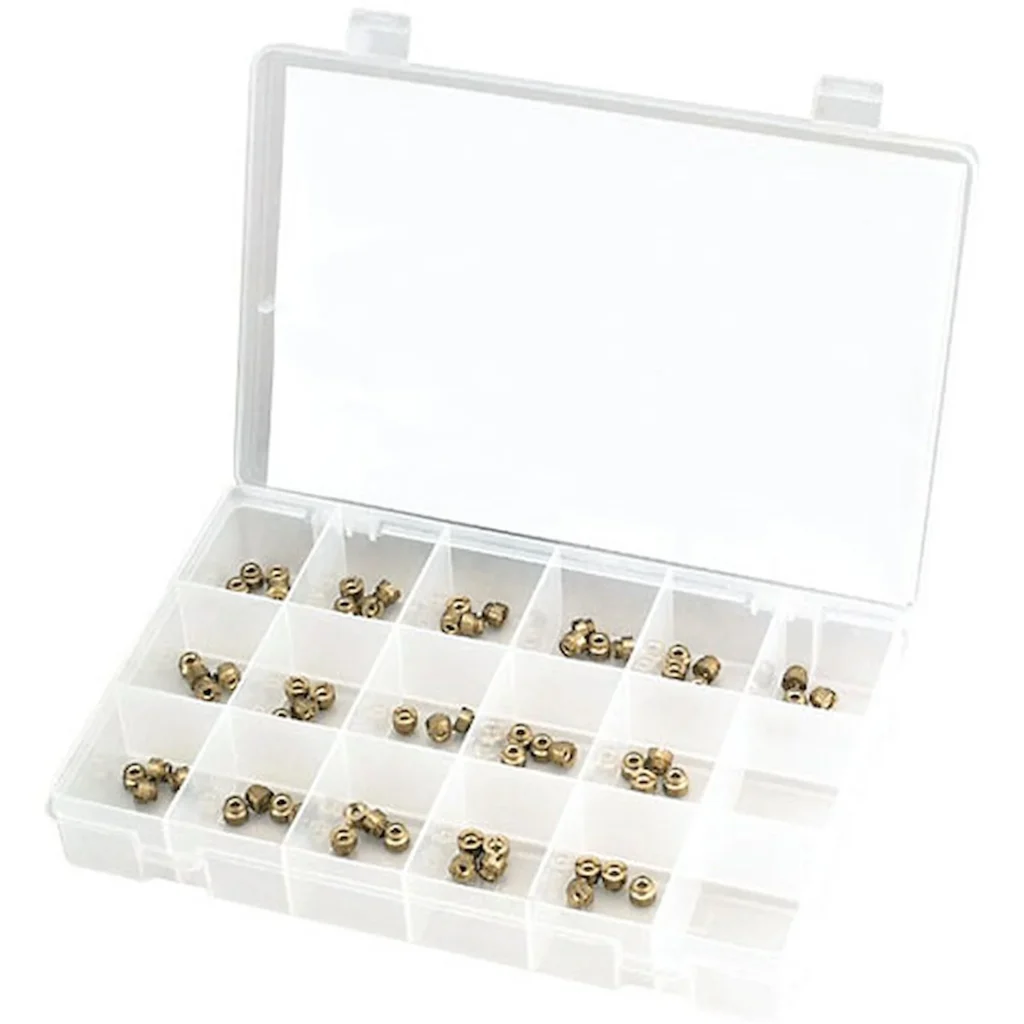
Once these mechanical settings are confirmed, the idle air bleeds in the carburetor’s main body should be visually inspected. Holley uses calibrated brass inserts or drilled passages to meter air into the idle fuel emulsion. If the primary and secondary idle bleeds are not the same size, or if there are signs of debris or corrosion, the idle circuit will not function properly.
All four corners should flow evenly. If you find mismatched bleeds, you can replace brass bleeds with matched inserts or drill the passages to an identical diameter using precision bits. Balancing the idle bleeds provides equal air distribution and smoother idle performance.

When tuning the idle circuit, one of the most common questions is: should the Holley idle mixture screw be turned in or out for a richer mixture? The answer is simple. Turning the idle mixture screw out will enrich the mixture by allowing more fuel to flow. Turning it in will lean it out.
To get the best results, warm up the engine and set the idle speed using the throttle screw. Then adjust each idle mixture screw a small amount at a time, in a cross-pattern (for example, front left and rear right, then front right and rear left). Your goal is to find the point where vacuum is highest and the engine speed is stable.
A vacuum gauge is helpful here, as it allows you to track small changes in manifold pressure as you adjust the screws. If you go too rich, the engine may stumble or load up. If too lean, it will idle rough or surge. Use small, equal adjustments on all four screws to keep the circuit balanced.

Sign up now to join the JEGS email newsletter and be the first to learn about new products, special deals and e-mail only offers!
Adjusting a Holley carburetor correctly ensures smooth operation and throttle response across all RPM ranges. Below is a general guide to follow:
1. Set the Float Levels
Before tuning the idle circuit, confirm the fuel level in both primary and secondary bowls is correct. With the engine running and the sight plugs removed, fuel should just reach the bottom of the threads without spilling over.
2. Set the Throttle Blades
Adjust the primary and secondary throttle blades so that the transfer slot is just barely visible when viewed from underneath the carburetor. If too much is exposed, idle fuel will transition too early, making it harder to tune.
3. Adjust Idle Mixture Screws
With the engine at normal operating temperature, turn each screw out 1 to 1.5 turns as a baseline. Use a vacuum gauge to fine-tune each screw until you reach the highest stable vacuum reading.
4. Balance All Four Corners
Ensure that all four idle mixture screws are adjusted evenly. If your Holley has 4 corner idle, both primaries and secondaries must be matched to maintain proper idle fuel balance.
5. Adjust Idle Speed
Once the mixture is correct, use the idle speed screw to set your desired idle RPM.
6. Recheck Vacuum and Fuel Pressure
After making adjustments, verify that your idle vacuum is steady and that your fuel pressure is within Holley’s recommended range for your carburetor model.
Holley carburetors offer unmatched tunability for performance enthusiasts, but success depends on attention to detail. Holley 4 corner idle air bleed matching ensures that all barrels contribute equally to idle fueling, which enhances smoothness and throttle response. Understanding how the Holley idle mixture screw in or out for rich adjustment works helps prevent hesitation and improves drivability.
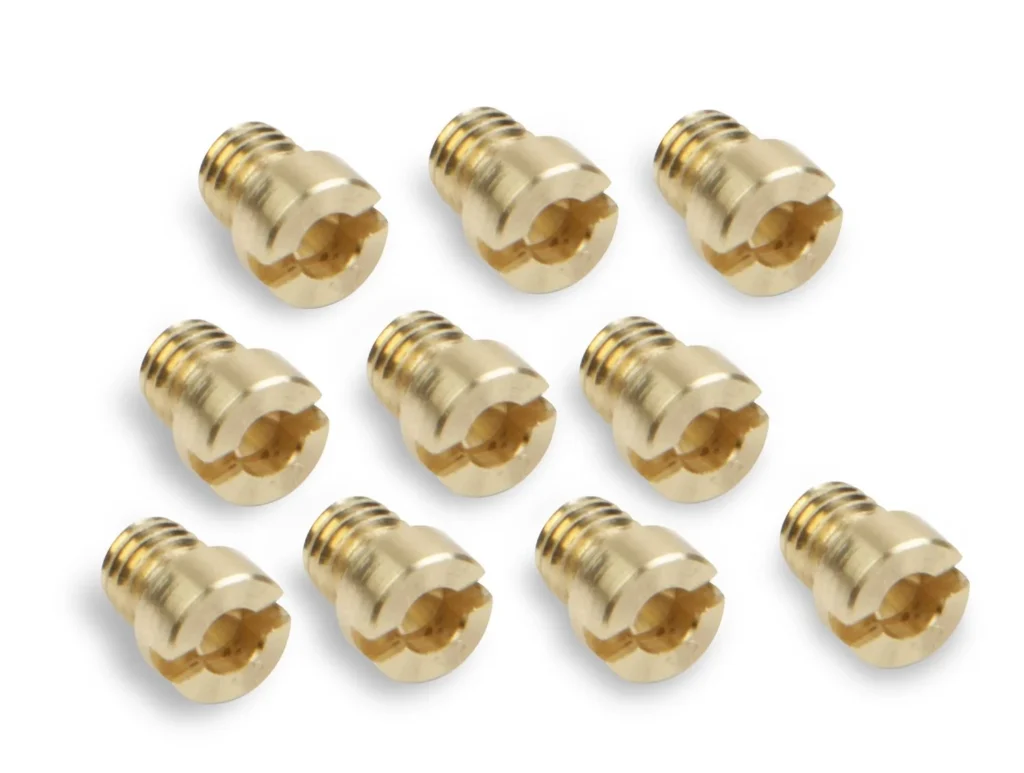
If you are ready to adjust Holley carb settings and need tools or replacement parts, JEGS has a wide selection of components to help you get the job done. From tuning kits to replacement bleeds and fuel system parts, we have what you need to dial in your setup. For tech support, parts help, or tuning advice, contact the experts at JEGS at 1-800-345-4545 or visit JEGS.com.

Hello, I have a 750 HP double pumper and I have 73 primary jets and 82 secondary jets. From reading the plugs they are black and sooty in a very short time. Are the secondary jets too large and causing this problem? Any feedback will be appreciated. Thanks, Dan.
By the way, I am running a 406 small block Chevy with a hydraulic roller camshaft lift 542/560 duration is 242/248.

Hi Dan,
Thanks for the details on your setup. With a 750 HP Holley double pumper running 73 primary jets and 82 secondary jets on a 406 SBC with a fairly healthy cam (242/248 duration, .542/.560 lift), you’ve got a combination that should run strong—but the sooty plugs are definitely a red flag.
If your plugs are turning black and sooty quickly, that typically points to an overly rich condition at idle or light throttle cruise—not necessarily at wide-open throttle where the secondary jets come into play. That said, 82s on the secondary side can be on the rich side for many street setups unless you’re running it hard often or have a heavy vehicle.
Here’s what you might want to check:
Idle Circuit & Air Bleeds: A rich idle can be caused by improperly adjusted idle mixture screws, too-small idle air bleeds, or throttle blades opened too far into the transition slot. That’s something to verify before changing jetting.
Main Jetting: 73/82 is a fairly common starting point, but with your symptoms, you might try stepping the secondary jets down to 78 or 80 and monitor changes in drivability and plug color. Just make changes one step at a time.
Float Levels: Make sure both floats are set properly. High fuel levels can cause excessive richness.
Power Valve: If you’re using a power valve that opens too early, that could also dump fuel in too soon. Make sure it matches your engine’s vacuum at idle (a common rule is 1.5 to 2 inches below your vacuum reading).
Spark Plug Heat Range: If you’re running colder plugs than necessary, that could also contribute to fouling even if the mixture isn’t wildly rich.
From the details you shared, it’s quite possible the secondaries are contributing, but idle and cruise circuits are more likely to blame if the sooting happens quickly. Dial in the idle and primaries first, then fine-tune secondaries after.
If you need additional help, contact us at 1-800-345-4545 and speak to a tech support specialist. We’ll help you zero in on the right combination for your Holley and small block Chevy.





Leave a Reply