Sign up now to join the JEGS email newsletter and be the first to learn about new products, special deals and e-mail only offers!

 219 People Found This Article Helpful

Key Takeaways

Choosing the right carburetor has a major impact on how your performance engine runs, responds, and behaves in real-world driving. Two of the most recognized names in carbureted air and fuel delivery systems are Holley and Edelbrock. Both brands offer proven designs that have powered everything from daily drivers to championship winning race cars.
Holley and Edelbrock carburetors serve the same purpose, but they differ in performance potential, tuning complexity, reliability, and maintenance needs. Once you understand the Holley vs Edelbrock carburetor differences, it's easier to choose the right one for your engine, driving style, and long-term goals.
Before you compare horsepower or reliability, it helps to know how each carb is built. The Edelbrock vs Holley debate starts with two different design philosophies, and every tradeoff in this guide traces back to them.
Holley carburetors use a modular design:
• Removable fuel bowls and metering blocks
• Swappable jets and power valves
• Interchangeable accelerator pump cams and nozzles
That modular layout is the foundation for race-bred designs like Holley double pumper carburetors. If you're new to the term, our tech guide has the double pumper explained in plain language.
Edelbrock carburetors use a simpler, one-piece approach:
• Performer and AVS lines based on the Carter AFB design
• One-piece body with gaskets above the fuel level
• Metering rods and step-up springs for enrichment instead of a power valve
The result is a carb you tune from the top, with fewer places for fuel to leak.
Most people upgrade a carburetor to unlock more horsepower and sharper throttle response. Holley and Edelbrock take different paths to get you there.
Holley carburetors have a long history in motorsports and competitive racing, and the lineup includes the popular Holley Street Avenger carburetors. Their design gives you precise fuel control and extensive tuning options, which makes them a favorite among racers and performance-focused builders.
Key performance traits of Holley carburetors include:
• Wide range of jetting and tuning options with carburetor jet kits
• Replaceable carburetor power valves and accelerator pump cams
• Excellent fuel control at high rpm
• Strong support for drag racing, circle track, and off-road use
When it's tuned correctly, a Holley carburetor can deliver maximum horsepower and quick throttle response. That performance depends heavily on proper setup, though. Incorrect tuning can lead to drivability issues or lost power.

Edelbrock carburetors, like the Edelbrock Performer carburetors, are designed to deliver solid performance with minimal tuning. They're calibrated to run well out of the box and emphasize smooth drivability over extreme adjustability.
Key performance traits of Edelbrock carburetors include:
• Consistent throttle response
• Strong low and mid range performance
• Carburetor metering rods for fuel control instead of power valves
• Excellent street manners with minimal adjustment
Edelbrock carbs don't offer the same fine-tuning as Holley models, but they still deliver noticeable gains for street-driven vehicles and mild performance builds. If you want a step up, Edelbrock AVS2 carburetors add annular boosters and an adjustable secondary air valve.
Reliability plays a major role in long-term satisfaction, especially if your vehicle sees frequent street use.


Holley carburetors are built to handle demanding conditions such as high rpm and sustained wide-open throttle. In racing environments, they're extremely reliable when maintained correctly.
That said, reliability depends on regular attention. Float levels, carburetor floats, carburetor base gaskets, jets, and seals require periodic inspection. Fuel leaks or drivability issues are usually the result of improper setup rather than design flaws.
On a street-driven Holley, check the fuel bowl screws periodically. The bowl gaskets sit below the fuel level and can weep over time.
Holley carburetors reward knowledgeable tuners, but they may frustrate you if you're looking for a hands-off experience.

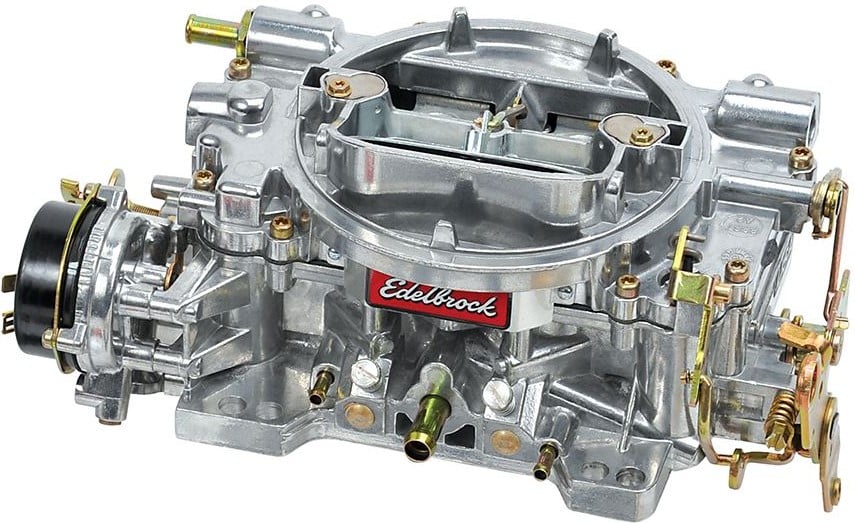
Edelbrock carburetors are known for stable operation and low maintenance requirements. Their design eliminates gaskets below the fuel level, which reduces the risk of leaks. The metering rod system automatically adjusts fuel flow based on engine demand.
If you drive on the street, an Edelbrock carburetor tends to stay in tune longer and need fewer adjustments. That makes it a popular choice for cruisers, classic car restorations, and weekend-driven performance cars.
Sign up now to join the JEGS email newsletter and be the first to learn about new products, special deals and e-mail only offers!
Maintenance effort is often a deciding factor when you're buying a carburetor.
Holley carburetors offer extensive adjustability, but that flexibility comes with more frequent maintenance.
Typical maintenance tasks include:
• Float level adjustments
• Jet changes
• Power valve selection
• Gasket inspection and replacement
Holley benefits from strong aftermarket support, with abundant parts availability and tuning resources. If you enjoy tuning, you'll likely see this as a benefit rather than a drawback.
To pick a power valve, connect a Holley vacuum gauge and read idle vacuum in gear. Choose a power valve rated below that reading. Our guide to Holley power valve tuning walks through the details.
If you feel an off-idle bog, tune the accelerator pump cam and accelerator pump nozzles first. Jet changes mean pulling the fuel bowls, so keep spare bowl gaskets and other carburetor tuning components on hand.


Edelbrock carburetors are designed to be simple and reliable.
Maintenance advantages include:
• Fewer gaskets exposed to fuel
• Easy metering rod changes without disassembly
• Stable calibration over long periods
Rebuilding and tuning an Edelbrock carburetor is typically quicker and easier than working on a Holley, especially if you're less experienced.
For Edelbrock carburetor adjustment, metering rod and step-up spring swaps change the cruise and power mixture from the top of the carb. Float adjustment takes more work because you'll need to remove the air horn.
For the full process, see our carburetor rebuild guide and these basic carburetor adjustment tips.

If you're swapping brands, fitment is usually simpler than you'd expect. Most Holley 4150/4160 and Edelbrock Performer/AVS2 four-barrels are square-bore designs. On a square-bore intake, you can usually swap between them with just a standard square-bore base gasket.
A spread-bore (Q-jet) intake is different. You'll need one of our carburetor adapter plates to mount a square-bore carb on it.
Before you bolt it down, check these fitment points:
• Throttle linkage, which may need a brand-specific bracket or lever
• Kickdown or TV cable fit, with kickdown cable brackets available if yours doesn't line up
• Air cleaner fit, since both brands use a standard 5-1/8 in air cleaner flange
• Total stack height, since carburetor spacers cut into hood clearance
Pick your air cleaner height based on the hood clearance you have left.
Holley carburetors excel in maximum horsepower potential, racing applications, and fine tuning capability.
Edelbrock carburetors excel in ease of use, reliability, and street friendly drivability.
Neither option is better in every situation. The best choice depends on how the vehicle is used.
Holley carburetors excel in maximum horsepower potential, racing applications, and fine-tuning capability.
Edelbrock carburetors excel in ease of use, reliability, and street-friendly drivability.
Neither option is better in every situation. The best choice depends on how you use your vehicle.
| Feature | Holley | Edelbrock |
|---|---|---|
| Best For | Racing, high RPM, and builders who enjoy tuning | Street-driven cars, cruisers, and restorations |
| Tuning Flexibility | Extensive: jets, power valves, accelerator pump cams, and nozzles | Simpler: metering rods and step-up springs |
| Enrichment Method | Power valve | Metering rods and step-up springs |
| Gaskets Below Fuel Level | Yes, at the fuel bowls | No |
| Maintenance | More frequent tuning and adjustments may be needed for float levels, jets, and gaskets | Generally low maintenance, with stable calibration over long periods |
| Out-of-Box Drivability | Depends heavily on proper setup and calibration | Typically calibrated for good out-of-the-box drivability |
| Jet Changes | Typically require removing the fuel bowls | Metering rods can be changed from the top without removing the carburetor; jet changes require additional disassembly |
Holley vs. Edelbrock carburetor comparison at a glance. Features, tuning procedures, and maintenance requirements vary by carburetor model and application.
Choose a Holley carburetor if:
• Your vehicle is used primarily for racing
• Maximum horsepower is the top priority
• You enjoy tuning and adjusting fuel systems
• Your engine operates frequently at high rpm

Choose an Edelbrock carburetor if:
• Your vehicle is street driven most of the time
• You want strong performance with minimal tuning
• Reliability and ease of maintenance matter most
• You prefer a carburetor that runs well out of the box

If your vehicle falls somewhere in between, consider airflow needs, engine modifications, fuel system layout, and how often you want to tune. Whichever brand you pick, size the CFM to your engine. Our answers to common carburetor questions cover CFM sizing.
If you want self-tuning drivability, the Holley vs Edelbrock EFI comparison is worth a look. Both brands offer throttle body EFI that bolts onto a four-barrel intake.
On the Holley side, check out Holley Sniper EFI kits. Edelbrock's answer is its lineup of Edelbrock Pro-Flo 4 EFI systems. To weigh the tradeoffs, read our breakdown of carburetor vs fuel injection.
No carburetor works alone. Performance improves when you match supporting components correctly.
Consider upgrading:
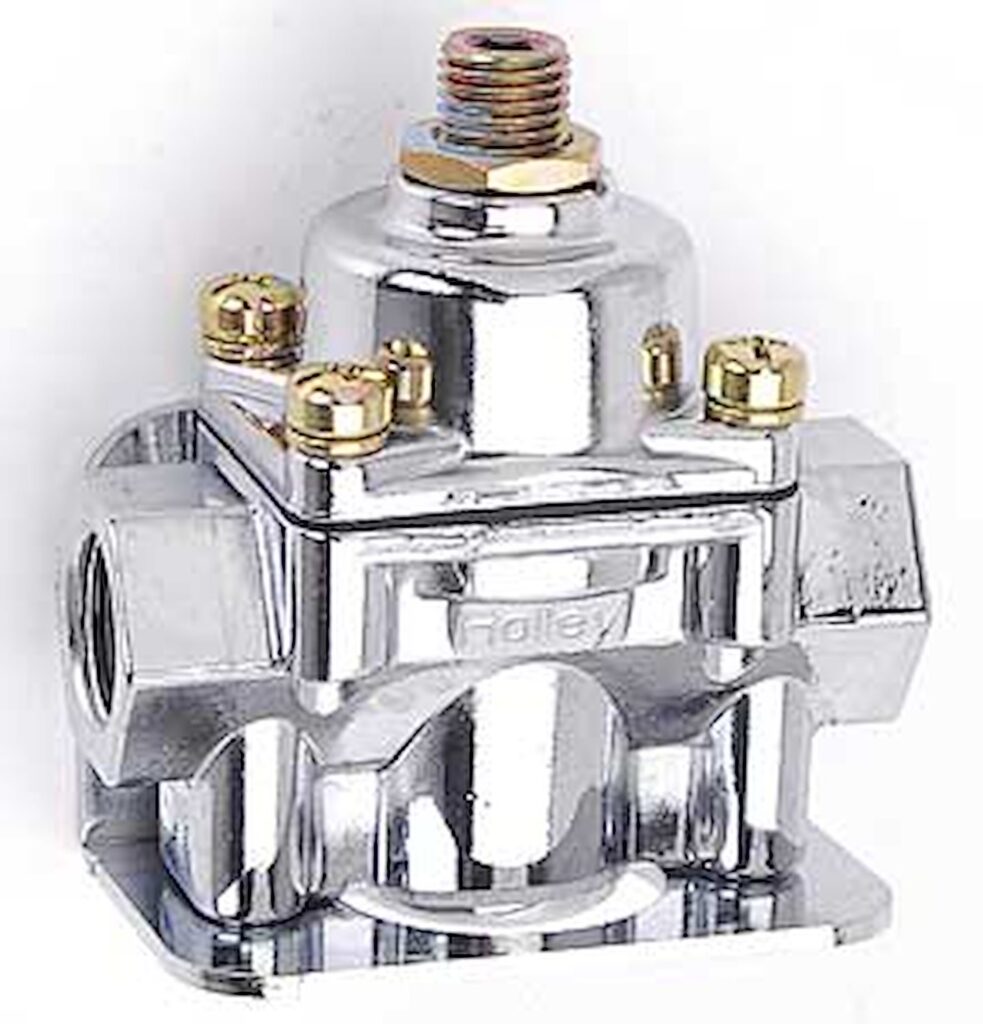
• Fuel pressure regulator set to manufacturer specifications
• High flow air cleaner and filter
• Proper performance intake manifold
• Quality throttle linkage parts and throttle return springs
• Electric fuel pumps sized for your power level
• Inline fuel filters ahead of the carburetor
• Quality fuel lines and fittings
Still choosing an intake? Our single vs dual plane intake guide helps you match it to your combo.
JEGS carries everything you need to support both Holley and Edelbrock carburetors.


Both Holley and Edelbrock carburetors have earned their reputations through decades of proven performance. The right choice depends on your driving style, performance goals, and tuning preferences.
At JEGS, you'll find a wide selection of Holley and Edelbrock carburetors, tuning parts, carburetor rebuild kits, and expert tech support. Whether you're building a street cruiser or a race-ready machine, JEGS has the parts and knowledge to help you get the most from your engine.
If you need help choosing the right carburetor, call the JEGS tech team at 1-800-345-4545. You'll get guidance from people who understand performance.
Neither wins everywhere: Edelbrock is easier for street driving, while Holley is better for racing and fine-tuning. Either way, the carb runs best when you understand why air/fuel ratio matters.
In a Holley vs Edelbrock daily driver matchup, Edelbrock usually wins because it stays in tune longer and has no gaskets below the fuel level. If you're chasing idle problems, learn why your engine stalls at a stop.
Yes, a square-bore Holley bolts onto a square-bore Edelbrock intake with a standard gasket, while a spread-bore intake needs an adapter. After the swap, re-check your mixture with an Edelbrock air/fuel ratio monitor.
Yes, they're a strong pick for street and street/strip use, with annular boosters and an adjustable secondary air valve. That adjustability comes in handy when you're fixing acceleration hesitation.
Holley carbs run around 6.5 psi, and Edelbrock carbs want about 5.5–6.0 psi. Whether you run one of our mechanical fuel pumps or an electric pump, use a regulator to hold that pressure.
Warm the engine, turn each screw for the highest smooth idle or vacuum reading, then reset idle speed. For the full Edelbrock carburetor adjustment process, see our guide to adjusting an Edelbrock carburetor.


Chevy 327 w/mild cam running a Edelbrock 1407 carburetor sitting on a Pro/Stock intake manifold. I want to switch to a Holley 4150 double pumper carb to squeeze out some more horsepower.
– Will I need an intake base plate adapter to switch to the 4150, or are they compatible?
– Do tuning instructions come with the 4150?
– What air cleaner with a reusable filter would you recommend for the 4150?

Gene,
You are on the right track with that swap, and your current setup makes it pretty straightforward. The Edelbrock 1407 is a square bore carburetor, and a Holley 4150 double pumper is also a square bore design. If your Pro Stock style intake manifold is a true square bore flange, which most of them are, you will not need an adapter or spacer just to make the carb fit. The only time an adapter is required is when moving between square bore and spread bore patterns, which is not the case here. As long as the intake was not machined specifically for a spread bore carb, the 4150 will bolt directly on using a standard square bore gasket. Holley does include basic setup and tuning information with their 4150 series carbs. It covers float level adjustment, idle mixture, accelerator pump setup, and general jetting guidance. That said, it is more of a starting point than a full tuning manual. Fine tuning for your 327, camshaft, gearing, and driving style will still take some hands on adjustment, which is normal with a double pumper. As for the air cleaner, any standard 5 1/8 inch carb flange air cleaner assembly will fit the 4150. For a reusable filter that flows well and seals properly, brands like K&N, Holley, and Edelbrock all offer low profile and standard height air cleaner assemblies that work great on street driven small blocks. Choosing the height will depend on hood clearance, but performance wise they all do the job well when matched correctly. If you want help confirming intake flange style, selecting the right air cleaner height, or dialing in the carb for your exact combination, you can call 1-800-345-4545 and speak with a tech specialist who can walk through it with you and make sure everything works together the first time.

413 hypo Mopar Wedge currently a 750 cfm,electric choke Holley
Intake is Edlebrock RPM PERFORMER
Which Edlebrock carb should I buy??
The Holley on it sucks
Thanks,Phil
Hi Phil, thanks for reaching out. Since you’ve got a Mopar 413 wedge with an Edelbrock Performer RPM intake, switching over to an Edelbrock carb is a solid match because the tuning characteristics of the carb and intake are designed to work well together. For your application, most folks go with an Edelbrock carb in the 750 CFM range since it provides a good balance of airflow and throttle response for a street-driven big block while still leaving room for spirited driving. If you want a bit more headroom, the 800 CFM option is also a good fit with your combination.
As far as linkage, yes, depending on your throttle setup you may need an Edelbrock-specific throttle lever adapter or kickdown linkage kit to make sure it connects properly to your transmission and pedal assembly. That’s something to keep in mind so the carb not only bolts up but operates correctly with your drivetrain.
If you’d like to go over your exact setup and make sure you get the right carb and any supporting parts in one shot, give us a call at 1-800-345-4545 and speak to a tech specialist. They’ll make sure you’re covered from install to performance.

429 ci Ford…dynoed at 530 HP…looking for a carb recommendation. Currently running dual Edelbrock 4 barrells. Would like to keep the dual quad setup, but with a different carb manufacturer. Car is not track raced, but occasionally street raced. Suggestions?
Hi Bob,
If you’re looking to stick with a dual quad setup but want to move away from Edelbrock, Holley is a great option, especially with your 429 pushing 530 horsepower. For occasional street racing and solid street manners, you’ll want to consider a pair of Holley vacuum secondary carbs if you want smoother drivability, or mechanical secondaries if you’re after a more aggressive throttle feel.
A pair of Holley 600 or 650 CFM carbs usually works well in dual quad setups on engines in that power range. That’ll give you around 1200 to 1300 CFM total, which is a good match for your 429. You just want to make sure your intake manifold supports the Holley bolt pattern and center-to-center spacing. If your current Edelbrock dual quad intake is standard spacing, many Holley carbs should bolt up with minimal hassle.
Also make sure to check your fuel delivery system. Holleys generally like a steady 6.5 psi, so if your pump and regulator were tuned for Edelbrocks, you might want to double-check that.
If you need help finding the best Holley dual quad combo that fits your intake and driving goals, call us at 1-800-345-4545 and one of our tech specialists can get into the details with you. Thanks for the question, and that 429 sounds like a fun ride.





Leave a Reply