Sign up now to join the JEGS email newsletter and be the first to learn about new products, special deals and e-mail only offers!

 341 People Found This Article Helpful
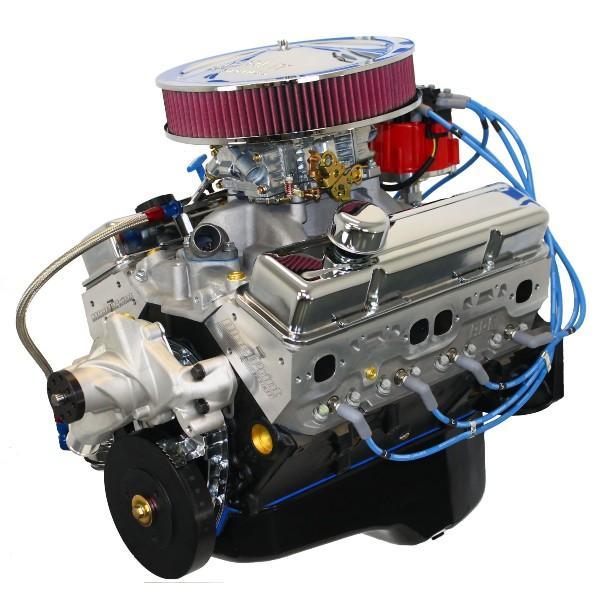

The Chevy 350 small block is an incredibly versatile engine known for its massive upgrade potential. Whether you’re looking to moderately increase horsepower for a more responsive ride or want to transform your Chevy 350 engine into the ultimate powerhouse, there are many options for achieving your goals.
This guide explores Chevy 350 horsepower upgrades in more detail. We’ll start by covering how to maximize your Chevy 350’s power without expending excessive effort or investment. Then, we’ll break down some performance upgrade suggestions based on whether you want an extra 100, 200, or 300 horsepower.
Ready to get started? Let’s begin.
When seeking to add 100, 200, or even 300 horsepower to a Chevrolet 350 small block engine, it's important to consider the maximum effort levels that are both effective and attainable.
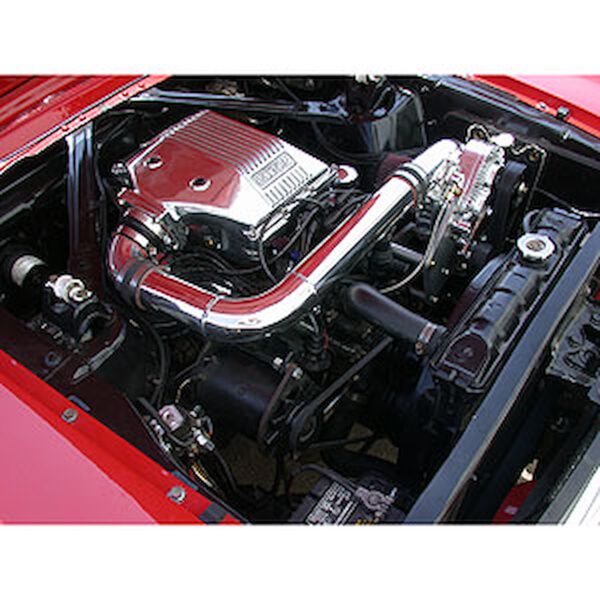
While the ultimate power upgrade could include a Chevy 350 supercharger for massive boosts in horsepower and torque, the cost and complexity often make this option less accessible for many enthusiasts.
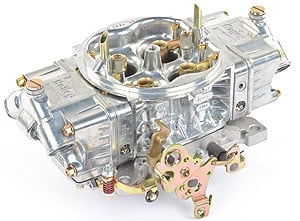
Instead, this guide focuses on maximizing engine potential through more attainable modifications. We'll detail how a combination of Chevy 350 horsepower upgrades, like high-performance cams, carburetors, cylinder heads, and intake manifolds, can greatly increase power.
These modifications represent the maximum effort levels that balance noticeable performance improvements with practicality and affordability, making them suitable for a wide range of enthusiasts looking to get the most out of their Chevy 350 small blocks.
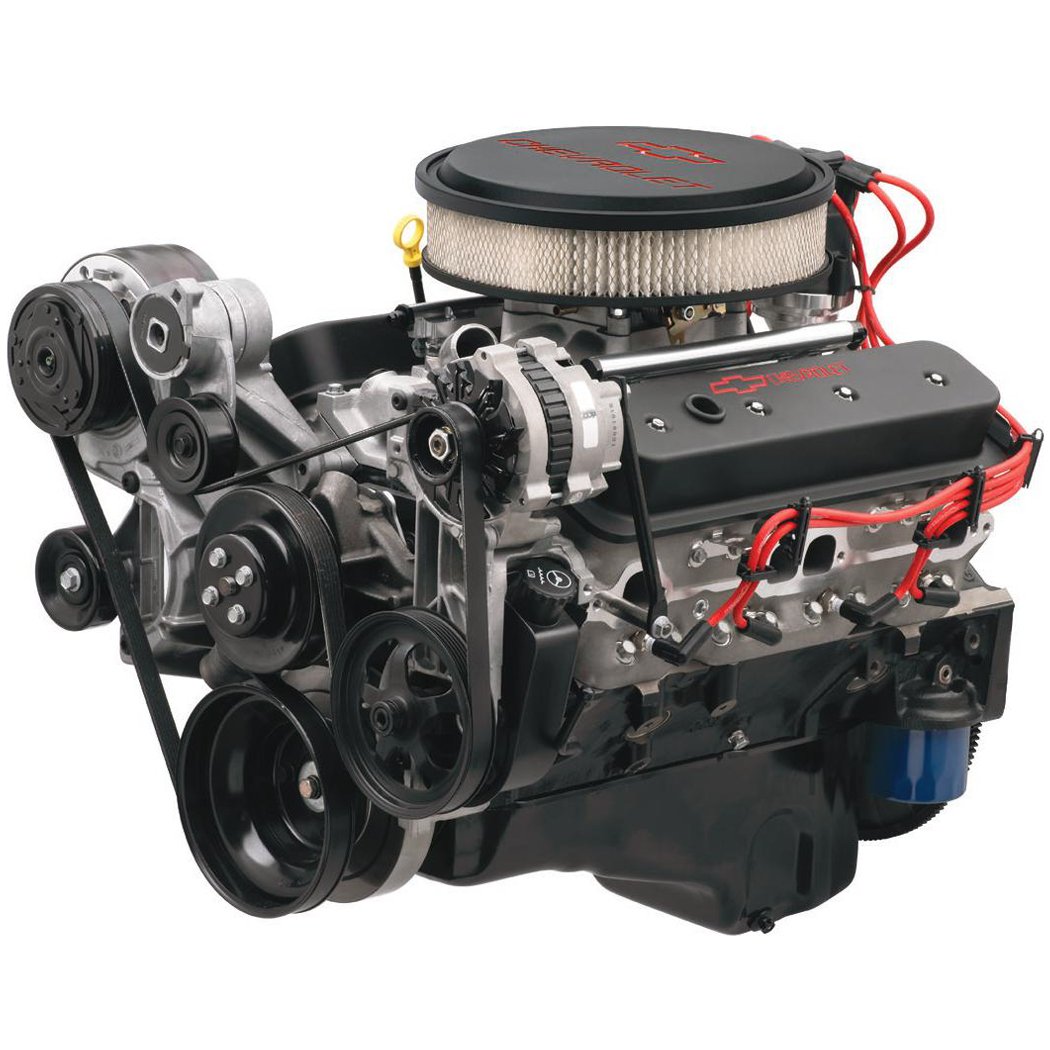
Boosting your Chevy 350 small block HP by 100 isn’t too difficult. Here’s how to get there from stock:
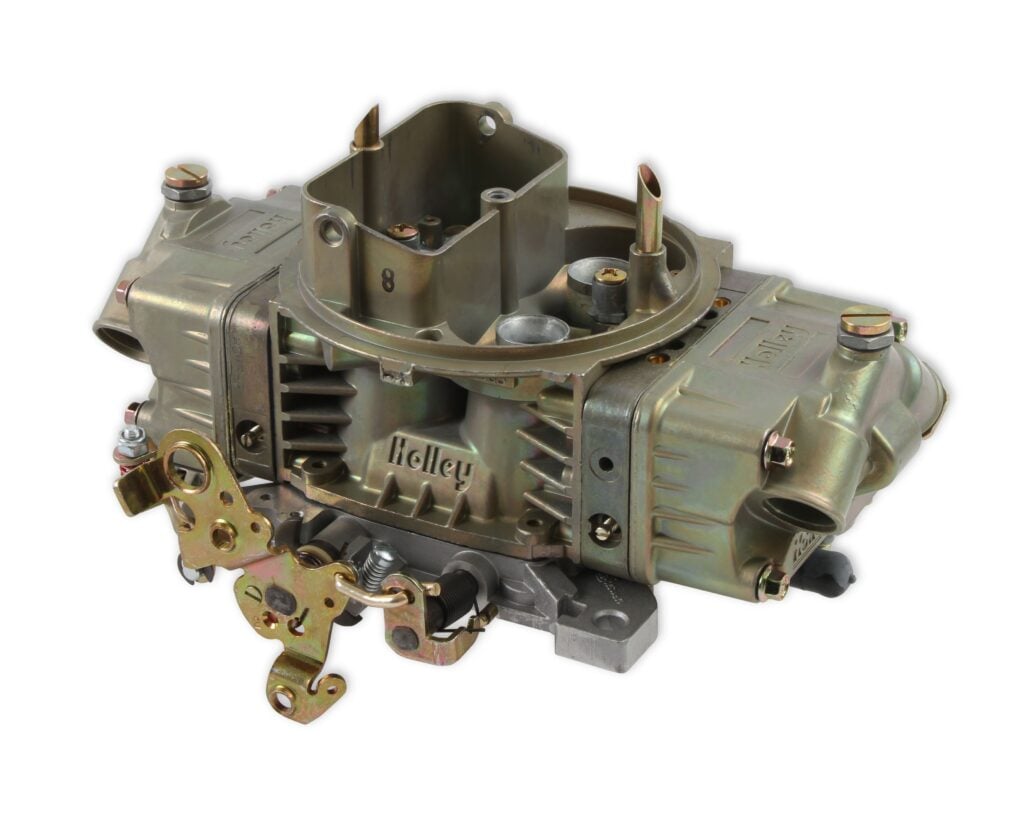
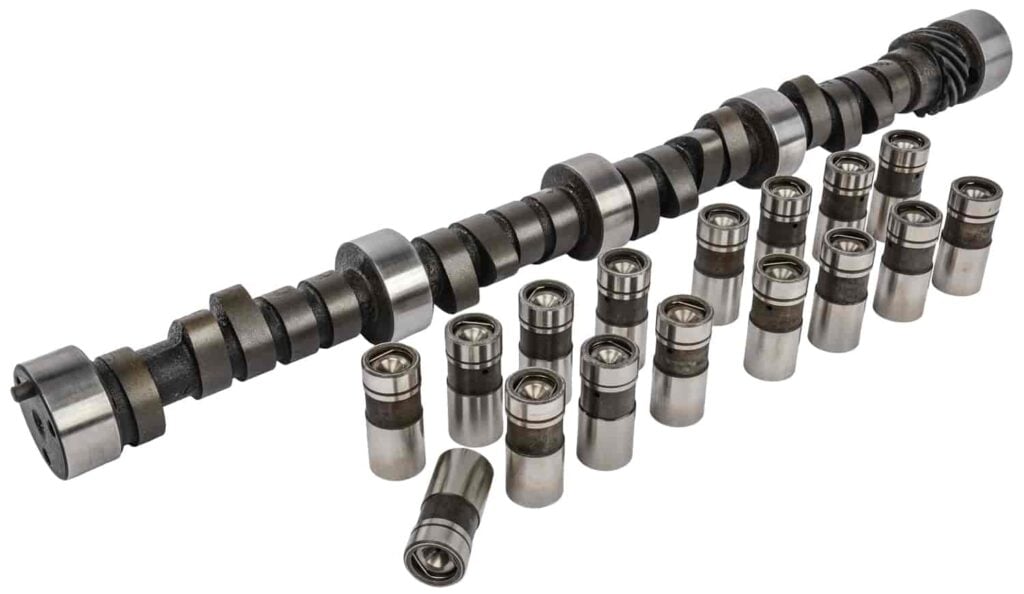
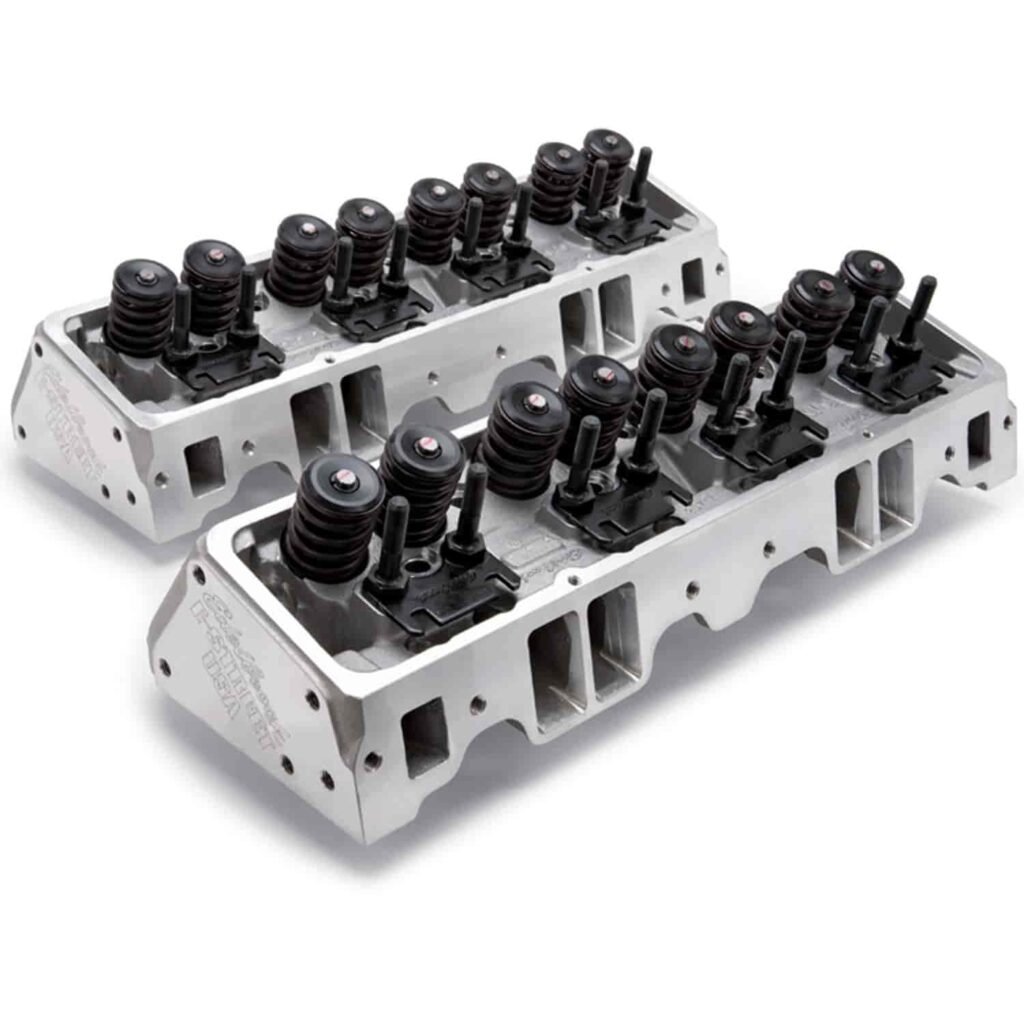
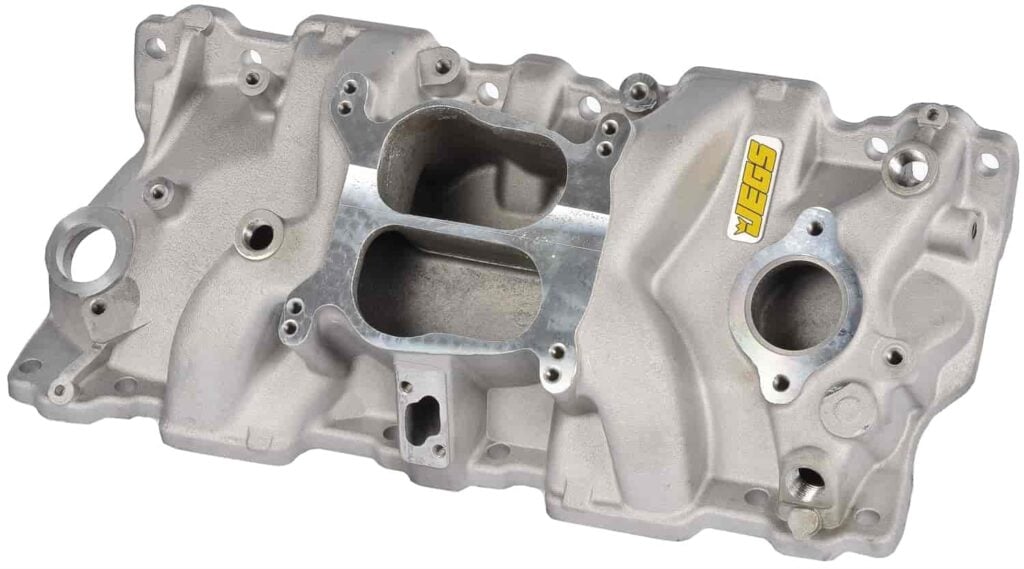
Remember that while 100 horsepower is possible via these mods, the actual results will vary on the specifics of the parts and how well the engine is tuned. Proper installation and tuning are key to realizing the full potential of these modifications.
Sign up now to join the JEGS email newsletter and be the first to learn about new products, special deals and e-mail only offers!
If 100 extra horsepower just didn’t do it for you, perhaps 200 will. Starting back at stock, here are some Chevy 350 horsepower upgrades to consider:
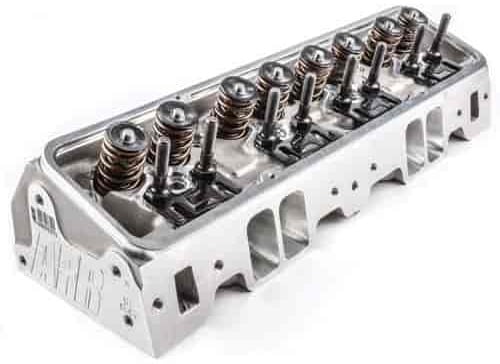
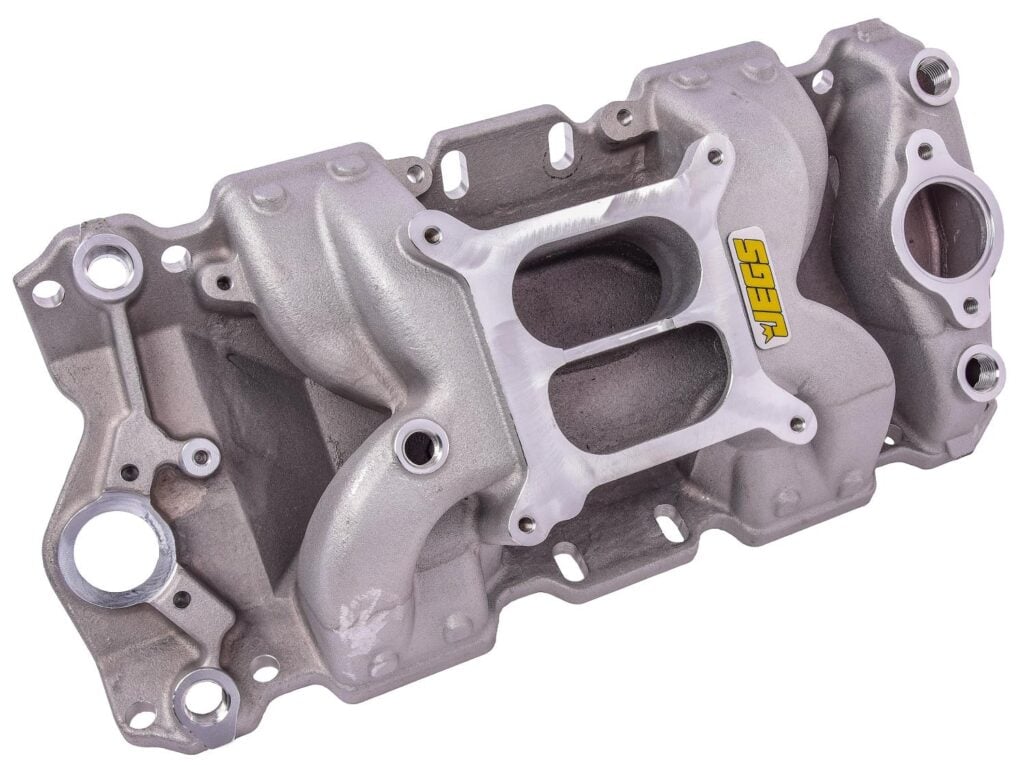
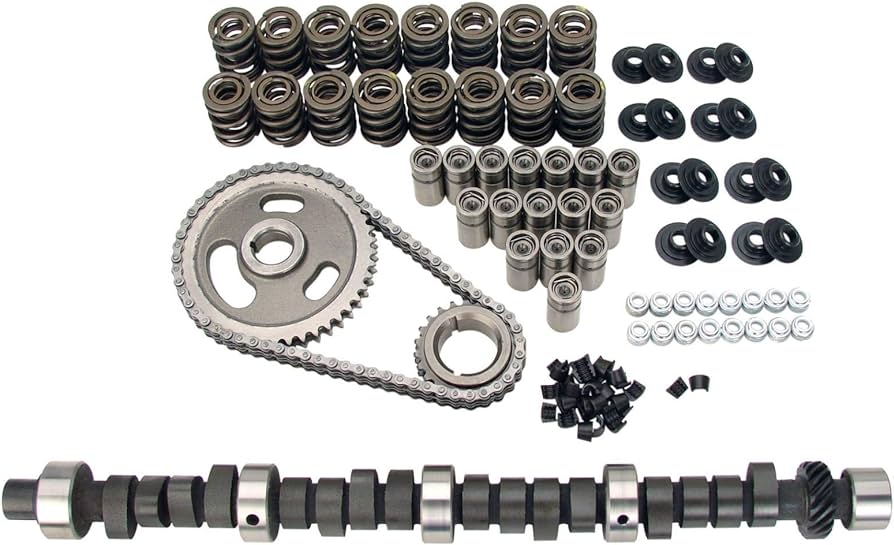
Keep in mind that while 200 horsepower from these mods is possible, the actual results will differ based on the chosen components and how the engine is tuned. Proper installation and tuning are necessary for maximizing these performance upgrades.
And now for those seeking the ultimate performance machine. Starting from stock, the below upgrades have the potential to boost your Chevy 350 engine by as much as 300 horsepower. Ultimately, your results depend on the components you choose, how they’re installed, and how your engine is tuned:
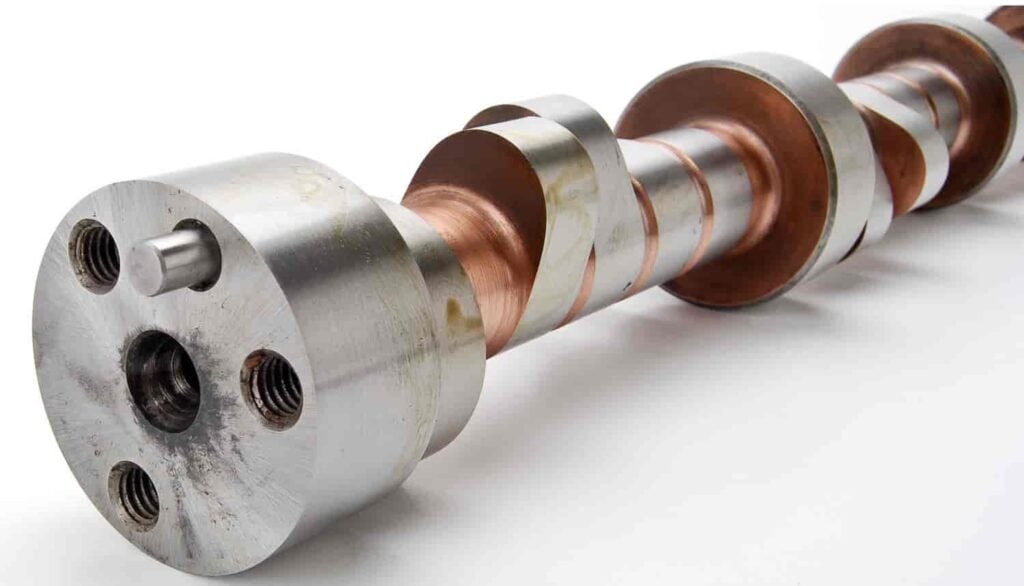
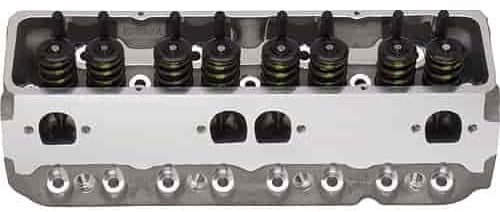

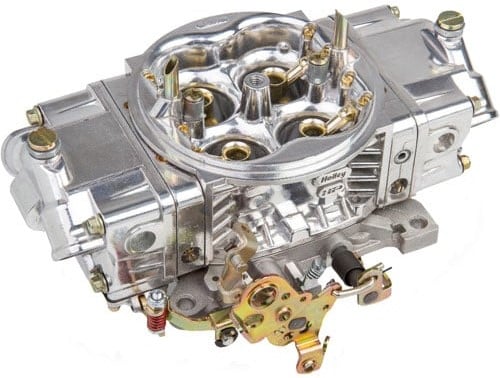


Note that 300 horsepower is a massive performance upgrade that may impact your vehicle’s everyday usability. If you aren’t working towards a street/strip build, consider adding just 100 horsepower or just 200.
If you’ve made it this far, then you should have a ton of great options for boosting your Chevy 350 engine by a good 100, 200, or even 300 horsepower. For all your automotive needs, consider JEGS, a leading supplier of performance auto parts.
Complete your order online and have your products sent straight to your door. Still have questions? Contact our team today.
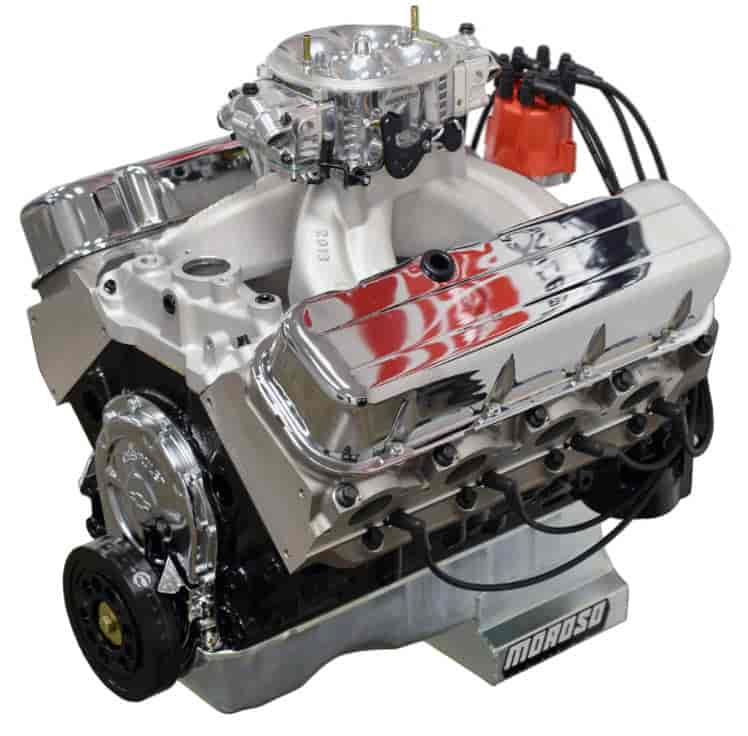

Hi, I have an 1981 Chevy C10 I inherited. My understanding is the original engine is a 305 but it has a 350 in it. How do I determine year/version of this engine so I order the correct parts?
Thank you

Steve, the best way to identify the year and version of the 350 is by locating the engine block casting number and the engine suffix code. On most small block Chevrolets, the casting number is found on the driver’s side rear of the block, where the transmission bolts to the engine. The engine suffix code is typically stamped on a pad at the front passenger side of the block, just below the cylinder head and near the alternator.
Once you have those numbers, you can look them up and determine the engine’s original application, production year range, and specifications much more accurately than by visual inspection alone.
You can also check the cylinder head casting numbers, since many 350s have had heads swapped over the years. That can affect which gaskets, valvetrain components, and other parts are correct.
One thing to keep in mind is that after 40-plus years, many small block Chevys are a mix of parts from different years, so ordering parts based solely on the truck’s model year can lead to mistakes. That’s why the casting and stamped numbers are so important.
If you’re able to locate those numbers and need help identifying them, give us a call at 1-800-345-4545 and a Tech Specialist can help decode them and make sure you’re ordering the correct parts.

Hey there. Not new to repairing engines but very new to building. I have a low mileage goodwrench 350 that I’d like to get a little more out of. It already has an Edelbrock Performer intake along with an Edelbrock AVS2 carb bolted on top with an open style air cleaner. I will be ordering headers shortly but am tempted to do a cam or cam/lifter setup while the engine is on the stand. This will be going into an 85K10 short box pickup that currently has the factory 305. Just curious on some direction of a cam. Looking for best bang for the buck driver/hunting rig. Thoughts?
Dean, you are in a great spot to do it now while the engine is on the stand. A Goodwrench 350 is typically a low compression, cast piston, hydraulic flat tappet style engine with mild heads, so for a driver and hunting rig you want to stay conservative and focus on torque. With the Edelbrock Performer intake and AVS2 already in place, plus headers on the way, the combo will respond well to a mild torque cam. For your 85 K10, especially if it is 4×4 and sees low speed use, I would stay in the range of roughly 204 to 214 degrees intake duration at .050 and around 214 to 224 on the exhaust, with lift in the .440 to .470 range and a 110 to 112 lobe separation. That keeps idle quality strong, maintains good vacuum for power brakes, and builds torque from about 1500 to 5000 rpm which is exactly where that truck will live. A cam much bigger than that will start to soften the bottom end, and with stock compression and likely stock converter, it will feel lazier down low. If the engine truly is a stock Goodwrench long block, I would also strongly consider matching springs to the cam and replacing the timing set while you are there. A basic double roller timing set and fresh lifters are cheap insurance. Make sure you confirm what heads are on it and what the spring pressures are rated for so you do not over cam it. For best bang for the buck in a hunting and driver setup, torque wins every time over big top end horsepower. If you want to dial in the exact cam choice based on your rear gear ratio, tire size, and whether you are keeping the stock torque converter, give us a call at 1-800-345-4545 and one of our JEGS Tech Specialists will be happy to help you pick the right cam and supporting parts.

Hi, my client has a 1984 with the 350 engine. He’s looking to create an impressive but drivable street car that could eventually go to the track. I’m new to getting into engine building and this guide was helpful, but how would you recommend going about this build? I would like to show case the smaller modifications he could start with and progressively get more advanced products.
Nicholas, for an 84 Chevy with a 350, the best approach is to lay out a clear path from mild upgrades to the more serious stuff so your client gets real improvements without jumping ahead of the supporting parts. The easiest place to start is with basic airflow and fuel upgrades. A good quality intake, a properly sized carb or EFI throttle body setup, and a true dual exhaust with headers will wake the engine up while keeping it totally street friendly. These are bolt ons that always make the car feel better without hurting reliability. Once those are handled, the next step is choosing a cam that matches how the car will be used. A mild hydraulic flat tappet or hydraulic roller cam with an idle to 5,500 style power band works well on stock bottom ends and gives a big bump in power. Pairing the cam with better valve springs and a decent ignition system is the right way to avoid problems down the road. If he gets comfortable and wants that next jump in power, the best investment is a set of aftermarket aluminum heads. They add airflow, raise compression a bit, drop weight, and are one of the biggest gains per dollar on a small block. At this stage you also want to think about the cooling system, gearing, and the converter if it is an automatic so everything stays balanced. After that, you’re looking at the more advanced stuff like an upgraded rotating assembly, stroker kits, or even a simple entry level supercharger. Those should come later since they work best when the supporting parts are already squared away. If you want to walk through a staged build plan based on your client’s exact engine, compression, and transmission, call us at 1-800-345-4545 and a tech specialist can go through it with you.

Hello, just found a 1970 L48 350/300 HP. When rebuilding looking to get close to 300 “Net’ vs the old “Gross” 300 HP. Any suggestions? Thanks
Hi Brian, that’s a great find — the 1970 L48 350 is a solid foundation. The original 300 HP rating was based on SAE “gross” numbers, which were measured with no accessories, open exhaust, and optimized conditions. Once converted to “net” (the modern standard that includes full accessories and exhaust), that same engine makes roughly 240–250 HP in stock form. So to truly reach a modern, realistic 300 HP at the crank, you’re looking for about a 20–25% bump over stock output.
The good news is you can get there pretty easily while keeping the engine’s period-correct look. Start with a mild hydraulic flat-tappet or retro-fit roller cam from Comp Cams, Lunati, or Howards in the 218–224 duration range. Pair that with a dual-plane intake from Edelbrock or Weiand, a 600–650 CFM carburetor, and a set of long-tube headers feeding into a free-flowing 2.5-inch dual exhaust. You’ll also want to ensure compression is in the 9.0:1 to 9.5:1 range with flat-top pistons and stock-style 64cc heads, or consider a modern aluminum heads like Dart SHP series if you want a little more efficiency.
With that combination, you’ll realistically see 320–340 HP “gross,” which works out to right around 300 HP net. It’ll idle cleanly, run on pump gas, and maintain great drivability.
For help picking a matched cam, intake, and head setup that fits your compression and fuel type, give us a call at 1-800-345-4545 and one of our tech specialists can fine-tune the combination with you.

I am new to the classic car scene. I have a 77 Corvette, and it runs and drives great with the occasional missfires here and there (hopefully a tune will fix it). I want to fully build this car, and engine work is a must. I want to keep the feeling of a classic motor and not LS swap it. I want the car to just have more power without requiring more safety features. I’m worried that if I use the +300hp upgrades, I would need to get a rollcage, fire suppression system, etc. I already plan on changing out the cooling system and wiring harness. I want this to be a good, relaxing, and reliable (for a classic) cruiser. Given that information, should I still do the +300ph upgrades?
Hi Ross, thanks for sharing the details about your Corvette build. Since your goal is to keep it a fun, reliable cruiser with the classic small block feel, you don’t need to go all-in with the +300 hp level upgrades. Those packages are usually aimed at guys chasing track performance or big horsepower numbers, and at that point you start needing extra safety gear like a roll cage or fire suppression.
For your situation, you’re already taking smart steps by planning to update the cooling system and wiring harness. If you want more power without sacrificing drivability or reliability, a moderate setup is the way to go. Things like an upgraded camshaft with a mild grind, aluminum heads, a good intake and carb or EFI system, and a set of headers will give you a solid bump in horsepower while keeping the car easy to drive and safe for cruising. That kind of build can easily push you into the 375–400 hp range, which is plenty of power for a street-driven classic without forcing you into race car territory.
The occasional misfire you mentioned could very well be cleared up with a tune-up, fresh ignition components, or carburetor adjustment. Once the car is running strong, building around that baseline will make the upgrades feel even better. Keeping it simple also helps with reliability, especially if you’re not looking to chase max performance numbers.
So in short, you don’t need the full +300 hp package to have fun and enjoy your Corvette. A balanced build focused on drivability, torque, and reliability will suit your goals perfectly. If you’d like to go over parts options and narrow down exactly what makes sense for your budget and power target, give us a call at 1-800-345-4545 and one of our tech specialists will walk through it with you.

Hi, I have a 94 k1500 blazer I am rebuilding the motor with a 30 over 350 block. I am trying to achieve between 700 and 750 hp. Do you have any tips on certain products that could help me realize this? I understand I need to over haul the cam, intake setup, and heads but am unsure what to be looking at and what other things I could do to add extra hp to reach my goal.
Hi Isaiah, thanks for reaching out.
Building a 350 that can reliably hit 700–750 horsepower is definitely possible, but it’s going to take a very different approach compared to a mild street build. A naturally aspirated 355 with stock-style internals and heads isn’t going to reach that power level without significant investment, so forced induction or nitrous will almost certainly be part of the plan.
To start, you’ll need to look at forged internals across the board, including pistons, rods, and a crank that can handle high cylinder pressures. For heads, you’ll want high-flow aluminum performance heads designed for big horsepower builds, matched with a single-plane intake manifold for maximum airflow. A custom or aggressive solid roller cam would also be necessary to take advantage of the added airflow and rpm range.
On the induction side, the most straightforward path is either a properly matched supercharger or a turbo setup, as both will allow you to reach 700+ hp with better street manners than trying to achieve it naturally aspirated. If you go that route, you’ll also want to upgrade the fuel system with high-capacity injectors or carburetor setup, a performance fuel pump, and lines to support the extra demand. An aftermarket ECU or ignition controller will be essential for tuning if you’re going EFI.
Cooling and drivetrain also need to be part of the plan. A high-capacity aluminum radiator, a performance transmission with a strong converter, and a rear end capable of holding the power are all key to making sure you don’t just build horsepower but actually put it to the ground reliably.
Since you’re aiming for 700–750 horsepower, the most critical piece is making sure every part of the build is working together, from the bottom end of the motor to the fuel and ignition systems. If you want to nail down the right combination of parts to get there reliably without overspending in the wrong areas, I’d strongly recommend talking directly with one of our tech specialists. Give us a call at 1-800-345-4545 and they’ll help you put together a package that matches your goals and budget.

Hi, we have a C10 1980, we wanted to know. Is there something on the market that can hold up to whp 1400? For a 350. That will not be stroked. (Booster, efi, stand alone ecu etc..)
Just wanted to prove that new technologies can help older Engines can get up to high power.
And yes its expensive, but still not 2jz 1400hp expensive. But now the most difficult part for us is searching for parts that can hold that power.
I just think we are the only ones.
That are willing to put this come to life.. i know i can ls swap it. But whats the fun in that.
Hi Mike,
We love your mission, and you’re definitely not alone in wanting to push the boundaries of what a classic small-block Chevy 350 can do with modern tech. Hitting 1,400 wheel horsepower from a non-stroked 350 is no small task, but with the right parts and engineering, it’s not impossible. That said, every single component in your build has to be capable of handling extreme stress.
Here’s a high-level list of what you’ll need:
1. Engine Block
You’ll want an aftermarket Dart or Brodix small-block Chevy block with a reinforced bottom end, four-bolt mains, and thick cylinder walls. A stock GM 350 block won’t survive at 1,400 whp.
2. Rotating Assembly
Use a forged crankshaft, H-beam rods (like Callies or Oliver), and custom forged pistons (e.g., JE, Wiseco) rated for 2,000+ hp.
Keep the compression low (8.5:1 or less) to handle high boost.
3. Cylinder Heads
Go with high-flow aluminum heads (e.g., AFR 220cc or Brodix Track 1), matched with heavy-duty valvetrain components and shaft-mount rockers.
Valve springs and retainers must handle high RPM and boost pressures.
4. Boost Setup
For 1,400 whp, you’re looking at twin turbos or a very large single. Precision, Garrett, or BorgWarner turbos in the 76–88mm range can support that.
5. EFI & ECU
Use a standalone ECU like Holley Dominator, Haltech Elite, or FuelTech FT600 for full control over ignition, boost, fuel, and safety strategies.
Pair with 8 high-flow injectors (2000cc+ each) and staged injection if needed.
6. Fuel System
Massive fuel demand requires dual or triple fuel pumps (e.g., Aeromotive A1000 or brushless setups), large lines, return-style regulation, and E85 (or race fuel) compatibility.
7. Transmission
TH400, Powerglide, or even a Turbo 400 with a transbrake, SFI bellhousing, and high-stall torque converter. Built to handle 1,500+ hp.
8. Driveline
9″ rear end, 35-spline axles, driveshaft loops, and upgraded suspension components are a must.
9. Safety
With this kind of power, roll cage, SFI harnesses, kill switch, and fire suppression system are non-negotiable.
Final Thought:
You’re right—this won’t be cheap or easy, and most people would just drop in an LS or big-block. But if you’re building it to prove a point, we’re here for it! With a proper setup, the small-block Chevy can absolutely be pushed to extreme power levels. It’ll be unique, brutal, and unforgettable.
If you want help picking parts for the short block, turbo system, or EFI setup, call us at 1-800-345-4545 and speak with a JEGS tech specialist. We’ll help bring your high-horsepower small-block dream to life!

I’m new to engine builds. I have a 72 monte carlo all stock. I’m looking to upgrade the engine but not brake the back. I already added new mufflers but want to do some engine stuff. Where should I start. It’s a stock 350 small block
Hi Daniel,
Great to hear you’re getting into engine upgrades! The Chevy 350 is an excellent platform to build from, especially in a classic like your 1972 Monte Carlo. Since you’ve already added new mufflers, you’ve taken a good first step in improving exhaust flow.
Here are some budget-friendly upgrades that can make a real difference without breaking the bank:
Upgrade the Intake and Carburetor:
A dual-plane aluminum intake manifold paired with a 600–650 CFM 4-barrel carburetor (like an Edelbrock or Holley) will noticeably improve throttle response and horsepower.
Ignition System Improvements:
Consider replacing the stock points ignition with an HEI distributor. It’s a simple swap that improves reliability and spark energy, helping your engine start better and run smoother.
Air Intake and Filters:
A high-flow air cleaner can increase airflow into the carburetor and add a little more power, plus it looks great under the hood.
Camshaft Upgrade (Mild Performance Cam):
If you’re ready for a bit more power and don’t mind opening up the engine, a mild hydraulic flat tappet camshaft will improve torque and sound without requiring major engine mods.
Gears and Converter (Optional Down the Road):
If you want the car to feel more responsive off the line, a rear gear ratio upgrade or a performance torque converter can also make a big difference—though these are better for later once the engine is dialed in.
Start with bolt-ons like intake, carb, and ignition. These are affordable and give a good boost in performance for a beginner-friendly build. If you need help choosing specific parts or matching components, contact us at 1-800-345-4545 and speak to a JEGS tech support specialist—we’re happy to walk you through it!

Great information





Leave a Reply