Sign up now to join the JEGS email newsletter and be the first to learn about new products, special deals and e-mail only offers!

 245 People Found This Article Helpful
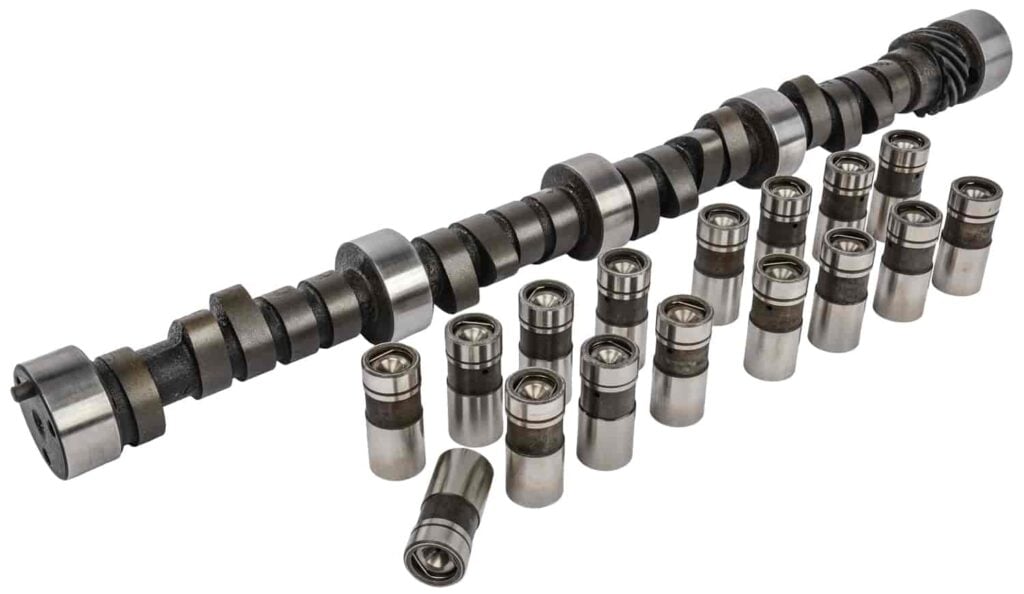

Selecting the right camshaft is one of the most important steps when building or upgrading an engine. The camshaft plays a major role in how an engine breathes. It controls how far the valves open, how long they stay open, and how the intake and exhaust events work together. Many other parts such as cylinder heads, valve springs, and torque converters depend on the camshaft you choose. A well matched combination leads to strong, efficient power. A mismatched setup can limit performance or cause mechanical problems.
This guide explains the key camshaft terms and the factors that influence your final choice.
Camshaft lift describes how far the cam lobe moves the lifter. This is called lobe lift or gross lift. Because rocker arms multiply that movement, the valve lift will always be higher than the lobe lift unless the rocker ratio is exactly 1 to 1.
For example, a cam with .400 inch lobe lift and a 1.5 to 1 rocker ratio will produce .600 inch valve lift. A different rocker ratio will change valve lift without changing the cam lobe itself.
More valve lift allows the engine to move more air and exhaust gases. This can improve power, but it also increases stress on the valve springs and can reduce piston to valve clearance. Always confirm spring compatibility and verify clearances before purchasing a higher lift camshaft.
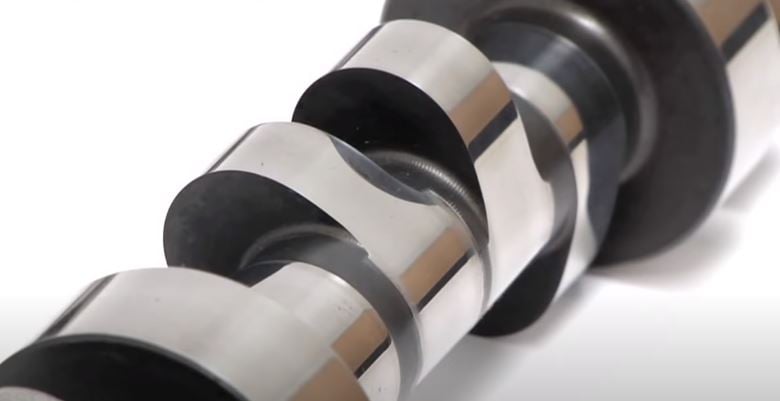
Duration refers to how long a valve stays open. It is measured in degrees of crankshaft rotation.
The industry standard is to measure duration at .050 inch of tappet lift. This eliminates variations caused by ramp design and provides a consistent way to compare cams from different manufacturers.
This is the number of crankshaft degrees the intake valve remains open after the lifter has moved .050 inch.
This is the number of crankshaft degrees the exhaust valve remains open after the lifter has moved .050 inch.
More duration keeps valves open longer and increases high rpm airflow. The tradeoff is reduced low rpm torque and a rougher idle.
Lobe separation angle is the number of degrees between the maximum lift points of the intake and exhaust lobes on the same cylinder. Most performance cams fall between 104 and 115 degrees.
A narrow separation angle increases overlap. This improves cylinder filling at higher rpm and can raise midrange torque. It also reduces idle quality and vacuum.
A wide separation angle reduces overlap. This produces a smoother idle, more vacuum, and generally broader but less aggressive power delivery.
Understanding lobe separation helps you match the cam to your intended use, compression ratio, and induction setup.

Camshafts involve many variables, which makes selection challenging for beginners. The right choice depends on compression ratio, gearing, vehicle weight, intended rpm range, and other supporting parts.
Here are two rules that help simplify the process:
Rule 1: If a professional engine builder is assembling the engine, rely on their input. Experience matters.
Rule 2: The most common mistake is choosing a cam that is too large. When undecided between two options, the smaller cam often delivers better results.
Every camshaft is designed to work within a specific rpm band. Match this to the way your vehicle is driven.
Examples:
• A street car that spends most of its time below 4500 rpm works best with a cam designed for idle to 5500 or 1500 to 6500.
• A race car that stays in the upper rpm range may benefit from cams designed for 2500 to 7000 or 3500 to 8000.

Most manufacturers include a short description that explains the cam's intended use and typical behavior. These summaries provide practical guidance and help narrow your choices without having to interpret every specification.
JEGS carries leading camshaft brands including Comp Cams, Crane Cams, Edelbrock, Ford Performance, Chevrolet Performance, Mopar Performance, Lunati, Crower, Isky Racing Cams, and Howards Cams. We also offer our own JEGS line of performance cams. If you would like personalized guidance, our tech team is ready to help.
Sign up now to join the JEGS email newsletter and be the first to learn about new products, special deals and e-mail only offers!
What Does a Camshaft Do?
A camshaft controls the opening and closing of the intake and exhaust valves. It is driven by the crankshaft through a timing set. As the cam rotates, its lobes push the lifters upward. The lifters move the pushrods, which pivot the rocker arms and open the valves. The shape and height of the lobes determine lift and duration.
Longer duration improves high rpm airflow at the cost of low rpm torque. Shorter duration does the opposite. Lobe separation angle influences idle quality, vacuum, and midrange characteristics.
Camshafts are designed for either hydraulic or mechanical (solid) lifters.
• Hydraulic lifters: Ideal for daily driving and long mileage use. They automatically maintain lash and require less maintenance.
• Solid lifters: Support higher rpm and can produce more power, but require periodic lash adjustments.
Lifters also come in flat tappet and roller versions.
• Flat tappet lifters: Use a flat contact surface. They are affordable but require proper break in and compatible oils.
• Roller lifters: Use a small wheel that rides on the cam lobe. They offer more power potential and reduced friction but cost more.
Always match lifter type to the camshaft. A hydraulic roller cam must use hydraulic roller lifters, and the same rule applies across all types.


Most camshafts use either cast iron or billet steel.
• Cast iron cams are cost effective and suitable for many street builds.
• Billet steel cams offer superior strength and wear resistance, which makes them ideal for high spring pressures and demanding race environments.
JEGS offers a wide range of options for every budget and application.
How to Install Camshafts
Installing a camshaft is straightforward with the correct tools and preparation.
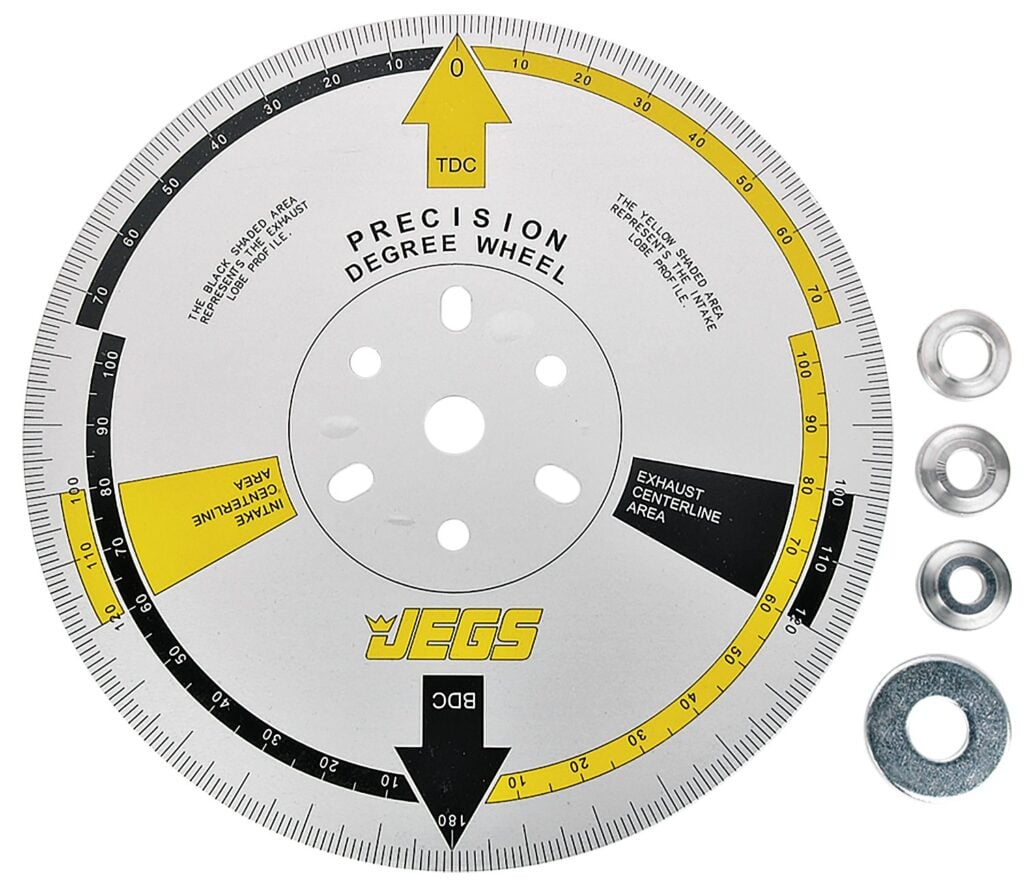
1. Degree the camshaft. This confirms that the cam events match the design and ensures proper piston to valve clearance.
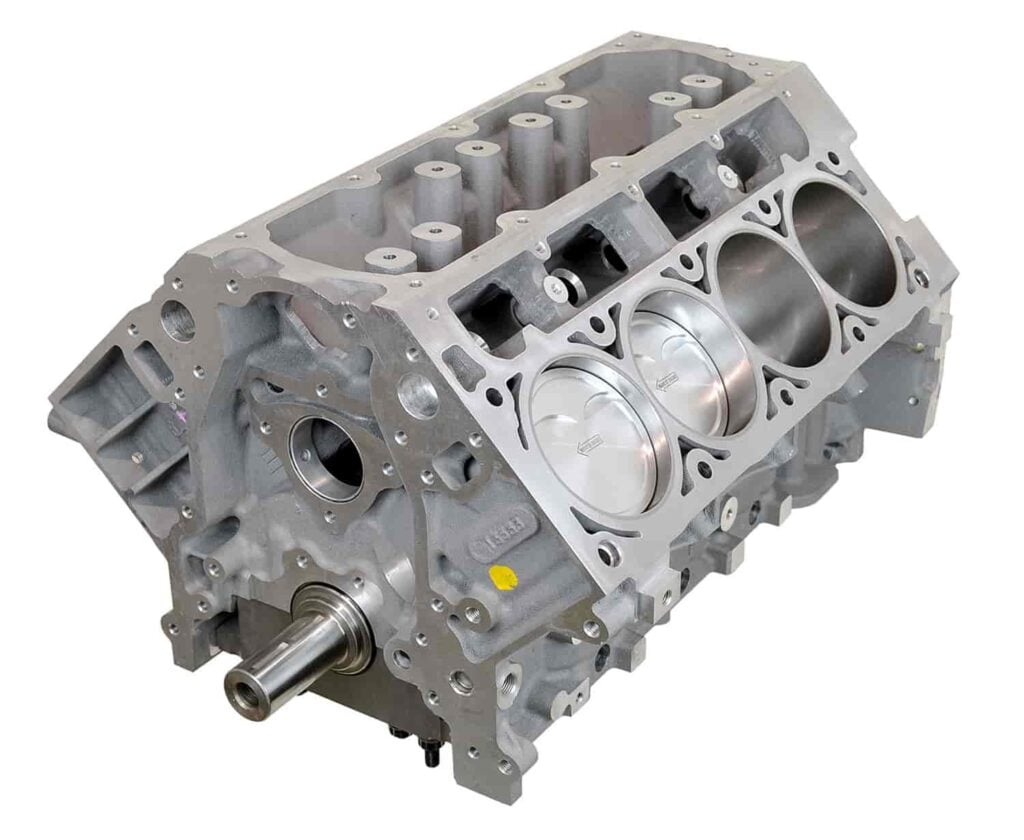
2. Confirm the short block is assembled and the crankshaft is installed.
3. Remove the old camshaft, lifters, and pushrods if applicable.

4. Inspect or replace cam bearings as needed.

5. Lubricate the new camshaft with assembly lube.

6. Use a cam installation tool to guide the cam through the bearings without damage.

7. Install the timing set and verify correct alignment between the crank and cam.

8. Install lifters and pushrods.
9. Set valve lash or preload depending on the lifter type.

| Camshaft Type | Distributor Gear |
|---|---|
| Cast Iron Hydraulic or Solid Flat Tappet Cam | Cast Iron Gear Composite Gear |
| Austempered Ductile Iron Hydraulic or Solid Roller or Nitrided Cam | Melonized / Hardened Steel Gear Composite Gear |
| Billet Steel Hydraulic or Solid Roller Cam | Bronze Gear Composite Gear |
Signs You May Have the Wrong Camshaft
Incorrect cam selection can cause:
• Poor idle quality that does not match the intended use
• Weak low rpm torque or sluggish throttle response
• Excessive valvetrain noise
• Low vacuum that affects brakes and accessories
• Detonation or poor tuning range
• Overheating or unstable operating temperatures
Recognizing these symptoms helps identify whether the cam is mismatched or if another component needs attention.
Low compression engines work best with shorter duration cams. High compression engines tolerate longer duration and later intake closing events. Matching these two elements prevents detonation and ensures efficient cylinder pressure.

Flat tappet cams require a proper break in procedure.
• Use high zinc break in oil.
• Run the engine at 2000 to 2500 rpm for 20 to 30 minutes.
• Avoid long cranking or idle time during the initial startup.
This protects the cam lobes and lifters during the critical first moments of operation.
A JEGS expert can help evaluate your combination, recommend the correct camshaft, and answer any technical questions you may have. Use our Ask A Tech service or call our support line for personalized assistance.


Hi, Patrick from Germany here, i’m currently building a 72 402 Chevy BB. I’m planing on bringing the compression up to 9.25 from the stock 8.5 by using higher dome pistons(21cc compared to the stock 12cc), other than that i will be using the stock heads(820),rockers and intake.
Do you have any cam recommendations to get a smooth running street engine with good low end torque? I’m considering a Comp Cams K11-231-3 Kit but im not sure if that one is already to big for the intended use(Daily, no towing, no strip)…

Patrick, your plan sounds well thought out for a street-driven 402. Raising the compression to about 9.25:1 while keeping the stock oval port 820 heads, intake, and rockers should make for a very nice torque-oriented combination. Since you’re after smooth street manners and strong low end performance, I would stay with a mild hydraulic flat tappet cam.
The Comp Cams K11-231-3 is probably a little larger than I would choose for your goals. It will make good power, but it tends to move the powerband higher in the RPM range than what most people want in a daily driven big block with otherwise stock induction and cylinder heads.
For your combination, I would look for a cam that emphasizes low and mid-range torque with good vacuum and a smooth idle. A cam in that range will complement the increased compression and stock heads much better, giving you excellent throttle response and street drivability without sacrificing reliability.
The stock 820 heads are capable of supporting a mild performance build, so unless you’re planning future upgrades like aftermarket heads, a larger cam is unlikely to provide much additional benefit.
If you’d like help selecting the best camshaft for your exact combination, including your transmission type, rear axle ratio, and tire size, give us a call at 1-800-345-4545 and a Tech Specialist can help recommend a cam that matches your goals.

I am currently building a 235 chevy engine to go into a 1949 3600 truck. Currently the truck has the factory 216 with the original 4.56 gears and a .73 overdrive t5. Truck runs good but I am scared of the dipper engine. The 235 is bored .080 and I am looking at camshafts. I can use hydraulic or mechanical as it is a hydraulic block. The cam i would prefer isn’t available elgin e-293s. Melling ccs-5 is close but is it close enough? Not really wanting a rough idle but want more power
Thomas, with your setup, especially the 4.56 gears and .73 overdrive, you’ve actually got a pretty good combination for waking up a 235 without making it miserable to drive. Since you want more power but still want decent idle quality, I would stay conservative on the camshaft selection. Those old inline sixes respond nicely to mild cam upgrades, but it’s easy to go too far and hurt drivability.
The Melling CCS-5 is generally considered a mild performance upgrade over stock and is probably about where I’d lean for what you described. It should give you a noticeable improvement in mid-range power without creating a rough idle or killing vacuum. With the engine bored .080 over, you’ll pick up a little extra displacement already, so combining that with a mild cam can make the truck feel much stronger than stock.
The fact that you have a hydraulic block gives you some flexibility, and for a street-driven truck, I’d personally stay hydraulic unless you specifically want the maintenance and character of a mechanical setup. Hydraulic cams are quieter, simpler, and easier to live with.
One thing to keep in mind is the upper RPM concern. A 235 is still limited by its overall design, so even with a cam, they’re generally happier making strong mid-range torque rather than spinning high RPM. A mild cam, good valve springs, proper ignition tuning, and a free-flowing exhaust usually work better together than trying to build it like a high-revving engine.
Your gearing will help a lot too. That 4.56 gear with overdrive should let the engine get into its powerband easily while still cruising reasonably well on the highway.
Overall, the CCS-5 sounds pretty close to your goals from what you described, especially if smooth idle and street manners matter more than chasing maximum RPM.
If you want to go over other mild cam options or supporting parts for the 235, give us a call at 1-800-345-4545 and a Tech Specialist can help you put together a balanced combination.

I’m looking for a cam for my 468bbc in my 1969 caprice. It has Brodix race rite 270cc heads, 119cc chambers, performer rpm intake, currently has a hydraulic roller comp cam “11-422-8”. About 9.5 to 1 compression. Stock crank, forged rods, domed Hypereutectic pistons. 850 Holley, msd ready to run billet distributor and msd 6al box. 4.10 gears in a 12 bolt, 4l80 trans with 2500 stall converter with lockup. Current cam is junk. It had lots of low end torque, wondering if I can squeeze out more power with something bigger. I’ve been told the heads could flow a lot more air. Just wanted some advice on choosing my next cam. Thanks
Callum, you’ve got a solid foundation there, and you’re right that the cam is the limiting factor right now. That 11-422-8 style cam is pretty mild for a 468 with those heads and gearing, so stepping up is where you’ll pick up a noticeable gain.
With your combo, especially the 4.10 gears, 2500 stall, and decent flowing Brodix Race Rite heads, you can support quite a bit more cam than you’re running now. Something in the range of a hydraulic roller with around mid-230s to low-240s duration at .050 and lift in the .550 to .600 range on a 110–112 LSA would be a strong street/strip upgrade. That will move your powerband up, help the engine breathe better, and take advantage of those heads without getting too wild for your current converter.
If you really want to push it further, a slightly larger cam in the 240–250 range at .050 would make more top-end power, but at that point your 2500 stall is going to start holding it back. You’d be looking at stepping up to something closer to a 3000–3500 stall to get the most out of it.
Your compression around 9.5:1 is workable, but it does favor staying in that mid-range cam rather than going too aggressive. That’ll keep it responsive on the street and still give you a strong pull up top. Also make sure your valve springs and pushrods are matched to whatever cam you choose, especially with those heads capable of more lift.
Bottom line, there’s definitely more power in your combo, and a properly matched hydraulic roller from brands like Comp Cams or Lunati will wake it up without making the car a chore to drive.
If you want to dial in a cam that matches your exact goals and how you use the car, give us a call at 1-800-345-4545 and a Tech Specialist can help you get it right the first time.

70 cadillac deville convertible 472,want a nice Lil lope at idle n yet want it to run good plenty of power
Bob, the 472 Cadillac is a torque monster from the factory, so you do not need a big cam to get a nice idle sound and still keep it running strong. For a heavy DeVille convertible, the sweet spot is a mild hydraulic flat tappet cam with moderate duration and a slightly tighter lobe separation. Something in the general range of about 210 to 220 degrees duration at .050 on the intake side with lift in the mid .450 to .480 range will give you a noticeable lope at idle without killing low speed torque or drivability. Keeping the lobe separation around 110 to 112 degrees helps create that soft lope while still maintaining good vacuum for power brakes and smooth cruising. Going any bigger than that usually hurts throttle response in a heavy Cadillac and makes it feel lazy off the line, even though the engine itself is large. Before locking anything in, it is important to confirm if the engine is completely stock internally, what compression ratio it still has, and whether the car is running the original converter and rear gearing, since those all play a role in how much cam it will tolerate. If you would like help narrowing it down to the best match for your exact setup, give us a call at 1-800-345-4545 and one of our tech specialists will be happy to help you dial it in.

I’m looking for a cam that will give my sons mud truck a little more go power. It’s an old chevy square body we put together from a handful of different years. Mostly from old parts we collected at no or little cost. The running gear is a matching set from a 76 3/4 ton, dana 44 front, 14 bolt rear, 5.13 ratio. Transmission is a th350 and transfer is NP203.
The engine is a 98 vortec 350 we picked up cheap. All the internals are stock, and the heads are stock. we converted it to this intake, JEGS Intake Manifold for 1996-2002 Small Block Chevy 350 Vortec with L31 Cast Iron Heads, Dual Plane [Satin], Part Number: 555-513002. Carburetor is an Edelbrock 1405, 600 cfm. We are running 1 and 5/8 inch derby headers for exhaust.
When we run low lock on the transfer, we have plenty of power in all transmission gears, but not the desired wheel speed. In high lock, we come off the line great, and it appears to be a powerhouse in low gear. Then it shifts to second, I would say it handles second OKish, but this is where we need more power. Second doesn’t gain ground, it holds just what we accomplished in low gear. If we let it shift to high gear, we lose it.
I might look at a regear, but my first thought is more power, we have room in gears to make more speed, but the engine is not doing its part.
Thanks
Hi Wesley, thanks for laying out all the details of your build. With the gearing you’re running (5.13s) and the TH350/NP203 setup, you’ve already got a strong foundation for mud, but I see what you mean about losing momentum once you shift out of low gear. That’s pretty common with a stock Vortec 350, since they were never built to make a ton of midrange torque in that kind of load.
A cam swap can definitely wake that engine up, but since everything inside is stock, you’ll want to stick with a cam that works with your compression ratio and factory heads. A mild performance hydraulic flat tappet or a mild hydraulic roller (if you’re open to upgrading lifters) designed for low to midrange torque would be ideal. You don’t need something radical, but a cam with a tighter lobe separation and more duration than stock will give you stronger pull in that 2nd gear range where you’re currently flattening out. Pairing that with your 600 cfm Edelbrock carb and dual-plane intake should keep drivability solid.
That being said, you’re right to also think about gearing as part of the solution. With 5.13s, you’ve already gone aggressive, but tire size and converter stall also play into how the truck responds. If you’re still running a stock or low stall converter, stepping up to something a little higher could help get you into the powerband faster and improve that second gear pull.
In short, a cam that emphasizes torque in the 1500–4500 rpm range is the safest next move for your setup, along with making sure your ignition timing curve is dialed in. If you want to squeeze more power without stressing the stock bottom end, that’s where I’d start.
If you’d like, you can give us a call at 1-800-345-4545 and one of our tech specialists can walk you through specific cam options that fit your Vortec heads and match the mud truck use you’re building for.

I’m looking for a hydraulic flat tapper cam that will work with my 1986 f150 302 I’m going to be running a stock rotating assembly with speedmaster gt40 style heads 62cc combustion volume 175cc intake runner volume my truck also has a AOD 4×4 transmission I’m going to put in a 2800-3200 stall converter the gearing for the differential is 5:38
Hi Abraham,
With your setup, that 302 in the F-150 is going to like a cam that balances low- and midrange torque with the ability to breathe a bit on the top end. Since you’ve got the Speedmaster GT40-style heads with the smaller 62cc chambers and 175cc runners, that helps cylinder pressure and velocity, which means you don’t need an extreme cam to make it come alive. The fact that you’re pairing it with a 2800–3200 stall converter and 5.38 gears gives you a lot of flexibility because the drivetrain is already set up to handle a more aggressive cam than a stock combo could tolerate.
For a hydraulic flat tappet, I’d recommend sticking in the moderate duration range, something in the 218–224 degrees at .050 lift window, with around .470–.500 lift. That will let you take advantage of your stall and gearing, give you a nice punch off the line, and still keep drivability decent for cruising. If you went too large, you’d sacrifice vacuum and low-speed manners, which you don’t need to do since your rear gear ratio already helps the truck jump.
The key detail I’d need to be more precise is whether you’re mainly going to use this truck for street and cruising or if it’s going to see off-road or drag strip duty. That influences whether you’d want the cam optimized more for torque down low or for pulling hard into the higher RPM range.
Based on what you’ve described though, a mid-range hydraulic flat tappet cam from a reputable brand like Comp, Lunati, or Howards would be a strong fit with your combination. Pair it with matched lifters and good break-in oil, and it should work well with your stall and gearing.
If you want to narrow it down to the best option for your exact usage, I’d suggest giving our tech team a call at 1-800-345-4545. They’ll walk you through specific grind recommendations that will complement your combo.

I’m looking for a cam for a sbc 350 bored .30 over with TRW L2256 pistons, Bowtie phase 2 heads, 1.6 aluminum roller rockers, with an Elderbrock performer intake. Suburban with 3.73 gears and 700R4. Looking for good low to midrange HP and torque. Not really for towing overall so a good compromise between HP and torque.
Hi Carson,
With your combination of TRW L2256 pistons, Bowtie Phase 2 heads, 1.6 roller rockers, and an Edelbrock Performer intake, you’ve already got a solid setup for a street-friendly small block. Since you’re running a Suburban with 3.73 gears and a 700R4, you’ll want a cam that builds strong torque right off idle but still pulls well into the midrange so the heavier vehicle feels responsive without sacrificing driveability.
For your build, I’d suggest looking into a hydraulic flat tappet or hydraulic roller cam in the mild performance range from reputable brands like Comp Cams or Lunati. Aim for something with an advertised duration around 260–270 and lift in the .480–.500 range (accounting for your 1.6 rockers). This will give you a nice broad powerband starting around 1,500 rpm and carrying well into the mid-5,000 rpm range, which matches your stated goal of a balance between horsepower and torque.
You don’t really need a towing grind, but a good street performance cam with a smooth idle to mild lope would give you that low-end grunt for a heavy Suburban while keeping the midrange fun. The 700R4’s overdrive and your gear ratio will help keep the revs where the cam works best on the highway.
If you’d like to go over exact grind specs and get a more precise match, give us a call at 1-800-345-4545 and speak to a tech specialist.

Hi
I’m looking for a hydraulic flat tappet cam for a 351C with 4v heads, tri-y headers, 4 barrel holley, C4 auto and a set of decent lifters to go with it.
The car is mainly used for cruising with occasional sprirted driving.. What do you recommend?
Hi Dave,
Thanks for the question. A 351C with 4V heads, tri-y headers, a 4-barrel Holley, and a C4 automatic sounds like a fun street setup. Since you’re mostly cruising with some spirited driving, a hydraulic flat tappet cam with a mild to moderate profile will work well and help keep vacuum and street manners in check.
With those large-port 4V heads, you want to pick a cam that keeps up airflow at low to mid RPM while still making the most of your cylinder heads up top. Something in the 216 to 224 degrees intake duration at .050 range with a .500 to .530 lift should give you a nice powerband from around 1800 to 5500 RPM, great for cruising with a bit of kick when you want it. Make sure your rear gears and converter match the cam’s needs, but you didn’t mention those, so feel free to call us if you need help dialing that in too.
As for lifters, stick with a matched hydraulic flat tappet lifter set from the same camshaft brand. Look at quality options from COMP Cams, Lunati, or Howards Cams. They all offer cam and lifter kits designed to work well together, which helps reduce the chance of break-in issues.
If you want help locking down the right cam and lifters for your exact setup, give us a call at 1-800-345-4545 and speak with a tech specialist. We’ll make sure you get the right combo to make that Cleveland sound and run as good as it should. Thanks again!

What would be a good setup on my 302 sbf? I was told it has the gt40p heads installed and I am looking at doing a 347 stroker kit in it. Mainly looking for a good daily driver with some good power.
Hi Ryan,
Great setup choice: combining GT40P heads with a 347 stroker is a proven way to build a strong, streetable small-block Ford! For a daily driver with good power and reliable manners, the goal is to maximize torque across the low-to-mid RPM range without sacrificing drivability or fuel efficiency. Here’s a solid setup recommendation:
Camshaft Recommendation (Hydraulic Roller Preferred)
Cam Specs (Approximate):
Duration @ .050: 218–224° intake / 224–230° exhaust
Lift: .540″–.565″ with 1.6 rockers
LSA: 112–114° for smooth idle and vacuum
Something like the Comp Cams XE274HR or Lunati Voodoo 20350711 would be ideal. These offer great throttle response, plenty of torque off the line, and won’t require crazy stall speeds.
Other Key Supporting Parts
GT40P Heads: These can support your power goals with mild port work and upgraded springs to match the cam. Be sure to check piston-to-valve clearance if going with higher lift.
Intake Manifold: Use a dual-plane like the Edelbrock RPM Air-Gap for excellent street torque.
Carb or EFI: A 600–750 cfm carb (Holley or Edelbrock) or a Sniper EFI system if you’re going modern.
Stall Converter (Auto Trans): 2,200–2,500 RPM recommended for best launch characteristics.
Gears: 3.55–3.73 for a good balance between cruising and performance.
Final Tips
The 347 stroker makes a lot more low-end torque than a stock 302, so avoid going too big on the cam unless you’re racing.
Ensure your valve springs match the cam’s specs.
If you’re staying EFI with a stock computer, choose a cam that’s ECM-friendly or go with a programmable ECU like Holley Terminator X for full control.
If you need help picking a camshaft or complete rotating assembly, feel free to call the JEGS Tech Team at 1-800-345-4545. We’d be happy to walk you through the build and get you dialed in. You’re on the right track to a fast, reliable SBF!

Hello,
I have a 1968 (iron block and heads) BBC 427. The heads are oval port with large stainless valves. I’m running an aluminum dual plane mid rise intake manifold and a 750 dual feed Holley carb. I’ll probably covert to a Holley Sniper EFI soon. I’m running Hooker comp long tube headers with 2” pipes and 3 1/2 collectors. I’m running 2 1/2 SS Flowmaster exhaust over the axle. I am running an HEI distributor and 10mm wires. The motor is in a 1968 (4000#) Caprice with a Turbo 350 with a B&M Holeshot converter (20413), which is advertised at 2800-3200 stall range. I also have an 1800-2200 converter I can use if suggested. It has a 12 bolt rear with 2.73 gears that I will probably change to 3.08 or 3.31. I plan to use the car to mainly cruise, so I would say that idle to 4500 is all that I’d need. I would like to run a hydraulic roller cam in the motor. Do you have a particular cam you’d suggest for my set up?
Thanks in advance,
Wally Perez Jr.
Hi Wally,
Thanks for the detailed setup rundown. That’s a solid foundation for a great street cruiser with torque on demand!
Since your 427 BBC is going in a heavy car with a TH350, a 2800–3200 stall converter (or optional 1800–2200 unit), and highway-friendly gears (2.73–3.31 range), the key is matching your camshaft to keep torque strong in the low to midrange, especially since you’re targeting an idle to 4500 RPM range.
For your setup, a hydraulic roller camshaft with the following general specs would be ideal:
Duration @ .050”: 210–220° intake / 215–225° exhaust
Lift: .510″–.540″ (plenty for your large valves and headers)
LSA (Lobe Separation Angle): 112°–114° (wider for smoother idle and better vacuum for EFI)
Operating Range: Idle–4800 or so
Style: Retro-fit hydraulic roller (with correct lifters and possibly a cam button or thrust plate depending on your block)
Also, switching to 3.31 rear gears will definitely help your drivability and work better with your converter and cam combo than the 2.73s, especially when cruising or accelerating from a stop.
If you need additional help with specific part numbers, contact us at 1-800-345-4545 and speak to a tech support specialist.

Hi. What cam and lifters do i need?
I have a Ford Falcon 289 8:1 or 8.5:1 compression (i forgot it) with a weiand Stealth intake pair to a 500cfm carb (i could upgrade the carb to a bigger cfm if you say so). Car has a 5 speed Ax-15 from a Dodge Dakota and 3.25 gears. i want a street performance car that could be drive relatively comfort on the highway.
Hi Jose,
Thanks for the info on your setup. With your 289-powered Falcon running around 8:1 to 8.5:1 compression, a Weiand Stealth intake, a 500 CFM carb, 5-speed AX-15 transmission, and 3.25 gears, it sounds like you’re aiming for a responsive, street-friendly build that can still hold its own on the highway.
For your combo, a hydraulic flat tappet camshaft in the range of 208–216 degrees duration at .050, with around .450″ to .480″ lift and a 112–114° lobe separation angle, would be a great fit. This will provide strong low-end torque for stop-and-go driving, a smooth idle for comfort, and enough midrange pull to stretch the legs a bit on the open road—especially with the overdrive gear in your 5-speed.
As for your 500 CFM carb, that’s actually a good match for your current engine and goals. If you were planning major upgrades in the future (heads, more compression, bigger cam), then stepping up to a 600 CFM carb might make sense. But for now, the 500 CFM unit will help maintain good throttle response and drivability, especially with your lower compression ratio.
A matched set of lifters should come with any cam you choose, and we can help you find a kit that fits your budget and goals.
If you need additional help, contact us at 1-800-345-4545 and speak to a tech support specialist. We’ll make sure you get the best cam and lifter combo for your Falcon.

Looking for a camshaft for my 390fe that has been stroked out to a 445. With the stock heads and a little pit of porting. It’s paired up to a c6 with 4:10 gears going in a 76 f150 no 4×4 it’s got a elderbrock perform rpm intake, long tube headers. Want to run off of pump gas will be a daily drive but I want chop. The specs of the striker kit are Stroke:4.250 / I-beam rods:6.700 / -28cc forged dish pistons / 4.080 over bore from the 4.050 standard bore.
Hi Landon,
Thanks for the detailed build info. With your 390 FE stroked to 445 CID, paired with stock ported heads, a C6 trans, 4.10 gears, long tubes, and an Edelbrock Performer RPM intake, you’re already working with a solid performance foundation. Since you’re running dish pistons with pump gas and want a cam that delivers a choppy idle but is still streetable, you’ll want something that balances lope with manageable street manners.
A good fit for your setup would be a hydraulic flat tappet or hydraulic roller cam with specs somewhere around 230–240 degrees duration at .050, a lift in the .550″–.580″ range, and a lobe separation angle (LSA) around 110–112 degrees. That will give you that aggressive lope you’re after at idle while still keeping vacuum high enough for power brakes(though a vacuum canister may be required) and making solid torque down low with those 4.10 gears.
Given your stroker’s increased displacement and compression efficiency with those -28cc dish pistons, it’ll handle a bit more cam than a stock 390. You’ll still want to match the cam to your converter stall speed—if you’re running a stock converter, you might consider stepping up to something in the 2,400–2,800 RPM range to match the cam’s powerband.
If you need additional help, contact us at 1-800-345-4545 and speak to a tech support specialist. We’d be happy to help you choose the right cam for your 445 FE build and driving goals.

I am building a BBF 460 with a S5-42 5 speed manual in a 1981 F-250. Flat top pistons, roller rockers and otherwise stock heads. Aluminum intake, a 850 cfm carburetor and mid length headers. This is a 4X4. Rear end ratio is 3.55. What cam would be best for this application?
Hi Joe,
Your 1981 F-250 with a 460 BBF, S5-42 5-speed manual, flat-top pistons, stock heads, aluminum intake, 850 CFM carb, mid-length headers, and 3.55 rear gears is a great setup for a torque-heavy, streetable 4×4 build. Since you need a cam that maximizes low-end torque and drivability, here are some great options available from JEGS.
Low-end torque is critical for a 4×4 truck with 3.55 gears. You want a cam with good throttle response from idle to mid-range.
Manual transmission gives flexibility, but you don’t want a cam that’s too aggressive for heavy truck use.
Stock heads limit airflow, so a moderate duration cam with a wide LSA (112-114°) is best for smooth power delivery.
Best Camshaft Options from JEGS
Option 1: COMP Cams Thumpr Hydraulic Flat Tappet Camshaft
Best for: Strong Low-End Torque & Mild Choppy Idle
Duration @ .050”: 227°/241°
Lift: .519”/.523”
LSA: 107°
RPM Range: 1,800-5,800
Why This Cam?
Great low-end power with mid-range boost.
Slightly aggressive idle sound.
Works well with stock heads & mid-length headers.
Option 2: COMP Cams Xtreme Energy Hydraulic Flat Tappet Camshaft
Best for: Smooth Idle & Max Torque at Low RPM
Duration @ .050”: 218°/224°
Lift: .513”/.521”
LSA: 112°
RPM Range: 1,500-5,500
Why This Cam?
Perfect for a heavy 4×4 truck—great low-end torque and good drivability.
Maintains excellent throttle response, making it ideal for trail use and towing.
Works well with stock heads and a manual transmission.
Option 3: Howards Cams Hydraulic Flat Tappet Camshaft
Best for: Heavy-Duty 4×4 Towing & Off-Roading
Duration @ .050”: 215°/225°
Lift: .510”/.510”
LSA: 112°
RPM Range: 1,200-5,000
Why This Cam?
Best for daily driving, towing, and off-road use.
More torque at low RPMs compared to bigger cams.
Smooth idle—great for trucks that see work duty and occasional off-road fun.
Don’t forget: Pair your cam with new hydraulic lifters, zinc-based break-in oil, and proper valve springs to match the cam’s lift.
If you need help ordering the right cam and lifter set, call JEGS Tech Support at 1-800-345-4545. Your 460-powered F-250 is going to be a torque monster!

Looking for a solid roller cam and lifter set.
75mm torqstorm (10psi) Supercharged 402 Cleveland.
9.4:1 compression ratio. 750 e85 blow through carb Trickflow track heat single plane intake manifold. Trickflow 225 heads flow 336in/240 @ .600” head max lift .680. Scat forged rotating assembly. DDS-18cc forged pistons. Tremec TKX .68. 3.70 rear end. Weekend driver. Track use (willow springs).
Hi Richard,
Your 402 Cleveland with a 75mm TorqStorm supercharger (10 psi), 9.4:1 compression, E85 blow-through carb, Trick Flow 225 heads (336 cfm @ .600″), single-plane intake, forged rotating assembly, and Tremec TKX (.68 OD) with 3.70 gears is a serious build, especially for weekend driving and track use at Willow Springs. Since you’re looking for a solid roller cam and lifters, let’s make sure we choose a cam that optimizes boost, RPM range, and durability for your setup.
Key Considerations for Your Camshaft Selection
Supercharged Torque Curve & RPM Needs:
The TorqStorm 75mm centrifugal supercharger builds boost progressively with RPM. This means you want a mid-to-high RPM-focused cam to take full advantage of boost efficiency.
Your Trick Flow 225 heads flow well up to .600″ and beyond, meaning a .650-.680″ lift cam is ideal.
E85 Fuel & Boost-Friendly Overlap:
E85 allows higher cylinder pressure and more aggressive cam timing because of its cooler combustion temps.
A 114-116° LSA (lobe separation angle) will work best to control reversion and optimize boost efficiency.
You don’t want excessive overlap since centrifugal superchargers work best with moderate valve timing to keep intake charge from escaping out the exhaust.
Street & Track Balance:
Since you’re running a Tremec TKX 5-speed manual with a .68 OD and 3.70 gears, you need a cam that’s aggressive for track use but still manageable for street driving.
Recommended Solid Roller Camshaft for Your 402 Cleveland
Option 1: Comp Cams XR286R-10 Custom Grind (Best for Power & Boost Efficiency)
Duration @ .050″: 252°/258°
Lift: .660″/.660″ (with 1.73 rockers, may increase slightly)
LSA: 114°
RPM Range: 2800-6800 RPM
Why This Cam?
Great for mid-to-upper RPM power, perfect for centrifugal boost.
Keeps enough low-end torque for street manners while pulling hard up top.
A 114° LSA optimizes supercharger boost efficiency.
Option 2: Crower 00471S Solid Roller (Aggressive Track Cam)
Duration @ .050″: 258°/264°
Lift: .680”/.680”
LSA: 116°
RPM Range: 3500-7200 RPM
Why This Cam?
More aggressive track-oriented profile, sacrificing a little low-end drivability for strong top-end power.
Works great with E85 and 10 psi boost, preventing reversion.
Example Lifter Recommendations
With a solid roller camshaft, you’ll need durable lifters that can handle high RPM and boost.
Best Choices for Lifters:
Crower Severe-Duty EnduraMax Roller Lifters – Good for higher spring pressures.
Jesel Sportsman Series – Premium option for max durability.
If you want street/track balance, go with the Comp XR286R-10 Custom Grind (252/258, .660 lift, 114° LSA).
If you prioritize track performance, go with the Crower 00471S (258/264, .680 lift, 116° LSA).
If you want something tailored exactly to your setup, consider a custom camshaft.
Additional Notes:
Valve Springs: Make sure your springs match the cam specs (~250+ lb seat, 600+ lb open).
Pushrods: Upgrade to hardened pushrods, especially with a solid roller valvetrain.
Tuning: Your blow-through E85 carb may need jetting adjustments to match the new cam profile.
If you need further assistance choosing the right cam or valvetrain parts, feel free to contact JEGS Tech Support at 1-800-345-4545, we are more than happy to help you out! Your boosted Cleveland is going to rip!

I am getting ready to build a Chrysler 400. I will be using a forged steel crank. closed chamber 1967 440 heads. compression ratio around 9.7 to 10.2. I have yet to select pistons but most likely will be flat top forged with the closed chamber heads. Want the rpm range between idle and 5500 rpm and have a good vacuum for power brakes? Will be running 91 pump gas. prefer a flat tappet cam as will be using stock rocker assembly. Can you suggest any possibilities?
Hi Craig,
For your Chrysler 400 build with a forged steel crank, closed-chamber 1967 440 heads, 9.7-10.2 compression ratio, flat-top forged pistons, and a goal of an idle-to-5500 RPM range with good vacuum for power brakes, here are a few flat tappet camshaft recommendations that will suit your needs:
Recommended Camshaft Specifications
You want a camshaft that provides:
Duration: Moderate duration to ensure good low-end torque and strong mid-range power while maintaining vacuum for power brakes.
Lift: Compatible with stock rocker geometry, typically in the range of 0.450″ to 0.480″ lift.
Lobe Separation Angle (LSA): 110° or greater for smooth idle and good vacuum.
RPM Range: Idle to 5500 RPM, ideal for street performance and pump gas.
Camshaft Recommendations
Comp Cams High Energy 260H or 268H:
Duration @ 0.050″: 212°/212° (260H) or 218°/218° (268H)
Lift: ~0.440″-0.460″
LSA: 110°
RPM Range: 1000-5500 RPM
Great for a strong idle and excellent street performance with good vacuum.
Lunati Voodoo 60202:
Duration @ 0.050″: 220°/226°
Lift: ~0.475″/0.494″
LSA: 112°
RPM Range: 1000-5500 RPM
Offers a bit more aggressive performance while retaining enough vacuum for power brakes.
Mopar Purple Shaft 272/272:
Duration @ 0.050″: ~216°/216°
Lift: ~0.450″
LSA: 112°
RPM Range: Idle to 5500 RPM
Designed specifically for Chrysler big-block engines with excellent street manners.
Additional Considerations
Valve Springs: Ensure your valve springs match the camshaft’s specifications, especially lift and seat pressure.
Dynamic Compression Ratio (DCR): Keep an eye on the compression to ensure it works well with 91 octane pump gas.
Carburetor & Exhaust: Pair the camshaft with a properly sized carburetor (750-850 CFM) and free-flowing exhaust to maximize performance in the specified RPM range.
Ignition Timing: Tune the ignition curve to match the cam and compression for efficient combustion.
Any of the above options will provide the strong low- and mid-range power you’re looking for while maintaining enough vacuum for power brakes. If you need additional help, contact us at 1-800-345-4545 and speak to a tech support specialist.

Looking for flat tappet cam for 1970 mustang Mach 1 M code all stock. Top loader four speed. 3:72 rear gears . Mainly a daily driver . What to be able to smoke the tires off the line . So low end torque.
Hi John,
For your 1970 Mustang Mach 1 M-code with a stock 351 Cleveland, a Toploader four-speed, and 3.72 rear gears, you’re looking for a flat tappet camshaft that maximizes low-end torque and delivers great off-the-line performance while being suitable for daily driving. Here’s a solid recommendation:
Camshaft Recommendation
Consider a Comp Cams High Energy 268H or a comparable grind. This camshaft is well-suited for stock engines with minimal modifications. Here’s why:
Duration: 268 degrees of advertised duration provides a good balance between low-end torque and mid-range power without sacrificing drivability.
Lift: Around 0.480″ valve lift works well with stock heads and valve springs.
Lobe Separation Angle (LSA): A wider LSA, like 110°, helps maintain good vacuum for power brakes and smooth idling.
RPM Range: Designed for power from idle to about 5,000 RPM—perfect for your goals.
Why It’s a Good Fit for You:
Low-End Torque: The shorter duration and moderate lift prioritize torque in the lower RPM range, which is exactly what you need to “smoke the tires off the line.”
Stock Setup Friendly: This cam works with your stock heads, intake, and exhaust, so you won’t need significant upgrades.
Daily Driver Ready: It provides a smooth idle and good vacuum, ideal for street use.
Other Considerations:
Valve Springs: While this cam works with stock components, check your valve springs to ensure they’re in good condition and can handle the cam’s lift. Weak springs could lead to valve float.
Ignition Timing: Properly tune your ignition timing to complement the camshaft and get the most out of your engine.
Exhaust System: A free-flowing exhaust system (headers and dual exhaust) can help unlock more torque and horsepower.
Let us know if you need help finding the right one. We are open 7 am-Midnight EST Monday through Friday and 8:00 am-11:00 pm on Saturday and Sunday. Call us at 1-800-345-4545.

I’m looking for a hydraulic flat tappet cam kit for my 1985 k30 chevy. 350 small block 30 over 4 valve relief flattops, stock crank and rods, aluminum heads 68cc 200cc intake runners, roller rocker arms. truck has a 350 turbo with 4:10 gears. Mainly going to be a daily driver but may tow with it occasionally.
Shane,
We are happy to help you out with finding a hydraulic flat tappet cam for your K30 Pickup. However, we need additional info and there are many options to cover so we can help you narrow down the best camshaft for you. Please call us at 1-800-345-4545 and speak to a tech specialist who can go over all of the options. We are open 7 am-Midnight EST Monday through Friday and 8:00 am-11:00 pm on Saturday and Sunday.



Leave a Reply